

Not every workshop changes behavior right away—and that’s where the right indicators make a difference.
If you measure attendance alone, it may look like everything worked. But in practice, participation, learning, and follow-through tell very different stories. In environmental education, environmental education impact indicators show whether an initiative became a habit, built understanding, or just made for a nice photo at the end.

Here’s the thing: a good activity doesn’t always lead to visible change that same day. And a modest activity can plant the seeds of change that show up months later. The problem is measuring the wrong thing and drawing conclusions too soon.
Why Attendance Alone Can Be So Misleading
Attendance is useful data, but it’s also the kind of data most likely to mislead anyone trying to prove impact quickly. A packed classroom may leave without learning anything; a small group discussion may lead to real change at home, at school, or at work.
Environmental education impact indicators need to distinguish engagement from outcomes. Engagement shows that someone took part in an activity. Impact shows what they took away from it and what they were able to sustain afterward.
In practice, this changes everything. People organizing a project often celebrate “80 participants,” then discover that only 12 remember the basic material. The gap between turnout and real-world impact is exactly where serious evaluation begins.
The 3 Levels You Should Measure from the Start
If you want to avoid guesswork, think in terms of three levels: participation, learning, and follow-through. These are the most reliable environmental education impact indicators for projects of any size.
- Participation: how many people showed up, came back, and completed the activity.
- Learning: what they understood, remembered, and could explain afterward.
- Follow-through: what changed weeks or months later, without the team having to push.
This trio is powerful because it avoids a common trap: calling an immediate reaction impact. Someone clapped, filled out the survey, and left. Only follow-through shows whether the message really stuck.
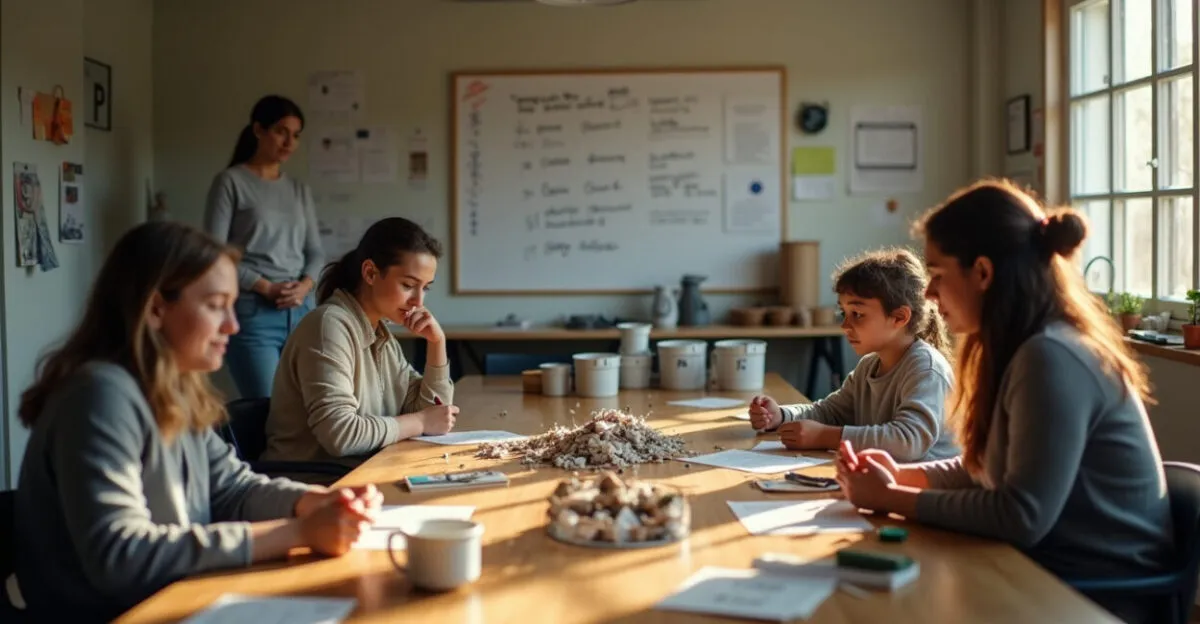
The Indicators That Tell the Whole Story

Not every indicator needs to be sophisticated. In fact, the best ones are often the hardest to fake. They can include questions, observation, and simple but consistent evidence.
- Return rate: who comes back for another activity or project phase.
- Content retention: what people remember after a few days.
- Attitude change: whether they start sorting waste, conserving water, or speaking up about wastefulness.
- Knowledge sharing: whether they share what they learned with family, classmates, or coworkers.
- Independence: whether they can take action without constant reminders.
Here’s the less obvious point: the best indicator isn’t always the most impressive-looking one. Sometimes the strongest sign of impact is someone who not only understood the message but also started holding themselves accountable in their daily routine.
The Common Mistake of Measuring Impact Too Soon
A common mistake is evaluating a project on the same day the activity ends. This tends to inflate results and undermine confidence in the project later, because real change hasn’t had time to show up yet.
Read also: Brazil’s National Environmental Education Day: How to Engage Families and the Community
I’ve seen projects labeled “ineffective” because only a few students got the answers right on an immediate quiz. A month later, those same students were bringing the discussion home, sorting waste differently, and correcting their classmates. The problem wasn’t the activity. It was the timing of the evaluation.
No single method works in every context. In some projects, it makes sense to measure results right away; in others, you need to compare before, after, and later on. Experts disagree about the ideal interval, but they all agree on one thing: without follow-up, impact is just a guess.
Read also: Environmental Education at School: Mistakes That Undermine the Message
How to Build a Simple, Reliable Evaluation
You don’t need a complex system to get started. You need consistency. A good evaluation combines brief tools with data collection at different points in time.
- Before: find out what your audience already knows and does.
- During: observe participation, questions, and interaction.
- After: check retention and intention to act.
- A few weeks later: see what lasted.
For a school project, ask what students remember without checking their notes. For a community project, observe actual practices. For a corporate project, see whether operations have changed. The right indicator depends on the goal, not on which survey looks best.
According to the OECD, evaluations focused on evidence of learning and follow-through tend to be more useful than isolated measurements of participation. In Brazil, education data from the IBGE (Brazilian Institute of Geography and Statistics) also highlight how much social context can shape the way results emerge.
When an Indicator Helps Guide Decisions
A good indicator isn’t just for reports. It helps you decide what to keep, cut, or redesign. When you compare activities, you can quickly see where your efforts have the greatest impact and where they create only short-lived momentum.
If it doesn’t help you make a decision, it’s just decoration. This filter saves the team time, budget, and energy. It also helps prevent the classic mistake of sticking with a popular but ineffective activity just because “it always looks successful.”
One line that often works well in meetings is: “If the activity is over but behavior hasn’t changed, the work isn’t finished.” It’s a little uncomfortable. That’s exactly why it’s useful.
How to Interpret Results Without Misleading Yourself
Even good results can hide weaknesses. Sometimes participation was high because the activity was mandatory. Sometimes learning was strong, but follow-through fell short because the surrounding environment didn’t offer enough support.
That’s why you should compare indicators. One group may have low attendance and high learning. Another may have high attendance and almost no retention. The contrast between the two tells you more than any isolated number.
For technical guidance, UNESCO reports and guidelines on education for sustainability emphasize the importance of tracking not only access but also the ability to maintain practices over time. In environmental education, that’s at the heart of evaluation.
Real impact rarely announces itself in the first week. It shows up when no one is asking for attention—and the behavior is still different.
Frequently Asked Questions
What Is the Best Indicator of Impact in Environmental Education?
It depends on the project’s goals, but follow-through is usually the most revealing. Participation shows reach; learning shows understanding; follow-through shows real transformation. If you have to choose just one area to track, check what happens weeks after the activity, once the initial excitement has faded.
How Can I Measure Impact Without Conducting Complex Surveys?
Use three simple checkpoints: before, right after, and some time later. A short survey, behavior observation, and a retention check can go a long way. The key isn’t to make the tool more sophisticated, but to compare results consistently over time.
Do Qualitative Indicators Matter, Too?
Yes—and sometimes they matter more than raw numbers. Personal accounts, observed changes, spontaneous comments, and examples of practical application can reveal transformation that a spreadsheet can’t capture. Ideally, combine both types: quantitative measures to see the scale and qualitative evidence to understand what really changed.
How Long Should I Wait to Measure Follow-Through?
There’s no one-size-fits-all timeline. For short projects, two to four weeks can reveal useful signs; for more structured initiatives, it’s worth tracking results for months. The important thing is not to measure only in the immediate aftermath, since that tends to overstate learning and underestimate how hard it is to sustain a new behavior.
What Should I Do If the Indicators Show Little Impact?
First, don’t automatically treat it as a failure. The activity may have been good, but its format, timing, or context may not have helped the change stick. Adjust the design, try another approach, and compare the results again. In environmental education, measuring poorly is worse than admitting there’s still work to do.
Artigos Relacionados
 National Environmental Education Day: 5 School Actions That Work
 Environmental Education in Elementary School: Activities That Work
 Environmental Education in Schools: Mistakes That Undermine the Message
 Environmental Education in Elementary School: Hands-On Activities
 Green Business Investing: The Positive Social and Environmental Impact of Companies Committed to Global Sustainability
 Environmental Activities for Early Childhood Education
