
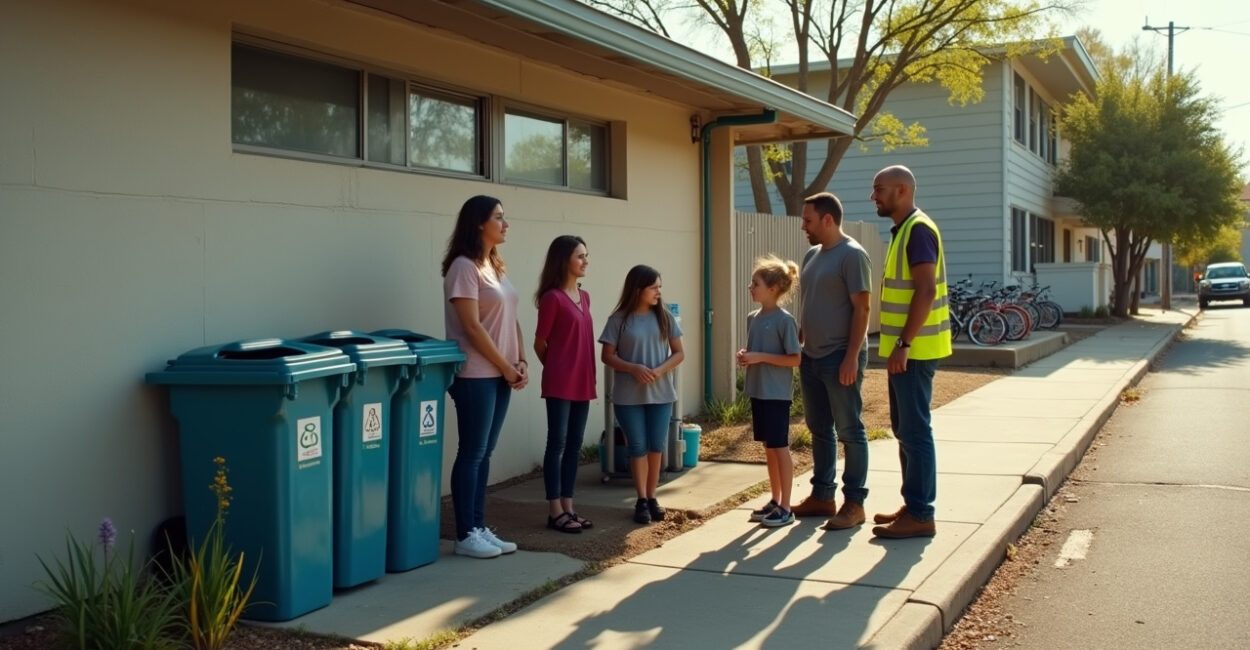
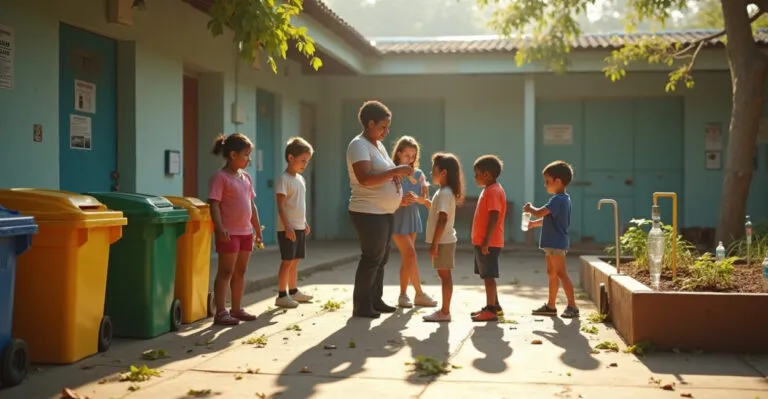
A recycling bin only works if there’s somewhere to take the materials. That simple detail captures a common challenge in school–community environmental partnerships: turning a local concern into action with clear responsibilities, resources, and follow-through. An environmental partnership brings a school together with people and organizations in the community to address a shared problem and learn from the process. It might start with a conversation about litter nearby, involve a recycling cooperative, and lead to classroom activities that are monitored throughout the year.

At a glance
- Goal: address a local environmental issue through collaboration and learning.
- Potential participants: students, families, school staff, associations, public services, and local organizations.
- First step: choose an observable problem and listen to the people who live with it.
- Resources: may include expertise, space, materials, transportation, or staff time.
- Follow-up: agree on responsibilities, record progress, and set a date to review the plan.
What school–community environmental partnerships are
These are collaborative agreements between a school and people or organizations in the community to develop environmental education activities tied to real-world issues. The school remains responsible for instruction; partners contribute knowledge, resources, or local connections. Simply put, each participant contributes what they can and agrees on how to track the work.
This definition helps distinguish an ongoing partnership from a one-time activity. A guest presentation can be useful, but without a connection to the curriculum, defined responsibilities, or next steps, it tends to end when the event is over. Brazil’s National Environmental Education Policy, a Brazilian law, calls for integrated, ongoing environmental education inside and outside schools.
An environmental partnership is more effective when the problem, responsibilities, and learning goals are shared from the planning stage onward.
Who can participate and what each partner can contribute
The right partner depends on the issue. For example, to discuss where waste goes, a recycling cooperative can explain how to sort materials and what local pickup services can and can’t handle. A health clinic can contribute to conversations about standing water, while a neighborhood association can help map places the community uses.
- Students: observe, ask questions, gather information, and make age-appropriate proposals.
- Families and residents: share habits, local knowledge, and information about the community.
- School staff: set learning goals, organize participation, and oversee safety and communication.
- Public agencies and local services: explain regulations, available services, and referral procedures.
- Universities, organizations, and cooperatives: may provide technical expertise, training, or support for specific activities.
Collaboration does not transfer the school’s responsibility for instruction and safety to families or outside organizations. It’s also important to make sure a partner’s proposal aligns with learning goals and local conditions. For example, a solution that requires daily maintenance needs someone with the time and permission to handle it.
How to plan and start an environmental partnership

Start with the community, not a list of activities. Teachers and students can observe the area, talk with staff and families, or note questions that come up in class. Choose an issue the school can investigate and that offers a realistic path to action.
- Define the issue: replace “improve the environment” with something you can investigate, such as finding out why recyclable materials aren’t picked up locally.
- Listen to the people involved: find out what’s already in place, who is affected, and what challenges previous efforts encountered.
- Invite partners based on what they can contribute: explain the goal and suggest a specific role without assuming they’re available.
- Write down the agreements: note tasks, responsibilities, resources, safety measures, communication channels, and how to handle changes.
- Start with a manageable test: try one initial step, see what didn’t work, and make adjustments before expanding the project.
A common mistake is setting up recycling bins before confirming which materials the local service accepts and how often they’ll be picked up. Without that agreement, materials can pile up and discourage people from sorting them. Confirming logistics up front helps prevent a well-intentioned activity from becoming a storage problem.
Read also: School Recycling Projects: 7 Practical Ideas
How to connect environmental action to the curriculum
Students learn when they investigate a question, interpret evidence, and communicate what they discover. Completing a task can be part of a project, but it doesn’t replace connecting the experience to what students are learning in each subject.
For example, a recycling program can lead students to track different types of waste, read maps of pickup routes, write materials to inform the community, and discuss consumption. The teacher sets learning goals and adapts activities to students’ ages, the curriculum, and the conditions for participation.
Read also: National Environmental Education Day: 5 School Activities That Work
The curriculum guidance from Brazil’s Ministry of Education can support lesson planning. Still, the project should start with what the class can investigate. An off-campus activity shouldn’t replace clear learning goals or expose students to risks.
Environmental partnership ideas suited to local conditions
The ideas below can be adapted. Before getting started, the school should confirm available services, permissions, and local conditions. A school garden, for example, requires water, access to the space, and someone to care for it during school breaks.
| Local issue | Potential partners | Student activity | What to check |
|---|---|---|---|
| Waste with no known destination | Recycling cooperative, waste management service, families | Map materials and research where each one goes | Accepted materials, pickup schedule, and storage space |
| Available space for growing plants | Families, local farmers, school staff | Plan garden beds and track plant growth | Water access, maintenance, and use of the space |
| Limited awareness of nearby green spaces | Neighborhood association, university, environmental agency | Create a map and share observations about the area | Safe access and compliance with site rules |
Imagine a class wants to start a school garden. Before planting, students talk with the staff responsible for maintenance and find out who can water the plants during school breaks. They research suitable plant species, record how the plants grow, and discuss how the food could be used. If there’s no water or no one to care for the garden when school is out, the plan can shift to smaller beds or another research activity.
How to address challenges, sustain the partnership, and evaluate results
Low participation often has specific causes: inconvenient meeting times, an unclear invitation, frustration with past efforts, or a lack of trust that residents’ input will matter. Before assuming people aren’t interested, ask what formats might work. A quick conversation at school pickup or a survey sent to families may uncover barriers that a long meeting wouldn’t.
To track the project, document the starting point and choose indicators that fit the goal. For a waste project, you might count participating classes, check whether pickups happen as agreed, and compare students’ knowledge before and after a series of lessons. These records show what has progressed; on their own, they don’t prove broad environmental change.
Continuity depends on keeping clear, accessible records. Saving contact information, schedules, decisions, and maintenance instructions helps keep the project going if a teacher, administrator, or partner changes roles. If someone drops out, the team should identify any tasks left uncovered, notify the others, and scale back or reorganize the effort without assigning risky tasks to students.
There’s no universal timeline for seeing results: a change in routine may happen before an environmental improvement, which depends on outside factors such as public pickup services, the season, and participation from other residents. UNESCO’s approach to education for sustainable development offers resources for connecting learning to real-world challenges. The right format still depends on students’ ages, available resources, and local conditions.
Frequently asked questions about school–community partnerships
Is a formal contract necessary to establish a partnership?
Not every collaboration requires a contract; simple activities can start with goals and responsibilities written down. If the partnership involves using space, funding, personal data, volunteer work, or institutional commitments, school administrators should check district policies and determine what formal agreements are needed.
What should we do if the community doesn’t want to participate?
First, find out why and reconsider the invitation: the timing, language, or format may be putting people off. Start with a brief listening session and a smaller activity. Don’t treat participation as an obligation or judge interest only by attendance at meetings.
How long can it take for a partnership to show results?
It depends on what counts as a result. A class may produce an assessment after just a few activities, while changes to waste management or the condition of an area may depend on services, resources, and decisions beyond the school’s control.
What should we do if a partner drops out during the project?
Review the agreements and identify which task no longer has someone responsible for it. The school can adjust the scope, find other support, or pause a step that can no longer be carried out safely or maintained.
How can we involve students so they learn instead of just completing tasks?
Give them questions to investigate, time to analyze information, and opportunities to present their conclusions. The teacher guides the process and connects activities to learning goals; collecting materials or watering plants alone doesn’t ensure understanding.
Before inviting partners, the team can write one sentence stating the local issue, the question students will investigate, and what each participant is expected to contribute. If that sentence isn’t clear, the next step is to listen to the community and narrow down the proposal.
Artigos Relacionados
 School-Community Partnerships: How to Engage Your Community Today
 Environmental Education in Elementary School: Activities That Work
 School and Environmental Integration: 2025
 Environmental Education in Elementary School: Hands-On Activities
 Parent Involvement and Teacher Training on ADHD: Communication Protocols, School-Family Partnerships, and Progress-Monitoring Strategies
 Women’s Leadership in Education: Strategies and Challenges for Inspiring Women Transforming Schools and Communities Around the World
