
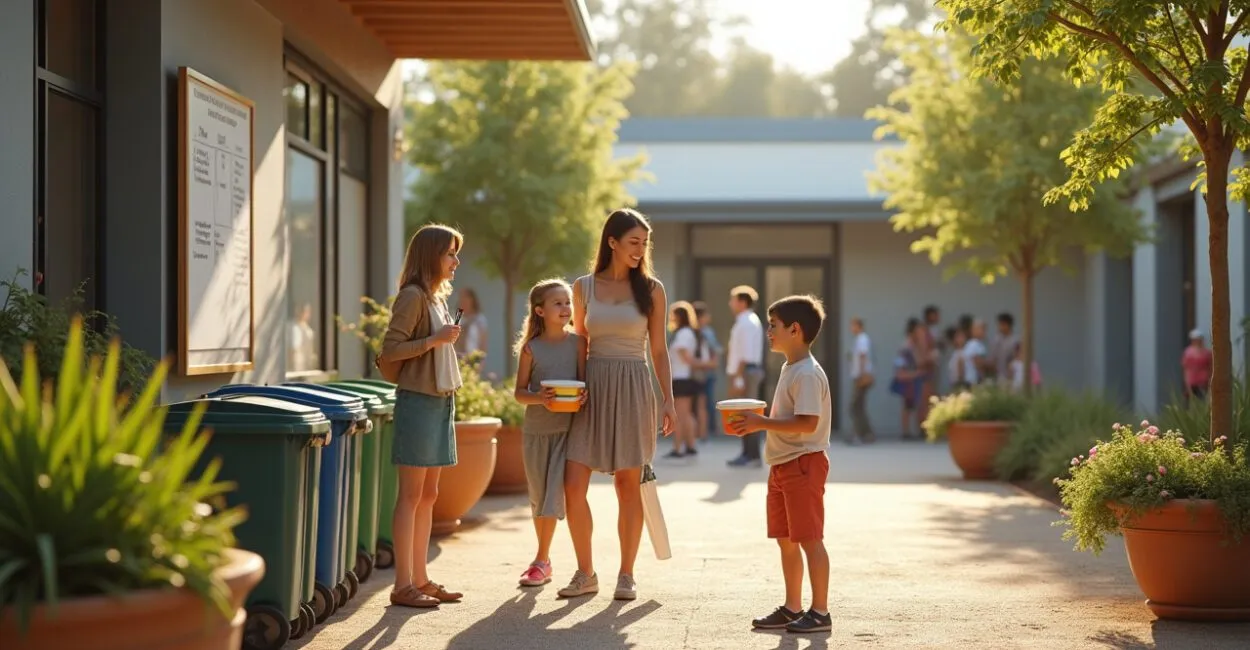
Schools that treat the environment as an “extra topic” miss a major opportunity: to build habits, sound judgment, and a sense of shared responsibility in a place where these can become part of everyday life. In practice, school and environmental integration means bringing together curriculum, school management, and daily routines so that sustainability moves beyond talk and becomes observable behavior. This applies to classes, school meals, water use, waste disposal, outdoor spaces, transportation, and family involvement.
This matters because environmental education doesn’t work well when it’s confined to a single commemorative day. It gains momentum when it’s woven into projects in science, geography, math, English, and even school operations. Below, you’ll learn what this means in practical terms, how to put it into practice, and which common mistakes can undermine results.

What You Need to Know
- Environmental education is more effective when it’s part of both the curriculum and the school’s daily routines, because habits reinforce learning.
- Projects involving recycling, school gardens, composting, and water conservation work better when they have a goal, an owner, and regular follow-up.
- Involving students, teachers, administrators, and families makes it less likely that an initiative will become a one-off gesture with no lasting impact.
- Simple metrics, such as waste volume, water use, and participation by class, provide more direction than generic campaigns.
- A school doesn’t need to become an ideal laboratory; it needs to be consistent, measurable, and persistent in what it chooses to do.
School and Environmental Integration: What It Is and Why It Works
Technically, school and environmental integration means connecting teaching practices, institutional management, and school culture to deliver ongoing environmental education. Put simply, the school teaches sustainability not just through lessons, but through everyday example. This includes decisions about consumption, the use of natural resources, care for school spaces, and community involvement.
This approach works through meaningful repetition. Children and teens learn quickly when they see consistency between what a teacher says and what the school does. If the school talks about recycling but puts all waste in the same bag, the message falls apart.
The Base Nacional Comum Curricular (Brazil’s national curriculum framework) and the country’s environmental education guidelines support this kind of integration because they treat the subject as part of civic education, not as a one-off activity.
In practice, environmental education works at school when learning is reinforced by repeated behavior. Without that, a project becomes just a campaign and loses its educational impact.
The School’s Role Goes Beyond the Classroom
Schools educate through the curriculum, but also through the physical environment and administrative decisions. Using water responsibly in restrooms, maintaining gardens, sorting waste correctly, and reducing disposable items all send quiet but powerful messages. Anyone who works in education knows that students notice more than we think. If a school wants to build environmental awareness, it needs to make that commitment visible in everyday life.
Where the Idea Often Falls Short
The most common mistake is turning environmental education into a one-time event: a themed week, one presentation, and then nothing. Another problem is expecting major projects without administrative support. The same approach won’t work everywhere—a small school with limited space may make more progress by reducing waste and composting than by building a large garden. The point isn’t to copy a model; it’s to choose actions that fit the school’s circumstances.
How to Bring Sustainability into the Curriculum Without Forcing It
If environmental integration is assigned to science alone, it remains fragile. A stronger approach is to make it cross-disciplinary, with each subject contributing in its own way. In math, students can calculate water use; in English, they can create campaigns; in geography, they can study watersheds and land use; in art, they can repurpose materials; and in history, they can examine how consumption patterns have changed over time.
The advantage of this model is that it doesn’t depend on one “hero” subject. The downside is that it requires coordination. Without alignment across the curriculum, the plan becomes improvised. Resources such as the IBGE (Brazil’s national statistics agency) can help teachers work with data on consumption, sanitation, and urbanization. Concrete numbers help students understand that sustainability also means critically examining the world around them.
A Practical Example of Cross-Disciplinary Integration
An elementary school class can study solid waste in science, measure the trash produced in the classroom for math, write improvement proposals in English, and present solutions at a school assembly. The material stays concrete because students measure, record, make a case, and propose solutions. This kind of sequence is more valuable than a polished activity that has no connection to everyday routines.
Read also: School Recycling Projects: 7 Practical Ideas
The difference between token and effective environmental education becomes clear when students can connect a problem at school to a concrete decision about resource use, consumption, or disposal.
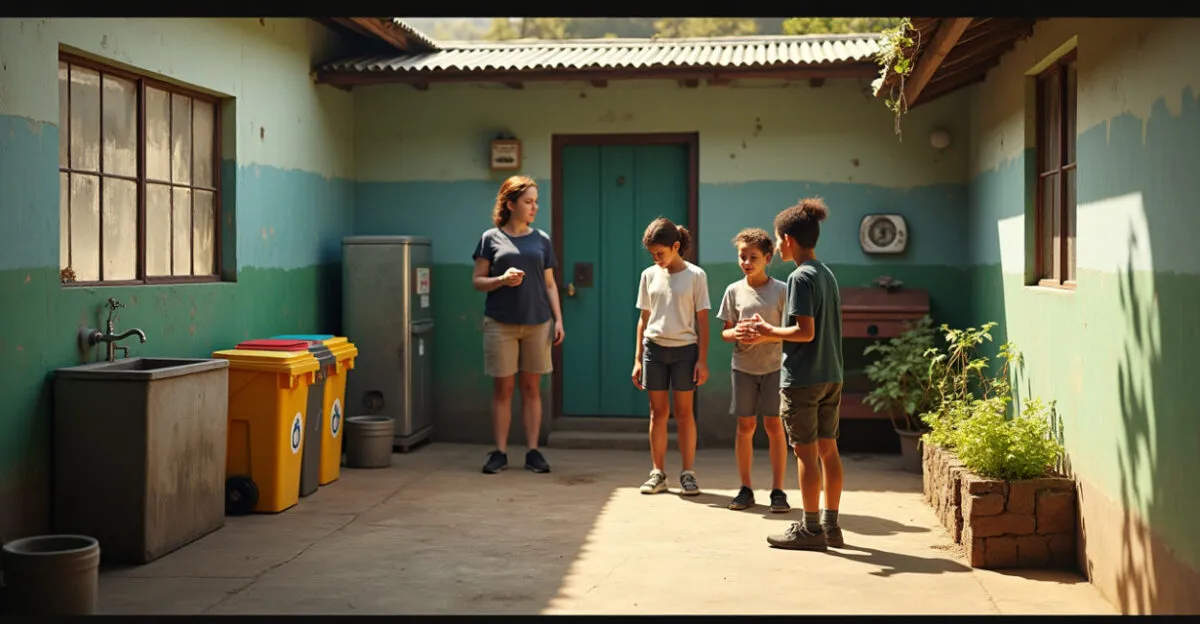
Sustainable Practices That Truly Change Everyday School Life

Some actions have a quick impact because they affect processes, costs, and behavior. They don’t need to be sophisticated. The key is to choose a few priorities, carry them out clearly, and measure the results before and after. When a team tries to do everything at once, the project loses focus. Choose well, and results can follow without a huge budget.
Four Actions That Often Work
- Recycling with clear visual guidance: Labeled bins and simple rules reduce sorting mistakes.
- Composting food scraps: A good option when the school serves meals and has staff to provide basic oversight.
- Educational school garden: Works best as a learning tool, not as a source of food production.
- Smart water and energy conservation: Campaigns without monitoring achieve little; monthly targets are more effective.
A public school in a rural area conducted a simple six-week assessment: where water was being wasted, which types of waste were most common, and which classes wasted the most food at lunch. Based on the findings, each classroom received a practical goal. The results weren’t a miracle—they came from consistency. Water use gradually declined, and students began paying closer attention to how they cared for their own spaces. This kind of change happens when a project moves beyond talk and becomes part of the daily routine.
Read also: School and Community Partnerships: Real Environmental Action
How to Engage Students, Teachers, and Families Without Just Paying Lip Service
Engagement doesn’t come from motivational posters. It comes when each group understands what they stand to gain and what they need to do. Students need a real voice, teachers need a workable plan, and families need to see the practical value. If communication is all about making demands, buy-in drops. When it fosters a sense of belonging, the initiative is more likely to last.
What Works for Each Group
- Students: Class-level choices, volunteer workdays, environmental ambassadors, and presentations of results.
- Teachers: Ready-to-use lesson plans, cross-curricular connections, and time for joint planning.
- Families: Simple campaigns, at-home challenges, and updates with school data.
School administrators also play a decisive role. Without management support, an effort depends on one enthusiastic teacher, which isn’t sustainable. Ideally, the school should create a small environmental committee with representatives from different groups. It doesn’t need to be bureaucratic; it needs to be effective.
Simple Metrics to Track the School’s Progress
A sound school environmental policy needs to be monitored. Without metrics, everything comes down to impressions. Tracking can start with basic data: weekly waste volume, monthly water use, class participation, the number of lessons that incorporate the topic, and how often the garden or composting setup is maintained. These numbers aren’t for punishing anyone. They’re for adjusting course.
Metric
What It Shows
How to Measure It Simply
Waste per class
Waste and proper sorting
Weekly weight or volume
Water use
Responsible resource use
Monthly bill and comparison with past usage
Project participation
Genuine engagement
Roster by class and attendance
Curriculum integration
Whether the topic was taught in class
Lesson plans and activity records
There’s an important caveat: metrics without interpretation can become meaningless numbers. If waste volume drops because the school stopped serving a certain food, the data can be misleading. That’s why it’s worth combining numbers with observations and teacher feedback. Transparency matters more than an upbeat story.
Real-World Challenges and How to Avoid Common Pitfalls
The main challenge is structural: lack of time, too many responsibilities, tight budgets, and staff turnover. Then there’s the cultural challenge, which is even harder. Some people see environmental education as a low priority; others think an annual campaign is enough. This outlook limits results because it treats the subject as an add-on when it should shape part of school life.
Another challenge is the inequality between schools. Not every school has space for a garden or lab, or an outside partner to organize recycling. In some settings, the best place to start is reducing food waste, improving waste disposal, and studying the surrounding community. For well-grounded guidance, consult resources from organizations such as UNESCO, which explores education for sustainability with a long-term perspective.
What to Avoid From the Start
- Overly ambitious projects with no designated owner.
- Good-looking initiatives with no maintenance plan.
- Campaigns that never make it back into the classroom.
- Vague goals that can’t be measured.
Next Steps to Put the Idea into Practice
If a school wants to get off to a good start, the best approach is to choose a real environmental problem that’s small and measurable. Then launch a 30- to 60-day pilot with one class or group. This scale reduces risk, shows what works, and avoids unnecessary strain. School and environmental integration gains momentum when it delivers visible results before asking to expand.
The smartest next step is simple: identify one source of waste, assign an owner, set a metric, and review the results at the end of the cycle. If it works, expand it. If it doesn’t, make adjustments. Strong environmental education doesn’t come from isolated enthusiasm; it comes from consistency, routine, and a clear method.
Frequently Asked Questions
What Does It Mean to Integrate School and the Environment in Practice?
It means aligning what students learn, school routines, and institutional decisions to support ongoing environmental education. This includes the curriculum, waste management, water use, food, projects, and community involvement. In practice, the school stops treating sustainability as an occasional topic and incorporates it into everyday activities. The strongest results come when students see consistency between what the school says and how it acts.
Which Environmental Projects Work Best at School?
The most effective projects are often the easiest to maintain: recycling, composting, educational gardens, reducing food waste, and tracking water use. The best project is one that fits the team’s routine and can be monitored with metrics. Very complex initiatives without ongoing maintenance tend to lose momentum quickly. Ideally, start small and expand after testing.
How Can You Involve Teachers Without Adding to Their Workload?
The safest approach is to connect activities to existing content rather than create extra assignments. Math can cover consumption data, English can involve creating campaigns, and science can examine waste and natural cycles. When the school provides a lesson plan, a clear objective, and a set time frame, teachers can take part with more confidence. Without that support, the topic becomes one more demand competing with everything else.
Does a School Need a Garden to Teach Environmental Education?
No. A garden can help, but it isn’t required or the most important measure of a sustainable school. In many schools, the greatest impact comes from reducing waste, improving waste sorting, saving water, and connecting the local community to the curriculum. Experts disagree about the relative importance of different actions because circumstances vary widely. The key is to choose practical approaches that can be maintained, rather than relying on infrastructure that’s difficult to sustain.
How Can You Tell Whether an Environmental Project Is Working?
The most reliable approach is to track simple metrics over time: waste volume, water use, class participation, how often activities take place, and lesson records. If possible, compare results from before and after the intervention. It’s also worth watching for changes in behavior, since not everything shows up in the numbers right away. A good project reduces waste, builds habits, and continues without relying on one person’s one-time effort.
Artigos Relacionados
 School–Community Integration: A Complete Practical Guide
 Environmental Education in Elementary School: Hands-On Activities
 Sustainability at School: How to Put It Into Practice
 Energy Savings at School: 10 Ways to Cut Costs
 Sustainable School Garden: How to Start One From Scratch
 Green Business Investing: The Positive Social and Environmental Impact of Companies Committed to Global Sustainability
