
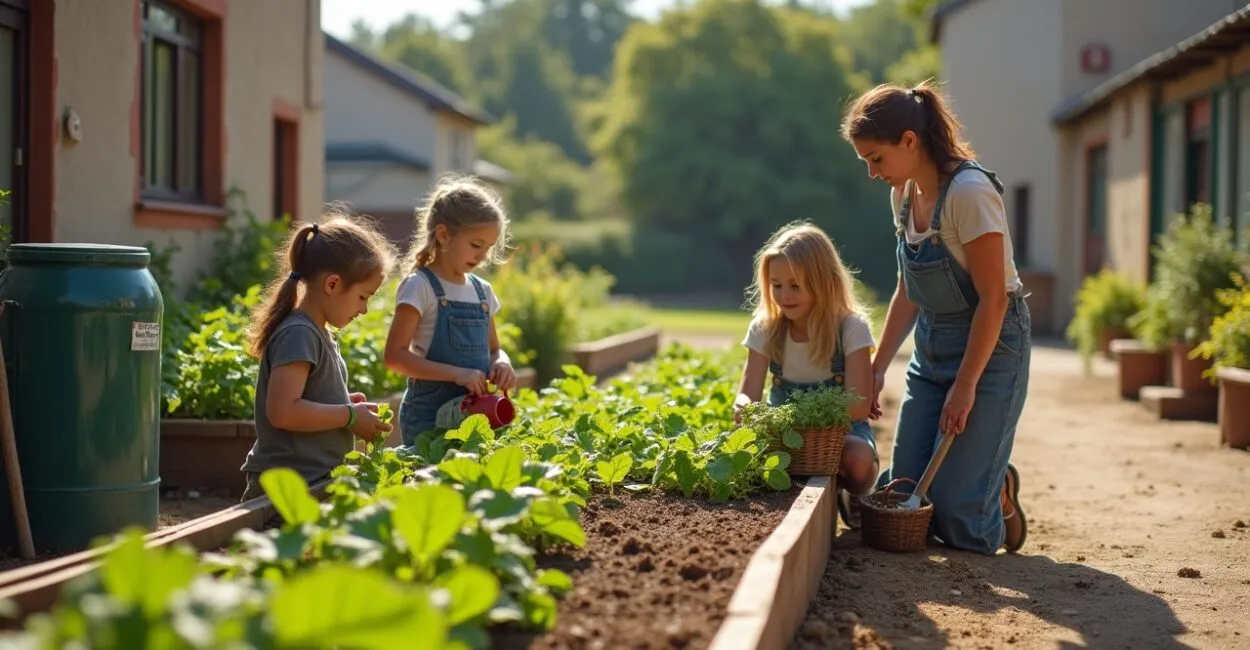
A well-tended garden can transform the feel of a school more than many a lecture on the environment. When students plant, water, observe the growing cycle, and harvest, learning stops being abstract and becomes a hands-on experience—and that’s where a sustainable educational school garden can make a real difference.
It brings environmental education, healthy eating, teamwork, and shared responsibility together in one space.

In practice, what works isn’t starting big; it’s starting with something manageable. A small garden, planned with suitable plants, a maintenance routine, and clear learning goals will usually last longer than attractive projects that fizzle out after the second month.
Below, you’ll learn what this kind of garden is, how to set one up, how to maintain it throughout the year, and which common mistakes can derail the effort before it takes root.
The Essentials
- A sustainable educational school garden is a growing space used as a learning tool, with the focus on the process, not just the harvest.
- The project stays viable only when it has a set routine, clearly assigned responsibilities, and links to the science, math, language arts, and geography curricula.
- Composting, rainwater harvesting, and reusing materials lower costs and align the garden with its environmental goals.
- The biggest mistake is treating the garden as decoration; without a maintenance schedule and a connection to lessons, it becomes a neglected plot.
- Longer-lasting projects use quick-growing plants, staggered planting, and meaningful student involvement in simple, ongoing tasks.
How a Sustainable Educational School Garden Connects Learning to Real Life
Technical definition: an educational growing space designed to teach curricular content, build social-emotional skills, and promote sustainable practices through ongoing care and participation from the school community. Put simply, it’s a school using food cultivation as a living laboratory. It’s not a “pretty garden bed”; it’s a teaching tool.
This distinction matters because it changes how the project works. When the garden is only for decoration, it depends on the goodwill of a few people. When it becomes a teaching strategy, it has a purpose, a schedule, a class in charge, and measurable goals. That’s how it connects biology, food, conscious consumption, and even concepts like life cycles, climate, and soil.
What separates a lasting school garden from a decorative one isn’t the size of the space—it’s having a routine, a learning purpose, and clearly assigned responsibilities.
Why It’s More Engaging Than a Lecture
Students get involved because they can see the results. A new leaf, a wilted plant, a pollinating insect, moist soil, finished compost: all of these create a kind of learning that a whiteboard alone can’t provide. Anyone who works in a school knows that interest grows when an activity has visible consequences. In the garden, mistakes show up quickly, teaching a lesson without a long speech.
Where Projects Tend to Fail
Projects fail when they depend on one person, when the school doesn’t set aside time for maintenance, or when plants are chosen that don’t suit the local climate. They also fail when expectations are too high for the available space. This can lead to frustration, so set expectations from the start: the main benefit is educational, not productive.
Planning Before the First Garden Bed
Before breaking ground, the school needs to answer four questions: Where will the garden go? Who will care for it? What will be planted? And how will the activities fit into lessons? Without a plan, maintenance becomes improvised. Ideally, create a simple plan with responsibilities assigned by class, a weekly schedule, and a short list of plants.
In practice, small, consistent projects tend to last longer than large, loosely organized ones. A space with four to six garden beds, for example, can accommodate rotating classes, observations of different growth stages, and distinct tasks for each grade. For schools with limited outdoor space, pots, planters, and vertical planters work well, as long as they get enough sun and water.
Setup Checklist
- Track sunlight exposure for at least one full day.
- Identify a water source and a place to store supplies.
- Choose easy-to-grow plants with short growing cycles.
- Assign roles to teachers, students, food service staff, and support staff.
- Set learning goals for each grading period.
Plants That Tend to Work Best
Lettuce, arugula, green onions, cilantro, parsley, collard greens, and radishes tend to do well in school gardens because they germinate and grow quickly. In very hot regions, partial shade may be necessary. More demanding crops, such as tomatoes, need closer attention and aren’t the best choice for beginners.
A useful resource for food and nutrition education is material from Brazil’s Ministry of Education, which connects food, curriculum, and school-based learning. For help building a stronger environmental component, resources from Embrapa, Brazil’s agricultural research agency, can help with plant selection and basic soil and water management.
Soil, Composting, and Water: The Core of Sustainability

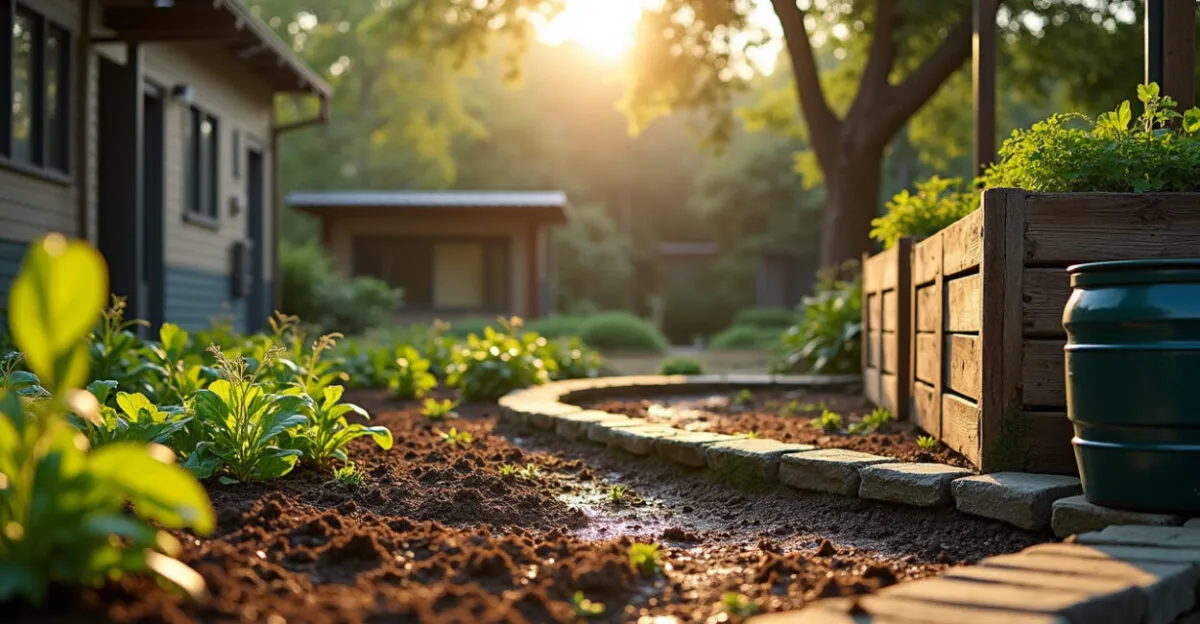
A sustainable garden doesn’t depend on constantly buying fertilizer. It relies on healthy soil, organic matter, and careful water use. That means considering composting, mulch, reusing plant scraps, and, when possible, collecting rainwater. These practices make the project a tangible example of sustainability.
Here’s something many schools learn too late: poor soil can derail a project faster than pests. If the soil is compacted, low in organic matter, and drains poorly, plants struggle from the start. That’s why it’s worth improving the beds before planting by mixing in compost, adding sand if needed, and using mulch to reduce moisture loss.
In practice, school composting works when waste sorting becomes routine. It fails when it depends on random scraps and no one tracks what goes in or comes out.
How to Make Composting Part of the School Routine
The best approach is the simplest: layer fruit scraps, dry leaves, and other dry materials. The school can use a home compost bin, a worm bin, or a small compost pile, depending on the space. The key is to balance moist and dry materials to prevent odors and pests.
Water: Less Waste, More Consistency
Watering a little often is better than soaking plants every once in a while. Drip systems, bottles with small holes, and watering early in the morning reduce evaporation. Schools with accessible rooftops can collect rainwater to support this routine at a very low cost.
Read also: Sustainable School Garden: How to Start from Scratch Today
Cemaden, Brazil’s National Center for Monitoring and Early Warning of Natural Disasters, publishes useful information about climate, rainfall, and hydrological risks, helping schools adapt garden care to local conditions. Not every approach works everywhere: in areas with prolonged drought, larger water storage is needed; in very wet areas, drainage becomes a priority.
The Roles of Teachers, Students, and Families
Successful projects are rarely left to one enthusiastic teacher. Keeping a garden going requires a real division of responsibilities. The teacher sets the learning goals; students handle daily care; support staff help with safety and logistics; and families can contribute materials, seeds, or occasional volunteer help.
Read also: Plants for a Vertical Garden: 9 Options for Apartments
I’ve seen gardens thrive because students took on regular roles: one pair handled watering, another recorded observations, another monitored pests, and a fourth took charge of harvesting. This builds a sense of ownership. When every group knows what to do, the garden stops being “the project’s” and becomes “the school’s.”
How to Divide Responsibilities Without Creating Chaos
- Set simple, repeatable weekly tasks.
- Post a visible schedule for shifts and observations.
- Rotate groups each grading period to give more students a chance to participate.
- Involve families in supportive activities, not daily maintenance.
How to Involve People Without Overloading Them
The most common mistake is promising to involve everyone in everything and ending up exhausting the whole community. It’s better to start with two classes and expand gradually. Rather than asking families to participate regularly, organize a volunteer workday at the start of the semester and a tasting event or presentation of results at the end of the cycle.
Learning Activities Beyond Planting
The garden becomes a powerful educational resource when it’s used across subjects. In science, students observe germination and photosynthesis. In math, they measure garden beds, calculate spacing, and compare growth. In language arts, they write journal entries, photo captions, and experiment reports. In geography, they discuss climate, place, and where food comes from.
This cross-curricular approach is one of the project’s greatest strengths because it brings lessons off the page. Students practice observation, record-keeping, and interpretation—skills they can use in other settings. Best of all, they see that knowledge doesn’t come in isolated compartments.
Learning Activities That Work Well
- A garden journal with dates, photos, and measurements.
- A map of the garden beds using a simple scale.
- A study of a vegetable’s life cycle.
- A comparison of fast-germinating seeds.
- A guided tasting focused on healthy eating.
A Sample Lesson Sequence
A school starts the semester by planting arugula seeds. The following week, students measure the seedlings and record the data in a table. Then they observe differences between beds with more and less shade. At the end, they write an explanation of why two similar areas produced different results. It’s a science, math, and writing lesson all in one activity.
Year-Round Maintenance That Keeps the Project Going
A project will last only if it has a schedule. Without a routine, a garden can quietly fall into neglect. The school needs to set regular times for watering, weeding, checking the soil, replanting, and harvesting. If the school has a long break, someone needs to put a basic plan in place to keep more sensitive plants alive.
The secret isn’t to require daily maintenance for everything; it’s to rotate growing cycles. Fast-growing plants are a good starting point; later, the school can try crops that take a little longer to maintain. It also helps to reserve part of the garden beds for staggered planting, avoiding the “planted everything, harvested everything, and now it’s over” effect.
A Practical Quarterly Routine
Time frame
Focus
Expected result
Month 1
Soil preparation and initial planting
Seedlings take root and a routine is established
Months 2 and 3
Maintenance, record-keeping, and first harvests
Engagement and observation of plant growth
Month 4 onward
Staggered replanting and expanded learning activities
Continuity and consistent curriculum integration
When the Plan Needs to Change
If a plant doesn’t suit the climate, replace it without hesitation. If watering is a problem, simplify the garden-bed layout. If classes are overloaded, reduce the growing area before people burn out. Here, sustainability also means adjusting the project’s size to what the school can realistically maintain.
Metrics, Safety, and Institutional Support
A good school garden needs simple metrics: seedling survival rate, frequency of maintenance, class participation, and the number of learning activities connected to the garden. These data help demonstrate the project’s value to school administrators and prevent the feeling that the project “exists, but no one knows if it’s working.”
There’s also an often-overlooked issue: safety. Tools must be age-appropriate, walkways should be kept clear, and the school should teach students to wash their hands, especially after contact with soil or harvested food. These precautions don’t get in the way; they help ensure the work can continue.
For guidance on health and nutrition, consult resources from Brazil’s Ministry of Health on safe, nutritious eating. For environmental education and curriculum ideas, the Ministry of Education’s environmental education portal can help align the project with school policy. These resources provide a foundation, but each school needs to adapt them to its space, staff, and calendar.
What to Measure Without Overcomplicating It
- Number of participating classes per grading period.
- Number of curriculum-based activities held in the garden.
- Amount of organic waste reused in composting.
- Percentage of seedlings that make it to harvest.
Next steps
If the school is just getting started, the smartest approach is to keep the project small and make it consistent. Choose a small space, select quick-growing plants, assign responsibilities, and connect the garden to one subject at a time. That’s how a sustainable educational school garden becomes more than a showpiece and turns into a lasting learning practice. The next step is to create a quarterly plan with tasks, plants, and simple tracking goals.
Frequently Asked Questions About Sustainable Educational School Gardens
What’s the Difference Between a School Garden and a Sustainable Educational School Garden?
A school garden can simply be a growing space on school grounds. A sustainable educational school garden has clear learning goals, a maintenance routine, links to the curriculum, and practices such as composting and careful water use. “Sustainable” isn’t just decoration: it describes a project designed for continuity, minimal waste, and shared participation. Without those elements, the garden is just a place to grow things.
What’s the Ideal Size for Starting a School Garden?
The ideal size is one the team can maintain consistently. Rather than starting big, set up a few well-organized garden beds or use pots and planters in sunny areas. Small projects are more likely to last because they need less water, fewer supplies, and less improvisation. Once the routine is established, the school can expand with confidence.
Which Plants Are Easiest for Students to Care For?
Fast-growing plants that are easy to maintain tend to work best, including lettuce, arugula, green onions, parsley, cilantro, and radishes. They let students observe germination and harvesting relatively quickly, helping keep the class interested. In hot regions, some may need partial shade. The main consideration isn’t just yield, but how well the plants suit the climate and the school’s routine.
How Can You Keep the Garden Going During School Breaks?
The school needs a basic plan to keep the garden going. Ideally, leave less sensitive crops in the ground, reduce the number of beds in production, and decide who will water and check on the plants at agreed-upon intervals. Simple irrigation systems help, as does mulch to retain moisture. If no one can provide support during the break, it’s best to pause some planting rather than risk losing everything.
Can a School Garden Really Make a Difference in Learning?
Yes, as long as it’s treated as a learning resource rather than a stand-alone activity. A garden makes it possible to teach concepts through hands-on observation, measurement, record-keeping, and real-world problem-solving. The value isn’t just in the harvest, but in how students learn to understand natural processes, collaboration, and responsibility. When well organized, a school garden boosts engagement and gives classroom learning greater meaning.
Artigos Relacionados
 Sustainable School Garden: How to Start One From Scratch
 School Recycling Projects: 7 Ideas to Get Students Involved
 School Recycling: An Effective Program for Educational Institutions
 A Practical Guide to School Sustainability Projects
 Individualized Planning for Students With ADHD: How to Create Goals, Accommodations, and Differentiated Assessments for Elementary School
 Inclusive Strategies for Students with ADHD: Practical Accommodations and Academic Outcomes for Elementary School Teachers
