
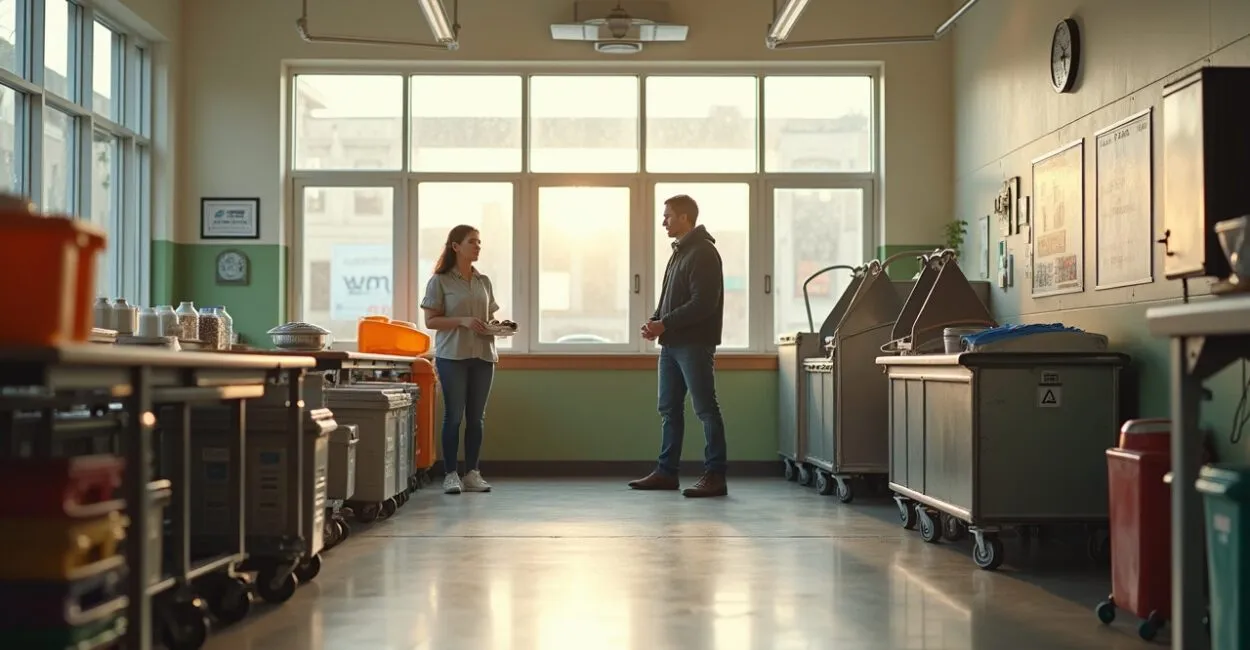
When a school reduces waste, saves energy, and changes consumption habits, the results show up in its budget, daily routines, and student behavior. Sustainability at school isn’t a decorative addition to an educational project. It’s a way to organize everyday decisions so the school uses fewer resources, teaches shared responsibility, and helps students become more aware of the impact of their choices.
In practice, it goes far beyond sorting trash. It involves waste management, the responsible use of water and energy, environmentally conscious purchasing, more thoughtful food choices, a curriculum connected to the local community, and meaningful participation from the school community.

Here’s how to turn sustainability into concrete action, with strategies that work in public and private schools, from preschool through high school.
What You Need to Know
- A sustainable school reduces its environmental impact, leads by example, and builds lasting routines rather than relying on one-off campaigns.
- The most effective starting point is usually an assessment: where waste occurs, what gets thrown away, and which habits are already in place.
- Projects succeed when they involve students, custodians, cafeteria staff, administrators, and families. When they exist only on paper, they quickly lose momentum.
- Energy, water, waste, and food are the four areas most likely to deliver practical, visible results in the short term.
- Without a goal, an owner, and follow-up, an initiative becomes symbolic. With consistent routines and metrics, it becomes part of the school culture.
Sustainability at School: Making It Part of the Daily Routine
Here’s a technical definition: school sustainability is the set of management, teaching, and operational practices that reduce an institution’s environmental impact, improve resource efficiency, and integrate environmental education into everyday life. Put simply, it means running a school in a way that teaches by example.
This matters because students quickly notice inconsistencies. If a classroom discusses recycling while the school wastes paper, water, and food, the message loses credibility.
But when the building, cafeteria, classes, and school management all work together, sustainability stops being an isolated topic and becomes a shared practice.
What Changes When a School Takes Sustainability Seriously
The first benefit is usually a shift in school culture. Staff start recognizing waste as a real problem, students become more involved, and administrators have data to make better decisions.
In many cases, the financial savings come after habits change—not before.
What separates a school “with a green project” from a truly sustainable school isn’t the poster on the wall—it’s the consistent practice of making responsible choices every day.
Initial Assessment: Where the Biggest Waste Happens
Before launching campaigns, take stock of what’s already happening. In most schools, the same three areas account for recurring waste: high energy use from lights and equipment left on unnecessarily, water waste in restrooms and outdoor areas, and mixed waste that could have been reused or recycled.
An honest assessment helps avoid wasted effort. Instead of trying to fix everything at once, the school identifies the costliest or most visible problem and starts there.
This approach works in schools of any size, but it falls short when administrators expect quick results without giving staff the authority to monitor and make adjustments.
How to Assess Your School in 4 Steps
- Observe a week of normal school routines without making changes.
- Track water and energy use, paper consumption, and waste generation.
- Talk with custodians, cafeteria staff, administrators, and teachers.
- Choose an initial focus based on impact and feasibility.
If the school uses a lot of paper, for example, the problem may not be printing alone. It could also involve duplicate tests, too many paper notices, or a lack of basic digital processes.
The same goes for water: even a small leak in a high-flow faucet can add up to a significant expense over the course of a month.
Practical Projects That Work in Everyday School Life

Good projects are the ones that make it past the first week. They need to fit into the school’s routine without relying on one teacher to do everything. The initiatives below tend to get real buy-in because they’re easy to understand, visible, and simple to track.
Waste Management and Proper Sorting
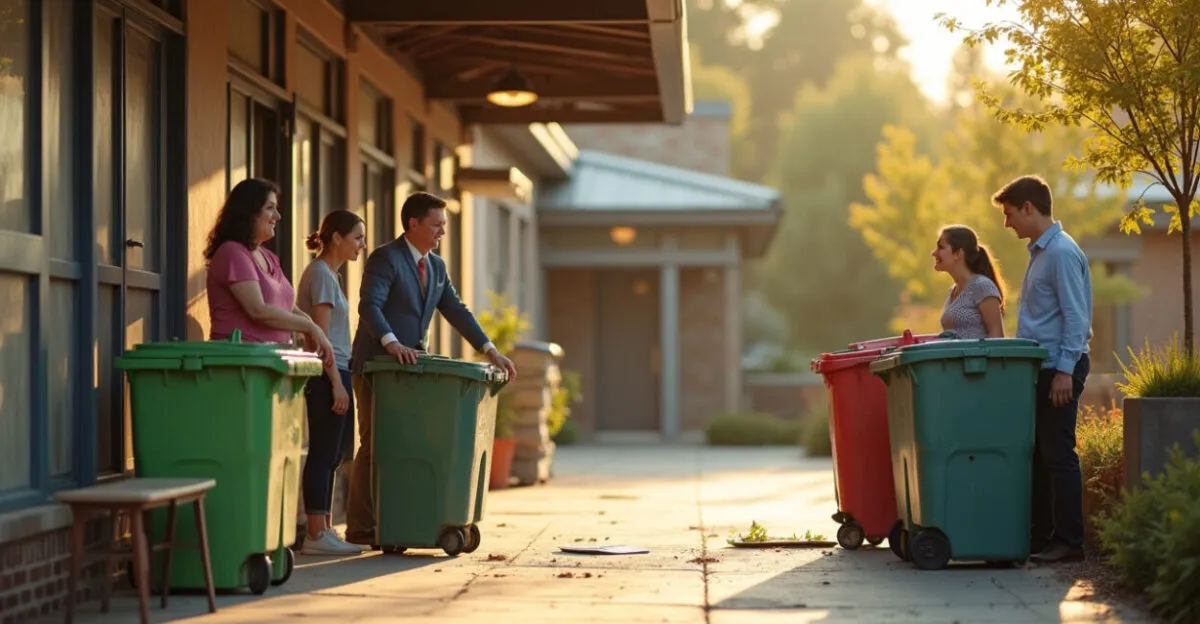
Sorting organic waste, recyclables, and trash works when the school makes it easy to know where things go. Clear signs, well-placed bins, and regular reminders matter more than a polished presentation. If the school community can’t tell the difference between recyclables and trash, the system fails at the source.
School Gardens and Composting
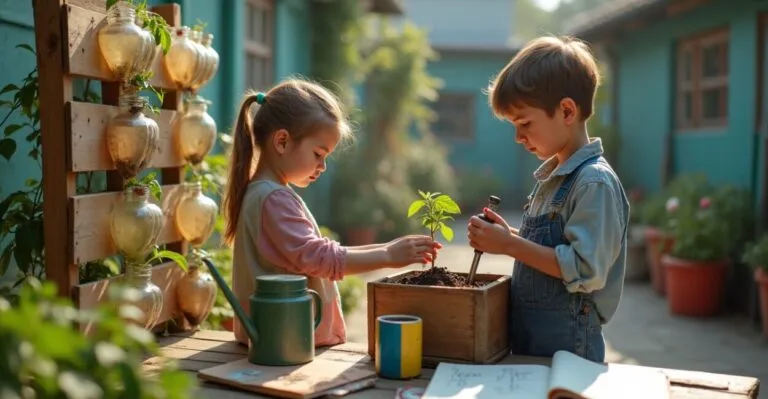
A school garden has educational value, but composting gives the project greater depth. Organic cafeteria waste can be turned into compost, creating a tangible learning cycle. For schools with limited space, vertical gardens, growing boxes, and compact composters can solve much of the problem.
Saving Water and Energy
Replacing bulbs with LEDs, installing faucet aerators, and fixing leaks often deliver quick results. The same goes for turning off lights and equipment when they’re not needed. Large schools should track consumption in a monthly spreadsheet; otherwise, waste can get lost in the total bill.
Read also: Sustainability at School: A Practical Implementation Guide
A school garden isn’t just an educational decoration. When it’s connected to cafeteria meals, composting, and classroom lessons, it becomes a living environmental education lab.
Environmental Education Beyond the Classroom
Environmental education shouldn’t be limited to themed weeks. Brazil’s National Common Core Curriculum, known as the BNCC, is the national framework that guides school curricula and includes competencies related to citizenship, responsibility, and critical thinking. This makes it possible to weave the topic into science, geography, math, English, and even art without adding a separate class.
The most common mistake is treating sustainability as something students simply memorize. Schools get more out of it when they encourage students to investigate, compare data, and solve real problems. Tracking water use, for example, can teach students to read tables, interpret charts, and make decisions all at once.
Read also: 5 Steps for Schools to Adopt Sustainable Gardens
A Classroom and Schoolyard Example
At an elementary school, students compared the amount of trash produced over two weeks before and after a schoolwide awareness effort. The results were surprising: fewer recyclable items were ending up in the trash, but organic waste remained high. The takeaway was useful: the school needed to address cafeteria food waste, not recess. That’s how sustainability becomes concrete.
For more on the legal and educational framework, consult the Brazilian Ministry of Education’s BNCC materials and environmental education guidance from Ibama, Brazil’s environmental agency.
Engaging Students, Teachers, and Families
Without engagement, the project becomes the responsibility of just one department. At school, behavior changes through social reinforcement, not posters. That’s why the most effective strategy is to assign clear roles: students monitor initiatives, teachers connect the topic to coursework, families receive practical guidance, and administrators track results.
How to Share Responsibilities
- Students: Monitor waste sorting, water and energy use, and school campaigns.
- Teachers: Connect the topic to classroom activities.
- Support staff: Guide everyday cleaning, cafeteria, and waste-disposal routines.
- Administrators: Set goals, allocate resources, and track monthly metrics.
- Families: Reinforce habits at home and take part in occasional initiatives.
There’s an important trust issue here: not every school will be able to get the same level of family involvement. In some communities, families have other priorities, and asking them to attend events may lead to low turnout. In those cases, short messages, practical activities, and initiatives tied to everyday life work better than lengthy campaigns.
How to Measure Results Without Making Management More Complicated
If a school doesn’t measure results, it can only guess. And guesswork in an educational project often leads to frustration. Measurement doesn’t have to be complicated: regularly track a few indicators, such as monthly water use, electricity bills, the amount of paper purchased, and the volume of waste sent for collection.
Simple Metrics That Can Help
Metric
What It Shows
Recommended Frequency
Water use
Leaks and waste in restrooms, kitchens, and cleaning
Monthly
Energy use
Use of lighting, climate control, and equipment
Monthly
Paper purchased
Reliance on printing and circulation of paper notices
Monthly
Waste sorted
Sorting quality and community participation
Weekly or monthly
This data also helps with internal reporting. Administrators who can show lower consumption and better waste sorting have a stronger case for expanding the project. If the numbers aren’t improving, it’s easier to pinpoint what needs to change.
For information on public policy and general statistics related to education and the environment, consult the IBGE, Brazil’s national statistics agency, and the UNESCO resources on education for sustainable development.
What Often Goes Wrong and How to Avoid It
The biggest mistake is turning sustainability into a one-off campaign. Arbor Day events, science fairs, and hallway posters can help, but they won’t sustain change. The second mistake is investing in an expensive solution before addressing the basics: sometimes a school wants solar panels before fixing leaks and upgrading its lighting.
Another common problem is a disconnect between what the school says and how it operates. If the cafeteria sells too many single-use packages while the school promotes waste reduction, the project loses credibility. Experts also disagree about the ideal pace of implementation: some favor rapid changes to make an immediate impact, while others recommend small pilot programs to avoid burnout. Both approaches can work, depending on how ready the team is.
In school sustainability, the most polished project often lasts less than a simple one with consistent routines, clear goals, and assigned owners.
Next Steps to Turn the Idea Into Action
The best approach is to start small and stay consistent: choose one problem, set a clear goal, and establish a follow-up routine for 60 days. Then move on to another area. Schools that try to fix everything at once often fail to make lasting changes; schools that focus on one issue and track results build a culture of sustainability.
If you’re serious about making progress, the next step is to create a plan that includes an assessment, an action, an owner, and a metric. This prevents ad hoc efforts and helps keep the project going throughout the school year. To move beyond talk, the rule is simple: get the routine in place first, then think about expanding.
Frequently Asked Questions
What Does Sustainability at School Mean in Practice?
It means organizing how the school operates to reduce waste, use water, energy, and materials more efficiently, and teach these behaviors through everyday routines. In practice, that involves waste management, food, purchasing, maintenance, and lessons connected to sustainability. It’s not a separate project; it’s a way to run the school so its actions match its message. When done well, the results show up in both learning and costs.
Which Actions Deliver Results the Fastest?
The quickest wins are usually low-cost, high-impact measures: fixing leaks, replacing bulbs with LEDs, teaching proper waste sorting, and reducing unnecessary printing. These actions can change behavior without requiring major renovations. At many schools, the first real improvement comes when staff begin tracking monthly consumption. The key is consistency, not a big campaign.
How Can You Involve Teachers Without Overburdening Them?
The most effective approach is to work sustainability into existing activities instead of creating new tasks for every teacher. A math lesson can use water consumption data; a geography class can examine waste and the local area; an English class can explore persuasive writing through school campaigns. When the proposal respects teachers’ schedules, participation increases. The mistake is asking teachers to get involved without showing how the topic applies to their curriculum.
Can Sustainability Work in Small Schools?
Yes, and sometimes it can happen even faster than at larger schools because communication is simpler. In smaller schools, a change in habits can affect the entire daily routine quickly. The challenge comes when basic infrastructure, such as recycling pickup or routine maintenance, is lacking. Even so, schools can start with low-cost actions and make gradual progress. Size changes the scale, not the approach.
How Can You Tell Whether a Project Is Working?
A project is working when the metrics show improvement and the new behavior becomes part of the daily routine. Lower costs, less waste, better sorting, and more consistent student participation are practical signs of progress. If the numbers improve for a month and then slip, the initiative hasn’t become part of the culture. That’s why ongoing follow-up matters more than one-off events.
Artigos Relacionados
 A Practical Guide to School Sustainability Projects
 Practical Resources for Building Student Autonomy Into the School Day
 Play at School: Bringing Free Play Into the Early Childhood Curriculum
 Science Projects Integrated Into the Elementary School Curriculum
 Turn Your Coffee Shop Into a Profitable, Popular Coffee School
 Low-Cost School Sustainability Projects in 3 Weeks
