
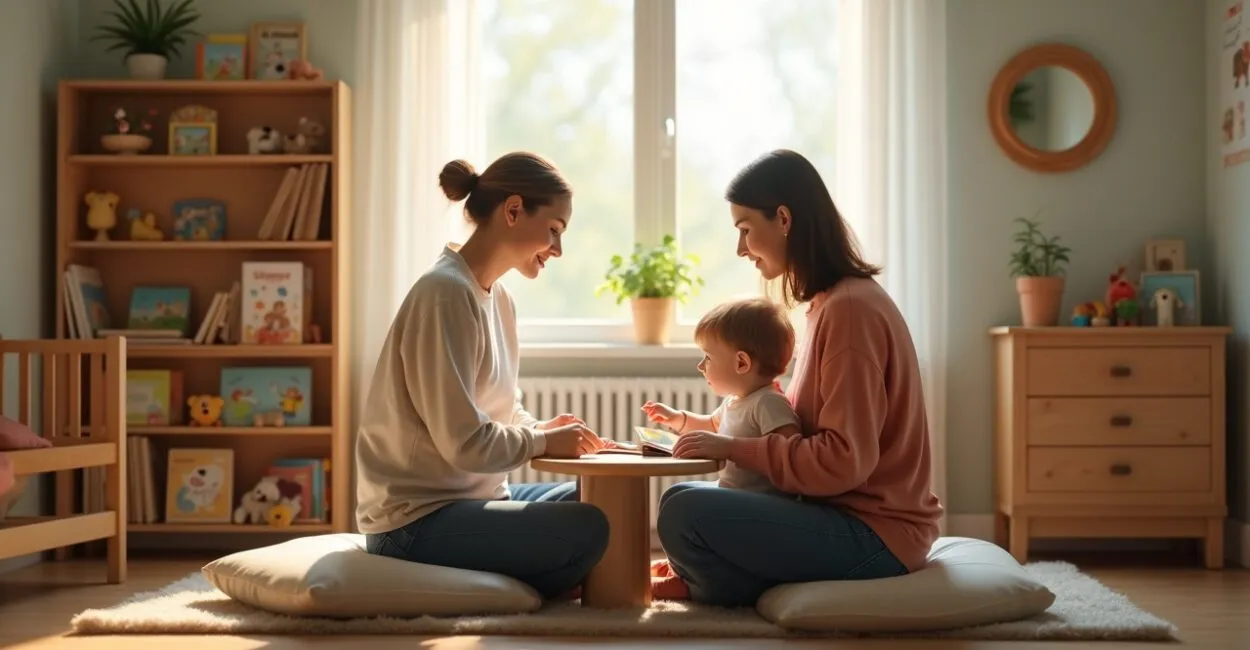
Language doesn’t “appear” overnight. It develops in the brain through listening, interaction, memory, attention, and meaningful repetition. Understanding the neuroscience of language development makes it easier to distinguish expected variation from signs that call for support or early evaluation.

This matters because the first few years of life are marked by high brain plasticity, and small changes in a child’s environment can have a significant effect on language acquisition. Here, you’ll learn how the brain learns to speak and understand, which milestones to expect at different ages, what can delay this process, and how families and schools can work together in practical ways.
The Essentials
- Children’s language development depends on the integration of hearing, joint attention, working memory, speech motor networks, and the brain’s social circuits.
- Language milestones should be monitored by age group, because persistent delays tend to show up as specific signs, not just “general impressions.”
- A responsive environment, child-directed speech, shared reading, and pretend play support language acquisition more consistently than passive screen time.
- Language delays can have various causes, including hearing loss, limited interactive stimulation, neurodevelopmental disorders, and family history.
- Early intervention works best when families, schools, pediatricians, speech-language pathologists, and, when needed, neurologists work toward clear, measurable goals.
Neuroscience and Language Development: What It Means in Practice
The neuroscience of language development explores how the brain organizes sound perception, meaning comprehension, and speech production throughout childhood. In practical terms, it explains why language depends on more than just “hearing words”: it also relies on social connection, repetition, adult responses, and the maturation of specific neural networks.
In practice, children learn best when language is presented in context: someone names what they see, responds to their gestures, builds on what they tried to say, and keeps exchanges short and frequent. This kind of interaction strengthens circuits involved in attention, auditory processing, and connecting sounds with meaning.
A Technical Definition, Made Simple
Technically, language development is the process of acquiring and refining receptive and expressive systems. “Receptive” refers to what a child understands; “expressive” refers to what they can communicate through gestures, sounds, words, and sentences.
Speech is only one part of this picture, because communication also includes intent, turn-taking, and the social use of language.
Language development depends on more than exposure to words. It relies on the quality of interactions, hearing ability, and the maturation of brain networks that turn sounds into meaning and meaning into communication.
Anyone who works in this field knows that two babies can hear the same number of words and have very different outcomes. The difference often comes down to how responsive their environment is: when an adult notices a child’s attempt, waits, responds, and builds on it, the brain gets a stronger signal that communication is worthwhile.
How the Brain Processes Language in the First Years of Life
The brain processes language through distributed networks, not a single “speech area.” Broadly speaking, temporal regions help us understand sounds and words, frontal areas contribute to planning and producing speech, and connections between these regions support the flow from listening to understanding and responding.
From Hearing to Meaning
First, the auditory system distinguishes sounds. Then the brain begins to recognize phonological patterns: the sound units that distinguish words. Through repetition and context, these sounds take on meaning and are used in real-life situations. This is a key part of language acquisition: children don’t learn words as a memorized list. They learn patterns, intentions, and relationships. That’s why gestures, facial expressions, and routines are so helpful in the early stages of children’s language development.
Brain Plasticity and Sensitive Periods
Brain plasticity is the brain’s ability to reorganize itself through experience. This ability is especially high in the first few years of life, giving language a kind of sensitive period for establishing phonemes, vocabulary, and rules for combining words.
This doesn’t mean it’s impossible to learn later; it means early childhood is the most favorable time.
There’s an important nuance: plasticity doesn’t mean “any kind of stimulation will do.” Passive exposure without interaction has limited impact. The brain learns much more through real exchanges in which children participate, make mistakes, repeat, and get immediate feedback.
To learn more about child development and neurodevelopment, see resources from the NICHD (the U.S. National Institute of Child Health and Human Development), as well as clinical guidance from the American Speech-Language-Hearing Association.
Key Language Development Milestones by Age

Language milestones serve as clinical and educational guideposts. They aren’t tests, but they can help show whether development is on track for a child’s age. When a milestone is consistently delayed, the pattern deserves attention—not vague comparisons with other children.
| Age range | What typically emerges | What to look for |
|---|---|---|
| 0 to 6 months | Eye contact, vocalizations, responses to voices, attention to sounds | Does the baby react to sounds? Sustain interaction? |
| 6 to 12 months | Babbling, turn-taking, gestures, response to their name | Do they point? Imitate sounds? Look for the source of a sound? |
| 12 to 18 months | First functional words, gestures used to communicate | Do they understand simple instructions? Try to communicate? |
| 18 to 24 months | Rapid vocabulary growth, combining two words | Do they put words together? Make steady progress? |
| 2 to 3 years | Short sentences, greater intelligibility, simple questions | Can family members and other people understand them? |
| 3 to 5 years | More complex sentences, simple storytelling, social use of language | Can they tell you about events? Understand longer instructions? |
Milestones That Often Matter Most
- Not responding to sounds or their name.
- Not pointing or using gestures to ask for things or show something.
- Not combining two words within the expected age range.
- Losing skills they had already acquired, such as words they used to say.
These milestones need to be considered in context. For example, a child with suspected hearing loss may seem “inattentive” when they’re actually having trouble accessing speech sounds. That’s why hearing evaluations are an early part of investigating language delays.
Factors That Support or Hinder Language Acquisition
Language acquisition depends on biological, environmental, and relational factors. Biological factors include hearing, neurological maturation, prematurity, family history, and neuropsychomotor development. Environmental factors include the quality of interactions, how often people talk with the child, and opportunities for the child to actively participate.
What Helps
- Child-directed speech using short, natural sentences.
- Shared reading with naming, pointing, and simple questions.
- Pretend play, imitation, and conversational turn-taking.
- Predictable routines, which make it easier to anticipate what comes next and connect words with actions.
What Can Hinder Development
- Undiagnosed hearing loss.
- Limited face-to-face interaction.
- Excessive screen time with little adult involvement.
- An environment that rarely responds to the child’s attempts to communicate.
- Neurodevelopmental conditions, such as autism spectrum disorder and intellectual disability, in some cases.
The main environmental factor that strengthens language isn’t the raw number of words a child hears; it’s the quality of interactive turn-taking: someone speaks, the child responds, and the adult adapts their response to what the child tried to communicate.
Experts differ on the exact impact of screens on speech development because it depends on a child’s age, the content, screen time, and adult involvement. Still, the safest guidance is clear: screens don’t replace human interaction in language acquisition.
In clinical practice, one detail stands out: many families believe their child “understands everything, but just doesn’t talk.” That can be true, but it may also mask a receptive language delay, which can be more serious than it appears. When comprehension is impaired, expressive speech is more likely to be delayed.
How to Support Language Development Through Neuroscience
In practice, supporting language means creating interactions that prompt the brain to listen, predict, make connections, respond, and reorganize. The best approach is simple: less interruption, more back-and-forth. Fewer strings of commands, more functional language in real-life contexts.
Strategies That Work at Home
- Name what your child is looking at. If they point to a dog, say, “That’s a dog. The dog is running.”
- Expand on what they say. If they say “water,” respond, “Do you want cold water?” or “The water’s all gone.”
- Use a purposeful pause. Say something, then wait a few seconds for your child to respond with a look, gesture, or sound.
- Read short books together. Interactive reading is more valuable than reading quickly without engaging with your child.
- Turn routines into language opportunities. Bath time, getting dressed, meals, and trips to the grocery store all build useful vocabulary.
What to Avoid
It doesn’t help to overwhelm children with long instructions, correct every utterance, or demand mechanical repetition. This often discourages participation. It also doesn’t help to anticipate everything they want, because they lose the chance to try to communicate.
Effective early intervention doesn’t have to start with sophisticated goals. It can begin with observable targets: responding to their name, pointing, building functional vocabulary, combining words, and better understanding simple instructions. In many cases, that alone can change a child’s trajectory.
Here’s a realistic example: a 2-year-old who used only gestures began attending sessions involving shared reading and guidance for the family. Within a few weeks, the parents started waiting for a response, naming everyday objects, and anticipating less. The most noticeable gain wasn’t “talking more”; it was starting to ask for things, make eye contact, and communicate with intention.
Warning Signs and When to Seek an Evaluation
Seek an evaluation if your child’s language is clearly behind expectations for their age, if they lose skills, or if their comprehension seems far below what you’d expect. You don’t have to wait for “absolute certainty” before looking into it; when it comes to child development, timing matters.
Signs That Deserve Attention
- No babbling in infancy.
- Not responding consistently to their name.
- Not pointing to show interest.
- Not using functional words by around 18 months.
- Not combining two words by around age 2.
- Losing speech, eye contact, or social skills they had already acquired.
The pediatrician is usually the first point of contact. They may refer you to a speech-language pathologist and request a hearing evaluation. In some cases, a pediatric neurologist may be involved to determine whether the delay is part of a broader neuropsychomotor development condition. The key is not to dismiss everything as normal without a sound reason.
The CDC’s Act Early program brings together developmental signs that help families and professionals track milestones more objectively. In Brazil, monitoring child development through primary care is also an important resource in both the public and private healthcare systems.
When comprehension, gestures, and speech are all delayed, a developmental issue is more likely than simple individual variation.
Neuroscience, School, and Family: How to Work Together
The best outcomes happen when schools and families use the same approach to supporting language. Children don’t need identical messages in every setting, but they do need consistency: someone names things, someone waits, someone encourages attempts, and someone tracks real progress.
The Family’s Role
Families provide the strongest foundation for language because they’re part of children’s everyday routines. Adults at home can turn meals, bath time, play, and outings into opportunities to communicate. When this becomes a habit, interactions increase without making language practice feel like an artificial task.
The School’s Role
School provides opportunities for peer interaction, turn-taking, storytelling, and social language. Attentive teachers notice early who speaks less, who has trouble understanding, who doesn’t join group activities, and who struggles to sustain a conversation. That perspective is valuable because many difficulties become more apparent in a group setting.
The best approach is simple: define observable behaviors. Instead of just saying “the child is delayed,” record whether they respond to their name, name objects, make requests, understand instructions, and talk about something they experienced. This makes intervention much more precise.
For a broader perspective on child development and monitoring policies, the World Health Organization offers reference materials on early childhood development that can help align expectations and practices.
Frequently Asked Questions About Language Development
How does neuroscience explain language development?
It explains how brain networks involved in hearing, attention, memory, receptive language, and expressive language work together to turn sounds into communication. The brain learns language through interactive exposure, meaningful repetition, and social responses. Without interaction, learning tends to be weaker.
What language milestones should children reach at different ages?
Milestones change with age, but they include babbling, gestures, responding to their name, first words, combining two words, and using more complex sentences throughout the preschool years. The most important thing is to look for steady progress. If development stalls or skills are lost, it’s worth looking into.
What can delay language development?
Hearing loss, limited verbal interaction, excessive screen time without adult involvement, prematurity, neurodevelopmental differences, and family history can delay language acquisition. In some cases, language delays occur alongside motor, cognitive, or social difficulties. That’s why a comprehensive evaluation is important.
How can I support my child’s language development at home?
Talk with your child during daily routines, name what they see, pause to give them a chance to respond, read books together, and build on what they try to say. Support works best when it’s brief, frequent, and connected to real-life situations. Correcting too much often does more harm than good.
When should I see a speech-language pathologist or pediatrician?
Seek help if your child is clearly behind on milestones, rarely responds to their name, doesn’t use gestures, has few words for their age, or loses skills they had already acquired. The pediatrician is usually the first point of contact, and a speech-language pathologist can assess language, speech, and communication in more depth. If a neurological or broader developmental cause is suspected, a pediatric neurologist may be needed.
Does screen time interfere with speech development?
It can when it replaces human interaction, because language develops through social exchanges, not passive consumption. The impact depends on the child’s age, screen time, and adult involvement. For babies and young children, real conversation, play, and shared reading should come first.
%%AGPTRH9%%
What to Do Now to Support Your Child’s Language Development
The best use of neuroscience here isn’t to create anxiety; it’s to turn observation into action. If your child is on track, support their environment with conversation, reading, and play. If you notice signs of delay, document milestones, seek an evaluation, and start early intervention rather than waiting for things to “work themselves out.”
The smartest next step is to look beyond subjective impressions: for two weeks, write down what your child understands, says, points to, imitates, and asks for. This record can help you decide much more accurately whether family guidance is enough or whether it’s time to seek a specialized evaluation.
Artigos Relacionados
 Supporting Oral Language Development: Ages 0–5
 Child Language Development From Birth to Age 6: Stages and How to Encourage Speech
 Neuroscience and Child Learning: 7 Practical Strategies
 Neuroscience-Based Study Strategies for Better Focus
 Neuroscience Applied to Learning
 Neuroscience in Early Childhood Education: How Children’s Brains Learn and How to Apply This Knowledge to Maximize Learning
