
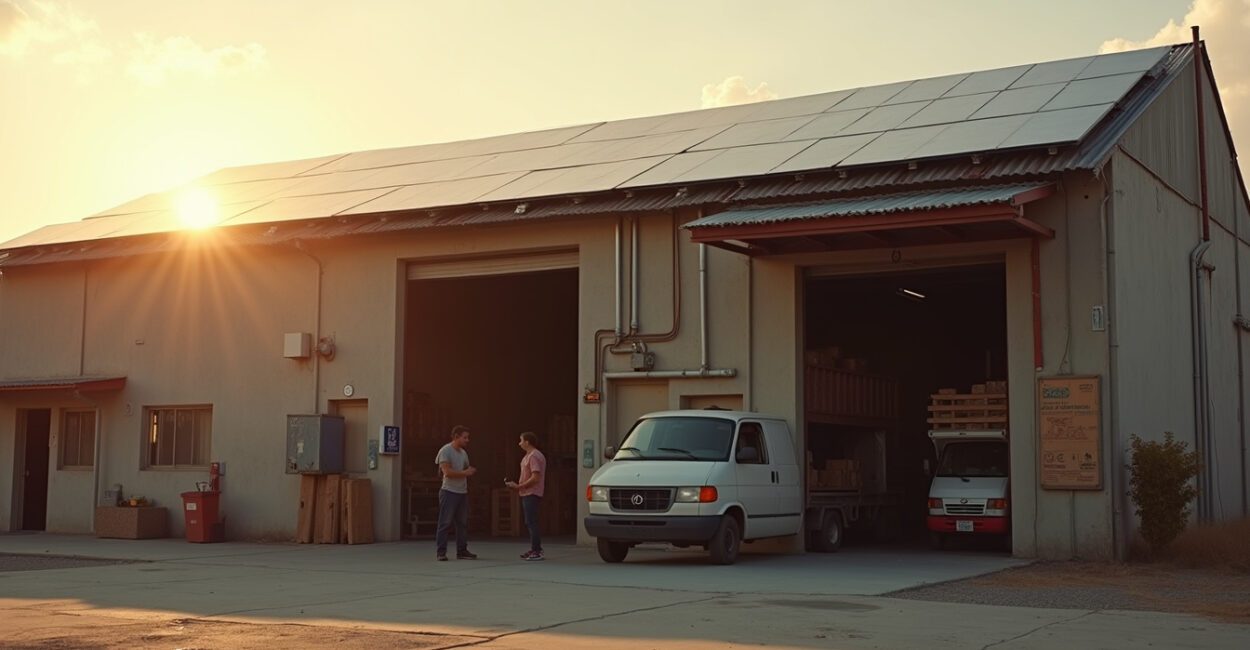
A high electric bill alone doesn’t mean installing solar panels is a good investment. Solar energy for small businesses tends to make sense when usage is predictable, there’s adequate space, and the estimated savings justify the total cost, net metering rules, and cost of capital. Bakeries, clinics, and salons that use equipment during the day often make better use of on-site generation. A business that’s about to relocate or expand, however, should factor those changes into its analysis before signing a contract.
At a glance
- Most common setup: a grid-connected photovoltaic system.
- What determines system size: usage history, time-of-day consumption, and site conditions.
- Energy credits: governed by Brazil’s Electricity Compensation System (net metering rules).
- Costs to compare: equipment, installation, grid connection, financing, and operation.
- Recommended approach: compare proposals based on the same generation and savings assumptions.
When solar energy is worth the investment for small businesses
It tends to be worthwhile when a business has consistent usage, can install a properly sized system, and expects to remain at the property long enough to recoup its investment. The decision depends on usage patterns, electricity rates, roof or land conditions, net metering rules, and financing costs. A high bill helps make the case, but it isn’t enough on its own.

Before requesting quotes, check whether these factors make the project a good fit:
- The business has at least 12 months of bills to show seasonal variations.
- A significant share of electricity use occurs during peak solar generation hours.
- The property has usable space with minimal shading and suitable structural conditions.
- There’s little chance of relocating or significantly changing electricity use in the next 12 to 24 months.
- The business can afford the upfront cost or payments without disrupting operations.
The system size should match the business’s operations. A bakery that runs ovens and refrigerators throughout the workday has a different usage profile from a store that uses most of its electricity at night. Keeping track of small operational changes, such as adding equipment or extending business hours, can also prevent you from basing the system design on a routine that’s about to change.
How to assess electricity use and size the system
Sizing a photovoltaic system means calculating the capacity needed to meet a given usage profile, based on estimated local generation and system losses. Put simply, the calculation determines how many panels and inverters fit your operations without assuming the entire roof can generate electricity.
Gather the last 12 months of utility bills, the property’s location, business hours, and a list of equipment that will be added or removed. Your utility provider and rate plan also matter: some bill components don’t necessarily go away when you earn energy credits. To understand what drives demand, track electricity use by time of day and by equipment, rather than relying on the monthly average alone.
Generation depends on local solar irradiance, panel orientation and tilt, shading, temperature, dirt, and electrical losses. An annual estimate doesn’t mean the system will produce the same amount every month. Ask the provider for a monthly projection and the assumptions behind it, including usable area and grid connection limitations.
How much energy do 10 solar panels generate per day?
There’s no single daily output figure. Generation depends on each panel’s capacity, location, time of year, and installation conditions. To estimate it, you need those details and a local simulation; counting panels without knowing their capacity won’t tell you how much electricity they’ll produce.
Return on investment: costs, savings, and payback period

The payback period estimates how long it takes for accumulated savings to cover the investment. A simple calculation that divides the system price by monthly savings is useful only for an initial screening: it doesn’t account for financing, maintenance, panel degradation, rate changes, or bill charges that remain.
Compare at least three scenarios: a conservative one with lower generation and higher financing costs; a baseline one with well-supported assumptions; and an optimistic one that you don’t treat as a guarantee. For each scenario, consider the total investment, net savings, recurring costs, contract terms, and any plans to expand the business. Cost of capital matters, too; understanding how interest rates affect other investments can help you compare installation with other ways to use your cash.
Read also: Small Garden: A Quick, Easy Way to Get Started
For example, imagine a business whose simulation shows monthly savings that would cover its loan payments, but leaves out grid connection costs and the portion of the bill that isn’t offset. Once those items are added to the spreadsheet, cash flow could be negative for the first few years. The payback period is useful only when the assumptions are clear.
How much does a solar system for 10,000 kWh per month cost?
You can’t get a reliable price based on monthly usage alone. Location, electricity rates, required capacity, structural conditions, grid connection, and contract scope all affect the cost. Request up-to-date technical proposals that detail equipment, installation, permitting and approval, any required upgrades, and payment terms.
How much does a 500 kW solar project cost?
Pricing varies based on location, project type, mounting structure, equipment, and the work required for grid connection. Ask for a quote that specifies capacity, full scope, and generation assumptions; a standalone price per kilowatt isn’t enough to compare proposals reliably.
Read also: Sustainable Entrepreneurship in 2026: 7 Practices That Deliver Results
System-sizing mistakes that undermine savings
An undersized system produces less than the business expects; an oversized one ties up money in capacity that may go unused. Both problems start when calculations rely on a single bill or the roof’s total area without accounting for usage patterns, seasonality, shading, and expansion plans.
One detail that’s often overlooked is the effect of shade at specific times of day: a water tank, chimney, or neighboring building can reduce the output of part of the array. The proposal should explain how the provider assessed the site and factored in losses. It’s also worth checking the maintenance and cleaning plan rather than assuming the panels never need inspection.
Before approving the project, ask the company to show monthly output and explain what happens if your electricity use changes. An estimate that only works with maximum generation or constant usage should be reviewed.

Net metering rules and costs that remain
Grid-connected distributed generation uses Brazil’s Electricity Compensation System, a net metering program: excess electricity can earn credits under the rules that apply to the utility account. That doesn’t mean the entire bill is offset. Law No. 14,300/2022 established Brazil’s legal framework for the sector, and how it applies depends on the application date, project classification, and utility regulations.
In 2026, new projects should be assessed under the applicable transition rules and the gradual charges for using the grid, such as the so-called Fio B (a grid-use charge), where applicable. ANEEL, Brazil’s electricity regulator, publishes information on regulation and distribution. Also confirm the unit’s access, metering, and compensation requirements with your utility. EPE’s National Energy Balance, an overview of Brazil’s energy sector, provides useful context but doesn’t replace an analysis of your business’s specific electricity rate.
Some charges may remain on the bill, including minimum charges, contracted demand, or components that can’t be offset, depending on the connection type and applicable rules. The calculation should show savings based on the actual bill, not assume every charge disappears.
How to compare financing, contracts, and providers
Compare proposals based on the same reference usage, system capacity, and equivalent generation assumptions. A low-cost offer may exclude electrical upgrades, mounting structures, grid connection, or monitoring, while another may include them. Also check warranties for panels and inverters, installation timelines, post-installation support, and who is responsible for obtaining utility approval.
Item
Proposal A
Proposal B
Capacity and equipment
Models and total capacity specified
Models and total capacity specified
Estimated generation
Monthly estimate and assumptions provided
Monthly estimate and assumptions provided
Scope
Installation, connection, and upgrades described
Installation, connection, and upgrades described
Financial terms
Down payment, installments, interest, and total cost
Down payment, installments, interest, and total cost
Warranties and support
Terms and responsible parties identified
Terms and responsible parties identified
When financing solar energy for your business, compare the total cost of financing and payment schedule with estimated savings in a conservative scenario. A consortium plan, a loan, and paying upfront all have different risks and costs; no option is best for every business. Check whether the contract explains what happens if grid connection is delayed or generation falls short of the estimate.
Use this as a reminder to check whether the proposed solution works for your actual routine: who monitors the system, how are equipment problems handled, and what services are included? Also review references, company registration, and scope clarity before signing.
Should you wait for electricity rates to rise before investing?
There’s no way to guarantee how rates will change. Make your decision by comparing the system’s cost today against different scenarios for usage, electricity prices, and financing, rather than relying on a specific rate increase to make the investment pay off.
If your business has stable daytime usage and the conservative scenario is already acceptable, waiting could mean putting off potential savings. If the project only works with much higher rates, cheap financing, or zero generation losses, revisit the numbers before committing your cash. EPE’s National Energy Balance provides context on Brazil’s energy mix and consumption, but it doesn’t predict the bill for a specific business.
The next step is to gather 12 months of bills, note planned operational changes, and request proposals with comparable scopes and assumptions. Then calculate net returns, including financing, grid connection, maintenance, and bill components that will remain.
Frequently asked questions
Does solar energy eliminate a business’s electric bill?
Not necessarily. Net metering may lower the amount due, but minimum charges, contracted demand, and charges that can’t be offset may remain, depending on the project classification and applicable rules.
Can you install solar panels on a rented property?
Yes, but review the lease and get the property owner’s permission before starting work. You should also plan for what will happen to the system if your business moves out.
How long does a photovoltaic system last?
Service life depends on the equipment, installation, and operating conditions. Check panel performance warranties, product warranties, and inverter warranties separately, since their terms and coverage may differ.
Is starting a solar energy company worth it?
It may be worthwhile for someone who sees local demand and can build out sales, engineering, installation, and after-sales service. The decision requires market research and working capital; growth in the sector alone doesn’t guarantee profitability.
Artigos Relacionados
 Solar Energy for Small Businesses: When It Pays Off
 Sustainable Packaging for Small Businesses: Is It Worth It?
 ESG Checklist for Small Businesses: Essential Steps
 How to Reduce Waste in Small Businesses: A Practical Guide
 Sustainability for Small Businesses
 Solar Energy or Energy Efficiency: Which Pays Off?
