
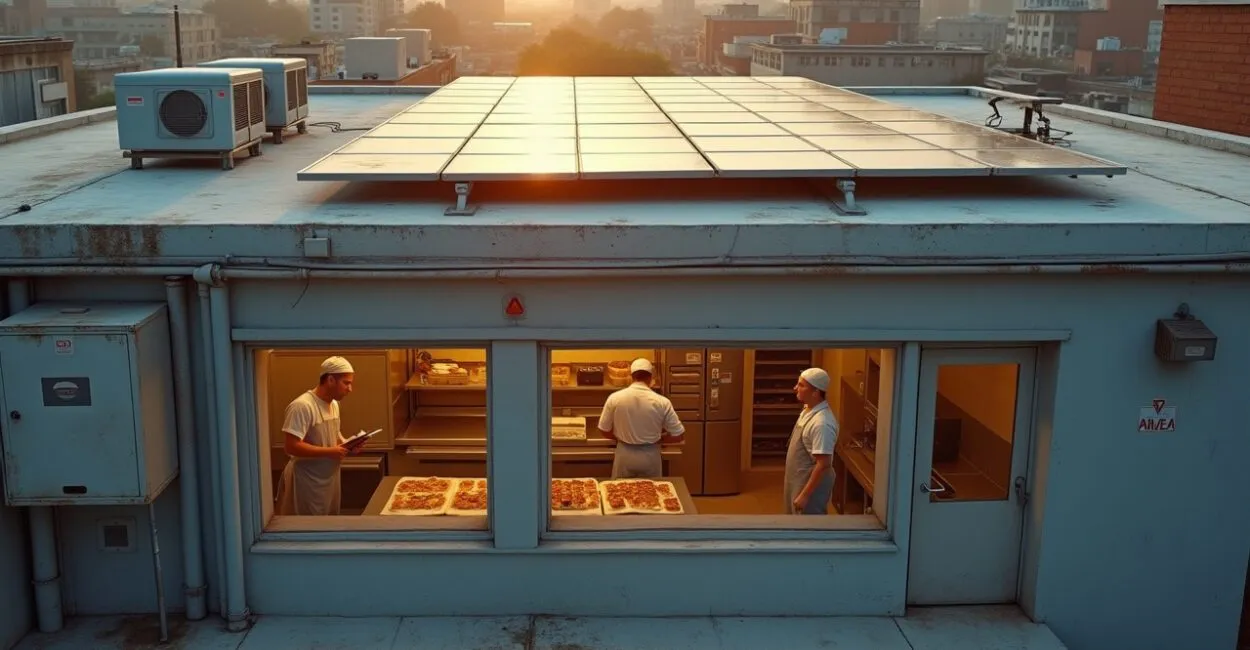
Investing in solar energy for small businesses often makes sense when electricity bills have become a major fixed expense and the property has predictable daytime energy use. The point isn’t simply to “put panels on the roof”; it’s to reduce reliance on the grid, protect profit margins, and shorten the time it takes to earn back your investment.
In practice, the difference between a good project and a bad one comes down to usage patterns, available space, and utility rates. This article explains when solar power makes financial sense, how to estimate real savings, and what to consider before signing a proposal.

The Essentials
- Solar power pays off sooner for businesses with high daytime energy use, such as bakeries, grocery stores, clinics, and offices.
- Not every roof is suitable: shading, orientation, structural condition, and roof age all affect the final results.
- Savings depend on more than the solar panels; the inverter, ANEEL approval, the “wire B” grid charge, and maintenance all factor into the equation.
- A good project isn’t the cheapest one. It’s the one that estimates output, losses, payback, and system lifespan realistically.
- In some cases, the numbers don’t add up, especially when energy use is low, irregular, or concentrated at night.
Solar Energy for Small Businesses: When the Investment Really Makes Sense
Technically speaking, a solar photovoltaic system converts sunlight into electricity using solar panels, an inverter, and a connection to the grid or batteries. Put simply: you generate some of your own electricity and buy less from your utility.
For small businesses, the right question isn’t “Is it worth it in theory?” but “When do the numbers work comfortably in my favor?” That’s usually the case when a business operates during regular business hours, faces high electricity rates, and can use much of the power it generates at the same time it generates it.
Business Types That Often Benefit Most
- Retail shops and neighborhood grocery stores: Steady energy use, refrigerators running all day, and bills that are sensitive to utility rates.
- Bakeries and restaurants: Heavy use of equipment, ventilation, and air conditioning, often during the day.
- Clinics, medical offices, and professional offices: Consistent loads, predictable usage, and little seasonal variation.
- Auto shops and small manufacturers: Machinery, lighting, and air compressors can provide a solid base of energy use to offset.
The best setup for solar isn’t necessarily the one with the highest overall energy use. It’s the one with predictable daytime consumption and enough usable space to install the system without expensive construction.
There’s an important caveat: a business can spend a lot on electricity and still be a poor fit. If most of its energy use happens at night, the system will send power to the grid during the day and rely on regulated net metering credits, which changes the payback period.
The numbers may still work, but the payback period will be longer.
How to Calculate Payback and Savings in Practice
A sound calculation starts with your electricity bills for the past 12 months. They show average usage, seasonal patterns, contracted demand, taxes, and delivery charges. Without that information, any estimate is just a guess.
The calculation usually considers four key variables: monthly usage in kWh, estimated system output, the cost per kWh avoided, and the total installed price. Many projects pay for themselves in 3 to 6 years, but that can vary significantly depending on local rates and the percentage of energy used as it’s generated.
What Goes Into the Payback Calculation
- Total installed cost of the solar system, including racking, the inverter, and engineering.
- Estimated monthly savings on the electricity bill, accounting for net metering credits.
- Ongoing costs, such as cleaning, occasional maintenance, and monitoring.
- Natural degradation of the panels over time.
Anyone in the industry knows the most common mistake is overestimating energy production and underestimating utility rates. The numbers look great on paper, but the cash flow doesn’t bear them out. For official guidance, check ANEEL, Brazil’s National Electric Energy Agency, for current rules on distributed microgeneration and minigeneration, since its net metering rules directly affect net savings.
A Quick Example for a Small Business
A clinic that uses an average of 2,500 kWh per month installs a system sized to generate about 2,000 kWh monthly. Rather than eliminating the bill, the system cuts a substantial portion of the expense while leaving charges and usage outside the system’s coverage. The result was a much lower, more predictable bill, which helped with cash flow. The real benefit came from combining daytime usage with high utility rates—not from promises of complete energy independence.
What to Consider Before Installing on a Roof or on the Ground

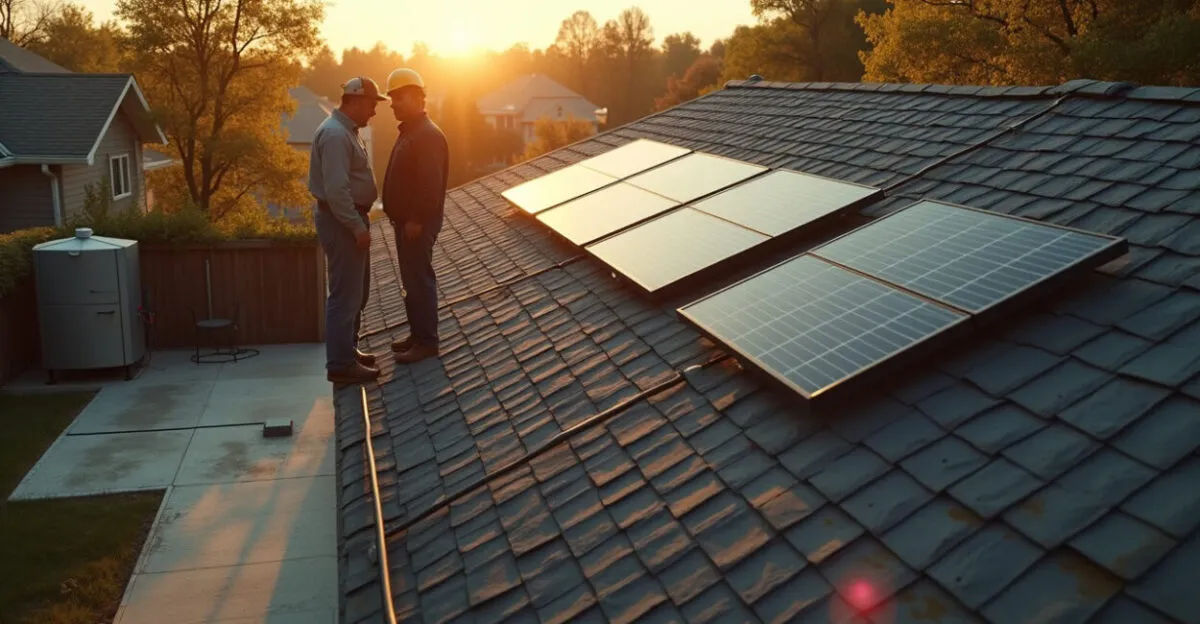
Start with the physical site. A leaky roof, aging structure, or heavy shading can turn a promising project into a headache. In some cases, a ground mount, flat roof, or secondary roof is a better option than trying to make the main roof work.
The second consideration is the electrical system. The electrical panel, breakers, grounding, and service entrance must be able to handle the system. If the business’s wiring is already makeshift, the work will be more complex and the cost will go up.
Read also: Solar Energy for Small Businesses: When Is It Worth Investing?
Technical Checklist Before Approving a Project
- Enough available space with no significant shading throughout the day.
- Suitable orientation and tilt for the region.
- Roof condition and remaining useful life.
- Electrical capacity of the service entrance and distribution panel.
- Monthly usage history to size the system correctly.
For regulatory context and connection requirements, visit ANEEL’s official page on Gov.br, Brazil’s government portal. This is especially important if the business plans to expand later. A system that’s sized incorrectly today could limit future expansion or require additional work.
A good solar project isn’t the one that covers the entire roof. It’s the one that delivers consistent output, is easy to maintain, and works with the business’s actual electrical setup.
Equipment, ANEEL Approval, and Net Metering: Common Pitfalls
A photovoltaic system is more than just solar panels. It includes an inverter, a string combiner box, cables, protective devices, mounting hardware, and, in some cases, remote monitoring. If any of these components is undersized, system performance suffers.
Read also: Sustainable Packaging for Small Businesses: Is It Worth It?
In practice, the inverter is often the most sensitive component because it converts the panels’ direct current into alternating current for use inside the business and delivery to the grid. It must be compatible with the installed capacity and the site’s voltage.
Key Terms to Know
- Distributed microgeneration: A smaller system, common in small businesses.
- Distributed minigeneration: A larger capacity category for somewhat bigger projects.
- Net metering credit system: A mechanism that applies electricity sent to the grid as credits against future bills.
- Wire B: A portion of grid costs that continues to affect part of the bill.
- ICMS: A state-level tax that can affect savings depending on the state and applicable rules.
Regulations changed significantly with Brazil’s Legal Framework for Distributed Generation, so it’s worth checking the official text of Law 14,300 on the Planalto website, Brazil’s federal government portal. This is one of those cases where the best project depends on the rules in effect—and those rules affect the rate of return. The impact isn’t the same in every case; it varies by utility, regulatory category, and usage profile.
How Much Can a Small Business Save Without Falling for Easy Promises?
Real savings show up on the bill, not in a sales pitch. Businesses with high daytime usage can see significant, recurring reductions. For businesses with low usage or usage concentrated at night, savings are still possible, but may be less than expected.
The biggest trap is being promised complete independence from the grid. With grid-connected systems, the business still relies on its utility at various times, including at night and on days when generation is lower. The benefit comes from net metering credits, not from disconnecting completely.
Business type
Likelihood of paying off
Practical note
Bakery, grocery store, clinic
High
Consistent daytime usage helps the system pay for itself.
Office with regular business hours
High to moderate
Good alignment between generation and usage.
Laundromat or auto shop
Moderate
Depends on peak demand and available space.
Nighttime business
Low to moderate
Payback may take longer because usage and generation don’t align as well.
For a more technical look at system sizing and solar output in Brazil, compare your estimates with resources from organizations such as CEPEL, Brazil’s Electric Energy Research Center, which publishes studies and references for the electric power sector. These materials can help you avoid generic online estimates that often ignore system losses, orientation, and local climate.
Risks, Maintenance, and Limitations Few People Explain Clearly
Every system has limitations. Panels degrade over time, inverters have a shorter lifespan than panels, and dirt reduces performance. In areas with dust, salt air, or lots of organic debris, cleaning has a bigger impact on results.
There’s also financial risk. If the business plans to move soon, the investment may become less attractive. The same applies to leased properties without clear permission from the owner: the project may be legally uncertain.
When the Numbers May Not Work
- The business will move within a few years.
- Energy use is low and irregular.
- Buildings, trees, or parapet walls cast heavy shadows.
- The roof will need repairs soon after installation.
- The proposal leaves out ANEEL approval, electrical upgrades, or maintenance.
This is where many people get disappointed: the technology works, but the circumstances aren’t right. I’ve seen technically sound projects that didn’t work operationally because the business moved soon after installation. Solar energy makes sense for small businesses when the decision accounts for how long they’ll stay at the location and how predictable their revenue is.
How to Make a Confident Decision Before Signing Any Proposal
The smartest approach is usually to compare three scenarios: keep things as they are, invest in a full system, or start with a smaller project and expand later. This helps prevent oversizing and reduces the chance of regret.
If a proposal doesn’t include estimated monthly output, payback period, assumptions, and the impact on your bill, be wary. A serious proposal shows the numbers, scenarios, and limitations. A weak one sells expectations.
- Request an analysis of the past 12 months of electricity bills.
- Confirm usable space, shading, and structural condition.
- Require a detailed project specification listing equipment and warranties.
- Confirm the utility’s approval timeline.
- Compare at least two system-sizing scenarios.
The best next step isn’t to rush into a purchase; it’s to validate the project against actual energy use, available space, and regulatory requirements. When those three factors align, solar energy can help protect profit margins—not just add another equipment purchase.
Frequently Asked Questions About Solar Energy for Small Businesses
How Long Does It Take for the System to Start Saving Money?
Savings usually show up on the first bill after the system has been approved and connected to the grid, but the full cycle depends on the utility and the meter-reading date. The approval, installation, and inspection process takes longer. Once the system is operating, savings reflect monthly energy use and generation, which vary with weather and seasonal patterns.
Can a Small Business Finance a Solar System?
Yes, and financing can significantly change the feasibility analysis. Instead of paying upfront, the business compares the loan payment with the monthly savings on its electricity bill. If the payment is less than the savings, cash flow improves from the start. If it’s higher, the investment is less attractive and the system size may need to be reconsidered.
Does the Roof Need to Be in Perfect Condition Before Installation?
It doesn’t have to be new, but it must be structurally sound and not in need of repairs soon. If there are leaks, broken tiles, or corrosion, it’s best to address them before installing the solar panels. Installing first and repairing later almost always costs more because removing and reinstalling the panels adds time and expense.
Does Solar Energy Eliminate the Electricity Bill Entirely?
No. With grid-connected systems, the business still pays part of the bill, including basic service charges, grid-related fees, and items that aren’t fully offset by credits. Savings can be substantial, but “zeroing out the bill” is misleading in most cases. The real goal is to lower total energy costs and make them more predictable.
What’s the Biggest Mistake When Buying a Solar System for a Business?
The biggest mistake is choosing a system based on price without checking its size and project quality. A cheap system may generate less power, age poorly, or rely on substandard installation. What matters in practice is the combination of energy use, usable space, equipment, utility approval, and expected payback—not just the initial price.
Artigos Relacionados
 Solar Energy or Energy Efficiency: Which Pays Off?
 How to Reduce Waste in Small Businesses: A Practical Guide
 Sustainability for Small Businesses
 Low-Cost Solar Panels: Lower Your Energy Bill and Pay Back Your Investment Faster
 Renewable Energy: Why Solar Projects Fail Today
 Green Entrepreneurship for Small Businesses
