
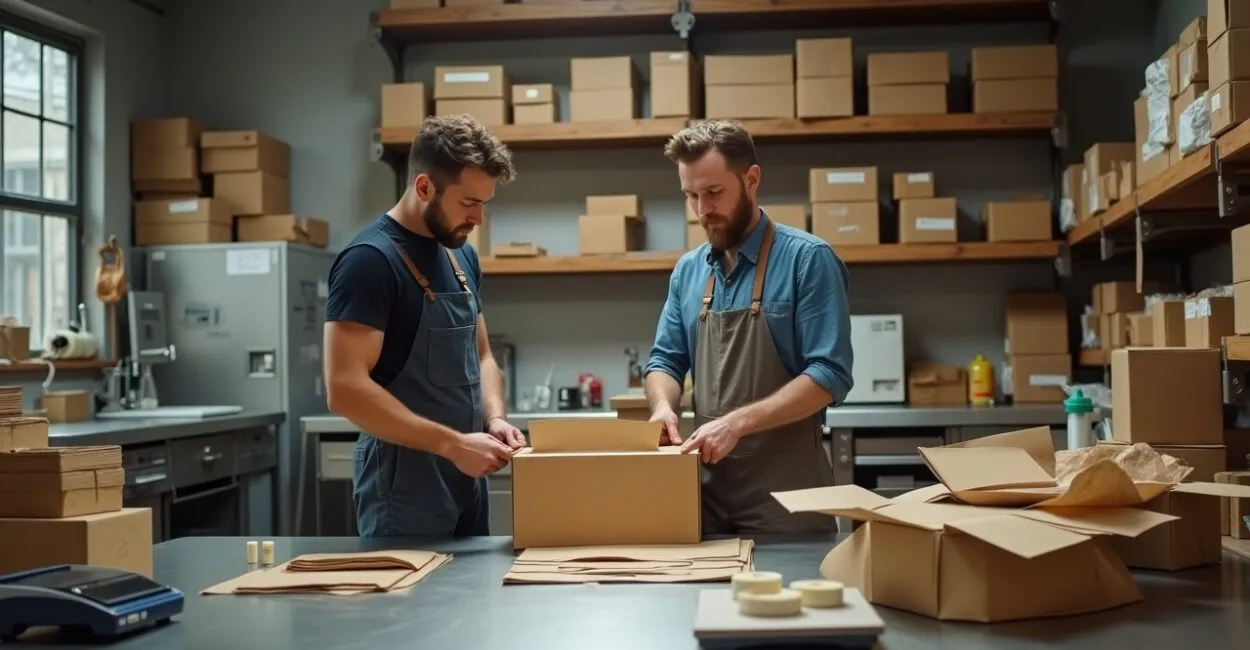
Changing your packaging can lower shipping costs, increase perceived value, and reduce waste—or have the opposite effect if the choice is only “greener” on paper. When we talk about sustainable packaging for small businesses, we mean materials and formats that reduce environmental impact without eating into margins or compromising the experience of opening, shipping, and storing products.
In practice, the difference between a smart choice and an expensive mistake comes down to balancing protection, weight, unit cost, local availability, and customer acceptance. This article explains how to compare materials, understand the trade-offs, and make decisions based on real criteria—not trends. The goal is to sell more with less impact, without romanticizing or demonizing any option.

What You Need to Know
- Sustainability in packaging doesn’t mean “using less material at any cost.” It means choosing the combination with the lowest total impact per order delivered.
- The “greenest” material isn’t always the best choice: poor protection and returns can wipe out any environmental benefit.
- Real cost includes shipping weight, damage-related losses, storage space, and brand perception—not just the price of the box.
- Businesses that do well with sustainable packaging tend to standardize formats, use less ink, and prioritize recyclable single-material packaging when operations allow.
- Customers see value when packaging conveys care, not when it looks improvised or flimsy.
Sustainable Packaging for Small Businesses: How to Choose Without Cutting Into Your Margins
The right decision starts with the packaging’s purpose. It needs to protect the product, make handling easier, and lower shipping costs before it communicates your brand. If the packaging fails to protect the product, the costs show up in replacements, reshipping, poor reviews, and extra work.
If it’s excessive, costs go up without a proportional benefit.
In practice, small businesses benefit when they treat packaging as part of their operations, not just a visual detail. This applies to e-commerce, food delivery, handmade cosmetics, gifts, and dry goods. The most useful rule is simple: packaging should withstand the most demanding part of your delivery route while using as little material as possible and offering an unboxing experience that fits the product’s price point.
Technical Definition and Practical Meaning
Sustainable packaging is designed to reduce environmental impact across its life cycle, taking into account raw material extraction, manufacturing, transportation, use, reuse, and disposal. Put simply, it gets the job done while using fewer resources, offering more opportunities for reuse, and being better suited to recycling or composting—when those options are actually available where your customers live.
“Sustainable” packaging only makes sense when the material, format, and logistics work together to reduce total impact. Changing the label without rethinking shipping, protection, and disposal usually shifts the problem instead of solving it.
Materials That Make Sense: Kraft, Recycled Paper, Corrugated Cardboard, and Bioplastics
The market often promotes “eco-friendly materials” as if they were one category. They’re not. Each option has an ideal use, a different cost, and a clear limitation. Kraft paper, recycled paperboard, corrugated cardboard, and bioplastics don’t compete on equal terms; they solve different problems.
Kraft and Recycled Paper
Kraft paper works well for void fill, shopping bags, envelopes, and inner wraps. Recycled paper tends to have strong brand appeal, but its strength and consistency can vary depending on its weight and fiber source. It’s usually a practical choice for lightweight, dry products. For items with sharp corners, exposure to moisture, or a risk of tearing, it needs reinforcement.
Corrugated Cardboard
It’s the most versatile option for real protection. If you ship products by mail or carrier, corrugated cardboard remains the backbone of your operation because it absorbs impact and stacks well. In many cases, it beats even “better-looking” options because it reduces damage. The key is choosing the right thickness without making the box walls unnecessarily heavy.
Bioplastics and Compostable Materials
These materials attract attention, but they require caution. Not every bioplastic is compostable, and not every compostable material has a suitable destination in local waste collection. The Ellen MacArthur Foundation offers reliable resources on circular economy and packaging system design, which can help explain why solutions need to account for what happens after use. For small businesses, bioplastics are worthwhile only when there’s a real functional need—for example, moisture protection for certain foods—and disposal makes sense for the customer.
Material
Best use
Main advantage
Common risk
Kraft paper
Void fill, bags, wraps
Appealing appearance and low weight
Low moisture resistance
Recycled paper
Lightweight boxes, tissue paper, cartons
Eco-friendly image and good printability
Quality variation
Corrugated cardboard
Shipping and protection
Protection and stackability
Excess bulk and shipping costs
Bioplastic
Specific applications requiring a barrier
Moisture resistance in some cases
End-of-life disposal is often misunderstood
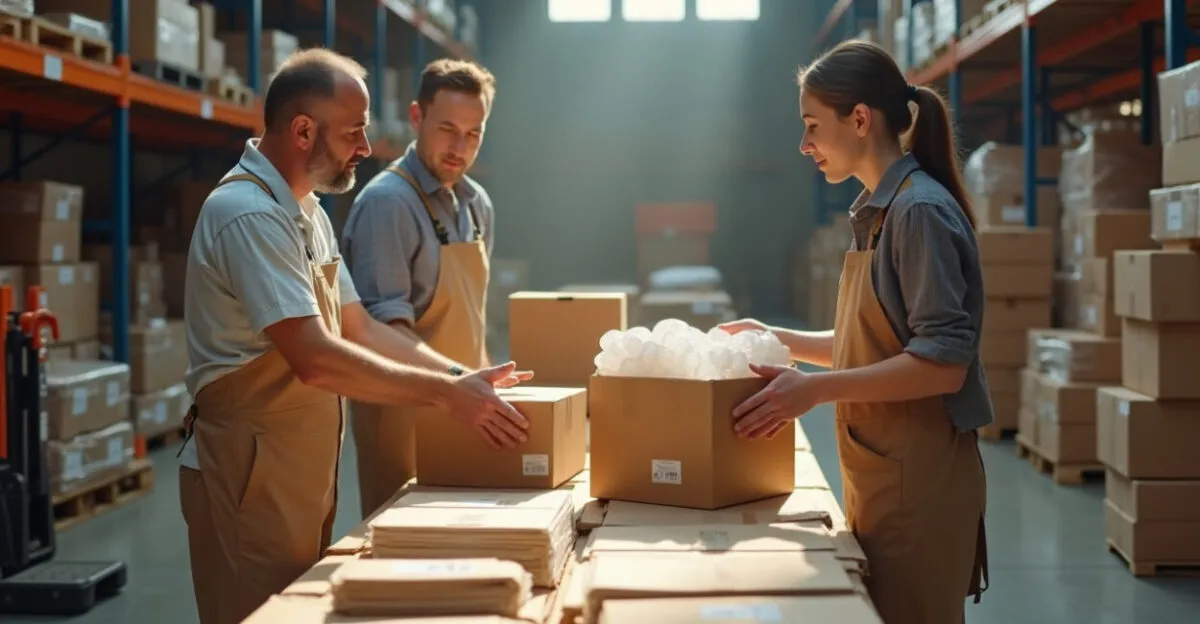
The Real Cost of Sustainability: Box Price, Shipping, and Losses

The most common mistake is comparing only the unit price. That skews the whole picture. Packaging that costs slightly more can end up being cheaper if it reduces damage, takes up less space, and lowers dimensional weight. This detail matters a lot for small operations because order volume isn’t yet high enough to absorb waste.
Where the Money Goes
- higher shipping costs due to excess volume;
- replacing products that are broken, dented, or leaking;
- inventory tied up in too many packaging SKUs;
- custom printing in batches that are too small;
- manual repackaging when standard packaging doesn’t fit.
The full picture becomes clear when you look at the entire cycle. I’ve seen cases where a “cheap” box increased the breakage rate by just 3%, but that was enough to wipe out the month’s entire savings. On the other hand, slightly better cardboard, with a standard size and less empty space, lowered shipping and replacement costs. Small businesses feel the impact more because they have little room for error.
The cheapest packaging from a supplier is rarely the cheapest option for the business. The true cost becomes clear when you add up shipping, losses, handling, and customer perception.
For information on regulations and recycling criteria, it’s worth following guidance from the Environmental Agenda of Brazil’s Ministry of the Environment (the federal environmental agency) and technical resources from IBRAM (the Brazilian Mining Institute) on waste management and recycling supply chains. Not every municipality recycles the same materials, and that changes the real cost calculation.
Read also: Solar Power for Small Businesses: When Does It Pay Off?
Customer Perception: When Packaging Becomes a Selling Point
Customers don’t read the technical label on your packaging. They notice its weight, texture, how it opens, the smell of the ink, its appearance, and whether it matches the product’s price. Eco-friendly packaging that looks flimsy gives the impression of a makeshift solution. A simple, cleanly cut design, on the other hand, immediately communicates professionalism.
Here’s a practical rule: packaging should look intentional. For a premium product, customers expect a clean finish, effective protection, and some indication of responsibility. For a fast-moving product, packaging should convey convenience and easy disposal. In either case, excessive varnish, lamination, or plastic can contradict the sustainability promise.
Read also: Recyclable Packaging: 5 Choices That Cut Costs and Waste
What Customers Actually Notice
- Whether the packaging protects the product without being excessive.
- Whether the brand’s message matches the finish.
- Whether disposal seems easy and obvious.
- Whether opening it feels thoughtful or like a poorly executed cost-cutting measure.
For example, a handmade soap brand that sells gift sets might use a recycled paper box with a minimalist label and paper fill. If the product arrives intact, customers are likely to see it as “carefully thought out.” But if that same packaging fails to protect the scent or keep out moisture, reviews will suffer. Sustainability without performance won’t sustain a good reputation.
What Works for Different Product Types
Different products call for different approaches. Whether a product is lightweight, fragile, liquid, or high-value changes the packaging choice entirely. The best approach is to identify the main risk before buying packaging. This helps you avoid overspending on protection you don’t need—or cutting corners where the risk is high.
Lightweight, Dry Items
For paper products, accessories, solid cosmetics, and small gifts, kraft and recycled paper work well when shipping distances are short. Standard-size boxes with minimal fill are usually enough. If you want to reinforce your brand’s value, a subtle one-color print can create a polished impression without driving up costs.
Liquids and Sensitive Products
There’s less room for error here. Bottles, oils, delicate candles, and foods at risk of leaking need secure closures, impact protection, and sometimes a moisture barrier. In some situations, compostable materials aren’t the best answer. The goal shifts from “as eco-friendly as possible” to “as balanced as possible.” This is where environmental claims have to account for the realities of shipping.
A Brief Real-World Example
A small coffee shop that sold whole beans decided to replace its custom rigid box with simpler corrugated cardboard packaging, using a label and paper tape. The product still arrived intact, unit costs fell, and inventory became leaner. The key was eliminating three box sizes that were rarely used. The improvement didn’t come from “being green”; it came from simplifying without sacrificing protection.
How to Build a Smart Purchasing Process
Packaging purchases shouldn’t start with a catalog. They should start with real orders. Before choosing a supplier, measure the product’s dimensions and weight, assess its fragility and exposure to moisture, and estimate average monthly volume. Then it makes sense to request samples, test compression, and simulate shipping. This process helps you avoid the trap of something that “looks great in the quote but fails in practice.”
A Practical Decision Checklist
- define the worst-case shipping scenario;
- standardize sizes as much as possible;
- choose recyclable materials accepted in your local market;
- test closures, stacking, and opening;
- compare total cost per order, not price per unit.
ABRE (the Brazilian Packaging Association) publishes useful resources on packaging trends, design, and performance. It can’t replace real-world testing, but it can help you avoid making decisions in the dark. One real limitation to keep in mind: what works well in a city with an organized recycling program may fail in another where disposal is confusing and reverse logistics are nearly nonexistent.
Where Sustainability Makes a Real Difference
There’s a point where the conversation stops being marketing and becomes a competitive advantage: when packaging reduces complexity. Fewer variations, less material, less wasted space, and less rework. That’s what improves margins and makes your brand story easier to tell.
In other words, the best choice is usually the simplest option that still provides good protection. Not every business needs compostable packaging. Not every business should use full-color printing. For many small operations, the most consistent gains come from standardizing boxes, using less fill, and choosing materials customers recognize as appropriate without needing a lengthy explanation.
For a small business, sustainability that works reduces operational waste first and improves brand perception second. Reverse that order, and costs usually go up.
Next Steps
If your goal is to sell more with less impact, the best next step is to run a 30-day test with two or three packaging options and track five things: damage, total cost, assembly time, customer feedback, and storage space. This kind of comparison quickly shows where the savings are real and where they’re just for show.
To make a confident decision, treat your choice as an operational experiment. Evaluate a supplier, request samples, simulate shipping, and compare the results against real order data. That’s how sustainable packaging for small businesses becomes more than a talking point and starts delivering real efficiency.
Frequently Asked Questions
Does Sustainable Packaging Always Cost More?
No. Unit prices may be a little higher for some materials, but total costs often fall when packaging reduces damage, takes up less space, and lowers billable shipping weight. For small businesses, the difference shows up quickly because every loss has a greater impact on cash flow. The mistake is comparing only the price of the box on the invoice and ignoring rework, returns, and inventory sitting unused.
What’s Usually the Safest Material to Start With?
For most small businesses, corrugated cardboard is the safest starting point because it provides good protection and is widely accepted for recycling. If your product is lightweight, kraft bags or wraps can complement your packaging. It’s best to avoid unusual solutions before you understand how your product holds up in transit. Performance comes first; differentiation comes later.
Is Bioplastic Worth It for a Small Business?
Sometimes, but not as a general rule. It makes sense when there’s a clear functional need, such as moisture protection or a specific product requirement. Otherwise, the environmental benefit can be unclear if there’s no suitable disposal option where the customer lives. The risk is paying more for a promise your business can’t fulfill at the end of the supply chain.
How Does Packaging Affect Customer Perception?
It matters more than many brands realize. Customers get a sense of consistency, care, and value when they touch the packaging, open the box, and see whether the product arrived well protected. A simple, clean, well-fitted solution conveys professionalism. But “green” packaging that arrives flimsy can create the opposite impression: poor cost-cutting and a lack of care.
How Can I Tell Whether Packaging Is Helping or Hurting My Margins?
Compare total cost per order, not just the unit price. Add up materials, shipping, losses, assembly time, and returns. If the packaging reduces breakage, takes up less space, and simplifies operations, it’s likely to pay for itself. If it creates more rework or complaints, even a cheap option becomes a hidden loss. You see the impact on margins in your daily operations, not in the catalog.
Artigos Relacionados
 How to Reduce Waste in Small Businesses: A Practical Guide
 Sustainability for Small Businesses
 Sustainable Hospitality Is Booming: Why Local Businesses Profit More
 Sustainable E-Commerce Packaging: 7 Options That Protect Products, Reduce Waste, and Control Costs
 Green Entrepreneurship for Small Businesses
 Local Chatbots for Sales: How to Deploy Offline AI Assistants and Increase Conversions at Small Businesses
