
Search intent: [B] Commercial.
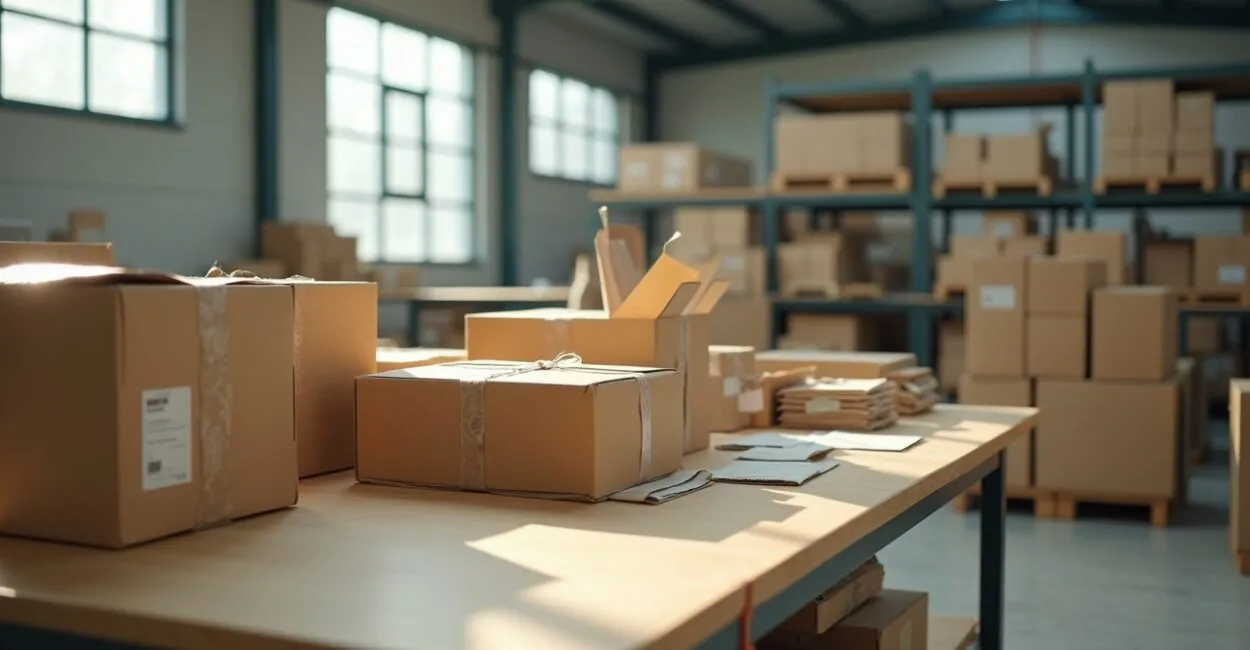
Changing the packaging for an online business can seem like a minor detail—until shipping costs rise, damage rates climb, and customers realize they bought a great product but received a poor experience. When we talk about sustainable packaging for e-commerce, the point isn’t to “use less material at any cost.” It’s to reduce impact without compromising protection, total cost, or perceived value.

In practice, sustainable packaging fulfills its logistical purpose while minimizing waste throughout its use cycle.
This matters because, in e-commerce, packaging becomes part of the brand. It protects products, communicates your values, organizes operations, and influences repeat purchases.
Here, you’ll find 7 practical options, criteria for making operationally sound choices, and the mistakes that can make a “green” solution expensive or cause problems during fulfillment.
What You Need to Know
- Sustainable packaging isn’t the “prettiest” option: it’s the one that balances protection, material reduction, recyclability, and cost per order.
- The biggest gains usually come from right-sizing packages and replacing excessive filler—not from immediately switching everything in your product lineup.
- Kraft paper, recycled paper, paper mailers, corrugated cardboard, and biopolymers solve different problems; treating them as interchangeable creates waste.
- For operations with high damage rates, the priority is reducing shipping damage before focusing on visual appeal.
- The best results come when packaging, picking, dimensional weight, and carriers are considered together.
Sustainable E-Commerce Packaging: How to Choose Without Sacrificing Protection or Margins
Technical definition: sustainable packaging is a packaging solution designed to minimize environmental impact throughout its life cycle, taking into account the origin of raw materials, material use, reuse, recyclability, compostability, and logistical efficiency. Put simply, it does its job without leaving excess behind.
That “without leaving excess behind” is what separates a marketing strategy from a real operational one.
Anyone who works in this field knows the decision shouldn’t start with the material, but with the risks associated with the order. A lightweight accessory, a garment, and an electronic device don’t need the same packaging design. In practice, many stores switch from boxes to “eco-friendly” mailers, only to discover too late that damage rates have gone up. Return costs wipe out any apparent savings.
What truly makes packaging sustainable isn’t just the material, but the relationship between protection, shipping volume, and post-consumer disposal.
To make a sound decision, use three filters: function, total cost, and end of life. Function tells you whether the item will arrive intact. Total cost includes materials, storage, dimensional weight, and rework. End of life considers recycling, reuse, or composting—without wishful thinking. If a solution requires special processing that your customer can’t access, its practical sustainability is limited.
Useful resources include the Brazilian federal government’s Ministry of the Environment, which brings together guidelines and policies related to waste management, and the Brazilian packaging industry association, which offers insight into industry trends and materials. For consumption and economic data that affect logistics and purchasing, IBGE, Brazil’s national statistics agency, is the most reliable source.
Corrugated Cardboard Boxes: The Most Versatile Foundation for Reducing Waste
Corrugated cardboard remains the most robust option for much of e-commerce because it combines strength, standardization, and broad recyclability. When you choose the right grade and size the box to fit the product, you reduce the need for filler and cut the dimensional weight of shipments.
This directly affects shipping costs, storage, and damage rates.
When It Works Best
It works especially well for fragile products, kits, items with sharp corners, and operations that need standardized fulfillment. It’s also a good fit for brands that want to add their visual identity without using laminated packaging that’s difficult to recycle.
Where It Often Falls Short
Problems arise when a store uses an oversized box “for safety” and fills the extra space with bubble wrap. In that scenario, packaging costs more, shipping volume increases, and environmental impact gets worse.
The real savings come from reducing dimensional weight, not just from buying a cheaper box.
One issue I see often: an order passes the bench test but arrives crushed because the team assembles boxes inconsistently. The right box needs to come with a template, a standard assembly method, and brief training.
Without those, error rates climb during the busiest shifts.
The right box isn’t the strongest or the cheapest one. It’s the one that protects the product with the least excess material and the lowest possible shipping volume.
Paper and Kraft Mailers: A Lightweight Option for Less Fragile Items

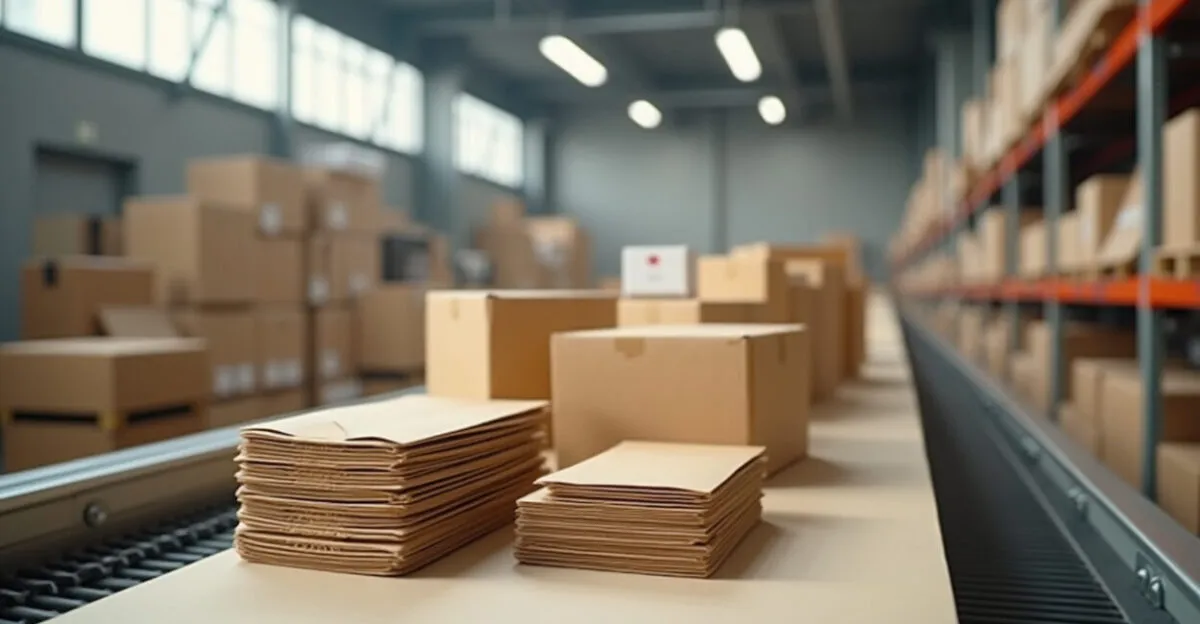
Paper mailers, kraft paper, and padded versions made with recycled paper are good choices for orders at low risk of physical damage. They work well for apparel, stationery, compact cosmetics, and accessories that already have their own inner packaging. The benefits are lower weight and simpler disposal for customers.
The Real Benefits of This Option
The main benefit is operational: less material, less storage space, and less assembly time. In high-volume operations, that simplicity eases picking bottlenecks. Many customers also see paper mailers as a clean, sensible choice for brands that communicate environmental responsibility.
The One Thing You Can’t Ignore
If there’s moisture, friction, or a protruding edge, the mailer may not hold up during shipping. This type of packaging works well when the product already has internal protection and the carrier has a low rate of damage from compression. If your situation is the opposite, it’s a risky choice.
For clothing orders, for example, paper mailers can replace boxes in many situations. But for sneakers in their original retail box, switching entirely to a mailer could ruin the presentation and increase the risk of crushing. Not every solution works for every product—it depends on the item’s physical characteristics.
Read also: Funding for Sustainable Businesses: Where to Find It
Recycled Paper Fill and Shredded Paper: Less Plastic Void Fill
Recycled paper fill, shredded paper, and paper honeycomb wrap can replace the bubble wrap or air pillows traditionally used to fill empty space. The goal isn’t to fill the box for its own sake, but to secure the product and prevent impact and vibration. In packaging engineering, this is called controlling internal movement.
- Shredded paper works well for kits and products with a premium presentation.
- Crumpled paper is useful when low cost and quick filling are priorities.
- Paper honeycomb wrap provides better cushioning and restraint for more delicate items.
This option can make a real difference when a business wants to reduce plastic without changing its main box. It’s a quick-impact solution because it requires few changes to existing workflows. Still, experts disagree about how much it reduces overall impact across every shipping route, since results depend on where the fiber comes from, local recycling options, and transportation to the distribution center.
Read also: Management: Core Principles and Practical Applications
In practice, paper fill works best as a planned replacement, not a last-minute fix. If the paper is too loose, it won’t protect the product. If it’s packed too tightly, it loses its cushioning function. Fine-tuning determines whether the switch is smart or merely cosmetic.
Recycled Plastic Mailers and Bags: An Option When Moisture Is a Concern
There’s a point where ideal principles meet day-to-day realities: some operations deal with rain, humidity, dust, or a risk of tearing that makes paper unreliable. In those cases, mailers and bags containing recycled plastic may be the more practical choice. The key is to distinguish “plastic” from “plastic without any standards.”
When a store chooses this option, it needs to consider the material’s composition, local recyclability, and appropriate thickness. Recycled material that performs poorly creates more waste than value. It’s sustainable when it extends the material’s life cycle and reduces delivery failures—not when it simply changes the label.
Brazil’s Ministry of Science, Technology and Innovation often shares initiatives related to materials innovation and the circular economy, which can help you track technical advances in the industry. University studies on recycled polymers also show that performance and recyclability need to be evaluated together, not separately.
Recycled plastic may be the best choice for wet or rough shipping routes. The mistake is using it without specifying its thickness, source, and post-consumer destination.
Reusable Packaging and Reverse Logistics: When Reuse Really Pays Off
Reusable packaging makes sense when return routes are predictable, products have high value, or orders recur often enough to spread out operational costs. Consider subscription models, local deliveries, B2B orders, or return programs with incentives. Without those conditions, reverse logistics is usually more expensive than it looks on a presentation slide.
When Reuse Pays Off
Reuse pays off when return rates are high, the packaging can withstand multiple cycles, and collection is straightforward. It also works well when the brand controls the last mile, reducing losses and damage on the return trip.
When It Falls Short
It falls short when it requires complicated registration, expensive return shipping, or difficult cleaning. Businesses that promise universal reuse without the necessary infrastructure usually shift the cost to customers and discourage participation. Sustainability becomes a hassle.
I’ve seen cases where returnable packaging was technically excellent, but customers saw no practical benefit. Adding a refundable deposit, a drop-off point, and clear instructions was enough to increase participation. This shows that sustainability in e-commerce depends as much on customer behavior as it does on materials.
How to Create Purchasing Criteria That Work Day to Day
Without clear purchasing criteria, packaging choices will shift with supplier prices. That may look like savings, but it often creates an inconsistent customer experience and more waste. Good criteria start with mapping products and end with drop, compression, and dimensional-weight testing.
- Classify the item by risk: fragile, flexible, bulky, moisture-sensitive, or high-value.
- Define the primary packaging: the layer in direct contact with the product.
- Choose the secondary packaging: shipping box, mailer, or bag.
- Validate the fill: secure the item internally without excess.
- Test the unboxing experience: make sure it’s easy to open, dispose of, and identify.
A common mistake is evaluating packaging only by its unit price. The right figure is the cost per order shipped, including damage, returns, storage space, and assembly time. That calculation varies significantly across apparel, beauty, accessories, and electronics. That’s why copying a brand’s packaging standards from another industry almost always fails.
Option
Best use
Key strength
Main limitation
Corrugated cardboard box
Fragile items and kits
Protection and standardization
May take up too much space
Paper/kraft mailer
Lightweight, less sensitive items
Low weight and easy disposal
Lower resistance to physical damage
Paper fill
Securing items inside a box
Replaces bubble wrap
Requires careful assembly
Reusable packaging
Routes with predictable returns
Reduces disposable packaging over time
Complex reverse logistics
The criteria that really work are ones your team can follow every day without having to stop and ask questions at the packing station. If they only work with constant supervision, they aren’t a process yet—they’re a well-organized exception.
Customer Experience, Brand, and What People Actually Remember
In e-commerce, packaging is the first physical touchpoint after payment. It can build trust or trigger buyer’s remorse in seconds. A well-designed sustainable solution improves the perception of care by aligning what the brand says with what it does.
The experience begins before the package is opened and ends after it’s disposed of. Customers notice whether it’s easy to open, takes up little space in the trash, looks clean, and protected the product. This matters greatly for brands that rely on repeat business, because the second purchase is influenced by how the first delivery felt.
Short example: A small accessories store replaced large boxes with paper mailers featuring internal reinforcement and standardized the use of recycled paper to secure items. Damage rates fell, shipping costs dropped, and the fulfillment team started packing orders faster. The improvement didn’t come from an abstract “green solution,” but from making a technical adjustment to the size and function of each layer.
Here’s the bottom line: sustainable e-commerce packaging isn’t separate from operations. It works when logistics, branding, and customer satisfaction are considered together. Leave any one of those out, and the numbers won’t add up.
Next Steps for a Thoughtful Implementation
The best next step is to test by product category, not by gut feeling. Pick your three best-selling items, run a simple fulfillment test, and compare damage rates, assembly time, cost per order, and customer feedback. What works on a small scale still needs to be tested at scale; what fails in a pilot rarely fixes itself.
If you want to move from talk to action, start by mapping packaging to product risk, standardizing dimensions, and validating suppliers with real samples. Then review the entire cycle, focusing on dimensional weight, disposal, and repeat purchases. The right decision usually becomes clear when packaging stops being just “material” and becomes an “operational outcome.”
Frequently Asked Questions
Does Sustainable Packaging Always Cost More?
Not necessarily. The unit price may be higher in some cases, but total costs often fall when packaging reduces damage, takes up less shipping space, and speeds up fulfillment. In operations with a lot of rework, the option that looks cheapest on paper is often the most expensive by month’s end. That’s why comparing unit prices alone leads to poor decisions. What matters is the cost per order delivered in good condition.
What’s the Most Sustainable Packaging for Selling Online?
There’s no one-size-fits-all answer; it depends on the product and shipping route. For many items, right-sized corrugated cardboard offers the best balance of protection and recyclability. Paper or kraft mailers can work very well for lightweight products. On routes with high moisture or impact, recycled materials or hybrid solutions may be a better choice than insisting on paper at any cost.
Can Recycled Plastic Still Be Considered Sustainable?
Yes, as long as the specifications make sense and the material can actually be recycled in its intended context. On rough routes, recycled plastic can prevent losses, provide better protection, and extend the material’s useful life. Problems arise when businesses use it without considering thickness, post-consumer destination, and rejection rates. Sustainability depends not only on the raw material, but also on performance and what happens to the packaging at the end of its life.
How Can I Tell Whether Packaging Is Right for My Product?
The safest approach is to test for physical risks, dimensional weight, and the unboxing experience. Create a sample using the actual product, simulate shipping, check for compression, and make sure the package is intuitive to open. Too much internal space lets the product move around. Packaging that’s too tight can increase damage. The right package protects without excess or unnecessary friction.
Is Reusable Packaging Worth It for a Small E-Commerce Business?
Only when returns are predictable, orders recur, or you have control over reverse logistics. For a small store without an organized collection system, reuse often adds complexity and discourages participation. It can be worthwhile for subscription models, local deliveries, or high-value product categories. The key is to measure actual returns, recovery costs, and loss rates before adopting the solution.
Artigos Relacionados
 Sustainable E-Commerce Packaging: 7 Options That Protect Products, Reduce Waste, and Control Costs
 A Practical Guide to School Sustainability Projects
 Sustainable Packaging for Small Businesses: Is It Worth It?
 Green Business Financing: Options and Criteria
 How to Build a Sustainable Brand Without Losing Your Margins
 Competitive Analysis for Opportunities: A Practical Guide
