
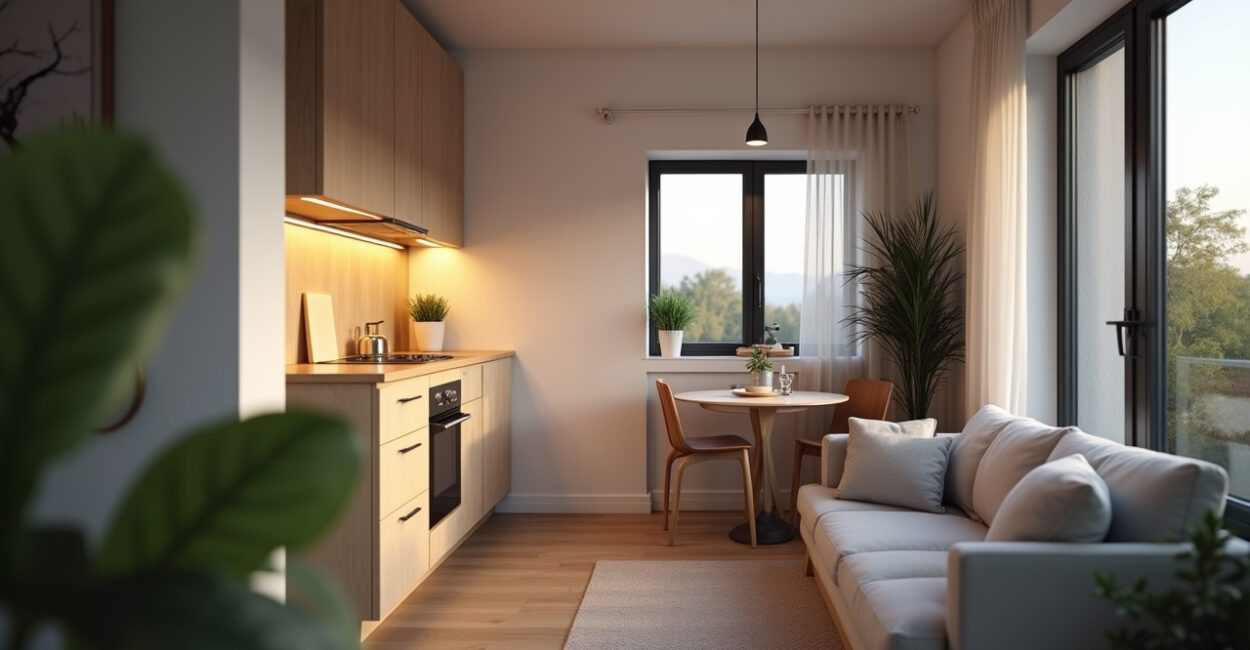
The right lighting can transform a small apartment more than an expensive renovation. Poorly planned lighting makes a space feel smaller, raises energy bills, and causes visual discomfort. Get it right, and the room feels more spacious, functional, and energy-efficient all at once.
Sustainable lighting in small apartments combines energy efficiency, well-distributed light, and choices that reduce waste without sacrificing style.

In practice, that means using less power to deliver more useful lumens, making the most of natural light, choosing the right color temperature for each room, and avoiding lights that “shine” brightly but illuminate very little. The difference between a pleasant apartment and a tiring one almost always comes down to the lighting plan, not the size.
The Essentials
- In a small apartment, good lighting distributes light evenly, avoids harsh shadows, and uses LEDs with enough lumens for each room’s actual needs.
- Color temperature changes how a space feels: neutral light works well in living and work areas; warm light encourages relaxation; overly cool light can make an apartment feel less inviting.
- Indirect lighting, dimmers, and occupancy sensors reduce energy use in spaces with short walk-throughs, changing needs, or frequently forgotten lights.
- The most common mistake in a small room is trying to “make up” for poor planning with brighter bulbs. This increases discomfort and doesn’t always improve visibility.
- For renters, reversible options are usually best: change the bulbs, use lightweight track lighting, add table or floor lamps, position LED strips thoughtfully, and try simple automation.
Sustainable Lighting for Small Apartments: What It Means in Practice
Sustainable lighting for small apartments is a set of decisions that provide visual comfort while using as little energy and as few materials as possible over time. Rather than relying on one powerful bulb, it combines LEDs, light direction, usage controls, and natural light to illuminate only what’s needed, where and when it’s needed.
The key is energy efficiency: more useful light per watt consumed. This matters even more in small spaces, where every mistake stands out. If a fixture reflects too much light, it causes glare; if it doesn’t provide enough, the space feels cramped; if the light color doesn’t suit the room’s purpose, the apartment becomes less comfortable.
What makes a small apartment feel truly comfortable—not just “bright”—isn’t the number of bulbs, but how well the light is distributed.
Why It Makes a Difference in Everyday Life
People in small apartments often use the same space for several purposes: work, relaxation, meals, storage, and getting around. That’s why lighting needs to be versatile. A good lighting plan reduces visual clutter, makes surfaces easier to see, and keeps the ceiling from becoming the home’s only source of light.
There’s also the cost factor. The ANEEL portal—the website of Brazil’s National Electric Energy Agency—provides guidance on energy efficiency and responsible energy use. Meanwhile, Inmetro, Brazil’s national standards and accreditation body, helps consumers compare certified products and avoid purchases that promise savings but don’t last.
Where Sustainability Really Shows
- Fewer bulb and fixture replacements thanks to LEDs’ long lifespan.
- Less wasted energy through dimmers, sensors, and zone-based controls.
- Less heat, which helps on hot days and reduces heat buildup in the room.
- Better use of natural light, especially in compact floor plans.
How to Choose Efficient Bulbs: LEDs, Color Temperature, and Lumens
If you want to save energy without sacrificing quality, start with LEDs. Energy-efficient LED bulbs produce more light while using less power than incandescent and compact fluorescent bulbs, and they last much longer. This matters in small apartments, where you may use lights for many hours in compact, multipurpose spaces.
The classic mistake is shopping by watts alone. Watts measure energy use; lumens measure the amount of light. For home lighting, lumens tell you much more about the actual result than wattage alone.
Watts, Lumens, and Color Temperature Made Simple
Term
What it measures
How to think about it in practice
Watts (W)
Energy use
For the same amount of light, lower energy use means better efficiency
Lumens (lm)
Amount of light emitted
This tells you whether a room will be bright enough
Color temperature (K)
The visual tone of the light
Determines whether the light looks warm, neutral, or cool
As a general guide, warm white light is usually around 2700K to 3000K, neutral light ranges from 3500K to 4000K, and cool light is above that. In a small apartment, neutral light is often the most versatile choice for multipurpose areas. Warm light works best for relaxing, while cool light should be used sparingly because it can make a room feel visually harsh.
How to Get It Right Without Overbuying
Rather than filling the ceiling with multiple lights, choose bulbs and fixtures that spread light well. A fixture with a diffuser, opaque shade, or design that directs light onto the walls and ceiling can make a room feel more spacious. A tightly focused light, on the other hand, can create bright spots and harsh shadows, even while using more energy.
Good lighting in a small space isn’t about using the brightest bulb; it’s about lighting the area where you need it without glare or excessive contrast.
For specifications and safety, it’s also worth consulting the standards and guidance of ABNT, Brazil’s national standards organization, when a project involves electrical work or changes to circuits. Not every situation requires renovation, but electrical compatibility matters when adding more lights or automation.
Strategies for Lighting Small Spaces Without Wasting Energy

The most efficient approach is to think in layers of light. This means combining ambient lighting, task lighting, and accent lighting instead of relying on a single central fixture. In a small apartment, this approach prevents excessive wattage and makes the space easier to navigate visually.
Three Layers That Work Best
- Ambient: Lights the room as a whole with comfortable, even illumination.
- Task: Focuses light on a countertop, desk, sink, reading area, or workspace.
- Accent: Highlights a wall, alcove, artwork, or texture without using excessive energy.
Indirect lighting is one of the best options for a compact apartment. By reflecting light off the ceiling or walls, it softens shadows and makes the space feel larger. LED strips in shallow coves, behind panels, or under shelves can be low-energy solutions when used as supplemental lighting, not as the only light source.
In practice, the most effective approach is to reserve bright light for the areas that need it. Kitchens and countertops call for more focused lighting; living rooms and bedrooms need flexibility; hallways and walkways benefit from quick, automatic controls.
A Real-World Example of Smart Lighting
I saw a 38-square-meter apartment where the living room had a powerful flush-mount light in the center, yet the sofa was still dark at night. The solution wasn’t a brighter bulb. All it took was a warm floor lamp near the reading area and a discreet LED strip behind the TV panel. Energy use went up only slightly, but the room felt larger and more inviting.
How to Distribute Light in the Living Room, Bedroom, Kitchen, and Bathroom
The best lighting layout depends on what each room is used for. In a small apartment, the same type of light rarely works well everywhere. Living rooms, bedrooms, kitchens, and bathrooms call for different combinations of brightness, direction, and color temperature.
Living Room: A Sense of Space and Flexibility
In the living room, the priority is to avoid an overpowering central ceiling light. Choose soft ambient lighting, supplemented by a table or floor lamp, a wall sconce, or indirect LED lighting. Whether you’re entertaining, watching TV, or reading, being able to light only part of the room makes it more versatile and energy-efficient.
Read also: How to Save Water in an Apartment Without Major Renovations
Bedroom: Visual Comfort and Rest
In the bedroom, warm or warm-neutral light with controls by the bed is usually the best choice. A table lamp, adjustable wall sconce, or reading light makes more sense than a very bright central fixture. If the light is too cool, the room can feel more stimulating than relaxing.
Kitchen: Clear Visibility Without Waste
The kitchen needs good visibility in food-preparation areas. Well-positioned neutral light over the countertop, sink, and stove improves safety and reduces eye strain. If the apartment has an open-plan kitchen, separate circuits can help you avoid lighting everything at once.
Bathroom: Safety and Accurate Color Rendering
In the bathroom, the priority is to see your face clearly and avoid shadows around the mirror. Neutral light usually works well as long as it isn’t harsh. If the mirror has built-in lighting, even better. In very small bathrooms, excessive brightness reflected in the mirror can be more annoying than helpful.
Helpful guidance on lighting choices and comfort is available in energy-efficiency materials from the IEA and national energy organizations. The principle is always the same: light the task precisely and keep the rest of the room under control.
Controls and Automation That Really Reduce Energy Use
Dimmers, occupancy sensors, and timers make a real difference in small spaces because they prevent lights from staying on unnecessarily. In a small apartment, the benefit doesn’t come from complicated technology; it comes from the automatic habits these devices build into everyday use.
Dimming: When It’s Worth It
Dimming lets you adjust light levels to suit the moment. Brighter in the morning, softer at night. In living rooms and bedrooms, it improves visual comfort and can reduce energy use when the system and bulb are compatible. The catch is simple: not all LED bulbs work with dimmers, so check compatibility before buying.
Occupancy Sensors and Timers
Occupancy sensors work especially well in hallways, entryways, powder rooms, and other pass-through areas. In rooms used for short periods, they prevent energy waste when someone forgets to turn off the light. Timers are also useful for decorative fixtures, balconies, and supplemental lighting. In a rental, you can start with plug-in options without changing the wiring.
One important detail: automation can’t fix a poor lighting plan. If the light is already badly distributed, a sensor will only switch a problem on and off. Get the basics right first; add automation afterward.
Mistakes That Make an Apartment Darker, More Expensive, or Less Comfortable
Some mistakes may seem minor, but they can undermine the whole result. The first is choosing cool light for every room. The second is relying on one “brighter” central bulb to fix the space. The third is ignoring wall finishes: dark colors absorb more light and require better planning.
What to Avoid
- Buying bulbs based only on the lowest price without checking lumens and efficiency.
- Using cool color temperatures in bedrooms and living rooms meant for relaxing.
- Placing a glaring fixture in your direct line of sight.
- Relying only on a central ceiling light.
- Forgetting that mirrors, tall cabinets, and light-colored walls help distribute light.
Another common mistake is ignoring a product’s life cycle. A cheap bulb that doesn’t last and gives off poor-quality light often costs more over time. So, in addition to energy savings, consider durability, warranty, and certification. Inmetro, Brazil’s national standards and accreditation body, is a good place to check whether a product provides reliable performance information.
In a small apartment, the wrong lighting can be more of a problem than too few light fixtures, because any glare or misplaced shadow affects the entire space.
A Practical Checklist You Can Use Today
Before you buy any light fixtures, take a moment to assess your space. This quick check helps you avoid unnecessary spending and create a lighting plan that suits your home.
- Identify the activities that take place in each room.
- Check the natural light throughout the day: morning, afternoon, and evening.
- Replace old bulbs with LEDs that have the right lumen output.
- Choose a color temperature for each room rather than relying on a general preference.
- Separate ambient, task, and supplemental lighting wherever possible.
- Use zone-based switches so you don’t have to light everything at once.
- Consider a dimmer, sensor, or timer for areas used briefly.
- Check for glare: if a bulb bothers your eyes, it’s in the wrong place.
If you rent, prioritize reversible changes: replace bulbs, add plug-in fixtures, use reflective adhesive films sparingly, bring in table lamps, install no-renovation wall sconces, and use lightweight track lighting. This approach typically delivers most of the benefits with minimal risk.
Frequently Asked Questions About Sustainable Lighting in Small Spaces
What’s the Best Lighting for a Small Apartment?
The best solution combines LEDs, indirect lighting, and well-distributed lights for different activities. Rather than relying on one powerful bulb, create layers of light for the living room, bedroom, kitchen, and walkways. This improves visual comfort and prevents energy waste.
Do LED Bulbs Really Save Energy Compared with Other Bulbs?
Yes. LEDs use less energy to produce the same amount of light and typically last much longer than incandescent and compact fluorescent bulbs. In practice, that means lower energy costs and fewer replacements.
What Color Temperature Is Best for Each Room?
For bedrooms, warm light—around 2700K to 3000K—tends to be more comfortable. Neutral light between 3500K and 4000K usually works well in living rooms and kitchens because it’s more versatile. In bathrooms, neutral light helps you see clearly without making the space feel harsh.
How Can I Make a Small Apartment Brighter Without a Big Increase in My Electric Bill?
Use LEDs with the right lumen output, make the most of natural light, and direct lighting toward the areas you actually use. Light-colored paint, well-placed mirrors, and indirect fixtures also help. The goal is to light more effectively, not simply to add more light.
Are Dimmers and Occupancy Sensors Worth It in Small Apartments?
Yes, as long as they suit the room. Sensors work especially well in walkways and areas used briefly; dimmers make more sense in living rooms and bedrooms. These devices are worthwhile when they prevent lights from being left on unnecessarily and make everyday spaces more comfortable.
What to Do Now
The best results come when you treat lighting as part of your apartment’s design, not as an afterthought. In a small space, energy efficiency, color temperature, light distribution, and controls have a bigger impact than raw brightness. If you’re buying just one bulb, start with its lumen output and the room’s purpose. If you’re planning a bigger change, map out the different areas of use before committing to any installation.
The most useful next step is to review one room at a time, starting with the space where you spend the most time. Define its purpose, choose the right color temperature, eliminate glare, and only then compare LED, dimming, and occupancy-sensor options. That’s how sustainable lighting moves from theory to real comfort and lower energy bills.
Artigos Relacionados
 Air Pollution: Hidden Impacts and Sustainable Solutions for Public Health
 5 Sustainable Practices That Transform Small Farms
 Sustainability Tips for Apartments: A Practical Guide
 Building a Sustainable Future: Eco-Friendly Fashion Business Ideas for Young Entrepreneurs in Brazil
 Sustainable Hospitality Is Booming: Why Local Businesses Profit More
 Small Vertical Garden, Made Easy: A Step-by-Step Guide That Works
