
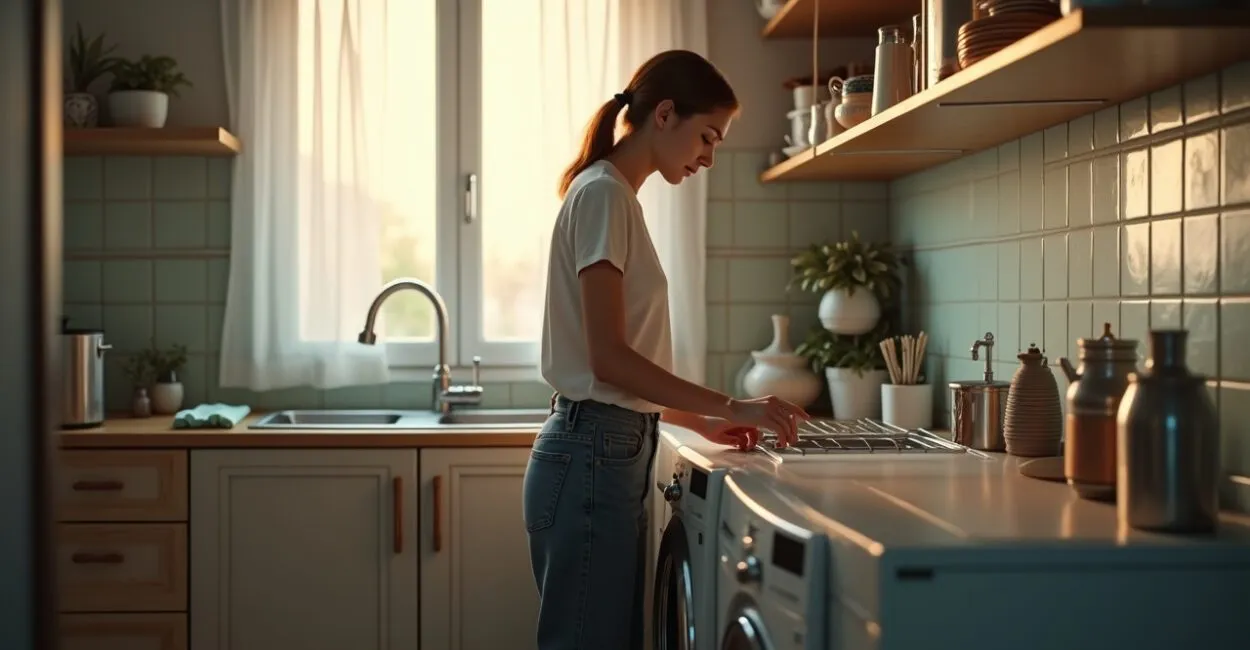
An apartment can use a lot of water without anyone noticing: a dripping faucet, a longer shower, a faulty toilet, and a half-full load of laundry add up to more than you might think. When your goal is to save water in an apartment, the most effective solution is rarely a renovation. Instead, find waste, adjust your habits, and install a few well-chosen fixtures.

In practice, the best approach is to focus on the three areas that account for most water use: the bathroom, kitchen, and laundry. With a methodical approach, you can often lower your bill without sacrificing comfort.
The difference comes less from “miracle savings” and more from daily habits, hidden leaks, and small fixtures that reduce flow without getting in the way.
The Essentials
- The biggest savings usually come from showers, toilets, faucets, and hidden leaks—not from changing just one habit.
- Faucet aerators, water-saving showerheads, and dual-flush toilets can help, but their real impact depends on daily use.
- If your water bill goes up without a change in routine, first check for an apartment leak or an unusually high meter reading.
- In small homes, cooking with less water, running full loads of laundry, and turning off the faucet while soaping up can noticeably reduce waste.
- Consistent savings come from measuring, fixing, and maintaining—not from a single tip.
How to Save Water in an Apartment Without Major Renovations
Saving water in an apartment means reducing the amount you use for everyday activities without compromising hygiene, cleaning, or comfort. It takes three approaches at once: changing habits, adjusting fixtures, and fixing leaks. For quick results, start with the things you use every day and the places that can leak without showing obvious signs. The key is to understand that your water bill reflects total usage, not how “moderate” your water use feels. A family may take short showers and still waste water because of a faulty valve or a faucet that doesn’t close properly. That’s why the most reliable savings come from reducing flow where water is used and preventing unnecessary loss.
If you want to lower your apartment water bill, start by fixing ongoing waste. Habits help, but a small leak or inefficient water use can cancel out much of your effort.
Set Priorities Before Changing Everything
If you want to see results soon, follow this practical order: find leaks, shorten showers, check toilets, improve faucets, and then fine-tune kitchen and laundry habits. This sequence usually delivers better results than trying to change everything at once.
- First: leaks and drips.
- Next: showers and toilets.
- Then: kitchen and bathroom faucets.
- Finally: laundry and cleaning routines.
Where Water Is Most Often Wasted Day to Day
Water waste in apartments tends to come from predictable sources: showers, toilets, faucets, and washing machines. Showers can use a lot of water because they combine high flow with frequent use. Toilets can also use a significant amount, especially older models or ones with poorly adjusted mechanisms. The kitchen and laundry may seem less important, but their water use adds up over the month.
One detail many people overlook: small, repeated losses can add up to more than one unusually wasteful use. A faucet that drips for hours, a valve that doesn’t close fully, or a slow leak can increase water use without the resident noticing.
That’s why looking only at showers gives you an incomplete picture.
Areas That Deserve Immediate Attention
- Shower: Long showers and high flow make an expensive combination.
- Toilet: Excessive flushing or a poorly adjusted toilet tank wastes water every time you flush.
- Faucets: Letting water run while brushing your teeth, soaping dishes, or cleaning surfaces increases use without any real benefit.
- Washing machine: Small loads use a similar amount of water with fewer clothes.
- Leaks: The most concerning leaks are silent ones, because they cause water use to continue nonstop.
Your bill is more likely to rise because of continuous, invisible water use than because of one bad habit. That’s what makes leaks and poorly adjusted toilets so costly by the end of the month.
To learn more about water use, consult resources such as the Agência Nacional de Águas e Saneamento Básico (ANA), Brazil’s National Water and Basic Sanitation Agency, which publishes information on responsible water use, and the Brazilian federal ministry responsible for cities and sanitation, which provides institutional information about the sector. For household guidance, your state’s local water and sewer utility can also explain how to read your meter and spot unusually high usage.
Practical Ways to Reduce Water Use in the Kitchen, Bathroom, and Laundry

The habits that really help are the ones that save water without requiring extra effort every time. Turning off the faucet when you’re not using it, using a container to rinse things, and grouping tasks together can make a difference. Anyone who manages a household knows that waste rarely comes from “forgetting” alone. It usually builds up through small, automatic actions.
In the Bathroom: Less Flow, Less Time, Less Waste
The shower is the easiest place to make a change. Cutting a few minutes can have a noticeable effect, and you can save even more with a lower-flow showerhead and by not letting the water run when you aren’t using it. Brushing your teeth with the faucet off and washing your face outside the direct stream also help.
If you have an old showerhead with a high flow rate, consider a water-saving showerhead. It won’t “work miracles,” but it controls flow more effectively and usually works well in apartments with steady water pressure. Performance can vary in buildings with inconsistent pressure, so it’s worth testing before installing a more restrictive model.
In the Kitchen: Put Water to Work Instead of Leaving It Running
In the kitchen, the biggest savings come from not using running water as a catch-all tool. Wash vegetables in a bowl, scrape food scraps off dishes before washing, and soap everything with the faucet off. A faucet aerator can help by mixing air into the water, maintaining the feel of a steady stream while reducing flow.
This accessory is inexpensive and often worthwhile for frequently used sinks. It may not help much if water pressure is very low or the faucet has a mechanical problem; in those cases, an aerator won’t fix the underlying issue.
In the Laundry Room: Wash Smarter, Not More Often
A common laundry mistake is running the washer with just a few items. The more efficient approach is to combine loads, stay within the washer’s capacity, and choose the right cycle. When possible, reuse rinse water for heavy-duty cleaning, as long as that makes sense for the clothes and the type of dirt involved.
- Wait until you have a full, appropriate load.
- Choose the right cycle for the fabric.
- Skip the prewash when clothes aren’t heavily soiled.
- Don’t add extra rinses unless they’re needed.
For technical information on residential water use and sanitation, the IBGE, Brazil’s national statistics agency, can help put household water use in Brazil in context. The data won’t teach you new habits, but it shows why using water efficiently at home matters when bills start to climb.
Fixtures and Adjustments That Save Water Without Renovations
The right fixtures can reduce water use without renovations, demolition, or changes to your plumbing infrastructure. For most apartments, a useful combination is simple: a faucet aerator, a flow restrictor, a more efficient showerhead, and a water-saving toilet. The savings come from combining them, not from relying on just one item.
What to Consider First
| Item | Where It Helps | When It’s Most Worthwhile | Practical Note |
|---|---|---|---|
| Faucet aerator | Kitchen and bathroom | Frequent use and faucets left running for long periods | Inexpensive, easy to install, and offers good value |
| Flow restrictor | Shower and faucets | When water pressure is adequate | Works well, but can be frustrating if it restricts flow too much |
| Water-saving showerhead | Bathroom | Daily showers and a consistent routine | Needs to work with your building’s water pressure |
| Water-saving toilet | Bathroom | An older tank or a flush mechanism without flow control | Dual-flush models tend to reduce water use per flush |
Read also: Start an Apartment Garden from Scratch: A One-Hour Method That Works
Are these fixtures worth installing? In most cases, yes—especially faucet aerators and dual-flush toilets. But there’s one condition: if there’s a plumbing problem, such as very low pressure, a partial clog, or an internal leak, the fixture will only mask the issue. Fix the underlying problem first, then make improvements.
The best water-saving fixture isn’t the most expensive one. It’s the one that works with your building’s water pressure, your habits, and the type of plumbing fixture you have.
How to Find Leaks and Unusually High Water Use
An apartment leak is any loss of water outside of intentional use, whether visible or hidden. This includes dripping faucets, a toilet that keeps running, a faulty shutoff valve, damaged indoor pipes, and leaks that cause water damage. The simplest way to check is to look at the water meter: if it’s moving when no one is using water, that may indicate a leak.
Read also: Sustainable Lighting for Small Apartments: 7 Solutions
A simple test is to turn off all water fixtures and watch the meter for a few minutes. If it moves, the issue could be a faucet, toilet tank, or pipe. In some buildings, the condominium association can also help locate leaks by section, especially when water use increases in a particular unit.
Signs Worth Investigating
- A high water bill without a change in routine.
- The water meter moving when everything is turned off.
- The sound of running water when no one is using it.
- Persistent dampness on a wall, ceiling, or floor.
- A toilet tank that takes a long time to fill or drains on its own.
If you’re unsure, contact your local water utility or consult the meter’s operating manual. Many utilities explain how to test for leaks and read your meter on their websites. This is usually more reliable than trying to guess based on one month’s bill. ABNT, Brazil’s technical standards association, also publishes technical standards for building plumbing systems that can be useful when a problem keeps recurring.
One important caveat: not every increase in water use means there’s a leak. A change in routine, guests staying over, more frequent washing-machine use, and hot weather can all affect usage. That’s why it’s best to compare similar months and verify the change with a meter reading before calling for maintenance.
How Much You Can Save on Your Water Bill With Small Changes
How much you can cut your water bill depends on your starting point. If you’ve been taking long showers, have a malfunctioning toilet, or have an undiscovered leak, you may see a significant drop. If you already use efficient fixtures, the savings may be smaller but more consistent. In practical terms, you’ll see results faster by eliminating ongoing waste than by trying to cut back on everything at once.
Where Results Usually Show Up First
- Fixing leaks: Can quickly bring unusually high water use down.
- Taking shorter showers: Provides consistent savings month to month.
- Adjusting the toilet: Reduces repeated water use without extra effort from residents.
- Installing aerators and improving faucets: Makes frequent water use more efficient.
The honest answer is that there’s no fixed percentage that applies to every apartment. Two homes with the same number of residents can have very different bills because of their habits and plumbing conditions. Still, when you follow a well-planned approach, you can usually see a noticeable reduction in household water use by the next billing cycle.
To check the actual impact, record your water meter reading for seven days before and after making changes. It’s a simple, inexpensive method that shows whether you’re really saving water, without relying only on your next bill.
Extra Tips for Renters and Condo Residents
Renters have less freedom to modify plumbing, but they can still save a lot without renovations. Prioritize removable fixtures, keep the original parts so you can reinstall them later, and notify the property manager or building manager if you suspect a structural problem. In a condo, building-wide monitoring matters too, because leaks in common areas or shared plumbing lines can affect everyone’s bill.
What You Can Do Without Modifying the Apartment
- Install a simple clip-on aerator.
- Replace the showerhead with a more efficient model, if compatible.
- Use a mental timer for showers and washing.
- Record the meter reading regularly.
- Report leaks to the building manager or property manager instead of waiting for the next bill.
In practice, renters have one advantage: they can try inexpensive solutions without making a permanent commitment. That works well for water-saving faucets, flow restrictors, and changes to daily routines. Just don’t install anything permanent without permission, or your savings could turn into a headache when you move out.
If your building divides water costs based on individual use, it’s especially important to pay attention. A small problem inside your apartment doesn’t just affect your bill; it can also distort your usage history and make any serious effort to track consumption more difficult.
Frequently Asked Questions About Saving Water in an Apartment
What are the quickest ways to save water in an apartment?
The fastest steps are to fix leaks, shorten showers, turn off the faucet while soaping up, and avoid washing small loads of laundry. These actions affect daily use, so you can see the impact on your meter sooner. If your toilet is malfunctioning, make it a priority because it can waste a lot of water without drawing attention.
What uses the most water in an apartment?
Showers, toilets, and leaks are usually the biggest sources of water use. The kitchen and laundry matter too, especially when the faucet is left running unnecessarily or the washing machine is used too often. The biggest mistake is focusing on just one room and ignoring continuous water loss.
Are faucet aerators, flow restrictors, and water-saving toilets worth installing?
In most apartments, yes. Faucet aerators usually offer excellent value, and water-saving toilets can help a lot if you still have an older model. Flow restrictors are most useful when water pressure is adequate; if they’re not properly sized, they can be frustrating to use every day.
How can I tell if there’s a hidden leak in my apartment?
Turn off all faucets, shut off the washing machine, and watch the water meter for a few minutes. If it continues to register water use, there’s a strong chance of a leak. You should also check the toilet tank, damp spots, and any sounds of running water when no one is using it.
How much can small changes lower my water bill?
It depends on your starting point, the number of residents, and the condition of your plumbing. If you fix leaks and adjust shower, toilet, and faucet use, you’ll often notice a real difference on the next bill. In homes that are already efficient, the reduction may be smaller, but it can still help keep water use under control.
Can renters still save water without renovations?
Yes. Removable solutions, such as aerators and changes to daily habits, work well and don’t require structural modifications. Keep the original fixtures and notify the property manager or building manager if you notice a leak or plumbing problem.
%%AGPTRH9%%
What to Do Now
The best place to start is simple: write down your water meter reading today, test for leaks, choose two habits to change this week, and install one inexpensive improvement, such as a faucet aerator. If your water bill is already high, focus first on hidden waste and then on comfort. That’s how water savings move from theory to next month’s bill.
If you live in a condo, document anything unusual and track your water use over several billing cycles. The goal isn’t to “save everything,” but to make water use something you can manage. If you measure, fix problems, and stick with it, you can usually pay less without living with restrictions.
Artigos Relacionados
 Sustainability Tips for Apartments: A Practical Guide
 How to Choose a No-Annual-Fee Credit Card Without Falling for Pitfalls
 How to Price Creative Work Without Losing Clients
 A Detailed Budget for Organizing Talks Without Mistakes
 Soil Testing: The Step That Prevents Major Losses
 Real Estate Agent Without a College Degree: Commissions That Can Change Your Life
