
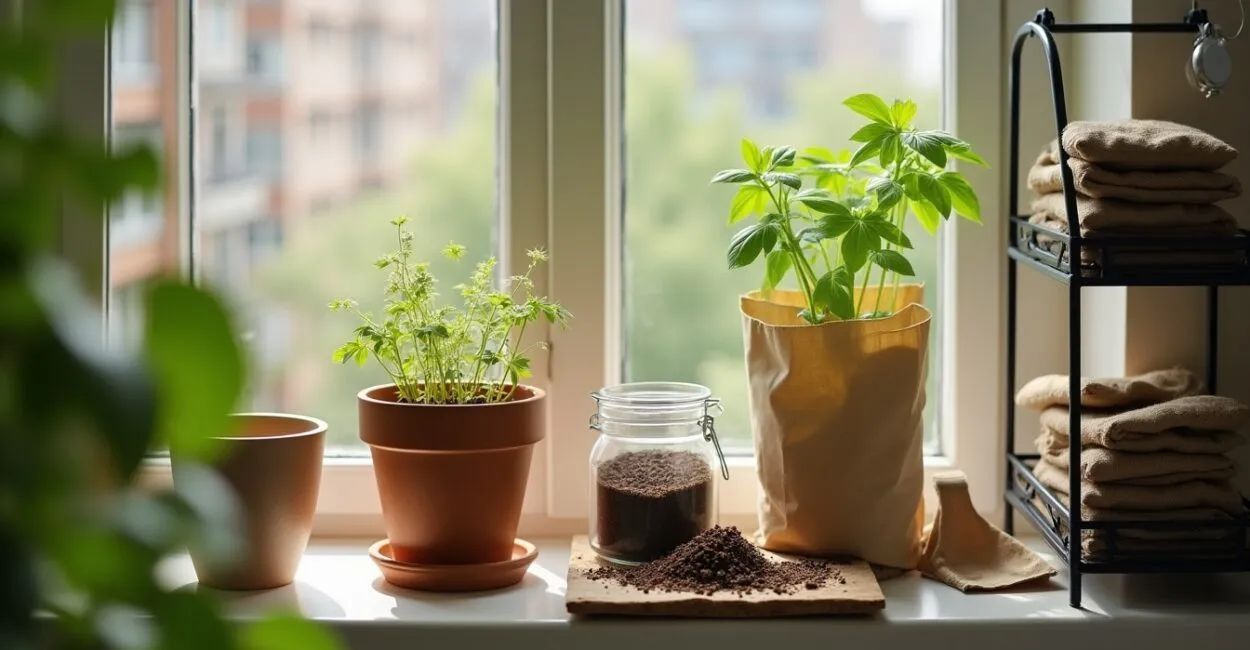
The smell of soil, a little pot of leafy greens on the windowsill, and something you can actually eat in 60 minutes: that’s what I want you to experience when you set up your apartment garden. No excuses about space, and no expensive equipment. I’ll give you the exact list of supplies, a step-by-step setup you can fit into your lunch break, and the mistakes that tend to kill plants in the first 30 days—so you can harvest fresh herbs instead of abandoning another project.
1. The One-Hour Kit: What You Need and Where to Find It
You need less than you think. Instead of buying 12 items, focus on 6 essentials that solve 90% of common problems. Buy or gather pots (3 to 5 in different sizes), quality potting mix, compost, seedlings or seeds, a watering can or spray bottle, and a small stand or shelf. Self-watering pots can help you succeed faster; vertical planters save space. You can find these items at garden centers, home improvement stores, or online.

2. Quick Setup: How to Finish in 60 Minutes
Start with the stand and finish with water—on a timer. Arrange the pots on the stand, add a layer of drainage material (small stones), fill them with potting mix blended with 20% compost, plant seedlings or sow seeds according to the package directions, gently firm the soil, and water with a spray bottle. Set aside 10 minutes to place your plants in the right amount of sunlight (4–6 hours of light). Set watering and pruning reminders on your phone. The setup takes about half an hour; use the remaining 30 minutes to make adjustments and get to know your plants.
3. What to Plant: Smart Choices for a Great Start

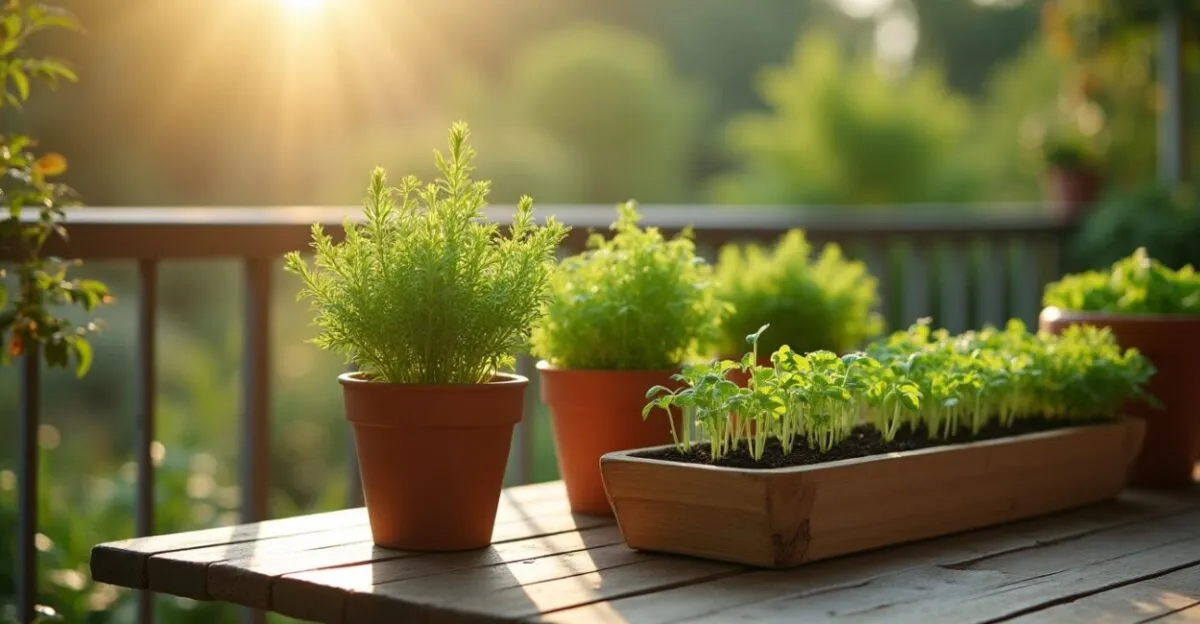
Choose plants that forgive mistakes and reward you quickly. Start with culinary herbs and leafy greens: chives, parsley, basil, arugula, and lettuce grow fast, so you’ll see progress within days. Seeds are inexpensive, while seedlings produce results sooner. Avoid deep-rooted plants (carrots, beets) until you’ve mastered the basics. Use different pots: medium pots for herbs and wide planters for leafy greens. These choices reduce frustration and make you more likely to stick with it.
4. The Basics Nobody Explains Well: Light, Water, and Roots
Light, water, and potting mix form a trio that determines whether your garden thrives or dies. Don’t just water “when it looks dry”: the right frequency depends on the pot and the season. Direct morning sun is great for herbs; filtered light works for leafy greens. Roots need oxygen, and overly compacted potting mix can suffocate them. The solution: use a light mix with organic matter and good drainage. A grow light can make up for a lack of sunlight in dark apartments. Understanding how these factors work together can prevent seemingly “mysterious” plant deaths.
Read also: Start an Apartment Garden From Scratch: An Effective 1-Hour Method
5. Expectations vs. Reality: A Comparison That Saves You Time
Expectation: everything will be green in two weeks. Reality: growth cycles, pests, and a learning curve. A typical before-and-after: at first, everything flourishes; then pests show up or leaves turn yellow from overwatering. Comparing what you expected with what’s happening helps you adjust: if leaves turn yellow, water less; if stems grow long and leggy, give the plants more light. This quick reality check speeds up the learning process. Small adjustments early on can prevent weeks of frustration and lost plants.
6. Common Mistakes That Kill 80% of Apartment Gardens (and How to Avoid Them)
Knowing what NOT to do can save your garden. Common mistakes include overwatering, using untreated soil from outdoors, putting plants in a dark corner, overfertilizing, and planting everything together. Avoid them: don’t use garden soil alone; choose prepared potting mix; set a watering schedule and check the mix with your finger; use pots with drainage holes; and start with just a few varieties. Here’s a practical checklist:
- Water based on observation, not routine—adjust for each pot.
- Don’t bury seedlings too deeply; keep the plant crown at the right level.
- Apply fertilizer in small amounts rather than using a heavy dose right away.
- Check weekly for pests and remove affected leaves.
7. 10 Minutes of Daily Care: A Routine for Healthy Plants
Spend 10 minutes a day, and your garden will reward you with food and well-being. Suggested routine: 2 minutes to inspect for pests and yellowing leaves, 3 minutes to water each pot (or refill the reservoir in self-watering pots), 3 minutes to harvest or rotate pots, and 2 minutes to make notes in an app or notebook. Every other week, prune and apply a weak liquid fertilizer. This small habit keeps problems from piling up and turns your garden into a steady source of fresh herbs.
To learn more about growing in small spaces, consult technical resources such as urban gardening guides from universities and government agencies. Embrapa, Brazil’s agricultural research agency, and urban agriculture guides published by local governments often include potting mix charts and local recommendations. Studies on urban agriculture suggest that well-planned small spaces can improve food security and reduce waste.
You’re all set: in less than an hour, you’ll have a functional setup, and 10 minutes of daily care will keep it thriving. Next, plant something you genuinely love to cook with—and harvest a meal that grew right by your window.
Wrapping Up
If your kitchen needs a little life, an apartment garden is a great shortcut. In 60 minutes, you can start a habit that brings flavor, savings, and enjoyment—and all it takes is a little attention during the first few days. If something goes wrong, make a quick adjustment: plants forgive those who learn.
How Much Space Do I Need to Start an Apartment Garden?
You can get started with less than a square meter: a vertical shelf or two pots on a windowsill are enough. The key is to provide 4–6 hours of direct sunlight or make up for it with a grow light. Choose pots that suit the plants (medium pots for herbs, wide planters for leafy greens) and use vertical storage to make the most of your space. With the right choices, even a small balcony or laundry area can become a productive garden tucked into a compact corner.
What Potting Mix and Fertilizer Should I Use During the First Few Months?
Choose commercial potting mix for vegetable gardens or a blend of coco coir, topsoil, and compost (about 60/20/20). Avoid using plain “garden soil” without sifting it—it can compact and may bring in pests. Start with diluted liquid organic fertilizer every 2–3 weeks to add nutrients without burning the roots. In small pots, smaller, more frequent doses work better. A drainage layer at the bottom of the pot and a little compost mixed into the potting mix can improve your chances of success from the start.
How Can I Tell When to Water Without Overdoing It?
Feel the potting mix: if the top 2 cm are dry, water. In small pots, that usually means every 2–4 days, depending on the weather. Use a stick or ruler to check below the surface: if it comes out damp near the bottom, wait. Wilting leaves can mean either too much or too little water, so check the pot’s weight; a light pot needs water. Self-watering systems greatly reduce the risk of overwatering.
Can I Use Seeds Instead of Seedlings to Get Results Faster?
Seeds are affordable and a great way to learn, but seedlings give you visible results sooner and reduce the risk of early losses. If you choose seeds, pick fast-germinating varieties (arugula, lettuce, radishes) and keep an eye on temperature and moisture: seeds need firm contact with the potting mix and consistent moisture until they germinate. Well-chosen seeds and a light covering of potting mix can produce visible sprouts in just a few days, especially in warm, bright spaces.
What Pests Are Most Common in Apartment Gardens, and How Can I Control Them Without Pesticides?
Aphids, whiteflies, and spider mites are the most common indoor pests. For an initial treatment, wash the leaves with water and diluted mild soap, use yellow sticky traps, or apply neem oil as a natural repellent. Introducing natural predators isn’t practical in apartments, so weekly inspections and manually removing affected leaves work well. Avoid harsh pesticides near food; organic methods and prevention are more effective over the long term.
Artigos Relacionados
 Literacy in Elementary School: Methods That Work
 Early Learning: Strategies to Foster Development from the Start
 Active Learning Methods: 7 Practices That Are Transforming Education
 Phonics Teaching Methods That Build Fluent Decoding Skills
 Creative Upcycling: Practical Ideas for Making Money from Waste
 Multisensory Method: A Guide to Teaching Literacy with Purpose
