
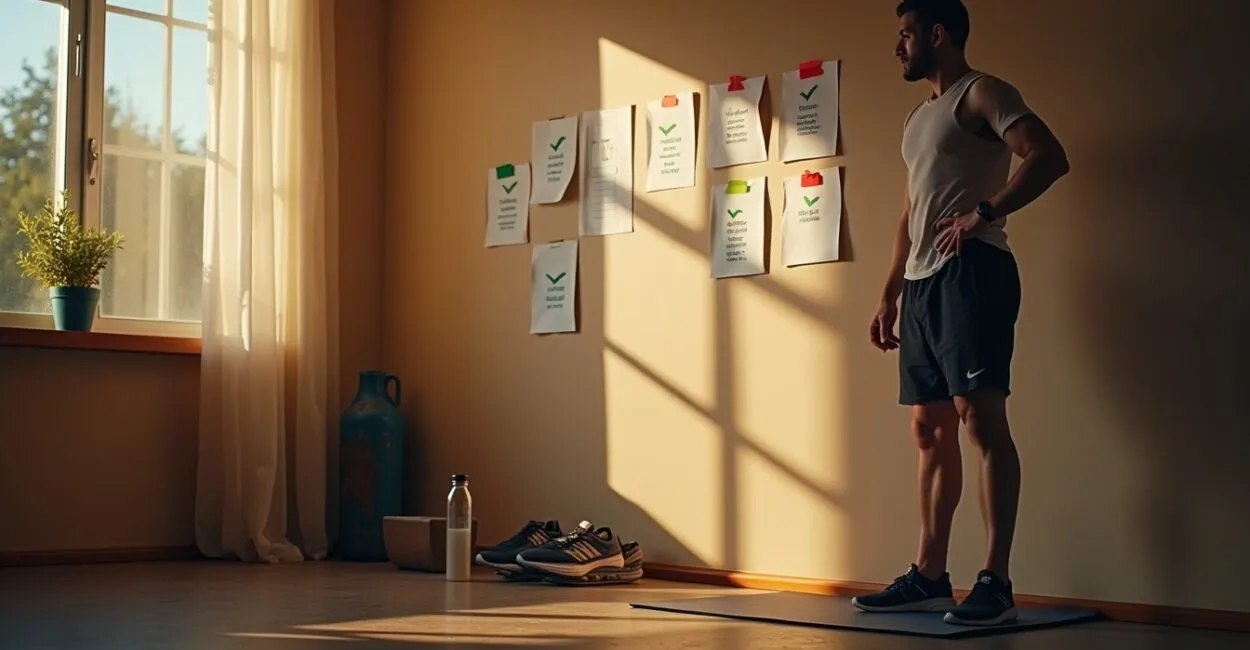
The progress you can point to at the end of the day often sustains more discipline than a huge monthly goal.
There’s a reason tracking small daily wins works so well: your brain responds better to frequent signs of progress than to distant promises. When you see concrete proof that you’re moving forward, giving up becomes less tempting.

And that changes everything. Instead of relying on high motivation, you build consistency.
The Mistake of Focusing Only on the Finish Line
The most common mistake is measuring discipline only by final results: the number on the scale, pages written, money saved, or a perfect workout. The technical term here is progress feedback—brief, observable signs of movement that show you’re making headway before the big goal comes into view.
In practice, people who overlook this often feel like they’re constantly failing. You may be working out, studying, or saving money, but because the goal is still far away, it can seem like nothing has changed. The mind interprets silence as stagnation.
That’s when people give up. Not because they’re lazy, but because they lack evidence of progress. Discipline doesn’t thrive in a fog; it grows when progress is visible.
Why Small Wins Help You Stick With a Habit
Tracking small gains works because it narrows the psychological gap between effort and reward. Every check mark in an app, every completed checklist, every workout creates a small reward. That reinforces the behavior.
Research on habit formation shows that repetition in a stable context matters more than willpower alone. University College London, for example, has published analyses on how habits become automatic through consistency, not heroics. See also the National Institutes of Health discussion of behavior and reward.
Here’s the counterintuitive part: you don’t need to feel like you’re “winning big” to keep going. You just need to feel like you’re gaining something. Small, but real.

What to Track Without Turning Everything Into a Spreadsheet

Not every situation calls for a sophisticated system. Sometimes, tracking small daily wins is as simple as answering three questions at the end of the day: What did I move forward? What did I maintain? What kept things from getting worse?
- Moved forward: I did the main task, even if only for a short time.
- Maintained: I stuck to my routine without breaking the streak.
- Made it easier: I reduced friction for the next day, such as laying out my clothes or opening the right file.
This system is more useful than writing down abstract goals. It turns effort into evidence. And evidence is fuel.
Read also: Personal Discipline Without Losing Heart: 7 Adjustments That Work
When Comparing Before and After Finally Feels Fair
Many people give up because they compare who they were “before starting” with their “ideal result.” That’s a harsh comparison. The right approach is to compare today with yesterday.
Before: You relied on inspiration. After: You have a record of progress to carry you through a bad day.
Read also: Morning Discipline: The Small Habit That Can Change Your Day
I saw this with someone who wanted to get back to writing. They spent weeks stuck because they wanted to finish entire chapters. Once they started celebrating 20 minutes of writing and 150 words a day, the project got moving again. It wasn’t magic. It just became possible.
4 Mistakes That Sabotage Consistency
Anyone who works with behavior change knows that routines break down because of too much ambition, not a lack of talent. Four mistakes come up again and again:
- waiting for high motivation before getting started;
- measuring only final goals;
- discounting small but meaningful efforts;
- not keeping a record and relying on memory.
The fourth mistake may seem minor, but it’s harmful. Without a record, your brain erases your progress and magnifies your setbacks. Then tracking small daily wins feels like a luxury, when it’s actually a foundation.
According to IBGE, Brazil’s Institute of Geography and Statistics, people’s behavior at work, in school, and in their daily routines can change significantly with structure and repetition; the same principle applies to personal habits. In mental health, the World Health Organization also emphasizes the importance of stable routines for well-being and adherence.
How to Turn Small Wins Into Visible Discipline
If you want this to really work, make your progress visible in three ways: check marks, streaks, and quick reviews. A check mark means marking something done. A streak means keeping the chain going. A quick review means taking 30 seconds to ask what helped most today.
The secret isn’t having perfect days. It’s making sure an ordinary day doesn’t feel empty.
This method works well for studying, exercise, finances, and writing. But it falls short when a goal depends on factors outside your control, such as someone else’s approval or constantly shifting deadlines. In those cases, focus on what you can control: showing up, preparing, and making incremental progress.
The Most Underestimated Effect: It’s Easier to Keep Going Tomorrow
The biggest shift that comes from tracking small daily wins isn’t emotional. It’s practical. You lower the cost of starting again, and that’s invaluable.
When your brain has already seen you follow through on something yesterday, it has less to negotiate with your resistance today. The next step feels less daunting. And gradually, discipline stops feeling like a daily battle and becomes a path you’ve already started down.
Discipline doesn’t come from grand promises; it lasts when progress fits into your routine.
If your goal keeps dying halfway through, maybe the problem isn’t a lack of willpower. Maybe you’re just waiting too long to notice the proof that you’re already making progress.
Frequently Asked Questions
Do Small Wins Really Help, or Are They Just Motivation?
They help because they create evidence, not just a feeling. Motivation comes and goes, but a progress record helps you stay consistent. When you see small signs of progress, effort no longer feels pointless and starts to feel purposeful. That makes you less likely to give up on ordinary days, which are often the most challenging for any habit.
Do I Need an App to Track Small Daily Wins?
No. A notebook, a note on your phone, or a simple checklist can work just as well. The important thing is that it’s easy to keep up with. If the system gets complicated, you’ll abandon it before you abandon the habit—and then the method loses its power.
What’s the Difference Between a Small Win and Self-Deception?
A small win is verifiable: completing a workout, writing a page, planning a meal, or avoiding an unnecessary purchase. Self-deception means celebrating an intention without taking concrete action. The distinction is simple: if you left a clear trace of progress that day, it counts. If it remained just a wish, it hasn’t become progress yet.
What Should I Do When I Can’t Achieve a Big Win?
Lower the bar. Instead of “finish the project,” mark “open the file,” “gather the materials,” or “work for 10 minutes.” That keeps you moving. Many important accomplishments start this way: small and almost unnoticeable, but repeated until they add up.
Does This Method Work for Any Goal?
It works for most goals that require repetition and sustained effort, such as studying, health, organization, and finances. It’s less effective when the outcome depends almost entirely on outside factors. In those cases, track what you can control and treat the final result as a consequence, not your only measure of success.
Artigos Relacionados
 The Entrepreneurial Mindset in Books: Proven Methods to Build Discipline, Decision-Making Skills, and Resilience for Small Business Owners
 Morning Self-Discipline: The Small Habit That Changes Your Day
 Personal Discipline Without Losing Steam: 7 Changes That Work
 Event Task Management Tools: 10 Options for Small Event Businesses
 Personal Routine: 12 Powerful Strategies to Boost Daily Productivity
 How Daily Reading Improves Quality of Life: Benefits and Practical Tips
