
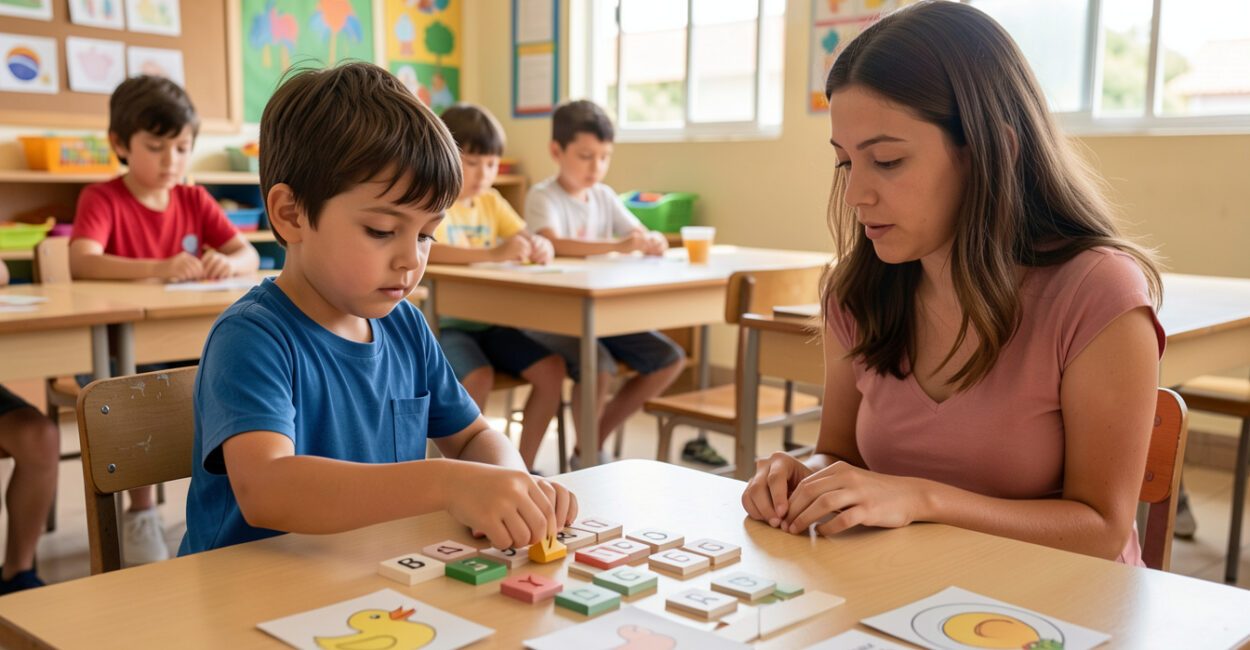
A child may read “cat” with no trouble and still hesitate when faced with “chat.” Literacy games for third grade help turn these differences into teaching opportunities: each round focuses on a reading or writing skill and lets you see what students can already do independently.
The results depend on the objective, the complexity of the rules, and the teacher’s guidance. An activity works best when it ends with a brief discussion or written reflection that shows what the class discovered about sounds, letters, words, or texts.

In a nutshell
- Choose a game based on an observed need, such as breaking words into syllables or reading words with consonant blends.
- Use the rules to create opportunities for reading and writing, not just to move spaces or earn points.
- Adapt clues, cards, and partners so students at different levels can play the same game.
- Record one piece of evidence per round, such as a self-correction or reading a word without picture support.
Literacy games for third grade: how to choose
Literacy games for third grade are structured learning activities in which rules, choices, and feedback on responses engage students’ reading and writing skills. To choose a game, first identify what the class needs to practice: comparing sounds, connecting phonemes and graphemes, reading fluently, writing words, or revising a text. The right game presents a challenge the child can take on with occasional support. If everyone gets the answers right without thinking, make the game more complex; if many students rely on classmates’ answers or drop out of the round, simplify the steps, offer clues, or review the skill before trying again.
- Set a target skill: Choose one priority for each game, such as recognizing rhymes or spelling words with “c” and “k.”
- Check the reading demands: Pictures can support comprehension, but they shouldn’t give away the answer when the goal is to read the word.
- Decide what to observe: Note whether the student breaks a word into parts, compares words, uses a clue, or revises without being prompted.
- Consider the student’s stage of literacy development: Assessment can guide the choice of literacy instruction and literacy activities that make sense for the class.
Brazil’s National Common Curricular Base (Base Nacional Comum Curricular, or BNCC) guides instruction in reading, writing, and language analysis in the early grades. Visit the Ministry of Education to find official documents. The curriculum provides a useful framework for connecting a game to lesson plans, but it doesn’t prescribe one specific activity for every class.
Reading and writing skills developed through games
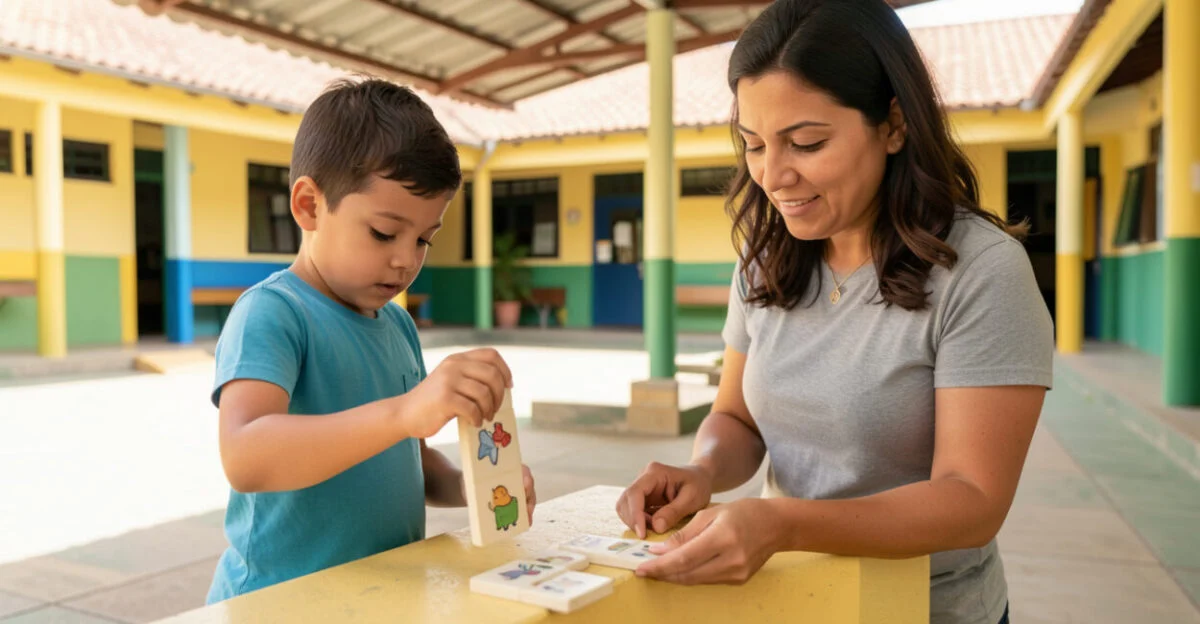
The same materials can build different skills depending on the rules. In dominoes, for example, a child might match syllables to break words into parts or read whole words to build fluency. That’s why the instructions should make clear what you’ll be observing.
Phonological awareness and sound-letter relationships
Phonological awareness is the ability to notice and manipulate the sounds of spoken language, such as rhymes, syllables, and phonemes. In comparison games, the teacher can ask the child to identify how two words sound alike, then point out the letters that represent that sound. To practice sound-letter correspondence, use words that differ in just one feature at a time. For example, the words “fan” and “van” let students compare the beginning sound and the corresponding letters without turning the round into a long list of spelling exceptions.
Fluency, spelling, and revision
Fluency means reading accurately, at a natural pace, and with attention to meaning. A reading path can include words and short sentences; players read each space aloud and explain a contextual clue instead of simply racing to the finish. Spelling games should encourage students to compare and revise. If the class confuses “p” and “b,” the cards can include words with those sounds in different positions. Then each student writes down a word they had to correct in a short text. A digital tool can suggest a spelling, but students should still decide whether it’s correct.
Types of games and examples to use

The most useful games are those whose rules require students to practice the target skill. The table compares activities that use simple materials; adjust the word lists to match what the class has already learned.
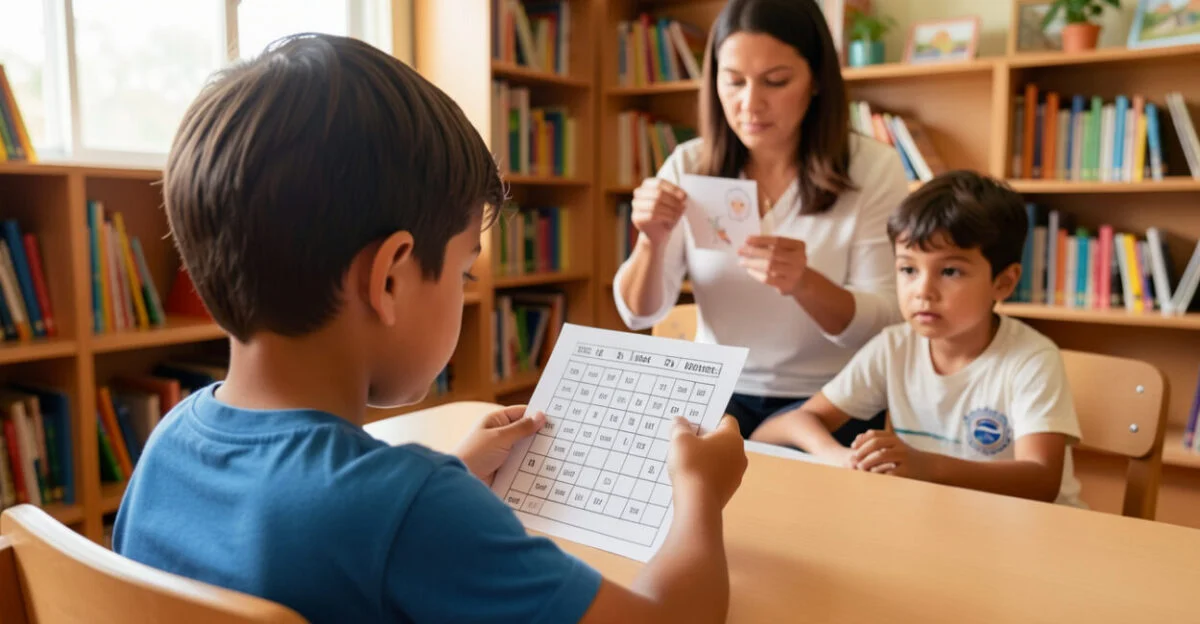
Game and focus Materials and how to play What to observe and how to adapt Word bingo: word recognition and reading Word bingo cards and calling cards. The teacher reads a clue or word; the student finds it, reads it, and marks it. See whether the student identifies the word without relying on its position on the card. Add a picture for support; for a challenge, use clues instead of reading the word aloud. Syllable dominoes: breaking words into parts and building words Tiles with syllables. Each player connects a tile to complete a possible word and reads the result. See whether the student combines the parts and checks the resulting word. Offer fewer choices to students who need support, or add complex syllables to increase the challenge. Matching pairs: connecting spelling with meaning Face-down cards with matching word-and-picture or word-and-definition pairs. Players turn over two cards at a time and read the pair. Check that students read the word before making the match. Remove pictures when they give away the answer. Reading path: fluency and comprehension A game board, a die, and cards with words, directions, or short sentences. Players must read the card before they can claim the space. Notice hesitations, self-corrections, and comprehension. Allow students to reread with support; to increase the challenge, ask them to say a sentence using the word. Revision cards: spelling and writing Cards with incomplete words or alternative spellings. Players choose an option, explain their choice, and write the form they think is correct. See whether students explain their choice and consult references. Start with familiar word families before introducing new patterns. Spinner or word search: vocabulary and visual scanning A spinner determines the category or sound; in the word search, students find previously selected words. Ask students to read the word they find and use it aloud. Make the grid smaller for students who have trouble scanning visually, or add a short writing challenge. Guided writing: writing sentences and texts Character, setting, and action cards help students create a sentence or short sequence, which the group revises. Observe spacing, punctuation, and revision. Provide a word bank for support without dictating what students write.
A simple adaptation can change the challenge without changing the materials: in bingo, instead of calling out “window,” the teacher gives the clue “an opening that lets in light.” The child has to retrieve the word from its meaning, find it, and read it. Activities can include this kind of variation as long as the rules specify what counts as a correct response.
To support learning, note responses that show a strategy, not just a correct answer. The skill you choose to observe should align with the goal of the round. When planning practice activities and exploring other games, it helps to separate inspiration from the learning objective: the format can vary, but the skill should be clear to both the teacher and the students.
Read also: Syllable Games for Dyslexia: 7 Ideas to Improve Reading

How to plan a lesson with literacy games
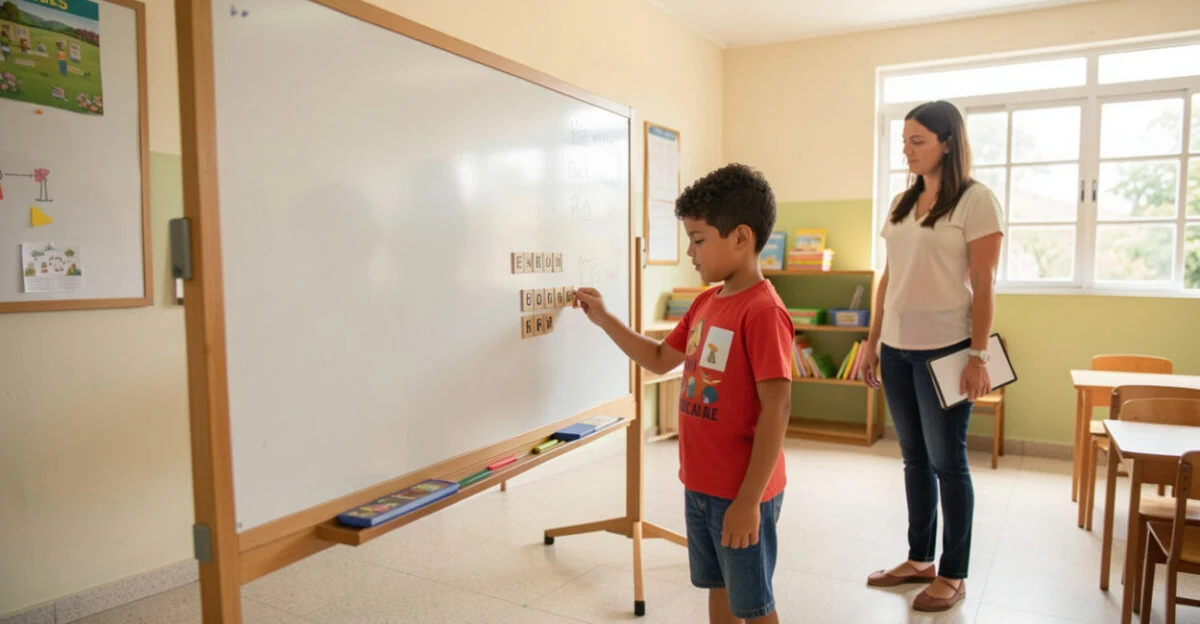
A game-based lesson works best when students know the goal, the rules can be explained briefly, and there’s time to reflect on what happened. A roughly 40-minute lesson can be adjusted to fit the class period and the pace of the class.
- Introduce the focus, 5 minutes: Explain what students will practice, such as reading words with consonant blends.
- Model a round, 5 minutes: Demonstrate the rules and think aloud as you compare an answer with a clue.
- Play in pairs or small groups, 20 minutes: Assign simple roles, such as reading the card and checking the answer.
- Pause to observe during the game: Record one piece of evidence per student or group without interrupting every turn.
- Wrap up with reading or writing, 10 minutes: Ask each child to write down a challenging word, a correction, or a sentence using vocabulary from the game.
The timing is a guideline, not a fixed rule. If students are still confused about the instructions, stop and model them again. Continuing a game when the rules aren’t clear usually leads to more discussion about the game and less reading.
Read also: Fraction Games: Fun Activities for Learning
The classroom setup matters too: keep the cards within reach, agree on how to ask for help, and teach students to check their work before calling the teacher. Accessibility tools can help more students participate; some assistive tools can enlarge text, provide audio, or reduce communication barriers.
- Before: Introduce the day’s skill and agree on the main rule.
- During: Circulate around the room, observe strategies, and offer a brief clue when needed.
- After: Review what students learned through an oral reflection, group reading, or brief writing activity.
How to adapt the game and support students at different levels
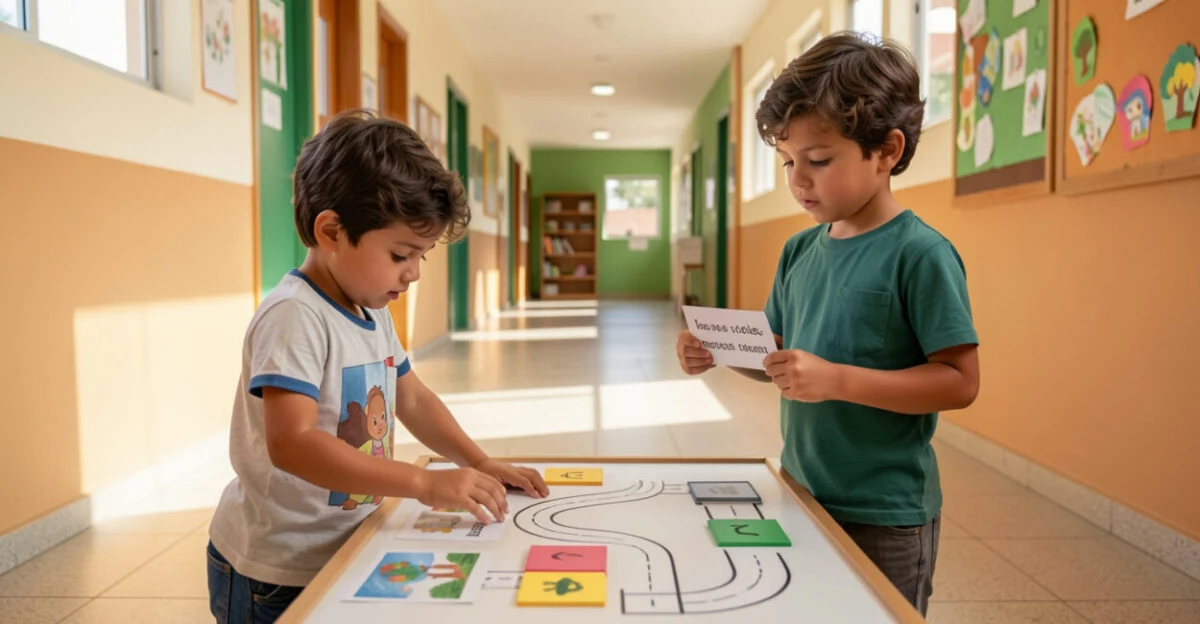
The same game can work for students at different levels if they all focus on the same skill with varying degrees of support. One student might get visual clues or fewer choices; another might explain a choice, write a sentence, or compare two spellings. In a reading-path game, for example, one child reads a word with picture support while another reads a sentence containing that word and explains its meaning. Both practice reading, but the tasks offer different levels of independence.
- To offer support: Reduce the number of cards, use a larger font, read the prompt aloud, or allow students to consult a reference chart.
- To increase the challenge: Remove pictures, include less familiar words, ask students to explain their choices, or add a written revision step.
- To track progress: Compare work from different points in time: accuracy, self-correction, need for clues, and ability to explain a choice.
Diagnostic literacy activities and a diagnostic assessment for the early grades can help identify students’ starting points. Teacher notes should describe what the child did, such as “read the word after breaking it into syllables,” rather than reducing performance to a label. The Center for Literacy, Reading, and Writing (Centro de Alfabetização, Leitura e Escrita, or Ceale) at the Federal University of Minas Gerais (UFMG) is a source of literacy research and materials. Each student’s experience and the class context matter too: an adaptation that helps one student may distract another, so observe how students respond and adjust as needed.
Progress shows when a child can explain, revise, or repeat the strategy practiced in the game with greater independence.
Mistakes that limit the educational value of games
Confusing rules, intense competition, and a lack of follow-up reduce the time students spend reading and writing. This often happens when students spend more time deciding who won or asking what to do than thinking about the words.
When the rules get in the way
Demonstrate a round and keep a short set of instructions visible. For games with many cards or steps, start with a simplified version; add rules once the class understands how to play.
When winning matters more than learning
If only the first-place player gets to participate, students who need more time may avoid trying. Rotate who reads, checks, and records. Cooperation doesn’t remove the challenge; it simply shares the language-related decisions among players.
When the game ends without a follow-up
A word game can energize the class without leading to much observable learning if no one revisits the spellings or strategies used. Set aside a few minutes to write a word, explain a choice, or reread a passage. Digital networks and ready-made materials can provide inspiration, but they can’t replace this closing discussion. Nor does every set of sentences or reading passage meet the class’s needs: review the content before using it.
Important
Don’t use speed as the only measure of performance. A child who reads slowly but notices and corrects a mistake is demonstrating a strategy worth noting.
How to plan the next series of activities
Plan the next round based on the evidence you gathered, not simply because you want to switch materials. If many students confuse beginning sounds, revisit oral comparisons and then connect them to letters. If their reading is accurate but choppy, use short sentences and purposeful rereading. Games can be used once or more during the week, depending on the lesson plan and the needs you observe; there’s no single schedule that works for every class. Games complement shared reading, writing, word analysis, and other activities, but they don’t replace regular exposure to texts and opportunities to write.
Choose a focus for the next lesson, gather words that fit it, and decide before the game what behavior will show progress. Then compare your notes with what the class produced in the wrap-up and adjust the level of support.
Frequently asked questions
What materials are best if the school has limited resources?
Homemade paper cards and a word chart are enough to play bingo, matching games, or reading-path games. The educational value comes from the rules and word choices, not from buying a commercial game.
How can I keep one student from answering for the whole pair?
Switch roles every round: one student reads, one checks, and one records. You can also ask both students to explain their choice before marking the point.
What should I do if a child refuses to read aloud?
Start with partner reading, shared reading, or a choice between two cards. You can observe participation without putting the student on the spot; increase the oral reading demands when the student feels more confident and the reading has a clear purpose.
Can I use the same game for several weeks?
Yes, as long as the skill or level of challenge progresses. Change the words, remove clues, or add a writing task so the game continues to require decisions.
How can I record results without turning the lesson into a test?
Write a brief note during the game, such as “identified the first syllable with support” or “reread and corrected the spelling.” These notes support instruction and can help you choose the next game.
Artigos Relacionados
 Fun First-Grade Math: Games, Activities, and Hands-On Ways to Explore Numbers, Shapes, and Logic
 Low-Cost Educational Games for Early Literacy
 Early Literacy Milestones and Games for Preschoolers
 Literacy Difficulties and Early Intervention: How to Identify Them
 Homework: How to Help Your Child Without Doing It for Them
 Middle School and High School: Criteria for a Diagnostic Assessment
