
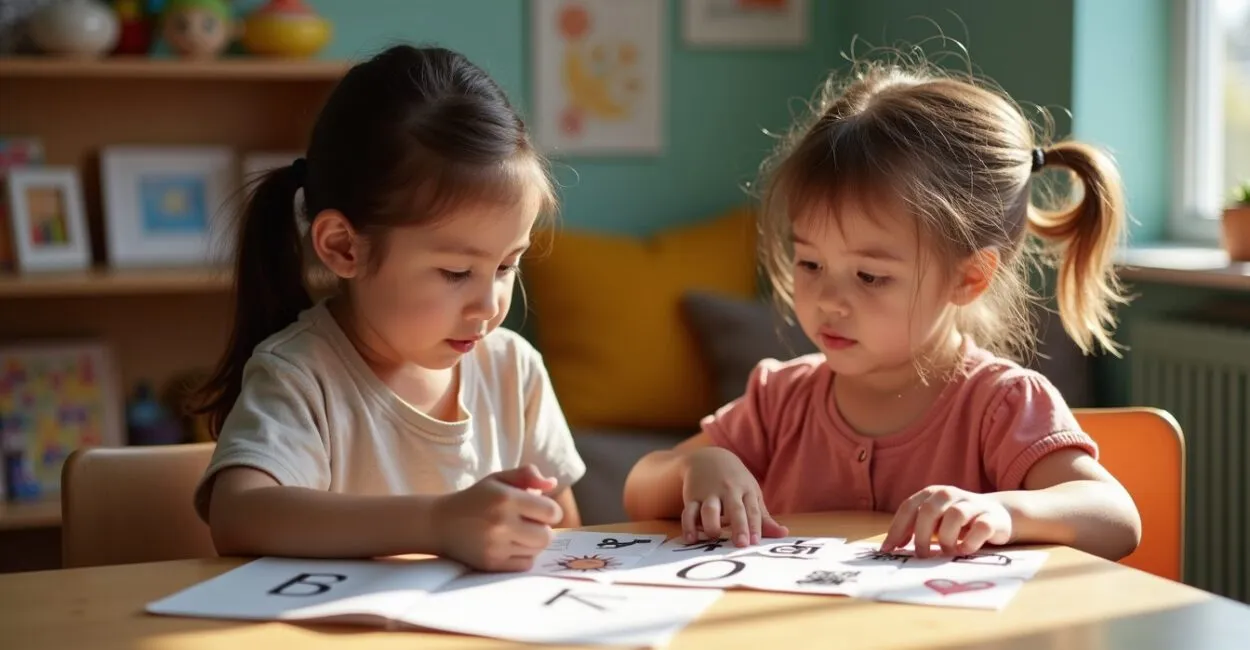
A child may recognize the letters in their own name and still have trouble hearing that “fan” and “van” begin with different sounds. To support this learning, dyslexia activities should target specific reading and writing skills in short steps that match what the child already knows. Dyslexia is a neurobiological learning disorder that primarily affects accurate, fluent word reading and can also affect spelling. The activities below can complement instruction and professional support at home or at school; they do not replace an evaluation or individualized intervention.
How Do You Choose Dyslexia Activities for Early Literacy?
Choose each activity based on an observable skill, such as identifying an initial sound, matching a letter to its sound, or reading short words. For children with dyslexia, early literacy activities tend to work best when they are explicit, gradual, and cumulative: the child learns a correspondence, practices with support, and then revisits it in new examples, without moving on before they are ready. Start with what the child can already do with some confidence. If they still confuse sounds, try listening games before asking them to read; if they can already read simple syllables, try short words with familiar patterns. Age can help you choose topics and materials, but the child’s learning level should guide the difficulty.

It also helps to notice what makes the task more accessible: movable letters, spoken instructions, fewer items on each page, or a pause between steps. A good starting point is to learn about general milestones in early literacy and how the process works, without treating the expected sequence as a rigid timeline for every child.
Which Activities Build Phonological Awareness?
Rhyming, segmenting, and sound-identification games help a child notice how spoken language is organized, both before and during reading instruction. Phonological awareness is the ability to think about the sound units of language, such as syllables and phonemes. A phoneme is the smallest sound that can distinguish words, as /f/ and /v/ do in “fan” and “van.”
- Initial sound hunt: Choose a sound, such as /m/, and look for objects or pictures whose names begin with it. Say each word aloud and emphasize the sound, without asking the child to write.
- Clap out the syllables: Say familiar words and clap once for each syllable. Then compare short and long words.
- Picture rhymes: Show pairs of pictures, such as “cat” and “hat,” and invite the child to find other words that end in a similar way.
The goal is sound awareness, not speed. If the child guesses from the picture, cover the illustration briefly and repeat the words; this small change can help you tell whether they are listening to the sounds or relying on another clue.
How Do You Connect Letters and Sounds Without Overwhelming a Child?

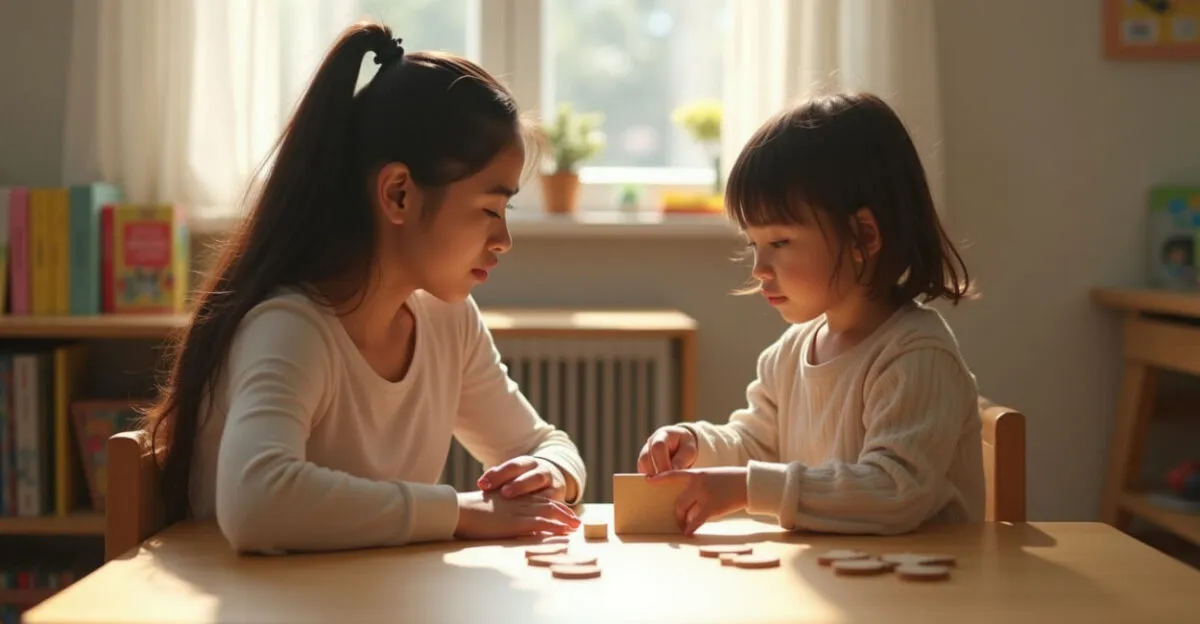
Teach grapheme-phoneme relationships explicitly, covering only a few at a time and spreading practice out over time. A grapheme is a letter or group of letters that represents a sound; for example, “sh” represents one sound in “ship.” The sequence should match classroom instruction and what the child has already learned.
A simple activity uses movable letters: say a sound, show two or three possible letters based on the material being taught, and ask the child to choose the correspondence they have learned. Next, build a syllable or short word, read it aloud, and take the letters apart. Building and taking apart words helps the child notice the order of sounds without relying only on pencil and paper.
The U.S. National Institute of Child Health and Human Development (NICHD) describes explicit, systematic instruction in speech sounds and letter-sound correspondences as components of reading instruction approaches. This is not a one-size-fits-all formula: the choices and pace should take into account the child’s response and guidance from educators or clinicians.
What Games Help Children Read Syllables, Words, and Short Sentences?
Matching games and repeated reading of familiar material help children practice decoding—that is, turning letters into sounds to read words. Start with patterns already taught, such as simple syllables, and gradually increase the complexity. A short sentence is useful only when its words do not require unfamiliar letter-sound correspondences. Make cards with syllables and ask the child to combine two to form a possible word. Then read the word aloud, find it in a short sentence, and talk about its meaning. Avoid using made-up words without explaining the purpose: they can be useful for testing decoding, but should not replace reading meaningful words.
Read also: Innovation in Educational Extracurricular Activities
Here’s an example of a progression: the child reads “ma” and “to” on separate cards, puts the parts together, and forms “mato.”
Then they read “The duck swims,” where the familiar word appears in context.
If reading becomes difficult, go back to the cards and reduce the number of words.
Progress means reading with understanding, not finishing the worksheet first.
To keep the activity playful without losing its learning goal, adapt ideas from educational games for learning through play, choosing activities that target one skill at a time.
Read also: Google My Activity, History, and Google Account: What’s Really Saved
Which Multisensory Activities Support Writing and Spelling?
Multisensory activities combine sight, hearing, speech, and movement to practice a skill, such as writing a letter while saying its sound. This approach may help some children focus on the sequence, but it does not eliminate the need for explicit instruction or guarantee the same results for everyone. Try having the child trace a letter with a finger in a tray of sand or flour, say its sound, and then write it on paper. For spelling, dictate a word the child has studied, ask them to build it with movable letters, and then write it down. Use just a few words and check whether the child can explain which sound they matched with each letter.
When writing, the most helpful support lets the child notice sounds, choose letters, and review their attempt without being afraid of making mistakes.
Some spelling difficulties persist even with practice, and errors can vary depending on how complex the word is or how tired the child feels. Keep track of patterns, such as omitted letters or spelling substitutions, to discuss with the school or the professional working with the child. Don’t label every mistake as a lack of attention.
How Can You Adapt Printable Activities and Materials at Home?
A printed worksheet should have just a few items at a time, short instructions, and enough space for the child to respond. Paper isn’t required: bottle caps, homemade cards, cutout letters, and household objects can serve the same purpose at lower cost and with more flexibility. Families looking for a free dyslexia activity workbook PDF may find a range of materials, but it’s worth checking who created them, what skill each page targets, and whether the words match what the child has already learned. Searching for “101 dyslexia activities PDF” or printable dyslexia activities does not guarantee that a file is suitable, up to date, or reviewed by a professional.
To adapt a page:
- Give one instruction at a time and cover exercises the child isn’t ready to do yet.
- Increase the spacing between letters and lines if that makes it easier to follow along visually.
- Allow the child to answer orally, point, or use movable letters before writing by hand.
Printable materials for educational therapy can be helpful, but they should support a specific goal set with the school team or professional. An activity from a PDF is not an intervention by itself; choosing the activity, guiding the child, and observing their response are all part of the work.
How Do You Track Progress and When Should You Seek Professional Support?
Track progress by recording a specific skill, the level of help needed, and how the child responded to the task. For example, note whether they identified the initial sound without cues, needed a model, or could repeat the skill with another word. Compare the child with their own past performance, not with classmates or timelines.
Keep sessions short and stop before fatigue turns practice into a struggle. During literacy instruction, a recurring error often points to the next step: if the child recognizes the letter but cannot connect it to its sound, review that correspondence before adding a whole list of words. This kind of everyday observation is more informative than counting completed pages.
The American Speech-Language-Hearing Association (ASHA) explains that reading difficulties can involve different skills and may require evaluation by qualified professionals. Contact the school and the child’s health care team if the difficulty persists, affects learning, or causes distress; an evaluation considers the child’s history and individual needs.
Activities should also align with educational therapy, speech-language therapy, or the child’s learning plan, when applicable. Learning about different teaching approaches and how to choose among them can help families coordinate strategies with the school without replacing guidance from the professionals responsible for the child’s care.
Question Short answer Where should we start? Choose a skill the child is ready to practice, such as hearing sounds or reading familiar syllables. What should we work on? Phonological awareness, letter-sound relationships, decoding, and writing with gradual support. Do we need a PDF? No; cards, movable letters, and household objects can also support learning. How do we assess an activity? Observe the skill, the support needed, and whether the child can use what they learned in another example. When should we seek an evaluation? If difficulties persist, affect learning, or cause distress, talk with the school and qualified professionals.
Next Steps: Choose One Skill to Practice
Choose just one activity, decide what you want to observe, and adapt the materials to the child’s current level. Then note what they were able to do and what support they needed. This information can help you decide whether to repeat the activity, adjust it, or talk with the team supporting the child.
Should You Correct Every Mistake During an Activity?
Correct calmly and choose the right moment based on the goal: when practicing a letter-sound correspondence, give the needed cue; during a comprehension reading activity, avoid interrupting after every word. Feedback should guide the next attempt without embarrassing or upsetting the child.
Can a Child Enjoy Reading and Still Have Dyslexia?
Yes. A child can enjoy stories and still have difficulty reading words accurately or fluently. Enjoying being read to does not eliminate the need to observe how the child decodes and spells.
How Long Should Each Session Last?
There is no ideal session length that works for every child. Choose a period that allows for attention and participation, with breaks as needed. Adjust for the child’s age, fatigue, task, and the guidance of the professionals involved.
Continue reading this series
Artigos Relacionados
 Diagnostic Literacy Assessment: 7 Activities to Try
 Phonological Awareness: 10 Activities for Better Reading Instruction
 A Guide to Early Childhood Education: Best Practices, Play-Based Activities, and Innovative Approaches to Whole-Child Development
 Brain Development: Practices for Early Literacy
 Supporting Emergent Literacy Through Playful Classroom Activities
 Building Reading Fluency in Children: Daily Routines and Activities to Improve Speed, Expression, and Comprehension in Elementary Students
