
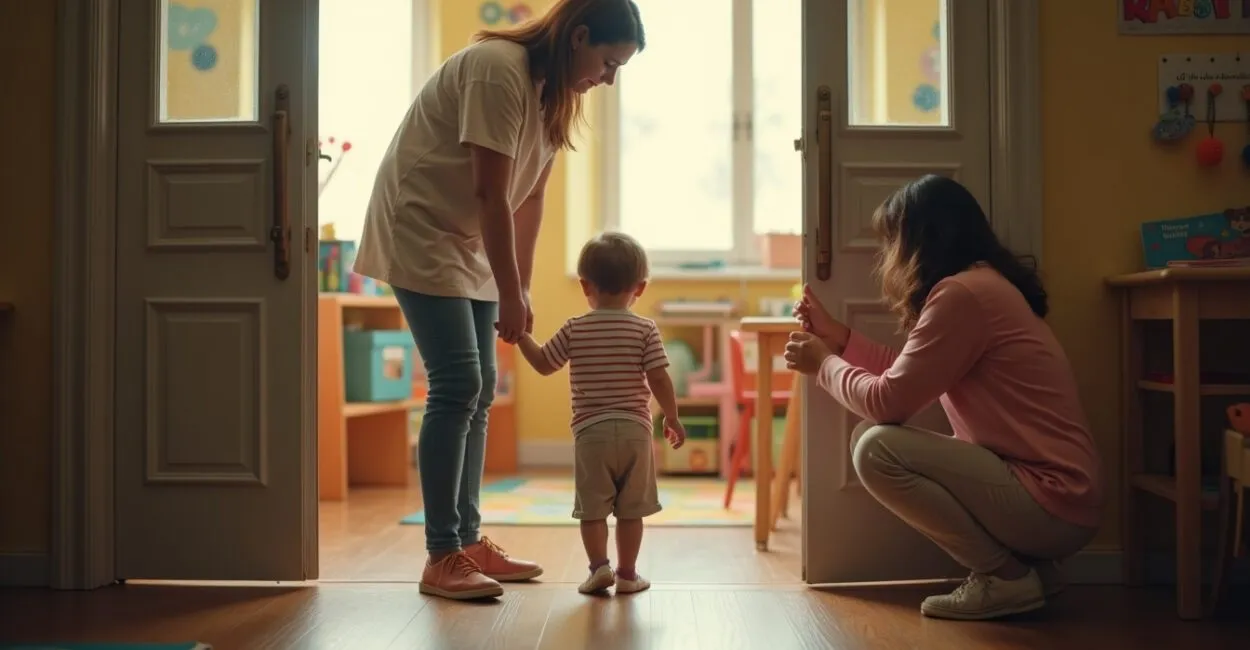
At the classroom door, one child may cling to a parent’s leg while others walk in without looking back. These different reactions are part of starting a new routine: school adjustment is the gradual process of building a sense of security, forming relationships, and becoming familiar with school.
This period may involve tears, silence, curiosity, or temporary changes in sleep and appetite. How long it lasts varies depending on the child, previous experiences, the support they receive, and the partnership between family and staff. There is no single timeline that works for everyone.

Before the First Day: What to Discuss
- Talk with the school about schedules, gradual transitions, and communication with the family.
- Tell the staff how your child usually asks to be held, shows they’re tired, and calms down.
- Plan sleep, meals, and transportation to avoid unnecessary changes that same week.
- Agree on a brief, honest goodbye, and don’t sneak away.
1. School Adjustment: Understand the Process and Respect Your Child’s Pace
School adjustment is the gradual transition from the relationships and routines of home to participating in school life. In everyday terms, children need to get to know the space, trust the adults who care for them, and learn that their parent or caregiver will come back after saying goodbye.
This process may take days or weeks, with progress and setbacks. Crying at first does not, by itself, mean that things are going wrong.
Look for specific signs instead of comparing children: Do they accept some contact with the teacher? Explore a toy? Calm down after their parent or caregiver leaves? A quiet child may also feel unsure, while another who cries at drop-off may join in play a few minutes later.
The timing of a child’s tears can be confusing for families. Some children protest intensely at goodbye but settle down once they join an activity; others seem fine during the day and show signs of fatigue or irritability at home. Staff feedback and behavior throughout the day can help put each child’s experience into perspective.
Trust grows when children find predictable adults and goodbyes that match what they’ve been told.
To learn more about how this phase relates to development, see this article on key milestones in child development.
2. Prepare Your Child for the New Routine at Home
Talk about school in concrete terms: who will greet your child, where they’ll spend time, and who will pick them up. Don’t promise they won’t cry or that everything will be fun; promises that are hard to keep can undermine trust. If the school offers a chance to visit beforehand, a walk-through can help make the place feel less unfamiliar.
Bring up school in conversations and play without turning it into an interrogation. Playing at packing a backpack, waving goodbye to a stuffed animal, or having a snack around the same time as the class lets your child practice parts of the routine. For age-appropriate ideas, see these educational play ideas for every stage.
The night before, set out clothes and supplies and stick to familiar sleep and meal routines as much as possible. A comfort item may help, if the school allows it and you agree on where it will be kept. Preparing doesn’t mean eliminating all anxiety; it means making the situation easier to understand and providing familiar, stable reference points.
3. Say Goodbye Briefly, Clearly, and Consistently

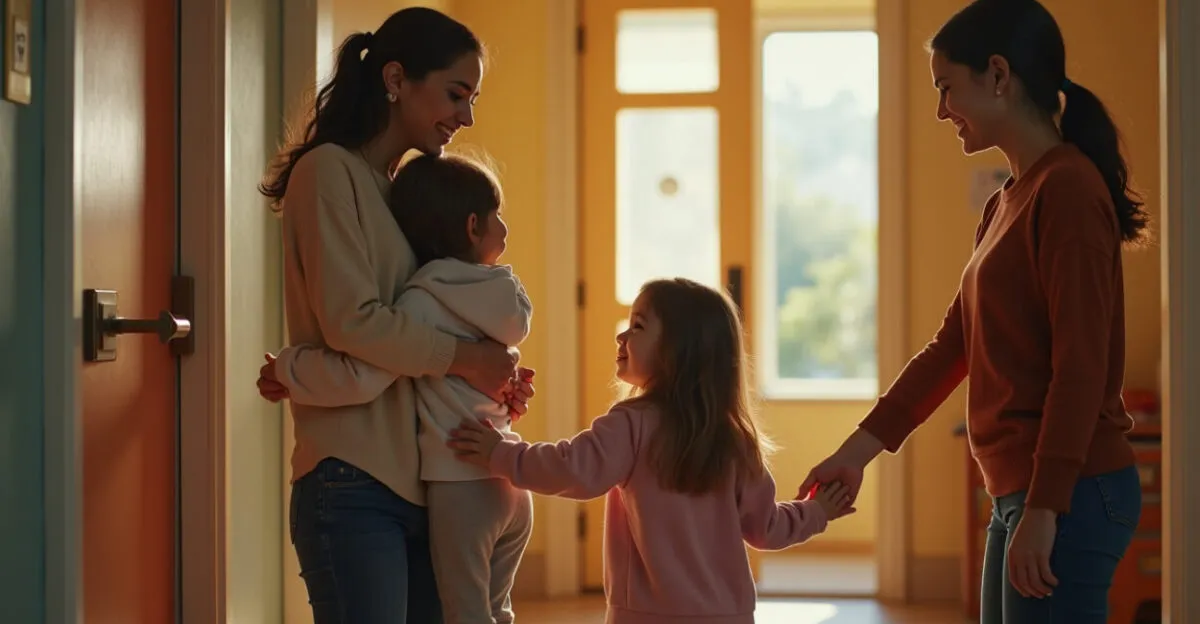
If your child cries, acknowledge their feelings and follow through on what you agreed: “I know you wanted me to stay. Your teacher will take care of you, and I’ll be back after snack time.” Say goodbye warmly, hand them over to their primary teacher, and leave without dragging out the moment. The staff can let you know how your child did after you left, using the communication channel you agreed on.
Sneaking away may stop the tears in the moment, but it can also leave your child unsure when an adult might disappear. Threatening, shaming, or saying “it’s nothing” can undermine communication. If goodbyes remain difficult, work with the school on a simple, repeatable ritual, such as putting away a coat, sharing a hug, and waving at the door.
Read also: School Partnerships: How to Support Elementary School Reading
Being consistent doesn’t mean being cold. Adults can show affection while offering reassurance through honest words, without negotiating endlessly about when to leave.
4. Work with the School on Support and Daily Communication
Families and schools need to share useful information without turning every drop-off into an evaluation. Tell the staff about recent changes, favorite kinds of play, allergies, how your child communicates, and strategies that usually help them calm down. The school, in turn, should explain who your child’s primary contact will be, what drop-off will look like, and how they’ll notify you if a significant problem comes up.
Read also: School Motivation: What to Say When Your Child Gets Discouraged
A brief, specific note is usually more useful than a general impression. “After a few minutes being held, they explored the blocks and drank some water” describes what happened; “they did well” doesn’t tell you what helped or what still needs attention.
Guidance from Brazil’s Ministry of Education and early childhood education principles emphasize interaction and play as foundations of teaching. In everyday practice, this means having available adults, accessible spaces, and activities that let children observe before joining in.
5. Plan Early Childhood Adjustment Through Play and Relationships
In early childhood education, the week’s plan should make room for welcoming experiences, not a rigid sequence of tasks. Brazil’s BNCC, the national curriculum guidelines, can help guide this work by bringing learning rights such as socializing, playing, participating, and exploring into everyday situations: getting to know the classroom with a teacher, choosing a toy, or joining a short group activity.
A lesson plan for adjustment week might include individual greetings, free exploration of safe materials, stories about separation and reunion, music, and caregiving routines. Staff can adjust the length and level of participation based on what they observe. Forcing every child to join the same activity at the same time may increase stress.
To create an early childhood adjustment plan for the week, including a PDF for staff use, record the goal, activity, materials, responsible adults, and alternatives for children who prefer to observe. The search phrase “early childhood adjustment according to the BNCC” is most useful when the plan shows how interaction and play inform practical decisions, rather than simply mentioning the acronym.
6. Tailor Support for 2-Year-Olds and Infants in Daycare
In daycare, children may not yet have the words to explain that they’re tired, hungry, or missing their family. Staff therefore pay attention to gestures, crying, posture, seeking to be held, and changes in interest in play. For 2-year-olds, predictable care matters just as much as the educational activities.
Share information about sleep, meals, diaper changes, comfort items, and ways to soothe your child. If the school allows it, a gradual start can begin with shorter periods and increase based on the child’s response and the family’s circumstances. The approach depends on the school’s situation; there is no universal schedule that works for every daycare.
Consistent adults and a familiar routine help children anticipate what comes next. In practice, giving them a heads-up before changing activities and keeping the same welcoming routine can prevent each transition from feeling like a surprise.
7. Track Progress and Notice When Difficulties Continue
An early childhood adjustment report should document observable facts, context, and strategies that helped. Include how drop-off went, what interactions took place, how the child participated in care routines and play, how long they needed to settle, and what will be adjusted. Avoid labels such as “difficult” or comparisons with classmates.
The report can also guide the next step: keeping the current schedule, extending the time at school, or revising the approach to support. If distress remains intense with no signs of easing, significantly affects sleep or eating, or occurs alongside a major change in behavior, the family and school should talk and consider seeking professional guidance. These signs deserve attention, but they don’t by themselves mean that a child has a disorder.
UNICEF Brazil offers resources on child development and protection; still, every situation needs to be considered in the context of the individual child. Adjustment time depends on individual factors and the quality of support, and can’t be accurately predicted based on age alone.
At the end of each day, write down one observation and one question to discuss with the staff. This habit turns worry into practical follow-up and helps you adjust the routine without rushing your child.
Frequently Asked Questions
Should I Pick Up My Child Early During the First Few Days?
This can be a good approach when the school recommends a gradual transition and your child seems to need more time to adjust. Agree on a schedule and criteria with the staff instead of changing the length of the day unpredictably.
What Should I Do If My Child Doesn’t Tell Me About Their Day?
Not every child can talk about their experience, especially at age 2. Ask specific questions without putting pressure on them, such as “What toy did you see?” and talk with the teacher to learn about meals, play, and rest.
Can My Child Bring a Comfort Item from Home?
It can provide a sense of familiarity, as long as it’s safe and the school allows it. Agree with the staff on when the item will be available and how to prevent it from getting lost or causing disagreements among the children.
Artigos Relacionados
 How to Teach Elementary School Kids About Money
 A School Garden in Early Childhood Education
 First-Grade Curriculum: Essential Subjects, Skills, and Tips for Supporting Your Child’s Learning
 Reading Comprehension Strategies for Children: Guided Questions, Mind Maps, and Summaries to Improve Interpretation and Retention in Elementary School
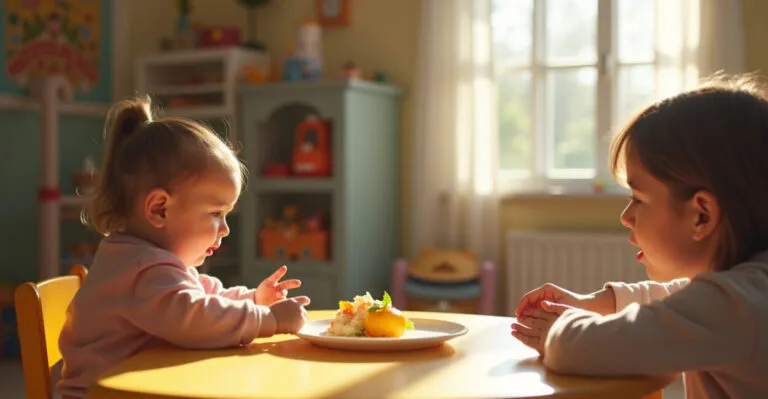 School Adjustment in Early Childhood Education: How to Help
 The Pomodoro Technique for Studying: 5 Steps to Get More Done in High School
