
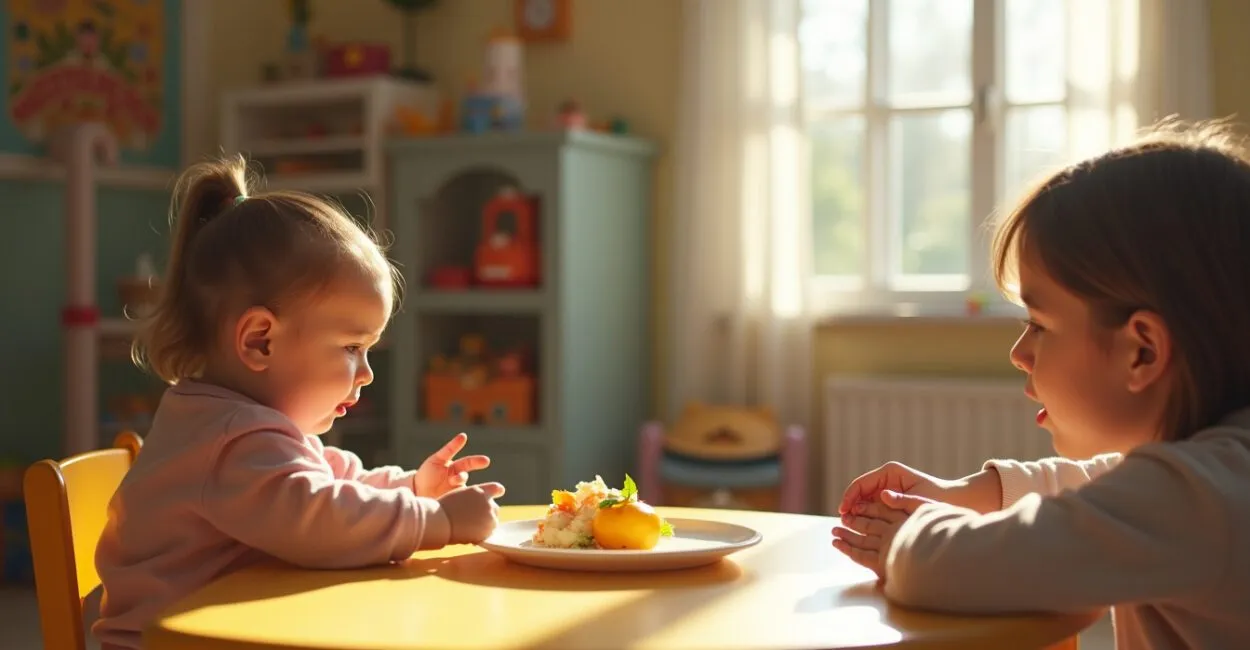
During the first week of day care, a child may accept a snack and still cry when they realize their caregiver is leaving. This is common: school adjustment involves building trust with new adults, spaces, and routines, and each child responds to these changes at their own pace. To make the transition smoother, families and schools need to agree on a predictable goodbye, share information about the child’s care, and observe how the child is doing after drop-off. Crying calls for comfort and attention; on its own, it does not mean the experience is going badly.
In Brief
- The process takes place through the relationship between the child, family, and school staff—not just at the classroom door.
- There is no set timeline: attendance, temperament, routines, and previous experiences all influence the pace.
- Clear, brief goodbyes are usually more helpful than sneaking away or prolonging the separation without coordinating with staff.
- Notes on sleep, eating, play, and seeking comfort help the school adjust the routine.
What Is School Adjustment in Early Childhood Education, and Why Does It Matter?
School adjustment is the process of transitioning and building relationships that a child goes through when starting at an educational setting or moving to a new group and routine. In early childhood education, this involves learning to rely on educators for care, exploring new spaces, and gradually joining the group. For families, it also means building trust in the staff and agreeing on how to communicate.

The process may involve protesting at separation, needing more cuddles, temporary changes in sleep, or changes in appetite. These behaviors should be considered alongside the rest of the day: a child who cries at drop-off and then plays, accepts a snack, and seeks out the teacher is showing a different pattern from a child who remains distressed for long periods.
One everyday detail can help prevent hasty conclusions: crying often returns during transitions, such as arrival, moving to a different setting, or bedtime, even after a child has started to feel secure in the classroom. That’s why staff should look at the whole routine rather than judging the process by the few minutes around goodbye.
How to Prepare the Child and Family Before the First Day
Preparing doesn’t mean rehearsing a promise that everything will be easy. It means sharing simple, truthful information: who will drop the child off, who will be at school, and when the family will return. For young children, predictability comes more from repeated actions and a familiar routine than from long explanations.
- Talk with the school about schedules, meals, sleep, health, comforting strategies, and permitted comfort items.
- Use short sentences to tell the child what will happen: “You’ll play with your teacher, and I’ll be back after snack.”
- If possible, visit the space and meet the educators before the start date. When you can, avoid scheduling other major changes for the same period.
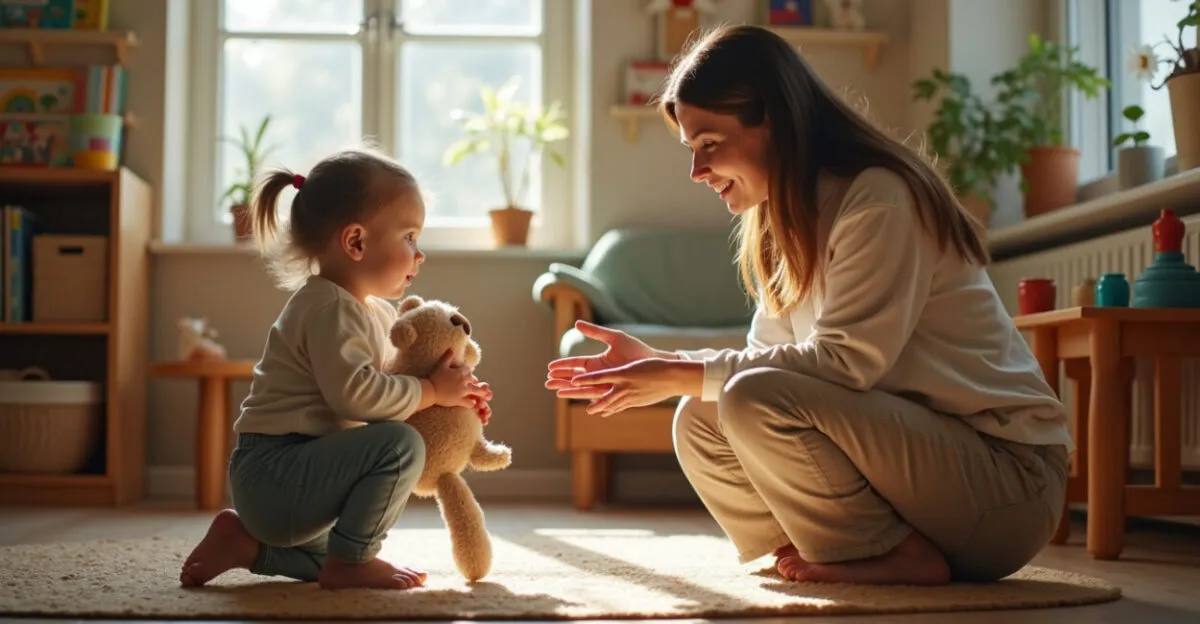
- Agree on a warm, consistent goodbye. Say that you’re leaving and will be back; don’t disappear without telling the child.
The school needs to prepare, too. Information about allergies, words the child uses at home, sleep habits, and signs of distress helps staff provide consistent care. Predictable routines, including meals and rest, can be planned in collaboration with families; mealtimes in early childhood education, for example, deserve attention when a child is starting to eat in a new setting.
How to Organize an Adjustment Week in Early Childhood Education

There is no universal schedule that works for every classroom. A school may start with shorter days, gradually extend the child’s time as staff observe how they’re doing, and revisit the plan with the family. An adjustment week can be a starting point for planning a warm welcome, but it shouldn’t become a countdown that requires every child to stay for the same amount of time.
A lesson plan for an adjustment week in early childhood education can include exploring the space, free-choice play, familiar songs, stories, and calm, unhurried caregiving. The goal isn’t to fill every minute with activities: time to observe, get closer to the educator, and stay near a familiar object is part of the experience, too.
An Example of an Everyday Adjustment
A child arrives with their caregiver and cries when they say goodbye.
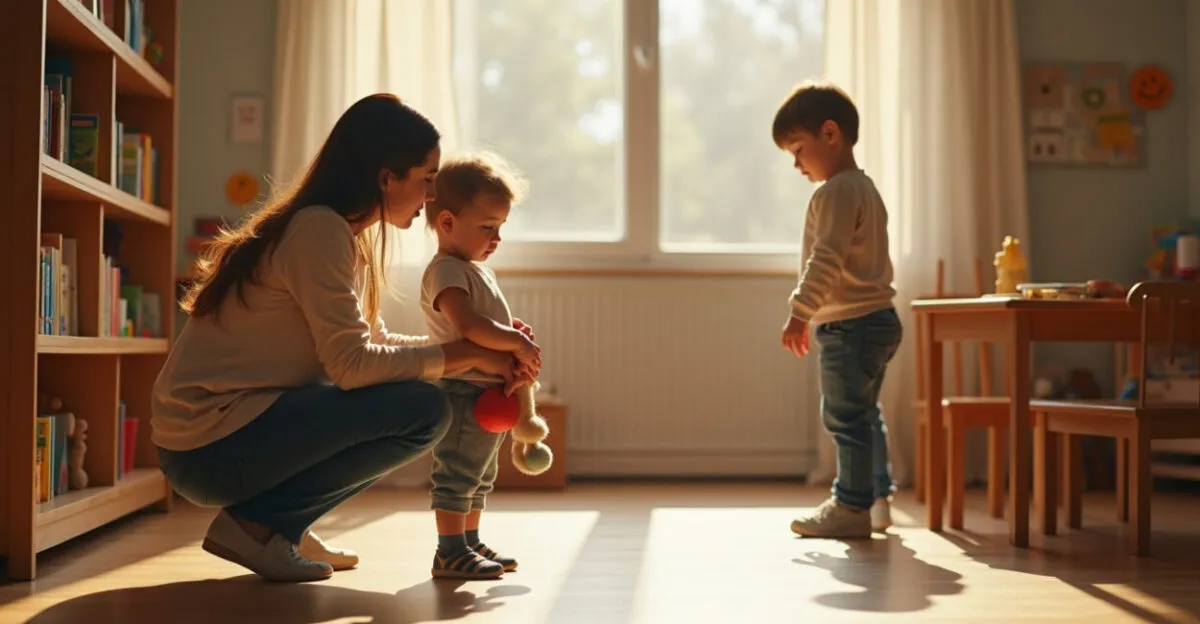
The teacher comforts the child and offers two play options without pressuring them to choose right away.
Read also: School-Family Partnership: How to Support Reading in Elementary School
Later, the family receives an update on what happened after drop-off, including whether the child drank water and sought contact with someone.
This kind of specific record helps distinguish difficulty with separation from distress that continues throughout the day. If the child is very upset, staff can revisit the schedule, comfort strategies, and communication plan rather than treating the original plan as set in stone.
Read also: What Does Creative Early Childhood Education Mean?
How to Handle Crying and Resistance at Drop-Off
Yes, crying during the first few days can be part of a child’s response to separation and new experiences. The most helpful response is to acknowledge their feelings, keep the goodbye clear, and let the school staff handle the arrival as agreed. Promising that the caregiver won’t leave or sneaking away can make the situation less predictable for the child.
If staff approve having the caregiver stay for a while, agree on how that support will be phased out. Some children need to observe first; others quickly accept contact with the educator. Pressuring a child to join an activity or trying to stop the crying at all costs can increase tension.
Families can ask the school how long the child cried, what helped them calm down, and how they did for the rest of the day. The answer should go beyond “they cried” or “they didn’t cry”: Did they seek comfort? Accept food or water? Explore a toy? These details make the conversation more concrete and help determine the next step.
How to Strengthen the Family-School Partnership
Adjustment and a warm welcome in early childhood education depend on consistent communication. The school knows what happens in the group; the family knows the child’s cues, habits, and important sources of comfort. Sharing these observations helps each side understand the situation in context.
Agree on a channel and time for updates that works with the educators’ schedule. Brief reports about sleep, meals, bathroom use, play, and moments of distress are more useful than a stream of messages throughout the day. Staff should, in turn, describe specific events and explain how they responded.
A well-organized partnership also makes it possible to talk about participation and well-being over time. Observation and pedagogical documentation practices can support this discussion when they’re based on the child’s everyday experiences, without turning drop-off into a performance test.
School Adjustment at Age 2: What to Consider in Day Care
During school adjustment at age 2, a child may not yet have the language to explain that they miss someone, feel afraid, or are tired. Their body and behavior communicate a lot: they may seek cuddles, move away from the group, repeat a play activity, or show discomfort when the routine changes. Staff should offer a steady presence and observe what helps, without expecting a verbal explanation the child isn’t yet able to give.
At day care, it’s worth agreeing on small details of care that can make a big difference: how the child usually falls asleep, what words they use to ask for water, whether they have a comfort item, and which foods they already eat. Respecting these cues doesn’t mean keeping the child apart from the group; it means providing a bridge between familiar comforts and new relationships.
There is no one-size-fits-all formula for every 2-year-old. A recent change at home, an illness, inconsistent attendance, or a previous experience with separation can affect a child’s response. If distress persists or intensifies, the family and school should revisit the plan together and, when needed, talk with the child’s pediatrician or another professional who supports them.
Brazil’s BNCC, Documentation, and Signs of Progress
School adjustment in early childhood education under the BNCC—the Brazilian National Common Curricular Base—should respect children’s learning and development rights and recognize interaction and play as foundational elements of this stage. The framework guides pedagogical work, but it doesn’t provide a fixed schedule of days, times, or steps for every child. Consult the Brazilian Ministry of Education’s National Common Curricular Base along with the school’s educational plan.
To track the process, an early childhood education adjustment report should describe observable events in context, not label the child. “Cried at goodbye, accepted comfort, and then explored the blocks” is more informative than calling the child “difficult.” The report should also describe the context and the strategies staff used.
- What happened at arrival and how long the child needed support at that time.
- Whether the child sought out educators or peers, explored materials, and joined in play.
- How the child responded to meals, rest, and other parts of the routine.
- Which situations caused distress and which responses seemed to help.
- What adjustments the family and school will make next.
A report shouldn’t promise that a child will be adjusted by a specific date. The timeline varies, and factors such as attendance, temperament, health, and family changes affect how things progress. If the child has no moments of comfort during the day, consistently avoids interaction, or shows persistent changes that concern the family, the school should discuss next steps with the caregivers.
A simple next step is to agree, before the start or at the next meeting with staff, on a goodbye routine, what information will be shared, and when the plan will be reviewed. This clarity helps families follow the process without expecting the child to meet a timeline that isn’t entirely up to them.
How Long Does Adjustment in Early Childhood Education Usually Take?
There is no set timeline. It depends on the child, attendance, routines, and how the family and school organize the transition.
Should I Go Back to Pick Up My Child if They’re Crying a Lot?
Talk with the staff before deciding. They can tell you whether your child was able to calm down and what happened after you left; if the distress remains intense, it may be worth revisiting the plan together.
Is It Better to Stay in the Classroom with My Child for the First Few Days?
It depends on the school’s approach and how your child responds. If the caregiver’s presence is part of the plan, it’s helpful to agree from the start on how that participation will change over time.
Can I Send a Toy or Comfort Item from Home?
Check the school’s rules and choose something safe, easy to identify, and suitable for a group setting. A familiar object can offer comfort, but it doesn’t replace a relationship with the educators.
What Should an Adjustment Report Include?
Record observable events: arrival, seeking comfort, play, meals, rest, moments of distress, and staff responses. Include the context and next steps, and avoid making judgments about the child’s personality.
When Should the Family Talk with a Health Professional?
If distress persists, worsens, or comes with significant changes in sleep, eating, or behavior, talk with the school and the pediatrician first. School staff don’t replace a health evaluation when one is needed.
Artigos Relacionados
 What Age Should Kids Start School in Europe? A Guide
 A School Garden in Early Childhood Education
 Recycled Toys for Early Childhood Education: How to Make Them
 Environmental Activities for Early Childhood Education
 Outdoor Pedagogy: The Swedish Model Explained
 The Montessori Method: How It Works in Europe
