
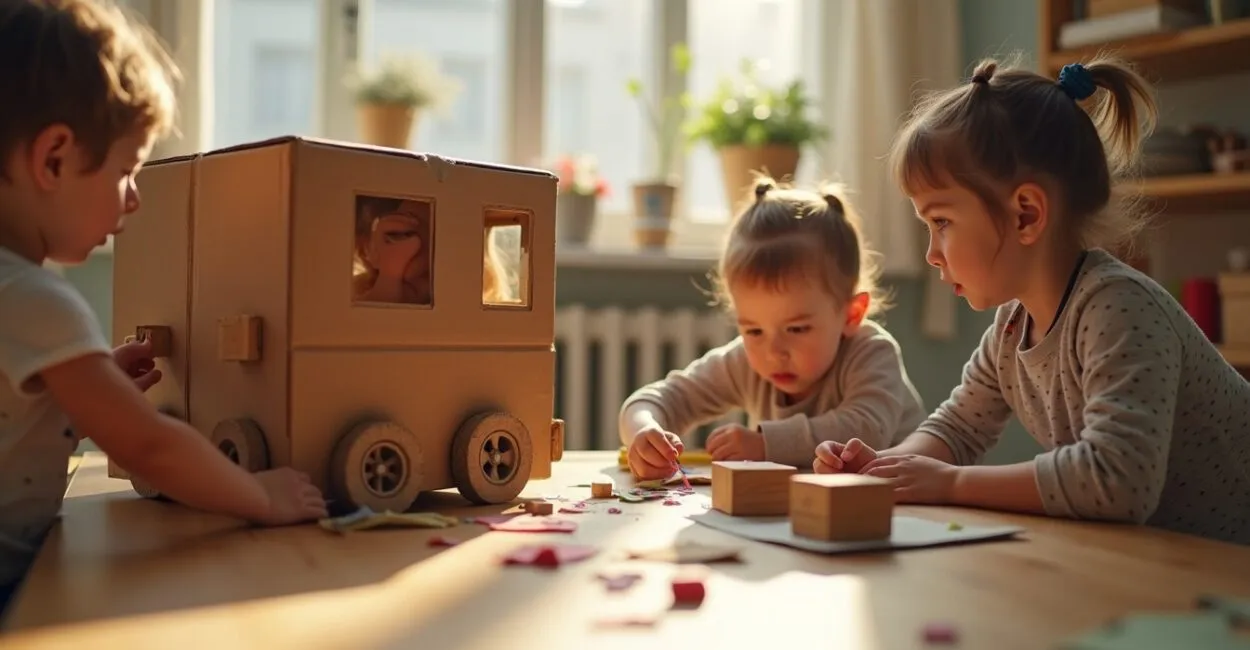
A cardboard box can become a store, a bus, or a rocket before anyone even picks up a pencil. Creative early childhood education builds on this ability to imagine, turning curiosity, play, and exploration into learning opportunities.
From a pedagogical perspective, it organizes purposeful experiences that let children investigate, express ideas, make choices, and learn through interactions with people and materials. This can happen during a conversation, while building with blocks, or when trying to figure out why a shadow moves.

Key Takeaways
- Creativity in early childhood means imagining, testing possibilities, and developing responses—not just making art projects.
- A playful activity has educational value when it has an age-appropriate goal and gives children room to make decisions.
- Simple, safe materials can support language, motor coordination, math thinking, and social skills.
- Observing children’s strategies, questions, and interactions offers insight into their learning without reducing them to a finished product.
What Creative Education for Young Children Means
Creative early childhood education is a pedagogical approach that offers open-ended, purposeful experiences for young children to explore, communicate ideas, and build knowledge through play and interaction. It supports different areas of child development and respects individual pace. In practice, it means planning meaningful experiences without dictating a single answer or outcome.
In this context, creativity shows up when a child invents a rule for a game, finds a new use for an object, or explains a discovery in their own words. Drawing, music, and modeling can all be part of it, along with exploring nature, dramatic play, conversation, and solving small challenges.
This approach aligns with the guidelines of the Base Nacional Comum Curricular (BNCC), Brazil’s national curriculum framework, which organizes early childhood education around learning rights and fields of experience. Planning can start with specific goals, but it should leave room for the unexpected: a question from the group may lead to a richer investigation than the planned activity.
Why Creativity Matters for Child Development
When children create and play, they exercise executive functions, such as planning an action, keeping an idea in mind, and adjusting their strategy when they encounter an obstacle. They also expand their vocabulary, negotiate meaning, and learn to live with different perspectives. These processes happen together, although each child shows progress in their own way.
Play is central because it offers a safe setting for trying out roles, rules, and ideas. In pretend play, for example, a child might act out a doctor’s visit and organize the sequence of events; with blocks, they might compare heights and test balance. UNICEF highlights play as an important part of children’s development and learning.
This doesn’t mean every game needs to become a disguised lesson. Sometimes free exploration is enough. Adult involvement is most helpful when it opens up a possibility, introduces new vocabulary, or helps keep children safe without taking over the activity.
Principles for Creating Meaningful Learning Experiences

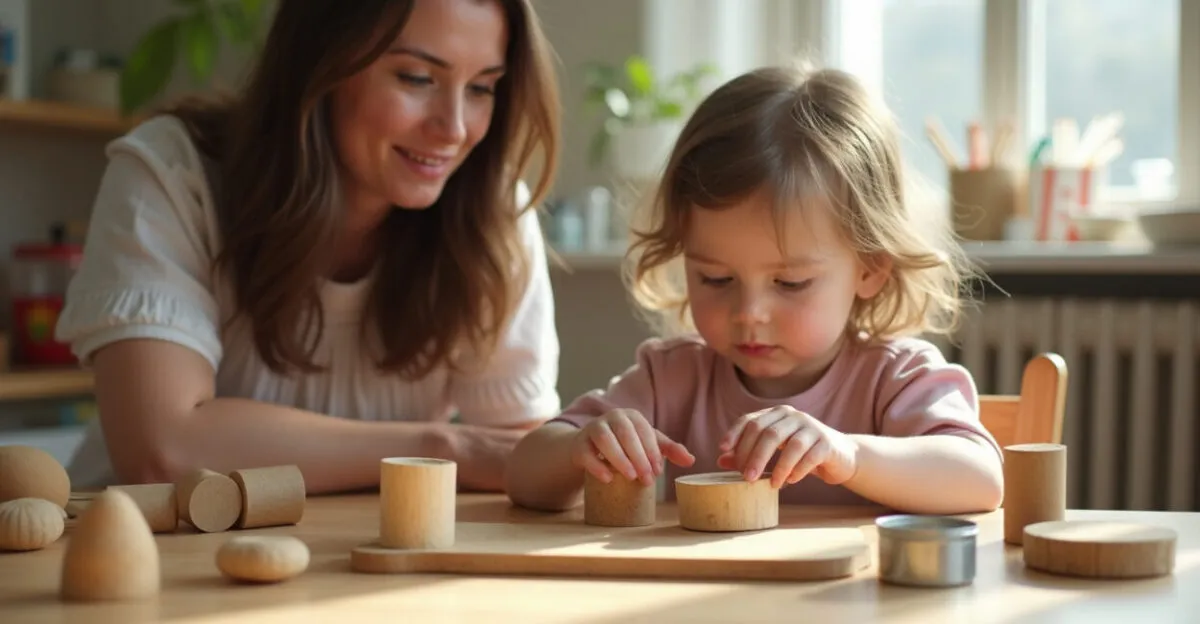
A well-designed activity starts with an observable intention, such as encouraging children to compare sizes or tell a sequence of events. The educator then chooses accessible materials and prepares an environment where children can make choices. The guiding question should open up possibilities, not lead children to a predetermined answer.
Read also: Early Childhood Pedagogy: Teaching and Learning
- Start with genuine interests: Notice what sparks questions, conversations, or recurring games.
- Offer a variety of materials: Pair structured items, such as blocks, with safe everyday objects.
- Allow time to repeat: Many children need more than one try before changing their strategy.
- Ask open-ended questions: “What did you notice?” often prompts more exploration than “Is that right?”
A common mistake is showing children the finished product before they begin. When an adult demonstrates exactly how a structure should look, many children copy the model, leaving less room for their own decisions. It’s also important to check for small parts, sharp edges, allergies, and the need for supervision based on the child’s age and the materials used.
A creative experience starts with a learning goal and becomes meaningful when children can choose how to take part.
Read also: The Classroom of the Future: Emerging Technologies Transforming Education
Creative Activities for Different Areas of Development
Creative activities for early childhood education can support several areas of learning at once. The goal doesn’t have to be complicated; a familiar scenario, simple materials, and a good question can encourage observation, language, and collaboration.
Activity
Suggested age
Learning focus
Safety considerations
Explore sounds using tightly sealed containers
Ages 2–4
Auditory perception and comparison
Avoid small parts and check that containers are sealed
Build a bridge with large blocks
Ages 3–5
Balance, planning, and spatial awareness
Use pieces appropriate for the age group
Create a pretend store
Ages 4–6
Language, counting, and negotiating roles
Use clean packaging with no sharp edges
In a pretend store, for example, some children might sort packages by type while others make up prices or play the customer and cashier. The educator might ask how to arrange the products so they’re easier to find. The conversation creates an opportunity to practice sorting and counting without interrupting the story the children have created.
To expand your options, explore these educational play ideas and choose ones that suit the children’s interests and available resources. An activity doesn’t have to work the same way for every child; changing the materials or how children participate can be part of the plan.
How to Adapt Activities for Age and Individual Needs
Age can help guide choices, but it doesn’t determine what a child can do on its own. Prior experience, communication, mobility, sensory sensitivities, and cultural context also affect participation. Suggested age ranges should be treated as a guide, not a deadline for reaching a particular level of performance.
For younger children, short activities, large materials, and guided exploration are often a better fit. Preschoolers may be ready for challenges with more steps, combinations of materials, and agreements among peers. For an overview of developmental stages, see our article on child development and age-appropriate activities.
If a child doesn’t communicate through speech, they can point, choose pictures, gesture, or handle objects. If they have motor difficulties, larger materials or stable surfaces may make participation easier. These adaptations don’t replace an individualized plan when one is needed. For children with disabilities or specific support needs, families, schools, and the professionals working with the child should coordinate their approach.
The Role of Educators and Families
Adults create the conditions for exploration and pay attention to what happens: they observe, listen, record children’s words, and step in when a child needs support or when there’s a safety risk. At school, this means organizing the environment and communicating with the team; at home, it might mean setting aside time to play without turning every interaction into a structured exercise.
Communication between families and schools helps connect children’s interests across both settings. A child who collects leaves on the way to school might bring that curiosity into an observation activity, as long as the materials are safe and the exploration respects the group’s space and routine.
To learn more about the relationship between learning goals and teaching strategies, see this resource on pedagogical methods suited to each child. No method guarantees results on its own; outcomes depend on the child, the activity, relationships, and available resources.
How to Assess Learning Without Limiting Creativity
Assessment in early childhood education should track processes, not categorize children by their finished products. Brief notes on what children say, authorized photos of different stages, and observations of their strategies can show changes in participation, communication, or problem-solving. Brazil’s Lei de Diretrizes e Bases da Educação Nacional (National Education Guidelines and Framework Law) calls for monitoring and recording children’s development, without using it to determine promotion to elementary school.
When reviewing an activity, educators can ask: Who found their own ways to participate? Which materials prompted exploration? When was support needed, or the environment rearranged? These observations can guide future learning activities, but they shouldn’t become a rigid checklist of milestones that every child must meet in the same way.
For the next activity, choose one small goal, prepare two or three possible materials, and observe what the children do before stepping in. This simple record can help you adjust the next activity based on what actually happened rather than assuming how the group should learn.
How Can You Encourage Creativity Without Buying Materials?
Use safe everyday objects, such as large boxes, fabric, and sturdy containers, with appropriate supervision. What matters is the potential for exploration and the conversations that emerge, not the price of the materials.
Can Free Play Support Learning?
Yes. In free play, children choose themes, make up rules, and test ideas while adults observe and ensure a safe environment. Play doesn’t always need an explicit academic goal to support development.
What Should You Do When a Child Isn’t Interested in an Activity?
First, consider whether the activity fits the child’s interests, communication style, and time of day. They may prefer to watch before joining in, choose different materials, or take part in another step of the activity. If they continue to refuse in different situations, talk with the team and family to understand the context.
Artigos Relacionados
 Exploring the World Through the Senses: 10 Creative, Safe Sensory Activities to Support Early Childhood Development
 Women’s Day Cards for Early Childhood Education: Creative Ideas, Inspiring Messages, and Fun Activities to Celebrate Gender Equality
 School Adjustment in Early Childhood Education: How to Help
 Recycled Toys for Early Childhood Education: How to Make Them
 Environmental Activities for Early Childhood Education
 Outdoor Pedagogy: The Swedish Model Explained
