
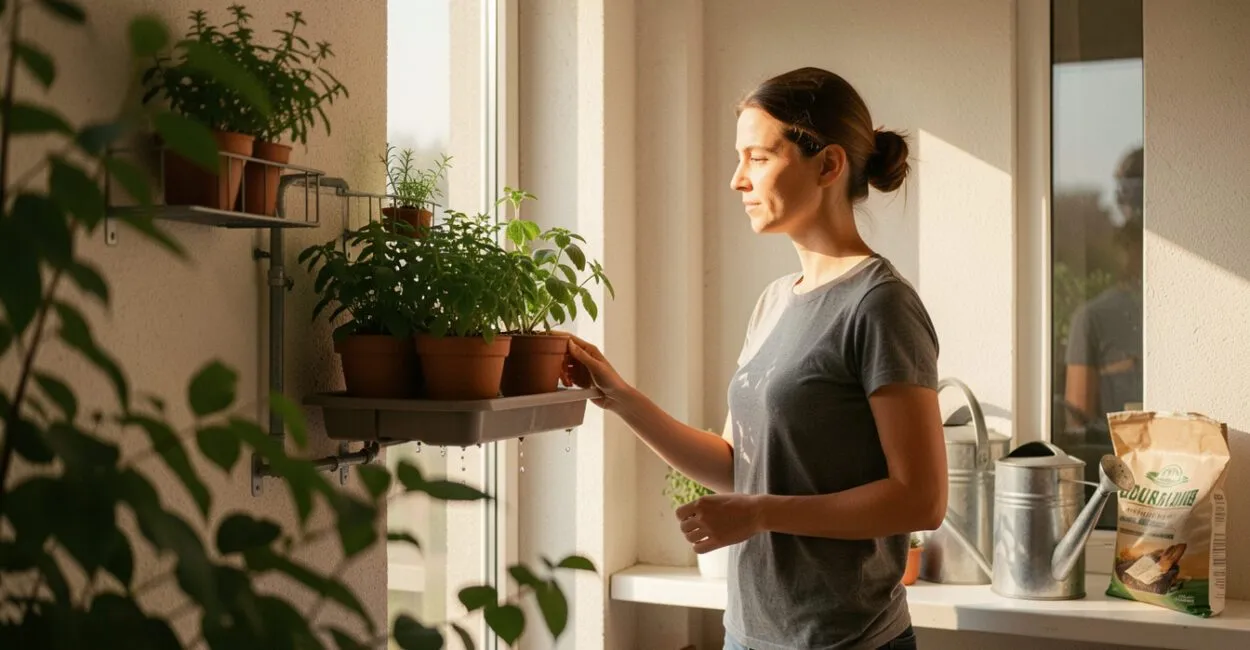
Garden Vertical in an Apartment: A Guide to Getting started from Scratch
An empty wall may seem like the perfect place to grow plants—until too little sunlight, the weight of wet planters, and dripping water make the idea more complicated.

An apartment vertical garden works best when you choose the location before the support. Observe how much light the spot gets throughout the day, make sure you can water the plants without wetting the wall, and start with a few plants that suit those conditions.
This approach helps you avoid a common mistake: setting up an attractive structure only to find that the herbs don’t get enough light or watering has become a problem for the floor. Once you’ve figured out light, weight, and access to water, it’s easier to choose containers and plants with confidence.
Read also: Plants for a Vertical Garden: 9 Options for Apartments
Vertical Gardens: An Empty Wall May Not Be the Best Spot
To create an apartment vertical garden, first choose a spot with suitable light, good airflow, and easy access for watering. Also check the wall’s strength and where the drainage water will go. Then choose a support, planters, and plants that suit those conditions.
Light changes in intensity and direction throughout the day. Observe the space at different times over several days, and note whether it gets direct sun or indirect light. The difference matters: some plants tolerate indirect light, while herbs grown for their leaves, such as basil, typically need more sun. If the spot is shady, choose plants that tolerate those conditions or consider another area. A grow light can supplement natural light, but it won’t solve every limitation.
Read also: Watering a Vertical Garden: How to Prevent Waterlogged Roots
Imagine installing planters on a sunny wall that’s hard to reach. The first time you water them, water drips behind the structure and stains the paint. The fix is simple: test watering with a container in place before securing everything. Embrapa Hortaliças, part of Brazil’s agricultural research agency, offers growing guidance that helps explain why plants have different needs.
Weight and Drainage Affect Your Choice of Planters
A vertical garden groups containers and plants in a structure mounted on or leaning against a vertical surface. In everyday terms, it’s a way to grow plants upward; technically, each planter still needs support, drainage, and room for roots. The setup gets heavier after watering, so check the mounting and the wall before installing it.
Choose planters with drainage holes and a lightweight potting mix made for container gardening. Without a tray or collector, drainage holes can let water run down the wall and onto the floor; water left sitting at the bottom can lead to waterlogged roots. A removable collection tray makes it easier to empty excess water and clean the setup.
Clip-on supports or freestanding structures may be easier to inspect than a heavy unit attached to the wall. Still, load capacity depends on the materials and installation. If you’re unsure about the wall or mounting points, consult a professional. Reusing materials can also reduce waste, as long as they’re clean and safe to use. Explore creative recycling ideas without turning just any container into an improvised planter.
- Don’t install planters without checking how heavy they’ll be after watering.
- Don’t use containers without a way for excess water to drain.
- Don’t choose plants based on looks alone: check each plant’s light requirements.
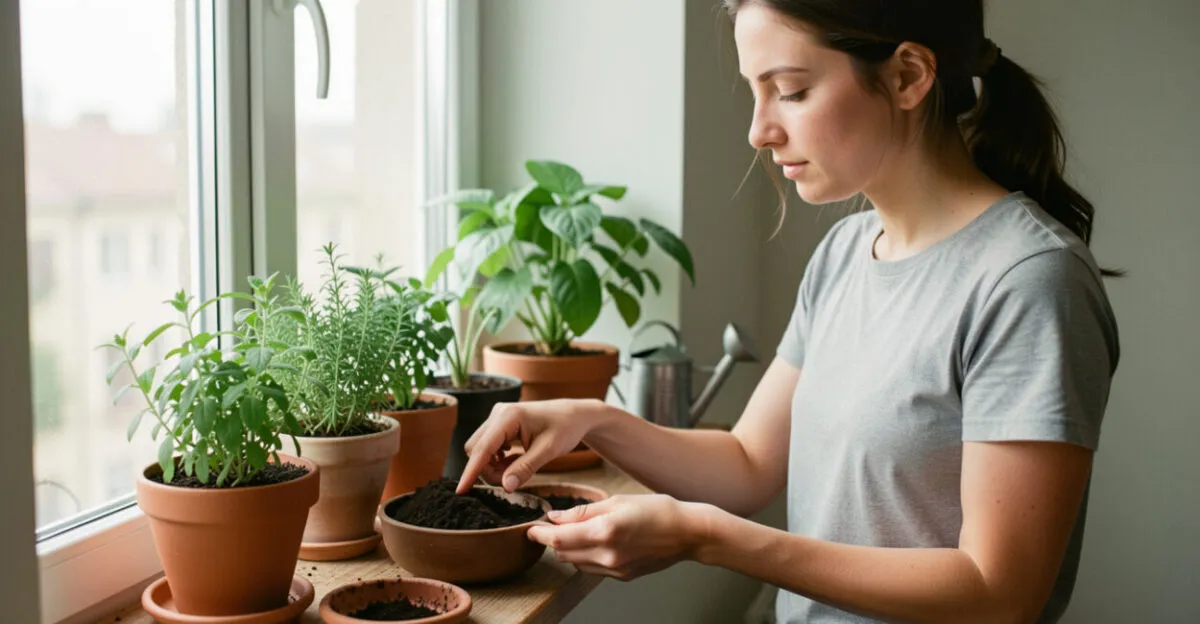
Start with a Few Plants and Adjust Your Routine

Choose plants based on the light you’ve observed, not a generic list of the “best plants for apartments.” Herbs that prefer full sun may not thrive in a dim corner. If the spot gets indirect light, look for plants that tolerate those conditions and check each plant’s needs in growing resources, such as guidance from Embrapa, Brazil’s agricultural research agency.
Start with just a few planters. That way, you can see which ones dry out faster, which get less light, and whether water reaches the collection trays without splashing. Keep the potting mix moist according to each plant’s needs, not soggy. Check the surface with your finger before watering, and adjust how often you water based on the heat, airflow, and container size.
When making sustainable choices, reusing materials can go hand in hand with sustainable entrepreneurship. At home, though, safety comes first: use stable planters, suitable materials, and functional drainage. There’s no universal watering schedule, because climate, plant type, and container all affect how quickly the soil dries. Before buying more supports, keep an eye on your first few planters for a few weeks and adjust anything that isn’t working.
Try this today: note when the spot gets sunlight, set a temporary planter there, and test watering it. If the wall and floor stay dry and the light suits your chosen plant, you’ve found a more reliable starting point than any empty wall.
Can I Have a Vertical Garden Without Direct Sunlight?
Yes, as long as you choose plants suited to the available indirect light. Herbs that need direct sun may not grow well in that spot.
How Can I Keep Water from Running Down the Wall?
Use containers with drainage and accessible collection trays. Test watering before the final installation, and empty any excess water.
What Potting Mix Should I Use?
Choose a lightweight potting mix formulated for containers with good drainage. The ideal mix depends on the plants and the container.
How Many Plants Should I Start With?
Start with a few. It’s easier to monitor light, how quickly the potting mix dries, and drainage before expanding the setup.
Keep reading this series
Artigos Relacionados
 Build a Vertical Garden Today: A 20-Minute Beginner’s Guide
 Small Vertical Garden, Made Easy: A Step-by-Step Guide That Works
 Sustainability Tips for Apartments: A Practical Guide
 Start an Apartment Garden From Scratch: A 1-Hour Method That Works
 A Practical Guide to Stocks for Beginner Investors in 2025
 Real Estate Funds: A Complete Beginner’s Guide to Investing
