
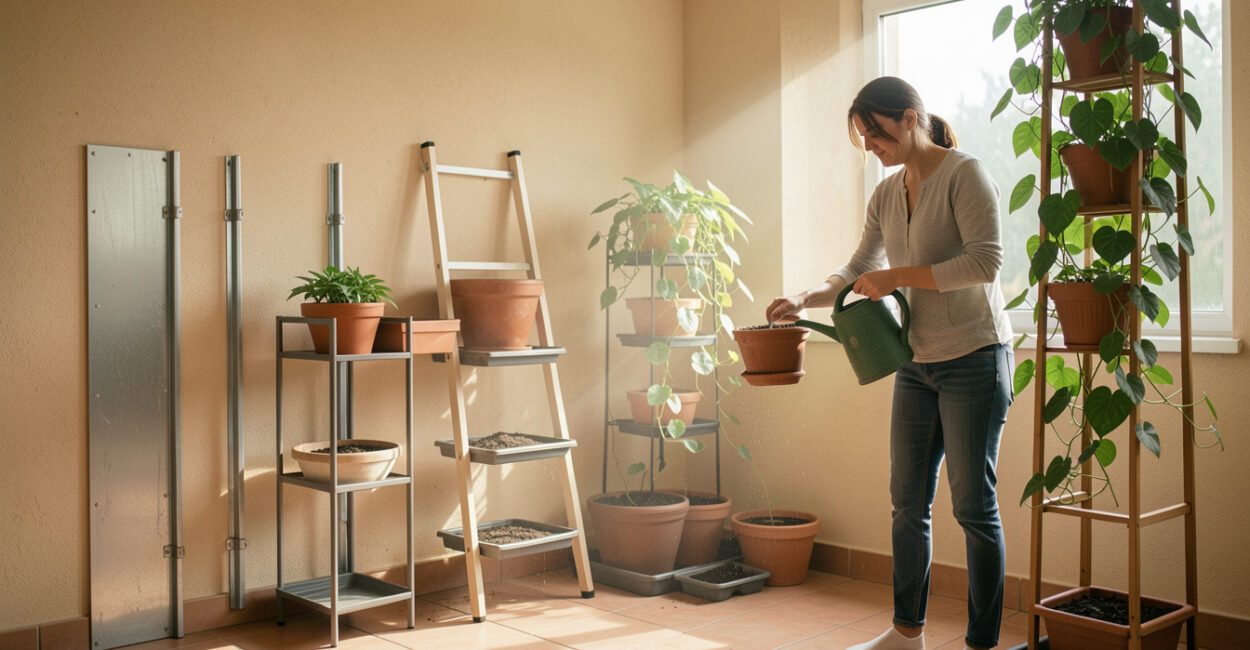
The weight your garden gains after watering can determine which vertical support is safe for your home.
Pots, damp potting mix, and water put different kinds of stress on a structure. That’s why choosing between five models depends on the weight of the containers when wet, where you’ll install them, and whether you can drill into the wall.

Read also: Sustainable Vertical Garden: Build One in a Small Space
Before you buy, consider how you’ll water and prune the plants and allow air to circulate between them. A support that’s hard to reach can turn a beautiful garden into an annoying daily chore.
1. Vertical Garden Supports: How Each Model Handles Weight
To choose a safe support, estimate the garden’s total weight when wet and match it to the structure, available space, and wall type. Panels and wall-mounted supports transfer stress to the masonry, while shelves and freestanding structures rest their weight on the floor. A trellis can guide lightweight plants, but it’s no substitute for a structure rated for heavy pots.
Complete guide: Vertical Gardening in an Apartment: A Beginner’s Guide
The relevant weight is the total weight of the setup when ready to use: pot, plant, damp potting mix, and retained water. Check the manufacturer’s specifications, and don’t assume any wall can support any kind of fastener. For guidance on evaluating the space, consult the National Civil Defense’s recommendations on building safety and risk prevention. For installation, the wall material and the instructions for the specific system determine the right solution.
2. Five Models, Five Ways to Arrange Your Garden
- Trellis: Lightweight and airy, it works for climbing plants or small pots when supported and secured according to the wall material. On its own, it may not hold full containers.
- Modular panel: Lets you arrange several pots and change the layout. Make sure it’s properly secured and that each container is easy to remove for maintenance.
- Shelving unit: Concentrates the load on the shelves and transfers it to the floor. It’s easy to water and move, provided it has a stable base and isn’t placed where it could tip or block a narrow walkway.
- Wall-mounted pot holder: Takes up little floor space, but each mounting point bears a load. Follow the stated weight limit and check whether the wall is masonry, concrete, or drywall.
- Freestanding structure: Stands without relying on the wall, making it a useful option for renters. It needs a level floor, a sturdy base, and enough room to avoid blocking foot traffic or airflow.
With any model, placing pots too close together traps moisture and makes pruning harder. Leave enough room to reach the leaves and remove pots without bumping into neighboring plants. The growing guidance from Embrapa Hortaliças, Brazil’s agricultural research agency for vegetables, can help you account for the needs of the species you choose.
3. Choose Based on the Location, Pots, and Home Restrictions

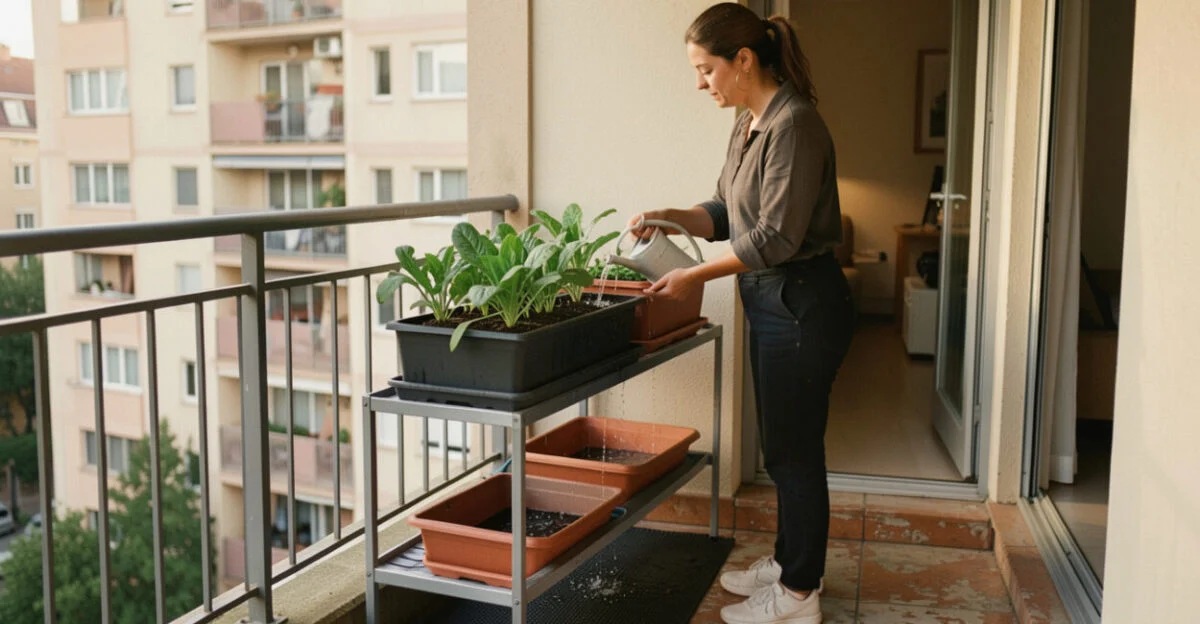
On a balcony, consider wind, drainage, and foot traffic before setting up your garden. Indoors, assess the light and protect the floor from splashes. If you’re using large pots or potting mix that holds a lot of water, choose a setup with a weight capacity specified by the manufacturer rather than guessing based on how sturdy it looks.
In a rental, a shelving unit or freestanding structure avoids drilling, but safety still matters: make sure the floor is level and the setup doesn’t wobble when you water. If you need to secure it, get the landlord’s permission and identify the wall material. The wrong anchors and screws can fail. One practical way to avoid rework is to water the pots in place and see where the water goes. If it drips onto the shelf below or down the wall, adjust the trays and containers before filling out the garden. This saves cleanup and reduces moisture buildup.
For a more sustainable choice, repurposing materials can be a good option as long as they’re in good condition and suitable for the weight and moisture. Ideas for using recycled pallets and creative reuse can inspire projects, but they don’t replace a structural check. Before planting, place the empty pots where they’ll go, make sure they’re easy to reach, and estimate how much the setup will weigh when wet. This simple check can help prevent poorly planned holes, overloaded shelves, and a garden that’s hard to maintain.
How Can I Tell Whether the Wall Can Hold the Pots?
Identify the wall material and follow the weight limit for the mounting system. If you’re unsure about the wall or the load, ask a qualified professional to assess it.
Which Model Is Best for a Rental?
A shelving unit or freestanding structure usually avoids drilling. It still needs a stable base and enough room for foot traffic.
Can I Use Pallets as a Vertical Garden Support?
They can work for some projects, but check their condition, stability, finish, and resistance to moisture. A pallet’s appearance doesn’t guarantee that it can support the load.
Artigos Relacionados
 Plants for a Vertical Garden: 9 Options for Apartments
 Small Vertical Garden, Made Easy: A Step-by-Step Guide That Works
 Build a Vertical Garden Today: A 20-Minute Beginner’s Guide
 Parent Involvement Tips to Support Early Learning at Home
 Vertical Garden Supports: Compare Materials and Install Safely
 Vertical Garden Supports: Compare 5 Models for Your Home
