
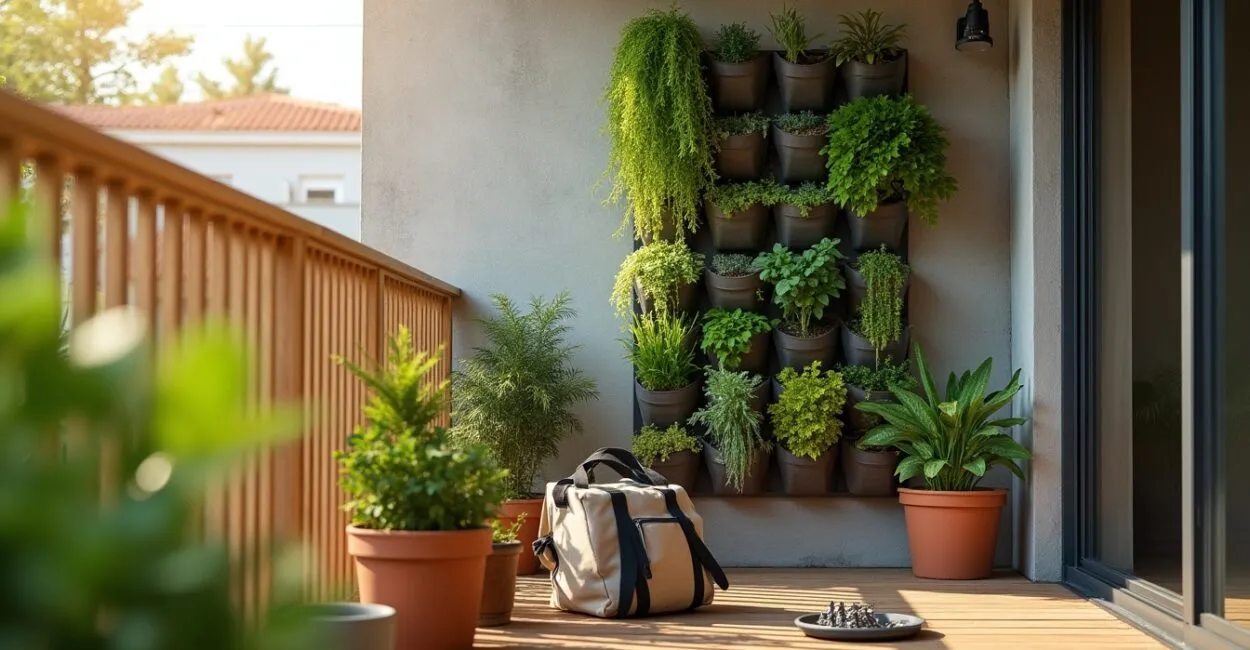
I was putting the finishing touches on my project when my neighbor knocked and asked, “You put all that together in 20 minutes?” Yes—it was a simple vertical garden that transformed the entire balcony. If you have five minutes to gather your tools and 15 to put everything together, this guide will help you get started today and give a wall a makeover without the hassle.
Why a Vertical Garden Works Better Than Pots on the Floor
A vertical garden puts underused wall space to work—it’s free real estate. On a small balcony, adding greenery without taking up floor space can make the difference between a relaxing green retreat and a pile of pots. Here’s a quick comparison: a 2-square-meter wall can hold the equivalent of 6 to 10 medium-sized pots; on the floor, they’d take up half the usable space. Plus, the visual impact is immediate: it makes a bigger statement and adds a sense of freshness to the space.

The 20-Minute Kit: What You’ll Need
Buy only the essentials and get started today. Here’s a practical list:
- Modular support (pockets, pegboard, or lined pallets)
- Lightweight pots or planting felt
- Lightweight potting mix (a ready-made blend for containers)
- Watering can with a narrow spout and pruning shears
- Screws and wall anchors (if mounting it to a wall)
If you’d rather avoid drilling, choose a freestanding panel or hooks for the balcony railing—you’ll save time and won’t need to rent tools.
Read also: A Small Vertical Garden Made Simple: A Step That Works
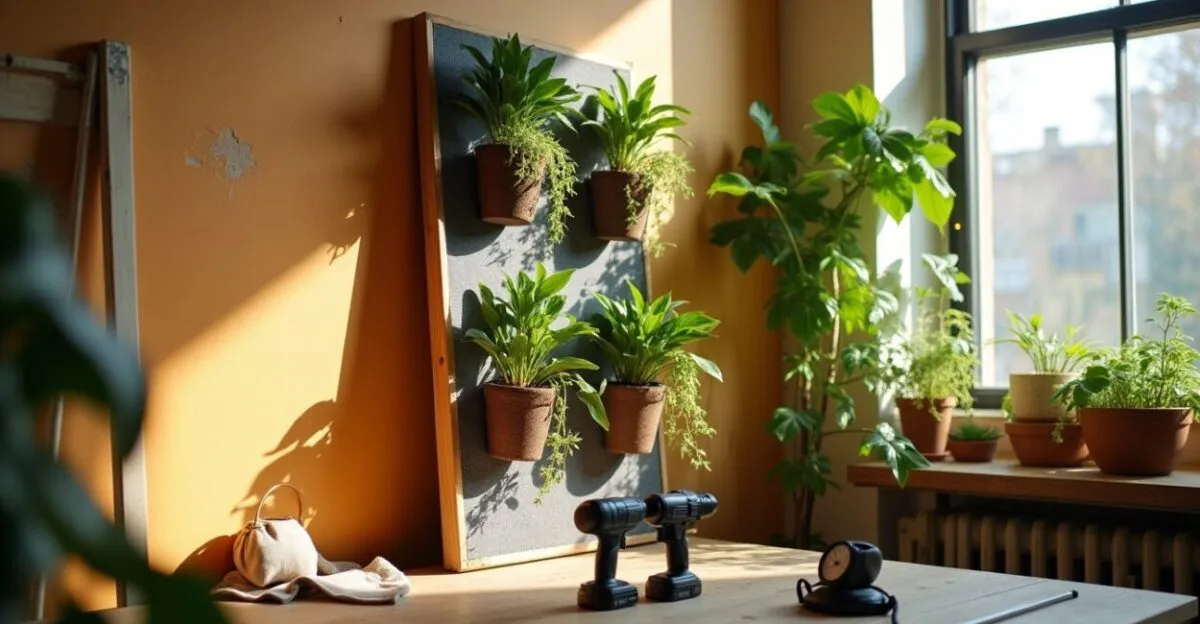
Step by Step: Build Your Vertical Garden in 20 Minutes

Timed, straightforward, and no suspense. Minutes 0–5: mark the spot and position the panel. Minutes 5–10: attach or secure the support. Minutes 10–15: fill the pockets with potting mix. Minutes 15–20: plant the seedlings and water lightly. To finish, arrange larger foliage near the bottom and trailing plants near the top to create visual movement. Picture the finished look as you go—think in layers, not a single row.
Plants That Thrive on Balconies and Indoor Walls (My Favorites)
Start with hardy varieties—less upkeep, better results. I recommend:
Read also: Vertical Garden in 20 Minutes: A Beginner’s Guide
- Ferns (great for shade and humidity)
- Succulents (for sunny balconies and low-maintenance care)
- Pothos/Philodendron (fast-growing and trailing)
- English ivy (for quickly covering areas)
- Mint and herbs (useful in the kitchen and fragrant)
Mix up the textures: one trailing plant, one full, bushy plant, and one compact plant per panel create contrast and avoid the look of a “wall of pots.”
Common Mistakes That Can Ruin Your Vertical Garden (and How to Avoid Them)
Avoid the mistakes I see most often: too much potting mix, inconsistent watering, and choosing the wrong plants. Other common missteps include using pots that are too large and make the support too heavy; mounting it directly on a damp wall without protection; and neglecting drainage, which can cause root rot. A quick fix: use an airy potting mix, try a simple drip irrigation system or set a watering schedule, and test one plant at a time before covering the whole wall.
Before and After: The Transformation No One Expects
Expectation: a wall with a few pretty plants. Reality: a wall that changes how an apartment feels. I saw a dark hallway in an apartment building brighten up after someone installed a panel of philodendrons and ferns; residents started stopping to chat and water the plants together. The before-and-after isn’t just visual—it’s social. For a quick trick, add warm LED lights to highlight the garden at night.
Easy Care in Just 5 Minutes a Week
Consistency beats complicated techniques. Five-minute weekly routine: check the moisture, remove dry leaves, trim unruly growth, and apply a light dose of fertilizer every 30 days. A key tool: a spray bottle to mist the plants and maintain humidity without soaking them. Water more often during hot months and less during cold months. A little care can prevent big problems, such as pests or root rot.
For more information on irrigation and potting mix recommendations, consult agricultural and horticultural university guidelines—for example, Embrapa, Brazil’s agricultural research agency, and technical resources from universities that study plant care in urban environments, such as UFRGS, the Federal University of Rio Grande do Sul.
Now for what really matters: give it a try. Start with a small panel, swap out any plants that don’t thrive, and expand if you enjoy it. Turning a wall green in 20 minutes is less about perfection and more about getting started today.
How Do I Choose the Best Spot for My Vertical Garden?
Choose a spot based on light, wind, and access to water. On a balcony, observe how much sun it gets over a few hours: morning or afternoon? Succulents need direct sun; ferns prefer shade. Avoid exterior walls exposed to strong winds unless they’re protected. Check whether there’s a water source nearby or plan to water by hand; without easy access, you may give up. Finally, make sure the surface can support the weight—older walls may need reinforcement or a freestanding solution.
What Kind of Potting Mix Is Best for Indoor Vertical Gardens?
Use a lightweight, porous, well-draining potting mix: ready-made blends for containers with perlite, coco coir, and organic matter work well. Avoid compacted garden soil; it holds too much water and can suffocate roots in narrow pockets. For supports without drainage, choose a mix that dries quickly and add a layer of pebbles at the bottom of each pocket. For herbs, a mix with a higher proportion of compost provides regular nutrients without becoming compacted.
Do I Need an Automatic Irrigation System?
It’s not essential, but it makes life much easier: a basic drip system with a timer helps prevent missed waterings and keeps moisture levels consistent. For small panels, hand-watering with a narrow-spout watering can is enough if you check the plants regularly. Automatic systems cost more upfront, but they reduce the risk of water stress in trailing plants and dense plantings. In apartments, consider using moisture sensors to adjust watering frequency rather than setting a fixed schedule.
Which Plants Should I Avoid in Balcony Vertical Gardens?
Avoid trees and deep-rooted shrubs, which get heavy and need room to grow. Plants that release a lot of sticky sap or flowers that attract persistent pests can make upkeep difficult. Giant cacti and thorny plants aren’t ideal for walkways. I also don’t recommend uncontrolled invasive species, since they can spread farther than you want on a wall. Choose compact, moderately growing varieties that suit your balcony’s microclimate.
How Can I Make Sure My Garden Doesn’t Damage the Wall?
Protect the wall with a waterproof barrier between the support and the masonry—plastic sheeting, a waterproof membrane, or plastic panels will work. Leave space for airflow behind the panel to prevent trapped moisture that can cause water damage. If you’re drilling, use the right wall anchors and check the building’s structure; for older masonry walls, consider floor-supported options or freestanding panels. Inspect the wall periodically and replace the barrier if you notice mold or stains.
Artigos Relacionados
 A Practical Guide to Stocks for Beginner Investors in 2025
 Real Estate Funds: A Complete Beginner’s Guide to Investing
 Passive Income: A Complete Beginner’s Guide to Building Financial Freedom
 Small Garden: A Quick, Easy Way to Get Started
 Start an Apartment Garden From Scratch: A 1-Hour Method That Works
 How Petrobras Is Investing in Waste Treatment Today
