
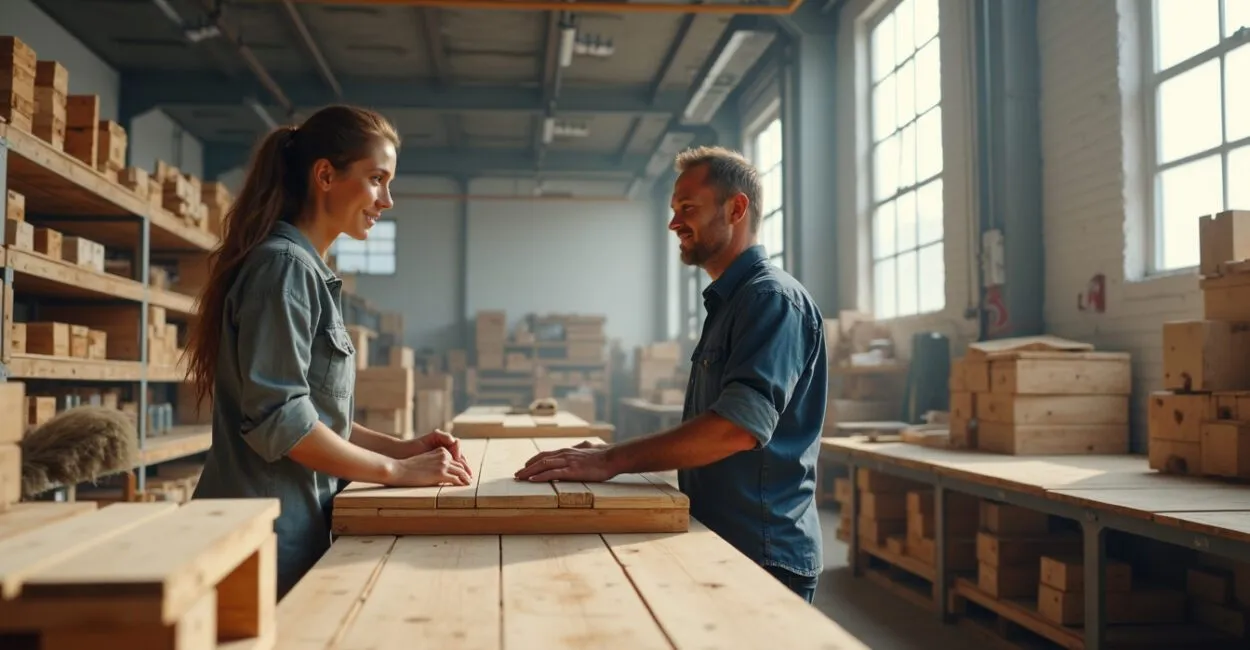
Recycled Pallets at Work: 9 Creative, Useful Ideas
A well-chosen pallet can become a workbench, display, shelf, or storage solution without requiring a major investment. In practice, recycled pallets solve two problems at once: they reduce waste and serve a practical purpose in your operation, from the office to the sales floor. That matters because reuse is about more than a rustic look. When the material is properly sorted, cleaned, sanded, and finished, it gains a purpose, durability, and practical value. Below, you’ll learn where pallet reuse makes sense, where it falls short, how much you can expect to save, and what precautions can help you avoid headaches down the road.

The Essentials
- Reused pallets work well when modularity, low cost, and quick implementation are priorities; they fall short when a business needs precise standardization or a premium finish.
- The biggest benefits usually come in three areas: operational savings, visual communication, and organizing support areas, inventory, or events.
- Wood pallets can be used indoors, but only after inspecting them, sanding them, checking their fasteners, and verifying where they came from.
- Turning a recycled pallet into furniture or a display usually costs less than buying ready-made pieces, but the final cost depends on labor, hardware, wood sealer, and prep time.
- The difference between a sustainable solution and a shoddy quick fix comes down to preparation: dry wood with no termites or splinters, and a finish suited to the environment.
Recycled Pallets at Work: Where Pallet Reuse Makes Sense
Recycled pallets are wooden structures used for transport and support that have been selected, repaired, and put to new use. Put simply, they are wooden pallets that go beyond serving as shipping materials and become raw material for furniture, decor, displays, and workplace organization. The great thing about reusing pallets is their versatility. Instead of buying a ready-made item for every need, a business can adapt the same material for different uses, reducing waste and supporting sustainable solutions. This fits especially well with circular economy projects that reduce costs, because it extends the material’s useful life without sacrificing function.
What a Recycled Pallet Needs to Be Worthwhile
The right pallet should be structurally sound, dry, free of mold, and show no visible signs of contamination. If it has a strong odor, chemical stains, crumbling wood, or markings indicating it is unsuitable for indoor use, it’s best to discard it. Anyone who works with this material knows that cutting corners can cost more in the long run when a pallet enters the workflow in poor condition and leads to rework.
A reused pallet isn’t the same as “free” wood; it only delivers savings when careful initial selection eliminates risks, reduces rework, and produces an item that can genuinely replace a ready-made solution.
9 Creative, Useful Ideas for Pallet Furniture and Decor
In practice, the smartest uses for pallet furniture come from designs that respect the original shape of each piece and avoid unnecessary cuts. The less structural modification required, the more durable the result and the lower the carpentry costs.
1. Workbenches and Side Tables
In reception areas, break rooms, and company events, two or three stacked and secured pallets can become a counter or workbench. Add a top made of MDF, glass, or treated wood for a cleaner finish and a commercial-ready look that doesn’t feel makeshift.
2. Rustic Sofas and Lounge Seating
Rustic pallet furniture works well in break areas, rooftop spaces, company cafés, and trade show booths. The key is to use a level base, cushions with the right firmness, and varnish that can withstand frequent cleaning.
3. Planters and Supports for Indoor Plants
For businesses that use plants in their decor, a recycled pallet can become a vertical support or modular planter. This is a popular solution for corporate pallet decor projects because it takes up little space and improves the overall look of the room.
4. Brand Feature Walls
Sanded and treated pallets can provide a backdrop for logos, lettering, signs, and accent lighting. This works well when a business wants to build its identity without spending on a full-scale set design. I’ve seen reception areas completely transformed with just two well-built pieces: a low bench, a branded backdrop, and warm lighting. The space stopped looking temporary and started feeling thoughtfully designed, all on a controlled budget.
5. Small Cubbies and Lightweight Shelves
If you want to display books, packaged products, or company materials, a pallet can be cut and turned into cubbies. In this case, use reinforced mounting with angle brackets and wall anchors rated for the expected weight.
6. Display Tables for Product Launches
For brand activations, a pallet can serve as the base for a display table, product pedestal, or promotional island. The rustic look draws attention, but the finish needs to fit the campaign’s visual identity; otherwise, the setup can look too temporary.
7. Headboards and Low Partitions
In rest areas, coworking spaces, and break rooms, a recycled pallet can become a decorative headboard or low partition. It’s a good option when a business wants to create simple zones without construction work.
8. Modular Retail Displays
In a brick-and-mortar store, the pallet’s advantage is its modularity. The same setup can serve as a base for different collections, seasonal campaigns, or product categories.
Read also: Sustainability for Small Businesses: A Practical Guide
9. Support Furniture for Company Events
Coffee breaks, internal trade shows, themed weeks, and team gatherings call for furniture that’s quick to set up and take down. Reusing pallets works well for these needs, as long as the pieces are secured, fitted with locking casters, and inspected before each use.
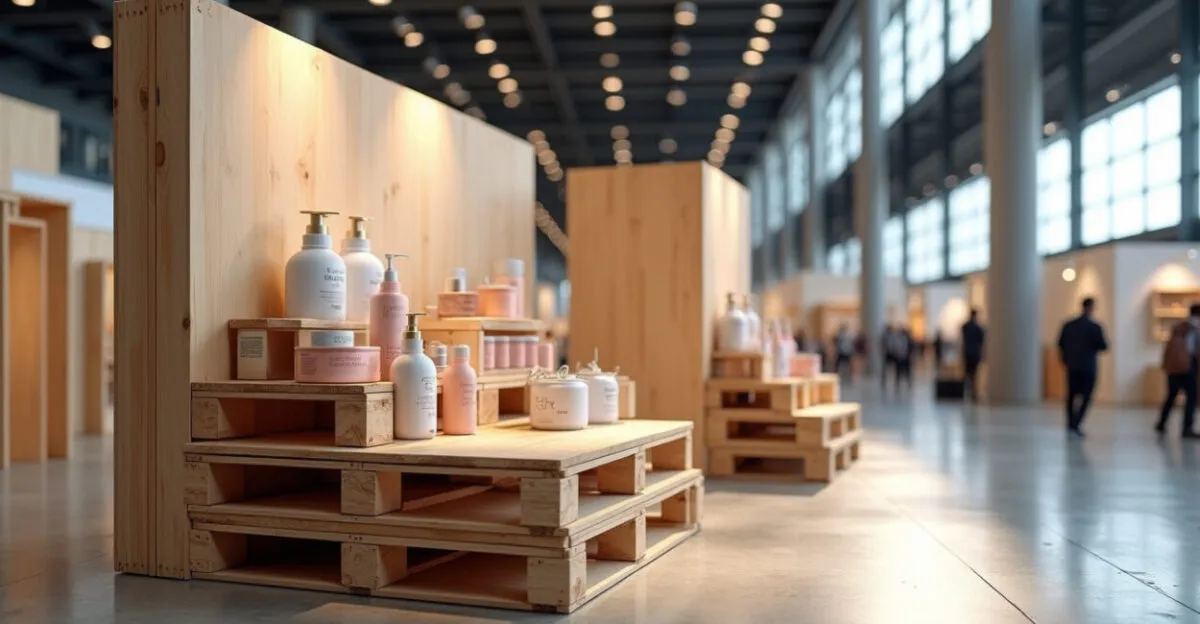
Pallets for Displays, Retail, and Trade Shows: How to Stand Out Without Overspending

At trade shows and brand activations, display pallets solve three problems at once: they add height, organize products, and reinforce the brand’s aesthetic. They’re widely used because they create a strong visual presence with little material, especially when the setup needs to be portable and quick to assemble.
Read also: Creative Upcycling: Practical Ideas for Making Money from Waste and Sustainability
In this context, the pallet shouldn’t compete with the product. It should serve as a base, frame, and support. If the look is too rustic, the display loses its commercial clarity. Ideally, the wood should be part of the design language, not an excuse for poor finishing.
If the project includes a consumer engagement strategy and supporting materials, it’s worth aligning that choice with the idea of recyclable packaging that reduces costs and waste, because the overall activation matters more than any single piece.
In a retail display, a pallet works best as a supporting structure rather than the main attraction; when the finish dominates the scene, it takes longer for shoppers to understand the product, and conversion tends to drop.
Pallet Organization and Storage: When Function Matters More Than Looks
For organization, recycled pallets are one of the most efficient solutions when a business needs to elevate items, divide areas, or make goods easier to move. A pallet can become an inventory base, a platform for boxes, a section divider, a sign holder, or a load-bearing skid.
Operational Uses That Make a Real Difference
- A platform to keep materials off the floor.
- A base for boxes and bundles in storage areas.
- A physical divider between product categories.
- A support for seasonal items and campaign materials.
The benefit here is practical: it improves traffic flow, reduces moisture exposure from floor contact, and makes better use of space. In small operations, that directly affects the daily routine. In larger operations, it helps prevent damage, improper stacking, and inconsistent storage.
Not every recycled pallet is suitable for storage, however. If it’s warped, has cracked wood, or has exposed nails, the risk outweighs the benefit. The OSHA takes workplace safety seriously, and precautions like these matter when people, goods, and frequent loading and unloading are involved.
Safety, Finishing, and Maintenance: What You Can’t Ignore
Recycled pallets are safe for indoor use when properly inspected, cleaned, and finished. Start with a visual check: any signs of mold, termites, persistent moisture, chemical odors, or peeling paint mean the pallet should be discarded or used only in a limited way.
Inspect Before Use
- Check the pallet’s markings and origin.
- Discard pieces with fungus, insects, or excessive moisture.
- Sand the surface and remove splinters.
- Reinforce joints with screws and angle brackets.
- Apply wood sealer, stain, or varnish depending on the environment.
Indoor and outdoor use call for different approaches. In a covered area, the finish can prioritize feel and appearance. Outdoors, wood needs stronger protection from rain, sun, and temperature changes. The right approach depends on the use, the weight, and exposure to the elements.
For wood from certified sources, consider standards such as the FSC, which can help businesses make more responsible choices about material sourcing. It doesn’t solve everything, but it reduces uncertainty when a business wants to align reuse with its environmental policy.
How Much Does Pallet Reuse Cost Compared with Buying Ready-Made Furniture?
Reusing pallets usually costs less than buying ready-made furniture, but the real difference becomes clear only when you add up every project expense. Wood, hardware, finishing, labor, transportation, and production time all count. Without those factors, the comparison can be misleading.
Item
Pallet reuse
Ready-made furniture
Raw materials
Low cost or nominal cost
Included in the final price
Finishing
Can raise project costs if labor is required
Already included
Timeline
Depends on sorting and assembly
More predictable
Customization
High
Moderate or low
In practice, recycled pallets offer the best value when a business needs several similar pieces, such as platforms, displays, benches, or supports. If the goal is a one-of-a-kind piece with a sophisticated design and precise construction, the savings shrink. In that case, the benefits are less about direct cost savings and more about visual identity and sustainability.
How to Choose, Prepare, and Reuse Pallets Efficiently
Choosing well starts before sanding. A successful project with recycled pallets depends on sorting them by prior use, dimensions, wood condition, and the type of construction the finished piece will require. The clearer the intended use, the less waste you’ll generate during preparation.
The most efficient process is to select, clean, dry, disassemble only if necessary, sand, treat, assemble, and test. For smaller projects, assembling the pallet as-is preserves its structure and reduces the chance of failure. For larger projects, disassembly can help you salvage slats and standardize dimensions.
- Plan how you’ll use a saw, drill, and sander instead of improvising.
- Standardize dimensions when producing multiple pieces.
- Test strength before making the piece available for public use.
- Document the finish used to make future maintenance easier.
A practical way to approach reuse is as a project, not as an isolated craft activity. This improves budgeting, reduces rework, and makes it clear when the solution is worthwhile for your operation. If your business already invests in sustainability, this approach aligns with sustainable entrepreneurship initiatives that deliver real results as well as sustainable entrepreneurship ideas for getting started.
Next Steps
If you want to use recycled pallets wisely, start with a small application, measure the results, and expand only after that. Choose a simple use—a workbench, a display, or an organization platform—and evaluate cost, finish, and strength before scaling up. That way, the material becomes an operational asset instead of leftover wood.
Frequently Asked Questions
What Are the Main Uses for Recycled Pallets?
Common uses include furniture, displays, organization platforms, workbenches, decorative panels, and temporary event setups. Businesses can put them to good use in support areas, storage rooms, reception areas, and brand activations. Their advantage lies in their modularity: the same structure can be adapted for different purposes with only minor modifications. When properly prepared, pallets can also help create a distinctive look without requiring a major investment in custom carpentry.
Are Recycled Pallets Safe for Indoor Use?
Yes, as long as they are properly inspected and treated. Check for mold, termites, moisture, splinters, nails, and any signs of chemical contamination. After that, sanding and applying a finish such as wood sealer, stain, or varnish can make the piece suitable for indoor use. In high-traffic areas or places where people frequently come into contact with the pallet, test its fasteners and stability before putting it into service.
How Much Does Pallet Reuse Cost Compared with Buying Ready-Made Furniture?
Reusing pallets usually has a lower upfront cost, but the final price depends on labor, hardware, sanding, painting, and production time. For simple pieces or production runs, the savings are real. For furniture with a sophisticated finish or highly precise design, the cost difference compared with ready-made furniture can shrink considerably. A fair comparison should include materials, production, durability, and maintenance—not just the price of the wood.
How Do You Prepare Pallets for Reuse?
Preparation starts with a visual inspection and discarding damaged pieces. Then clean and dry the pallet, sand it, and remove splinters or loose nails. If it will be used indoors, apply a finish suited to its purpose, such as wood sealer, varnish, or stain. For more demanding projects, consider reinforcing the joints with screws and angle brackets. This process reduces risk, extends the pallet’s useful life, and greatly improves its appearance.
Is It Better to Use Recycled Pallets for Decor or Organization?
It depends on your business’s needs. For decor, the benefits are visual impact, brand identity, and low setup costs. For organization, the advantages are usually operational: dividing spaces, keeping items off the floor, and making storage easier. If your goal is a quick return and frequent use, organization tends to deliver more consistent results. If your goal is to shape how people perceive your brand, decor can make a bigger impact.
Artigos Relacionados
 Creative Recycling for Businesses: 15 Practical Ideas
 5 Creative Education Methods That Work
 Kids’ Career Costumes for Parties: 10 Creative Ideas
 Creative Portfolio for Clients: The Mistake That Costs You Work
 How to Price Creative Work Without Losing Clients
 Creative International Women’s Day Gifts for Kids: Simple, Personalized Ideas to Celebrate and Honor Women
