
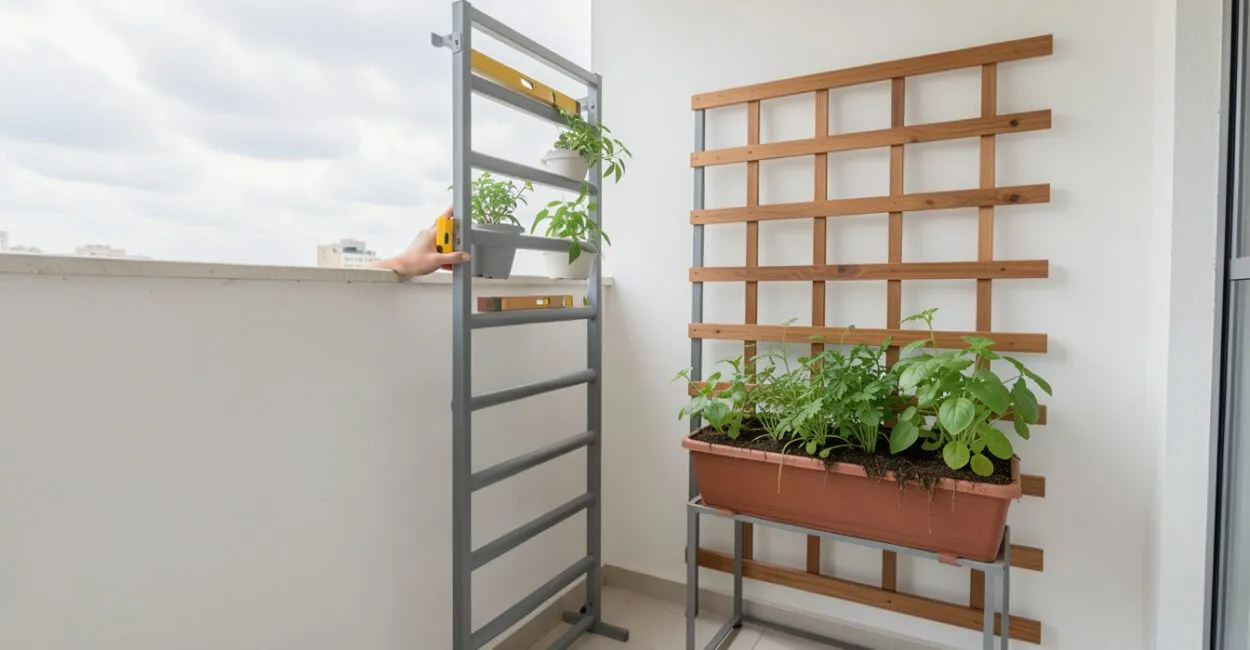
A planter filled with wet potting mix weighs much more than it seems when empty. That’s why choosing a vertical support for a compact garden means considering the load after watering, exposure to rain, and the type of surface where the structure will be installed. Wood, pallets, trellises, and metal can all work, but no material is safe in every situation. The right choice depends on the total weight, available space, and whether you can anchor the structure without damaging the wall or putting the balcony at risk.
The right support also makes drainage and maintenance easier. If you’re just getting started, this guide to starting a vertical garden in an apartment can help you think through the setup before choosing the pieces.

What Should You Consider Before Choosing a Vertical Garden Support?
To choose a safe structure, first assess the space, the installation surface, the weight of the pots and wet potting mix, and how often the structure will be exposed to water. Then compare the durability and maintenance requirements of each material. This order helps you avoid buying something that fits the space but can’t support the load or be installed properly.
Measure the available width and height, and note whether the area gets direct rain, strong winds, or intense sun. On a balcony, also check your building’s rules and make sure the installation won’t obstruct access or interfere with floor drainage. Narrow, lightweight pots call for different solutions than deep planters. Also consider how much room you’ll need to remove a pot, clean the wall, and direct water so it doesn’t run onto a neighbor’s balcony or pool on the floor. To decide what to plant, explore these plants suited to apartment vertical gardens.
Wood, Pallets, Trellises, or Metal: Which Material Should You Choose?
The best material depends on moisture exposure, expected weight, and the quality of the fasteners. For outdoor areas exposed to rain, metal with a corrosion-resistant finish usually requires less care than unprotected wood. In covered spaces, well-finished wood can be a practical choice, while trellises work well for lightweight plants that need support.
Material Best suited for What to watch for Wood Covered spaces and custom projects Protecting surfaces and end grain from moisture Pallet Upcycling projects with lightweight pots Source, treatment, and condition of the wood Trellis Lightweight plants supported by a wall or freestanding structure Don’t assume a trellis can hold heavy pots Metal Damp or outdoor areas, depending on the finish Corrosion at cuts, welds, and mounting points
A reused pallet should be intact, with no signs of rot, contamination, or loose nails. Labels and treatment codes can help identify its origin, but they don’t replace verifying where it came from. Avoid pieces with suspicious stains, a chemical smell, or an unknown history. Pallets can be used in many ways, but reuse doesn’t mean every pallet is suitable for a garden. See these pallet upcycling ideas, while keeping material safety in mind.
A material is suitable only if it can handle the expected load and remain intact in the environment where it will be used.
A decorative trellis, for example, may support vines without being designed to hold pots. If the structure will support containers, check the manufacturer’s stated weight capacity and how the load is distributed across its mounting points.
How Do You Calculate the Weight of Pots with Wet Potting Mix?

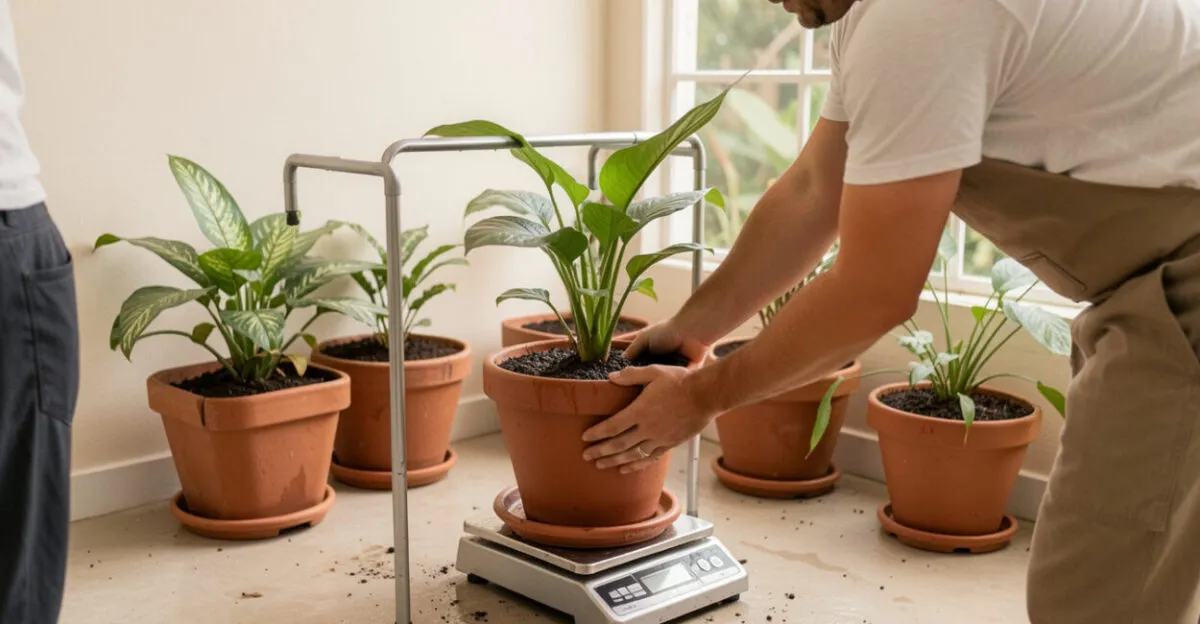
Add the weight of the pots, water-saturated potting mix, plants, and anything else attached to the structure. The weight of dry potting mix isn’t enough to go on: after watering, retained water adds to the load, and the amount varies with the mix, container size, and drainage.
Read also: Biological Pest Control: Protect Your Vertical Garden Naturally
If the manufacturer lists the weight of the pot and potting mix, use those figures as a starting point and add the plant and accessories. If that information isn’t available, weigh the assembled pot after thoroughly watering it and letting excess water drain. To calculate the total load, add up each setup and account for where it will sit on the supports.
Example: Suppose four pots weigh 6 kg each after watering and draining. Add 3 kg for the structure and accessories, for an estimated total load of 27 kg. This calculation is a reference for comparing options, not approval to install the structure. Its capacity depends on the anchors, material, and surface.
Read also: Recycled Pots for a Vertical Garden: How to Choose
Avoid placing all the pots at one end. Uneven weight distribution can twist a shelf or pull at the top of its mounting, even when the total weight seems modest.
Which Supports Hold Up Best to Rain and Moisture?
In areas that get frequent rain, a metal structure with adequate corrosion protection generally requires less maintenance than untreated wood. Actual durability depends on the metal, coating, cuts, and installation quality. Protected wood can work in a covered area, but it needs to dry between wettings and be inspected. Protect cut ends as well, and don’t let the feet sit in standing water. Varnish or sealer won’t fix a piece that’s already compromised, and the finish should be suitable for the location and intended use.
The IPT (Institute for Technological Research), a Brazilian research institute, provides information about wood and building materials on its official website. To reduce moisture around the structure, use containers with clear drainage holes and collect excess water. Guidance on watering and drainage in vertical gardens can help prevent water from pooling in the pots.
How Do You Secure the Structure to a Wall, Balcony, or Floor?
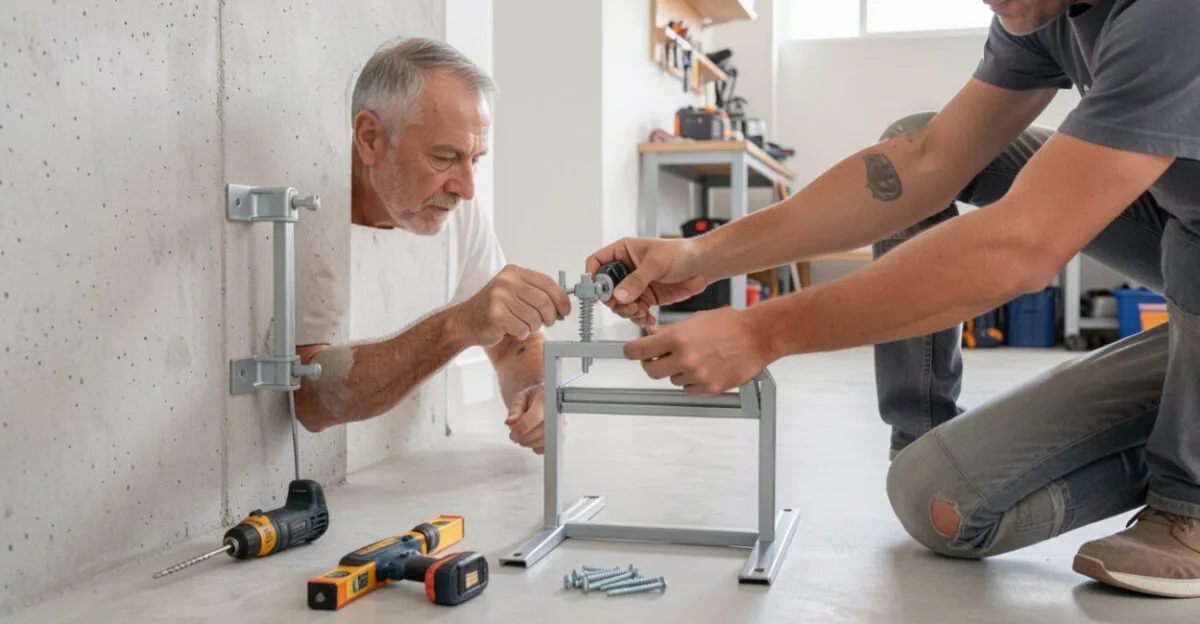
The mounting method must suit both the surface material and the expected load. An anchor selected without identifying the wall can fail, even if the screw feels tight. Before drilling, find out whether the base is concrete, block, brick, drywall, wood, or a finish mounted over another structure.
- Concrete or masonry: Choose anchors and screws suited to the base, following the manufacturer’s instructions and using the designated mounting points.
- Drywall: Fasten to studs or use anchors designed for the system and the load. A sheet of drywall alone should not be treated like solid masonry.
- Railing: Don’t drill into it or attach anything without permission and confirmation that it can bear the load.
- Floor: Use a stable, level base. If the structure is tall, consider how to prevent it from tipping without drilling through waterproofed areas.
A freestanding structure transfers weight differently from one suspended on a wall. Even so, it needs a level base, nonslip feet, and protection against tipping, especially when heavy pots are on the upper shelves.
What Should You Check Before Installing a Structure on a Balcony?
Before installing anything, check the balcony’s load capacity with your building management or a qualified professional, review the rules for drilling, and make sure the railing is safe. The weight of the pots adds to the weight of the structure and other items. Without technical information about the building, it’s not possible to say that a particular area can support a specific load. Also check whether drainage could reach the façade, the apartment below, or electrical outlets. In exposed locations, wind and rain can shift pots and increase stress on the anchors, so tall, narrow shelves need special attention.
Confea, Brazil’s Federal Council of Engineering and Agronomy, explains the work of engineering professionals on its official website. If you’re unsure whether the balcony structure can handle the load, consult a qualified engineer. Estimates based only on pot weight don’t replace an assessment of the building.
How Do You Assemble and Inspect the Structure Safely?
Assemble the structure according to the manufacturer’s instructions, and install it only after checking the parts, surface, and expected load. Drilling in the wrong place can hit pipes or compromise the mounting, so check for utilities before drilling and use tools suited to the material.
- Mark the mounting points and check that they’re level before drilling.
- Install anchors recommended for the surface; don’t substitute parts with an unknown load capacity.
- Check stability before adding pots, then place the containers gradually and distribute them evenly.
- Inspect the structure after the first watering and check it regularly.
Check for loose screws, cracks, rust, softened wood, damaged welds, and signs of water intrusion. How often you inspect the structure depends on its exposure: frequent rain and watering that reaches the structure call for closer checks.
What’s the Next Step in Choosing a Support?
Before buying or building, write down the dimensions of the space, identify the installation surface, and estimate the total weight of all the pots after watering. Use this information to compare the manufacturer’s stated capacity, moisture-resistant finish, and recommended anchors. If you can’t confirm a safe installation on the balcony or wall, don’t improvise with generic anchors or clamps. First confirm the area’s capacity and rules, then choose a solution suited to the actual load.
Can I Use a Shoe Rack or Regular Shelf for My Pots?
Only if the manufacturer specifies an adequate weight capacity and the material can withstand moisture from watering. Household shelving can warp or rust, and tall units also need to be stable enough not to tip over.
Is It Safe to Hang Pots from a Balcony Railing?
It depends on your building’s rules and the railing’s load capacity. Don’t drill into it or attach loads without permission and confirmation that the railing was designed to support them.
How Can I Keep Watering from Damaging the Wall?
Keep the pots away from the surface to allow airflow, and use trays or catch basins that don’t hold water for long periods. Make sure excess water drains to an appropriate location.
What Finish Should I Use on a Wood Structure?
Use a product suited to the wood and its exposure conditions, following the manufacturer’s label. Protect cut ends, and don’t apply a finish to pieces showing signs of deterioration.
What Should I Do if Rust Appears on the Metal Structure?
Remove the load if it’s safe to do so, and assess how extensive the corrosion is. Rust on welds, screws, or anchor points can compromise stability. Don’t just cover it with paint without checking the piece.
Does a Freestanding Structure Need No Anchoring?
Not necessarily. A wide, level base may not need anchoring in some situations, but tall, narrow structures or those exposed to wind can still tip over. The right choice depends on the design, how the pots are distributed, and the floor.
Artigos Relacionados
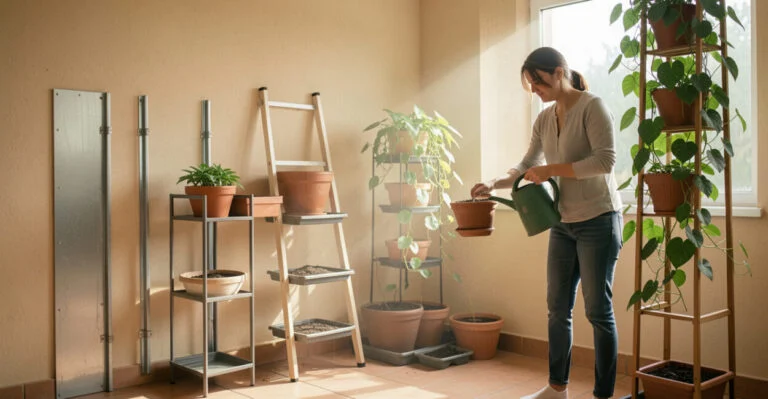 Vertical Garden Supports: Compare 5 Models for Your Home
 Sustainable Vertical Garden: Build One in a Small Space
 Small Vertical Garden, Made Easy: A Step-by-Step Guide That Works
 Build a Vertical Garden Today: A 20-Minute Beginner’s Guide
 Adapted Materials for Dyslexia: How to Support Writing
 Inclusive Environments and Sensory Supports for ADHD: Practical Strategies for Organizing Spaces and Materials to Reduce Distractions
