

A child may know what they want to write and still freeze when faced with a page full of instructions, cramped lines, and hard-to-follow text. Adapted materials organize the task to reduce access barriers and let students show what they have learned.
For children with dyslexia, small changes to instructions, page layout, and the time allowed can make writing more manageable.

There is no single model that works for everyone. The most useful approach is to identify an observable difficulty, test one change at a time, and see whether it improves participation without changing the activity’s learning goal.
This care also applies to autistic students, students with visual impairments, and students with other learning needs.
What Are Adapted Materials, and When Can They Help?
Adapted materials are instructional resources modified in format, language, presentation, or response options to improve a student’s access to an activity while preserving the learning goal whenever possible. Simply put, they are worksheets, instructions, and tools adjusted to the barriers a particular child faces.
They can help when the way a task is presented makes reading, organizing written work, or understanding what to do more difficult.
An adaptation might change the number of items on a page, break a long instruction into steps, or allow an oral response instead of a written one. The criterion is functional: the change should make the task more accessible without confusing accessibility with automatically reducing the content. The Brazilian Law for the Inclusion of Persons with Disabilities recognizes the right to inclusive education and provides for accessibility resources and reasonable accommodations. A common problem arises when a cleaner-looking worksheet still has a lengthy instruction with several actions mixed together. The page may look easier, but the child still doesn’t know where to start. Consider the whole activity, from reading the instructions to turning in the response, rather than judging only the material’s appearance.
How to Adapt Writing Activities for Children with Dyslexia
Start with the goal: if the activity assesses the ability to develop ideas, don’t let copying a long prompt take up all the child’s effort. Write short instructions, use clear verbs, and present one step at a time.
If the task has several parts, number them or separate them into sections.
For a writing assignment, for example, the worksheet could include space to plan characters or arguments, followed by lines for writing. A word bank can help with vocabulary without giving away the answer.
If the assignment assesses spelling, however, use this kind of support carefully, since it may change what the activity is meant to measure.
- Reduce copying information that could already be printed on the page.
- Separate reading, planning, and writing into clearly marked steps.
- Offer alternative ways to respond when they preserve the goal, such as dictating to an adult or using a keyboard.
The International Dyslexia Association provides information about dyslexia and learning support practices. This doesn’t mean general recommendations replace individual observation: the effects of reading, handwriting, and proofreading vary from student to student. To connect these choices to the literacy process, also see guidance on early literacy and key learning milestones.
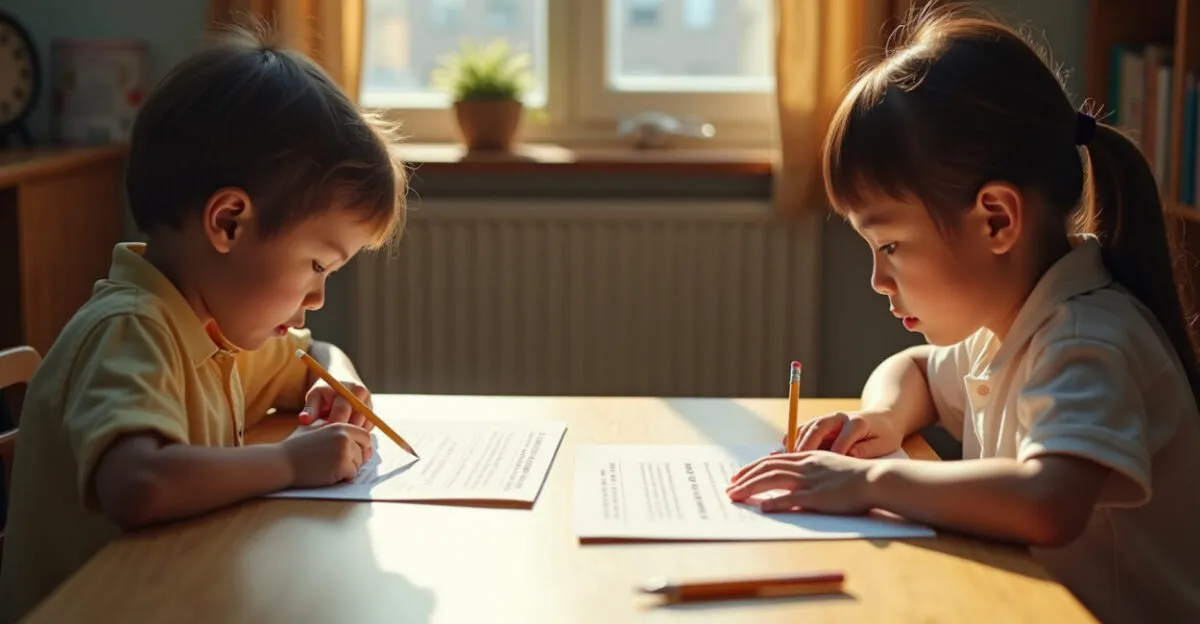
Worksheets, Fonts, and Spacing: What to Try

There is no one font, font size, or spacing that works for everyone with dyslexia. Some children follow sans-serif fonts and more open spacing more easily; others show no noticeable difference. Test one variable at a time, keeping the text and task difficulty similar so you can compare results.
Element What to try What to look for Font and size A simple, legible font at a comfortable size for the reading distance Whether the child can find words and follow the lines Spacing More space between lines or items Whether the child loses their place less often or mixes up questions less Page layout Fewer exercises per page and clearly defined response areas Whether the child can tell where to start and where to write the answer
Avoid filling the page with colors, boxes, and symbols. Each visual cue should have a consistent purpose, such as marking the start of a step. When everything grabs attention, nothing stands out. Also check the contrast between the text and background, and print a test copy: formatting that feels comfortable on screen may look cluttered on paper.
Read also: Reading and Writing Words: 8 Classroom Exercises
Writing Tools and Instructions That Make Tasks Easier
The right tool depends on the barrier you want to reduce. A triangular pencil or pencil grip may help some children hold a pencil; wider-ruled paper may give children more room to form letters; a keyboard or speech-to-text tool may be useful when handwriting gets in the way of developing ideas. Check that any tool is comfortable, supports independence, and fits the goal before using it.
Instructions are part of the material, too. Replace vague directions with concrete actions, such as “Write two sentences about the character” and “Check the punctuation.” A worked example can clarify the expected format as long as it doesn’t give away the answer. To compare teaching strategies and choose an approach that fits the child, this guide to teaching methods tailored to different learning profiles may also help.
Complete guide: Activities for Dyslexia: 12 Literacy Practices
A helpful adaptation makes the steps of a task clearer and lets the child focus their effort on what they are learning.
How to Tell Whether an Adaptation Is Working
Compare what happens before and after the change without changing several things at once. Notice whether the child starts the activity with fewer prompts, follows instructions more easily, completes more of the task, or needs less help finding the space for their response. Speed alone isn’t enough: a task may be completed faster because important content was removed.
Briefly note the adaptation used and the response you observed. For example: “Numbered instructions; started without a repeat, but still skipped the second step.” This kind of note can help you adjust the next trial. If the difficulty persists across different settings or significantly affects learning, talk with the school team and the professionals who work with the child. A worksheet alone can’t identify or address every underlying cause.
Where to Find Adapted Activities and Workbooks to Print
Printable activities are available on educational websites, school district resource libraries, and pages run by organizations focused on inclusive education. Free files come and go, so check the terms of access and use before downloading or sharing. A free PDF activity workbook for students with special needs can be a starting point, but the label doesn’t guarantee that the file is accessible or right for the child.
When looking for a website with adapted activities for students with diverse needs, look for materials that specify the grade level, learning goal, clear instructions, and whether they can be edited. A workbook adapted for students with disabilities may serve as a starting point, but it might need changes to the language, contrast, length, or response format. The same care applies when searching for inclusive special education activities in PDF format or a printable special education activity workbook.
Also check whether the PDF lets you enlarge the text without losing legibility, works with assistive technology, and allows printing under its license. The Ministry of Education information portal can help you find official information about education; activity planning should take the curriculum and needs observed at school into account. For ideas on learning through play, see these educational games and activities for different situations.
How to Choose Materials for Different Learning Needs
A resource designed for dyslexia won’t automatically work for an autistic child, a child with low vision, or a child with a motor disability. For some autistic students, a predictable visual sequence can help; for others, too many elements or changes in format can cause discomfort. A PDF resource for autism or a structured resource for autism spectrum disorder should be assessed in terms of that child’s communication, comprehension, and preferences—not just their diagnosis.
For students with visual impairments, materials may need to be enlarged, use high contrast, work with a screen reader, or be provided in braille, depending on the student’s needs and available resources. Adapting material for a visual impairment involves more than increasing the font size: images, tables, and instructions must also be accessible. Likewise, printable materials associated with ABA shouldn’t be used as a one-size-fits-all solution; qualified professionals should define goals and procedures in consultation with the family and school.
Before choosing or creating a worksheet, ask which barrier it is intended to reduce, which learning goal will be preserved, and how you will evaluate the outcome. There are limits to general rules: a change that helps with reading may get in the way of an activity focused on decoding. Try one small change, note what happened, and adjust the resource with the team that supports the student.
Frequently Asked Questions
What Font and Spacing Should I Use for a Child with Dyslexia?
Use a legible font and test the size and spacing with the child. There is no universal setting: see whether they can follow the lines and find information with less effort.
How Can I Adapt a Writing Activity Without Making It Too Easy?
Keep the learning goal and reduce barriers that aren’t part of what’s being assessed. If the assignment measures idea generation, for example, reducing how much of the prompt the child has to copy can leave more time for writing. If it measures spelling, providing ready-made words could undermine the assessment.
Where Can I Find Free Adapted Activities to Print?
Look on educational websites, school district resource libraries, and websites run by recognized organizations. Before downloading, check the file’s accessibility, whether it’s appropriate for the grade level, and the permissions for printing and sharing.
How Can I Tell Whether an Adaptation Is Helping?
Compare the child’s participation in similar tasks and note concrete signs, such as starting with less help or finding the steps more independently. Test one change at a time to understand what made a difference.
Does a Resource for Autism or Dyslexia Work for Every Child with That Diagnosis?
Not necessarily. Children with the same diagnosis may have different skills, preferences, and barriers, so materials need to be tested and adjusted for each child.
Artigos Relacionados
 Inclusive Environments and Sensory Supports for ADHD: Practical Strategies for Organizing Spaces and Materials to Reduce Distractions
 Reading at Home for Children With Dyslexia: Strategies
 Syllable Games for Dyslexia: 7 Ideas to Build Reading Skills
 Multisensory Activities for Dyslexia: How to Use Them
 Kids’ Reading: How to Support Portuguese Homework
 Early Writing: 7 Activities to Build Spelling Skills
