
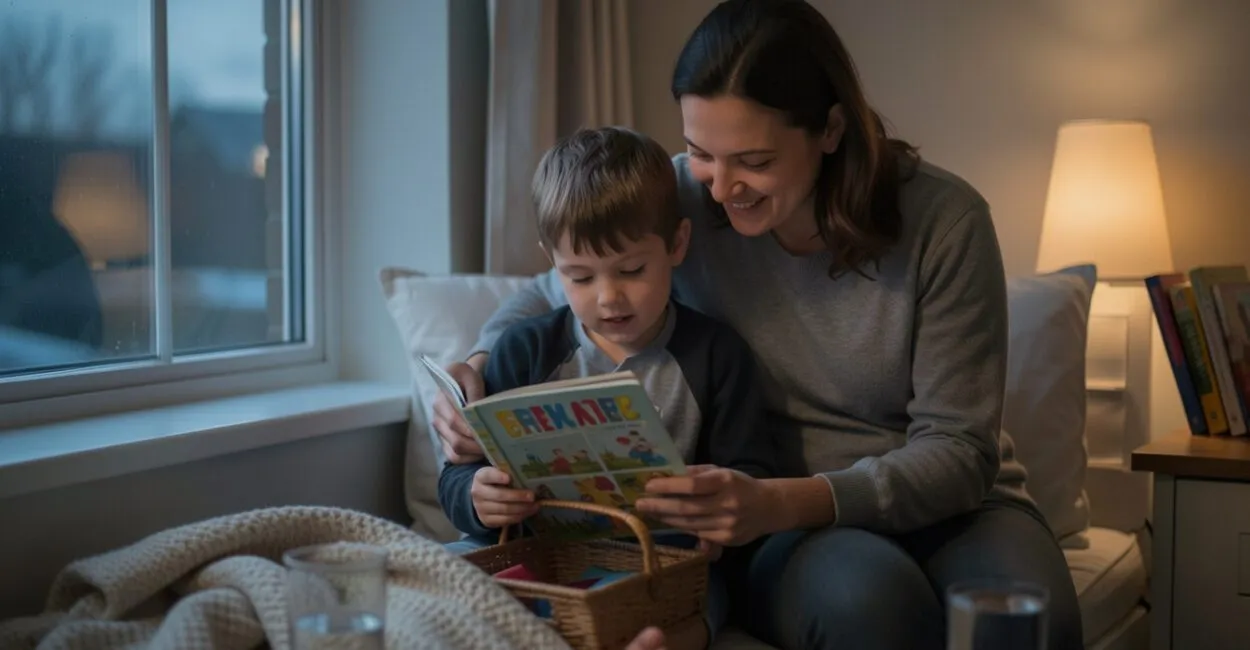
A five-minute story before bed can go further than an hour of forced reading full of interruptions. A reading routine at home works when it fits into family life and respects a child’s interests, even if there’s only a little time for it.
To get started, choose a likely time, keep a few books within reach, and agree on a flexible length. Consistency comes from repeating an enjoyable experience, not hitting a daily target at all costs.

If it doesn’t work one day, try again the next.
Before You Start
- Choose a time of day that tends to be calmer.
- Set aside books that match your child’s interests and stage of development.
- Pick a comfortable spot; absolute silence isn’t necessary.
- Let your child choose the story or ask to take a break.
How to Create a Reading Routine at Home Without Pressure
A reading routine is a flexible, recurring time to read, listen to stories, or explore books on days and in situations that work for the family. To create one, tie reading to a daily cue, such as after a bath or before turning out the lights. Start with a few minutes and let your child choose what to read or listen to. The goal is to make time with books predictable and welcoming, without turning pages or time spent reading into a chore. A daily anchor helps because there’s less need to negotiate about reading every night. Still, the time can change when your child is tired, sick, or busy with another important activity. If reading before bed turns into a struggle, try another time, such as after a snack.
Notice a common pattern: your child may ask for the same story again and again. Repetition can bring comfort and enjoyment; there’s no need to switch books to show progress.
It’s also fine to include nonfiction books, comics, and stories told aloud rather than limiting the habit to longer narratives.
A lasting routine begins when a child associates books with a safe, enjoyable time.
Why Reading Matters for a Child’s Development
Listening to and reading stories creates opportunities to build vocabulary, follow sequences, talk about emotions, and develop comprehension. Shared reading also brings adults and children closer: spontaneous comments about an illustration can be just as valuable as finishing the text.
The American Academy of Pediatrics recommends that pediatricians promote shared reading from early childhood as part of the interactions that support development. This guidance doesn’t mean that one book alone determines outcomes. Development depends on many factors, including a child’s experiences, environment, and access to responsive interactions.
Reading can exercise language, attention, and narrative comprehension. These effects depend on the kind of reading, the child’s age, and their level of participation; there’s no list of benefits that applies in exactly the same way to every child. To support literacy, pair stories with conversation and play, such as these educational games that build language skills.
Complete guide: Reading Difficulties in Elementary School: How to Help
How to Choose Books Based on Age, Interests, and the Moment

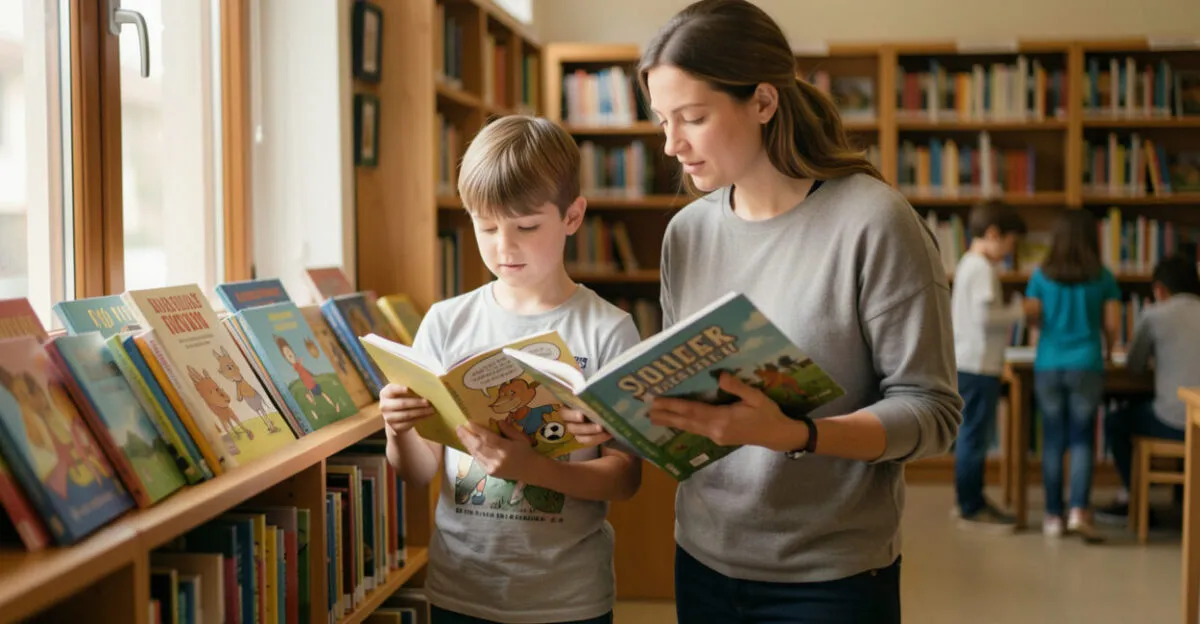
For young children, sturdy books with striking images, rhymes, and short text make it easy to explore books with an adult. When children start reading on their own, look for comfortable layouts and vocabulary they can decode, while choosing topics that spark their curiosity.
The age on the cover is a guide, not a measure of ability. Consider your child’s interest, experience, and the subject matter: they might prefer animals, humor, sports, or comics. For new readers, short books, easy-to-read type, and brief chapters can make it easier to get started. Public and school libraries let children try different titles without the pressure of finding “the right book.”
Read also: Inferential Reading: 5 Strategies for Elementary School
If your child needs reading accommodations for dyslexia, you may need to adjust the materials and the way you read together. See these reading strategies for children with dyslexia, too, and talk with the professionals who work with your child if you have ongoing concerns.
How Long and How Often Should You Read?
There’s no one daily reading duration that works for every child. For some families, five or ten minutes of reading together fits the routine; others prefer a chapter or a few pages. The best guide is whether your child stays interested and you can repeat the experience without tension.
For babies, reading may last only as long as they’re attentive, with breaks to look, touch, and make sounds. Older children may want to keep going, especially when they choose the story. Stopping in the middle of a scene can be frustrating; in that case, agree on a stopping point or leave the book out to pick up later.
How to Create a Weekly Family Reading Plan
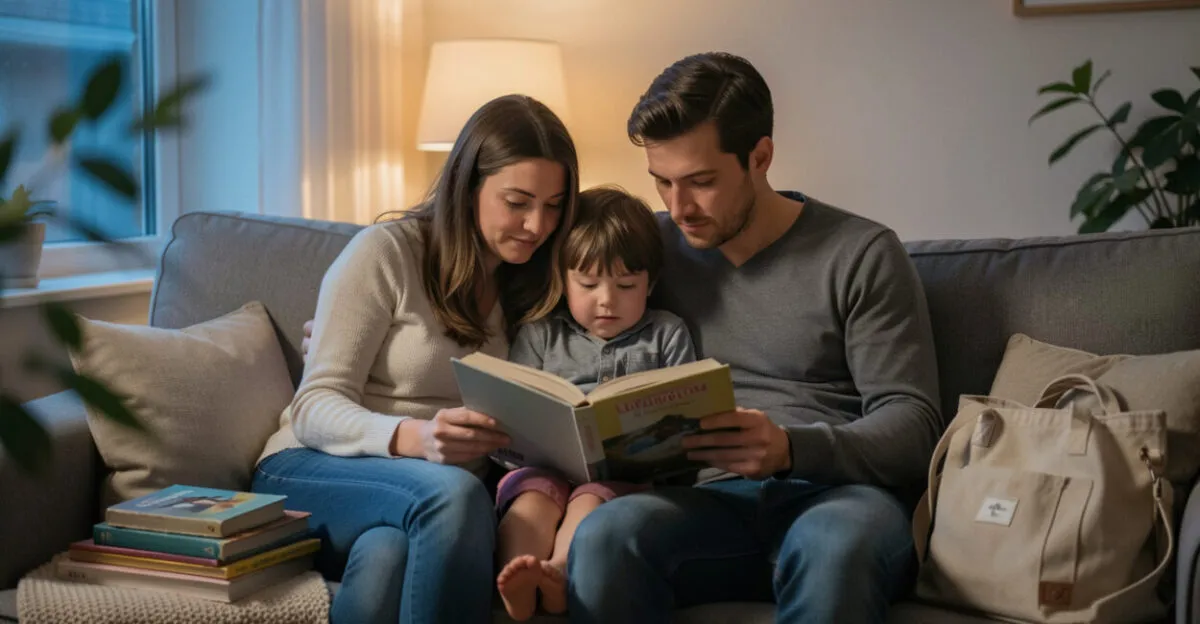
A weekly plan adds predictability without making every day feel the same. Choose a few possible times and keep alternatives for busier weeks. Frequency matters less than being able to repeat the habit without turning the schedule into a source of guilt.
- Monday and Wednesday: Read together after bath time.
- Friday: Let your child choose a book or comic.
- Weekend: Visit the library, read aloud, or talk about a story.
This example can be scaled back or rearranged. A family with unpredictable schedules can keep books in a bag and read during a calm trip; another family may prefer to save reading for the weekend. The sign that the plan works is simple: it fits real life and allows for changes.
Access matters, too. Brazil’s National Reading and Writing Policy, run by the Ministry of Culture, recognizes the importance of promoting reading practices and access to books. At home, this can start with borrowed books, sharing among family members, or library collections—no need to buy books frequently.
What to Do When Your Child Loses Interest
If your child doesn’t want to read, stop pushing in that moment and try to figure out what’s making it difficult: tiredness, a long text, an uninteresting topic, or a lack of confidence reading aloud. Offer a simple choice, such as picking between two books, listening to you read, or looking at pictures for a few minutes.
If your child can already read, avoid correcting every decoding mistake line by line. Offer help when they ask; otherwise, let the story flow and return to questions later. Ongoing difficulties deserve individual attention, since practice at home doesn’t replace an assessment or educational support when needed.
Here’s one possibility: after a busy day, your child turns down a long story and picks a familiar picture book. You look at the illustrations together and read just a few pages. The conversation ends early, with no pressure, and the book remains available for another time.
How to Maintain a Reading Habit Over Time
Bring in new titles, but make room for rereading. Keep books where your child can reach them, and let them see adults reading for pleasure, whether it’s recipes, magazines, or the news. Everyday examples show that reading serves different purposes, not just schoolwork.
Reading surveys in Brazil remind us that access to books and libraries varies among families and communities. That’s why a home’s commitment shouldn’t be measured by the size of its book collection. Borrowing books, visiting public libraries, and reading together are all worthwhile options, and the routine can change with a child’s age, schedule, and preferences.
The reading habit grows when books stay within reach and children have a say in what they read.
Choose a time that works this week, offer two reading options, and see which one sparks more interest. Then adjust the plan based on what happened, without measuring success by the number of pages.
How Much Time a Day Is Enough to Read with a Child?
There’s no universal number. A few attentive minutes can be enough to create an enjoyable routine; the length should match the child’s age, interest, and energy.
How Do You Choose Age-Appropriate Books?
Use the age recommendation as a starting point, and also consider interest, reading experience, text length, and readability. For beginners, short books on topics they choose themselves can make it easier to get started.
What Should You Do When Your Child Doesn’t Want to Read?
Don’t turn a refusal into a confrontation. Offer another story, read aloud, or try again at a calmer time. If the difficulty continues, consider whether the text is too long or your child is uncomfortable with reading.
Does Reading Aloud Count as a Reading Habit?
Yes. Children can take part by listening, following the illustrations, asking questions, or finishing familiar passages. Reading together helps children connect with books even before they can read independently.
Artigos Relacionados
 Reading at Home and Family Engagement: Build Routines, Choose Books, and Motivate Kids to Improve Reading Habits and School Performance
 School Routine: 7 Steps to Study Without Arguments at Home
 Morning Habits: 7 Routines That Build School Independence
 Syllable Games for Dyslexia: 7 Ideas to Build Reading Skills
 An At-Home Study Routine: Schedules That Actually Work
 Simple Syllable Activities: How to Build Reading Fluency
