
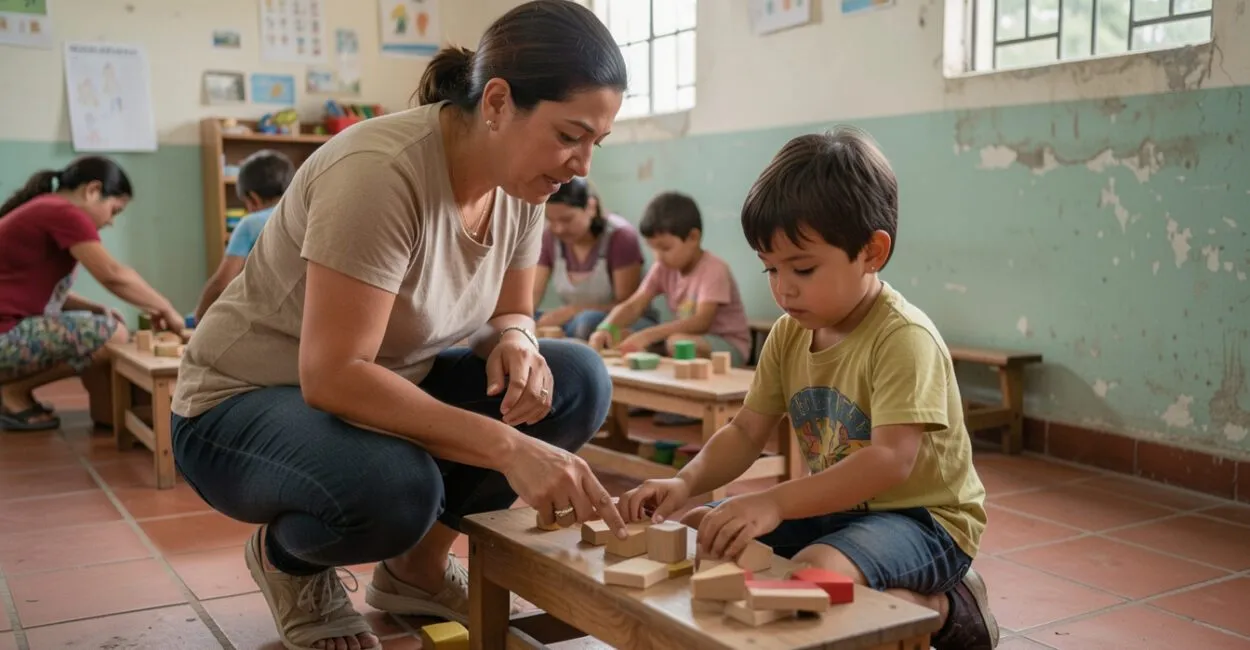
When a student can’t get started on a task, the difficulty may lie in comprehension, organization, attention, or environmental factors. Neuropedagogical practices help turn knowledge about cognition and development into observable educational decisions, such as adjusting instructions, breaking tasks into steps, and monitoring the student’s response.
This work requires a clear method and well-defined boundaries. It can support planning and inclusion in a range of settings, but it does not replace a clinical diagnosis or promise to resolve learning difficulties on its own.

What Defines Neuropedagogical Practices in Education
Neuropedagogical practices involve observation, planning, educational intervention, and follow-up, drawing on knowledge about the brain, cognition, and development to guide teaching. In everyday terms, they help educators form hypotheses about barriers to learning and test teaching strategies without treating those hypotheses as medical or psychological diagnoses.
Neuropedagogy brings together education and neuroscience, but it does not grant an independent professional license to diagnose disorders. The quality of the work depends on clear educational goals, records of what happens, and a review of strategies based on the student’s response.
A common situation illustrates the difference between observing and labeling: a child begins an activity, stops after the first instruction, and waits for further direction. This may mean the task has too many steps or the instruction wasn’t clear; by itself, it does not prove an attention deficit.
The hypothesis should be checked across other tasks and settings.
A neuropedagogical hypothesis has educational value only when it leads to an observable strategy and can be revised in response to the student’s needs.
How to Observe, Assess, and Plan Interventions
Neuropedagogical methods combine information gathering with teaching practices. In this context, a neuropedagogical assessment is educational: it describes how a student completes tasks, which supports help them participate, and where obstacles arise. It is not a clinical assessment and does not confirm disorders.
A useful process starts with a specific question, such as “Does the student understand spoken or written instructions better?” Next, the professional observes the student during relevant activities, records the conditions and results, tries an adjustment, and checks whether it helped. Comparing similar tasks helps prevent attributing to the brain a difficulty that may stem from vocabulary, time available, or the activity’s format.
- Observe: Record what the student does, in what context, and with which supports.
- Plan: Choose a strategy that addresses the identified barrier, such as brief instructions or visual supports.
- Monitor: Look for changes and decide whether to continue or adjust the strategy, or pursue another form of support.
Records should be specific. “Doesn’t pay attention” is an interpretation; “started after the instruction was repeated and completed two of four steps” describes what was observed. For specific reading difficulties, the school can document signs and talk with the family, as explained in this article about when to seek an assessment for slow reading.

Executive Function, Learning, and Neuroplasticity

Executive functions are cognitive processes involved in keeping information active, inhibiting responses, and switching strategies. Working memory, inhibitory control, and cognitive flexibility are terms for related components involved in school tasks such as following instructions, revising a paper, or adapting to a change in rules.
These concepts can guide decisions when they’re connected to specific demands. If a student loses track during a multistep activity, it may help to present one step at a time, use a visual checklist, and gradually remove the support as the student becomes more independent. If the difficulty occurs only during long copying tasks, for example, it’s also important to consider the writing load and access to materials.
Neuroplasticity is the nervous system’s ability to change through experience. In education, this knowledge supports the value of opportunities for practice and feedback, but it does not justify promises that a single exercise will “reprogram” the brain. Responses vary depending on the task, the student, the quality of instruction, and living conditions; whether a practiced skill transfers to other situations must also be observed, not assumed.
Read also: Effective Teaching Practices: A Complete Guide to Transforming Education
Where Neuropedagogical Work Can Take Place
Neuropedagogical work can take place in schools, learning support services, educational guidance settings, teacher training programs, and other educational environments. In clinical or specialized care settings, the scope depends on each professional’s training and legal responsibilities; the label “neuropedagogical” does not, by itself, expand that scope.
In schools, this work can support strategy planning and communication among teachers, school administrators, and families. In educator training, it can help analyze instructions, cognitive load, and activity design. In any setting, interventions should be tied to learning goals and clear ways to monitor what has changed.
Movement or creative activities can serve as teaching tools when they have a clear purpose and are appropriate for the group. A motor skills course using everyday objects, for example, can provide opportunities to follow sequences and practice coordination; it should not be presented as brain treatment or a diagnostic test.
Inclusion: Adapt Without Lowering Expectations
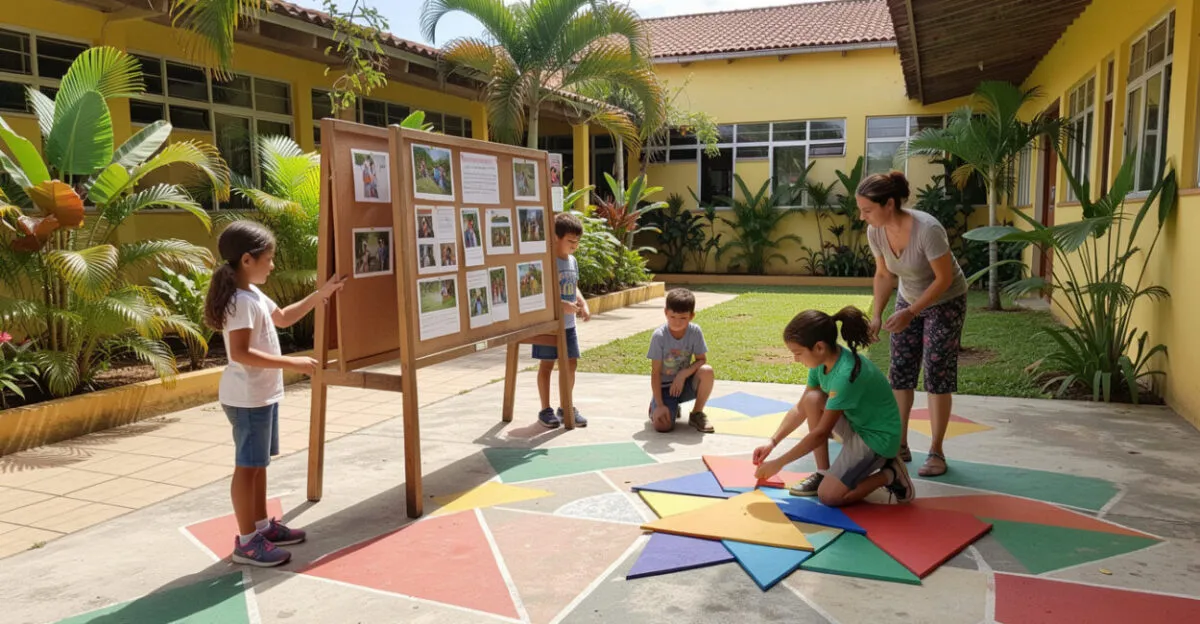
Neuropedagogy and inclusion come together in the effort to identify barriers to participation and learning. Adjusting how a student accesses a task doesn’t mean removing the learning goal: depending on the student’s needs and the instructional plan, they may demonstrate understanding orally, use a communication aid, or receive instructions in smaller parts.
Support should be chosen with the actual student in mind, not a profile supposedly determined by a diagnosis or a fixed learning preference. The idea that each person learns best only through a visual, auditory, or kinesthetic style should not guide decisions as if it were a scientific rule. A variety of resources can be useful, but their suitability depends on the content and the barriers observed.
Organizing activities in pairs, offering different ways to participate, and making rules explicit can also benefit the whole class. Examples of cooperative games that include the whole class can inspire group activities, as long as educators make sure everyone can participate with dignity and safety.
Professional Boundaries and Collaboration with Specialists
The key boundary is the distinction between educational support and diagnosis or treatment. An educator or professional with neuropedagogical training can describe observed difficulties, try teaching strategies, and share records with the family. Based on these observations alone, they should not conclude that a student has ADHD, dyslexia, autism, or another clinical condition.
When a difficulty persists across different situations, causes distress, interferes with participation, or does not improve despite consistent teaching adjustments, the school should talk with the family and recommend an assessment by qualified professionals. Depending on the concern, this may include psychologists, speech-language pathologists, physicians, occupational therapists, or other specialists. A referral does not relieve the school of its responsibility to provide accessibility and educational support.
There are also limits to how results should be interpreted: improvement during one activity does not prove the strategy will work across all subjects. Sleep, health, language, prior experiences, socioeconomic conditions, and the task itself all influence performance. The plan should be revised when the data do not support the initial hypothesis.
Ethics in Education and Avoiding Neuromyths
Using knowledge about the brain responsibly means consulting evidence, explaining the purpose of observations, and protecting student data. Records should include only information needed for follow-up, be shared only with authorized people, and comply with applicable privacy and data protection rules.
Brazil’s Ministry of Education (MEC) provides institutional references on education policy and organization in Brazil. To understand the scope and limits of neuroscience, the National Institute of Neurological Disorders and Stroke (NINDS) provides information about the nervous system and neurological conditions. These sources do not replace professional standards or individual assessments, but they can help prevent oversimplified explanations.
Ethical practices include obtaining consent for assessments and sharing information when needed, communicating uncertainty, and avoiding labels that lower expectations. Be wary of methods that promise guaranteed results, claim to “activate” a specific brain area without a clear basis, or promote one exercise as a universal solution. A resource should remain part of the plan only when it has an educational rationale and its effects are monitored.
Next Steps for Responsible Practice
When examining a difficulty, start with a specific educational question, record observable behaviors, and choose an adjustment that can be evaluated. If signs persist or go beyond the educational sphere, coordinate with the family and qualified professionals while continuing to support the student throughout the process.
Continue reading this series
Frequently Asked Questions
Who Can Conduct a Neuropedagogical Assessment?
This depends on the professional’s training and legal responsibilities. An educational assessment can guide teaching strategies, but it does not replace clinical assessments conducted by qualified professionals.
Are Neuropedagogical Practices Only for Children?
No. They can guide educational decisions for children, adolescents, and adults, as long as strategies take developmental stage, context, and learning goals into account.
Does Brain Training Improve School Performance?
There is no guarantee that skills will transfer automatically. It’s important to check whether the practiced skill also appears in relevant school tasks and adjust the intervention based on observed results.
How Can You Tell a Teaching Difficulty from a Possible Disorder?
A classroom observation cannot reliably make this distinction. The school can document patterns, try teaching adjustments, and communicate with the family; if the difficulty is persistent, widespread, or causes distress, the student should be referred for an appropriate clinical assessment.
Is It Appropriate to Adapt Activities Without a Formal Diagnosis?
Yes. Teaching adjustments can address observed barriers and support participation without waiting for a diagnosis. The team should record the purpose of the adaptation and monitor whether it helps the student access learning.
Artigos Relacionados
 The Montessori Method: What Does It Look Like in Practice?
 Active Learning Methods: 7 Practices That Are Transforming Education
 Neuroeducation in Practice: Innovative Teaching Methods
 Active Learning Methods: Engage Students With Proven Practices
 Pedagogical Practices in Early Childhood Education
 Early Childhood Assessment: Methods Without Tests
