
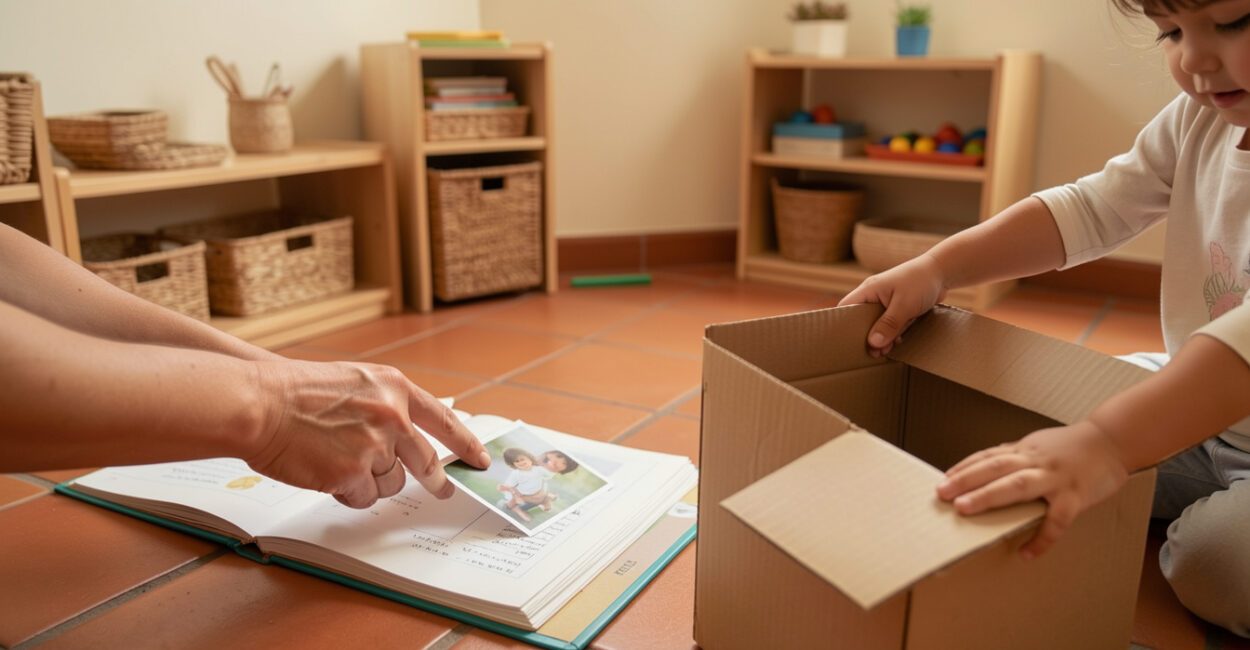
A child can spend an entire morning exploring a cardboard box and demonstrate learning that a worksheet would never reveal. In early childhood education, assessment follows learning processes: teachers observe interactions, play, and children’s work, record evidence, and use that information to plan experiences suited to each group. This doesn’t mean leaving development to chance. Assessment involves criteria, purposeful teaching, and documentation—but not grades, rankings, or tests to classify children. Looking for a template or PDF can help organize records, but the document only becomes meaningful when it reflects situations the child has actually experienced.
Key Takeaways
- Assessment in early childhood education follows each child’s progress without comparing them with their peers.
- Brief observations, children’s work, and portfolios help identify interests, strategies, and support needs.
- A useful record describes the context and what the child did or said instead of labeling them.
- Reports should guide lesson planning and conversations with families.
What Is Early Childhood Assessment, and What Is It For?
Early childhood assessment is an ongoing process of monitoring and documenting children’s learning and development through observation and a variety of records. It helps teachers understand how each child participates, explores, and relates to others, while guiding future learning experiences without selecting, promoting, or classifying children. This approach aligns with Brazil’s Lei de Diretrizes e Bases da Educação Nacional (LDB), the National Education Guidelines and Framework Law, especially Article 31, which calls for monitoring and documenting development without using assessment for promotion, including admission to elementary school.

Formative assessment takes place throughout children’s experiences. Teachers observe, interpret evidence, and adjust their approach: they might offer different materials, rearrange groups, or revisit an activity that sparked curiosity. Documentation isn’t meant to make a definitive diagnosis about a child; it shows what happened in a particular context and what opportunities might come next.
What Types of Assessment Does the BNCC Define?
Brazil’s Base Nacional Comum Curricular (BNCC), the national curriculum framework, does not establish an official list of “assessment types” with required stages for early childhood education. It provides guidance on monitoring learning and development through observation and different kinds of documentation, while respecting children’s learning rights and the experience areas. In school planning, terms such as diagnostic, formative, and summative assessment may be used. They describe the purposes of assessment, but should not be treated as official BNCC categories specific to early childhood education.
- Diagnostic: Helps teachers understand what engages a child and what experiences they have already had. In early childhood education, this can happen through a conversation, play, or exploring materials—not through a test.
- Formative: Follows a child’s progress during activities and provides information to help teachers decide what to offer next.
- Summative: Summarizes information from a period of time. If a school uses this term in reports, the summary should describe processes and evidence without reducing the child to a grade or classification level.
The rights to connect, play, participate, explore, express themselves, and develop self-awareness guide teachers’ observations. The Base Nacional Comum Curricular, Brazil’s national curriculum framework, available on the Ministry of Education website, also organizes this stage into areas of experience. These help teachers plan and observe; they aren’t a rigid checklist of skills every child must master in the same order.
How to Observe Children in Everyday Situations: Examples

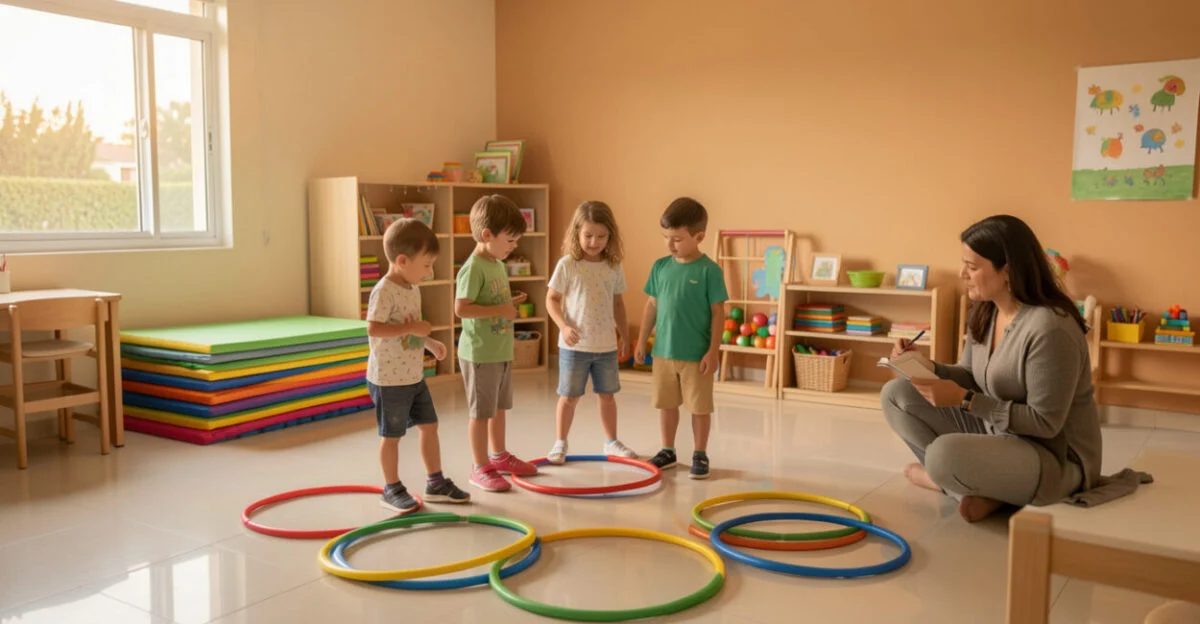
Intentional observation means choosing what to pay attention to without asking a child to stop playing to “show what they know.” A teacher might focus on a specific situation, such as children negotiating the rules of a game, and note the words, gestures, and strategies that help explain the experience.
An example of early childhood assessment might come from building a bridge with blocks. Instead of writing “struggles with math,” the teacher notes that the child stacked blocks, noticed the structure was wobbling, changed the base, and asked a classmate to hold the other side. This description preserves the context and offers clues about inquiry, persistence, and collaboration.
A practical detail makes a difference: simply writing “played with blocks” isn’t very useful. Brief records are more informative when they include the date, context, and an observable action or quote. It’s also helpful to separate evidence from interpretation: “pushed the block toward a classmate” describes what happened; “was generous” assigns the child a fixed trait.
Complete guide: Teaching Practices in Early Childhood Education
Activities with everyday materials can create rich opportunities for observation. A movement course using everyday objects, for example, lets teachers observe how each child explores balance, pathways, and ways to use space without turning the activity into a speed competition.
Which Records to Use: Notes, Photos, Children’s Work, and Portfolios
No single tool can capture a child’s entire learning journey. The choice depends on what you want to understand, how much time is available, and the school’s data protection and storage policies.
Read also: Ideas for Celebrating Physical Education Teacher Appreciation Day
- Observation notes: Capture specific episodes, words, interactions, and strategies. They can be kept in a class notebook or in individual files.
- Photos and videos: Document stages of an experience, as long as the school follows rules for consent, privacy, and access to images.
- Children’s work: Drawings, constructions, graphic marks, and other work show choices and changes when saved with the date and context.
- Portfolio: Brings together a selection of records over time. There’s no need to save everything; what matters is choosing materials that show learning processes and can be revisited with the child and family.
In pedagogical documentation, a photo without a caption may leave people wondering what was happening. Add details such as the activity, materials available, and something the child said, if relevant. A record is valuable when it helps someone understand the scene without having to guess what it means.
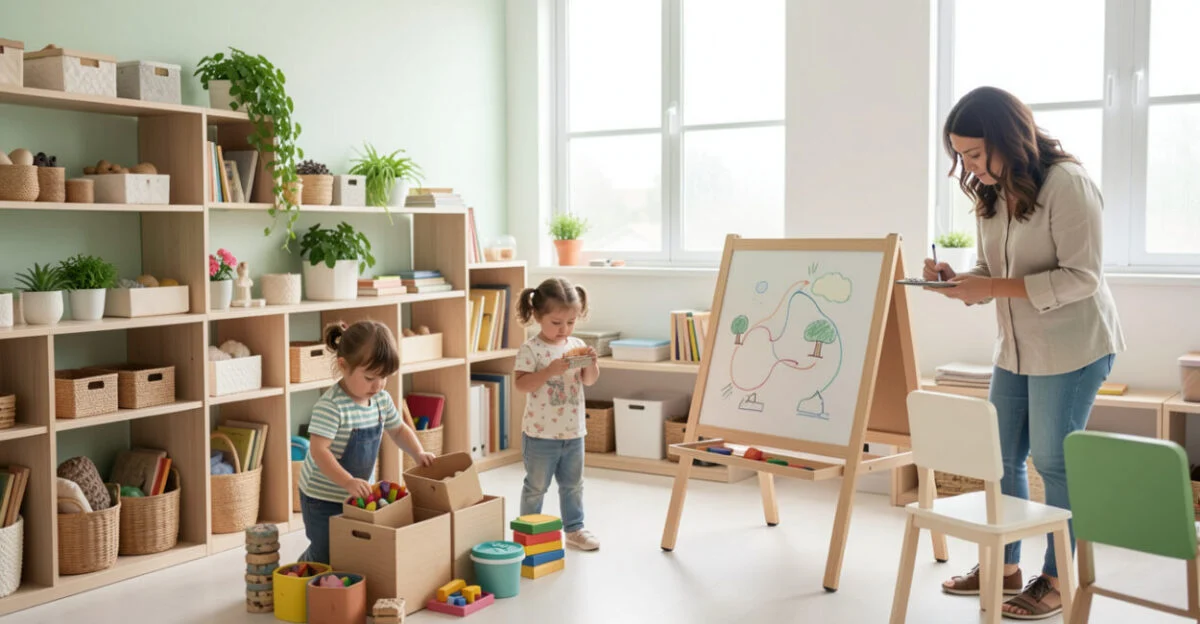
How to Document Learning at Ages 0–3, 4, and 5
Age provides context, but it doesn’t set a universal developmental timeline. Children have different backgrounds, paces, and ways of participating, so observations should take into account opportunities for interaction, frequency, context, and access to experiences.
Age group What you might observe Example record Ages 0–3 Attempts at communication, sensory exploration, movement, and interactions with adults and other children. “During play with containers, tapped two pieces together, listened to the sound, and repeated the action when the teacher came closer.” Age 4 Participation in pretend play, negotiating roles, expressing ideas, and exploring materials. “During pretend grocery store play, organized packages, assigned roles to classmates, and explained how they would shop.” Age 5 Strategies used in projects and games, hypotheses, storytelling, cooperation, and different ways of representing ideas. “While making a map of the classroom, drew the route to the library and explained the symbols used to mark different areas.”
These examples are starting points, not required milestones. An individual report for a 4-year-old in early childhood education or for a 5-year-old in the second half of the school year should be based on observations of that child. The same applies to searches such as “diagnostic math assessment PDF”: a single activity may inform planning, but it can’t represent a child’s learning journey on its own.
To plan activities that welcome different ways of participating, options such as cooperative play in early childhood education can create opportunities to observe how children share materials, agree on rules, and support their classmates.
How to Write a Clear, Respectful Individual Report
A good individual report presents concrete evidence, puts observed changes in context, and explains how the school plans to continue supporting the child. It should be easy for families to understand and avoid labels such as “uninterested,” “aggressive,” or “behind,” which reduce a child to a single trait without explaining what happened.
One Possible Structure
- Context: State the time period and experiences covered.
- Participation: Describe observed situations, words, choices, and interactions.
- Progress: Note changes or strategies in comparison with earlier records of the same child.
- Next steps: Explain what experiences the school plans to offer and how the family can share relevant information.
Example: “During building activities, Helena has begun suggesting ways to organize the blocks and inviting classmates to join in. When a structure falls, she usually tries different combinations. In the coming weeks, we’ll offer materials in a range of sizes and document how she explores new solutions.” This describes evidence and next steps without turning an observation into a diagnosis.
Assessment templates for 3-, 4-, or 5-year-olds can help organize writing, but they shouldn’t become checklists to fill out. If the school uses a reference document or looks for a report template in PDF format, adapt it to the children’s actual experiences, district guidelines, and educational program.
How to Use Records for Planning and Family Conversations
A record only serves its educational purpose when it informs planning. For example, if a teacher notices that several children are investigating shadows, they can add flashlights, fabric, and translucent objects to the classroom, set aside time for exploration, and observe what questions come up.
If a child rarely participates in group conversations, the record should help the teacher explore the context: Does the child communicate more in pairs? Do they need more time to respond? Do they prefer to express an idea through gestures or drawings? These questions guide adjustments and keep a single observation from becoming a label. If a concern persists across different situations, the school can talk with the family and follow district procedures without making a clinical diagnosis on its own.
When talking with caregivers, share specific examples, listen to what the family observes in other settings, and explain the next steps at school. Activities at home, such as an art workshop using simple materials, can also spark conversations about the child’s interests without replacing school-based monitoring.
There are limits to the general rule: a photo or a single note isn’t enough to determine how a child learns in every situation. Interpretations depend on repeated observations, the activity offered, and the understanding the team builds over time. To put this approach into practice next week, choose an activity for the class, record an episode with its context, and use what you observe to adjust a follow-up activity.
Frequently Asked Questions About Early Childhood Assessment
Does the BNCC Require Specific Types of Assessment in Early Childhood Education?
No. The BNCC provides guidance on monitoring and documenting learning, but it doesn’t require an official classification into types such as diagnostic, formative, and summative assessment for this stage.
How Can You Assess Children Without Giving Tests?
Observe real situations involving play, interaction, and exploration. Record actions, words, and strategies in context, then use that evidence to plan new experiences without grading or comparing children.
What Should You Document in Early Childhood Education for Ages 0–3?
You can document attempts at communication, exploration of objects, movement, and interactions. Record what happened and in what situation without treating a single skill as a complete measure of development.
Can a Math Activity for 5-Year-Olds Be Diagnostic?
It can offer clues about a child’s strategies and knowledge in a specific situation, as long as it’s age-appropriate and isn’t used as a test to classify them. It doesn’t replace ongoing observations or represent the child’s learning journey on its own.
What Should You Write in a Second-Semester Report for a 5-Year-Old?
Describe the experiences, participation, strategies, and changes observed during the period in comparison with earlier records of the same child. Include next steps for teaching and avoid comparing the child’s progress with classmates or suggesting diagnoses.
Can You Use an Assessment Template in PDF Format?
Yes, as a tool for organizing records or reports. Adapt it to the educational program and actual evidence; a pre-made form shouldn’t replace observation or become a rigid checklist of skills.
Artigos Relacionados
 The Montessori Method: How It Works in Europe
 Early Childhood Education in Japan: The Yōchien Method Explained
 The Montessori Method: What Does It Look Like in Practice?
 Early Childhood Literacy: Effective Methods for the Early Years
 Inclusion in Early Childhood Education: Welcoming Every Child
 Children’s Day in Early Childhood Education: Ideas by Age Group
