
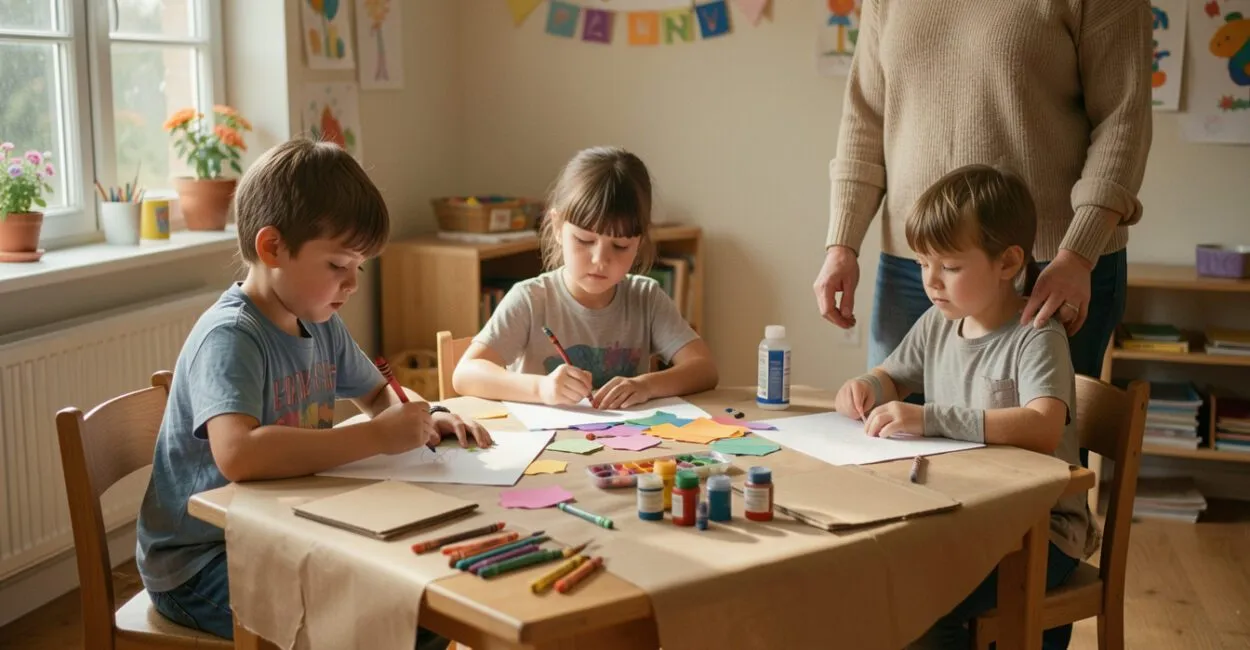
Children’s Day Art Workshop: Simple Supplies and Ideas
A welcoming art workshop starts with an organized space, accessible supplies, and the freedom for each child to create in their own way.

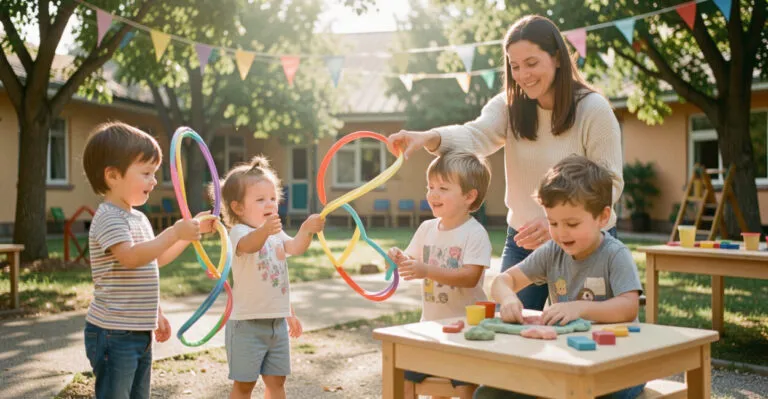
For Children’s Day, you don’t need a room full of supplies or a drawing for everyone to copy. Move fragile furniture out of the way, protect the tables, and set out small amounts of paper, crayons, and other age-appropriate items. The activity works best when there’s no required end result. Children can experiment, change their minds, or choose to watch before joining in. The facilitator’s role is to offer options and keep everyone safe, not compare the artwork.
1. Set Up the Art Workshop to Encourage Participation
A children’s art workshop is a guided activity focused on exploring and creating, where children choose the materials and approach they’ll use to make something of their own. To get ready, keep pathways clear, cover the work surface, and set out supplies at stations or in small portions. This makes it easier to share without interrupting the creative process.
Complete guide: Children’s Day in Early Childhood Education: Ideas by Age Group
Start with simple supplies: paper that’s blank on one side, clean cardboard, chunky crayons, and school glue labeled for the children’s age group. Washable paint can be included if the label says it’s safe for the children who’ll be using it. Check the manufacturer’s instructions and ask about allergies. Small pieces, scissors, and other tools require close attention and adult supervision.
Picture a table where the glue bottle gets passed around and soon becomes a source of conflict. Setting out small amounts in cups and assigning an area to each group helps the activity run more smoothly. This setup also helps children who prefer to watch before choosing a material.
Read also: Technology in Early Childhood Education: Innovations That Transform Children’s Development
In early childhood education, activities that offer choices and encourage exploration align with the learning rights outlined on the Brazilian Ministry of Education’s page about early childhood education. For more ideas for creative experiences, see this article on creative early childhood education.
2. Invite Children to Create Without a Required Template
Offer a simple prompt with more than one possible answer: “What shapes can you fit on this page?” or “What can you make with paper and crayons?” One idea is to create a map of imaginary places using lines and colors. Another is to turn large cardboard cutouts into characters with age-appropriate supplies.
Show children how to use the supplies, but avoid displaying a finished piece for them to copy. An example can unintentionally look like the “right” answer to a child. If someone asks, “Does this look good?” let them decide: “Do you like that color?” or “Would you like to add anything?”
For young children, choose large pieces and simple tools, with an adult close by at all times. Age, motor skills, manufacturer instructions, and possible allergies all affect what’s appropriate, so there’s no single list of supplies that’s safe for every group. Inmetro, Brazil’s National Institute of Metrology, Standardization and Industrial Quality, provides information about product safety, but reading labels and supervising children are still essential during the activity.
If the group enjoys exploring shapes, a composition activity can build on these geometry and spatial reasoning games, adapting the idea for free-form drawings and collages.
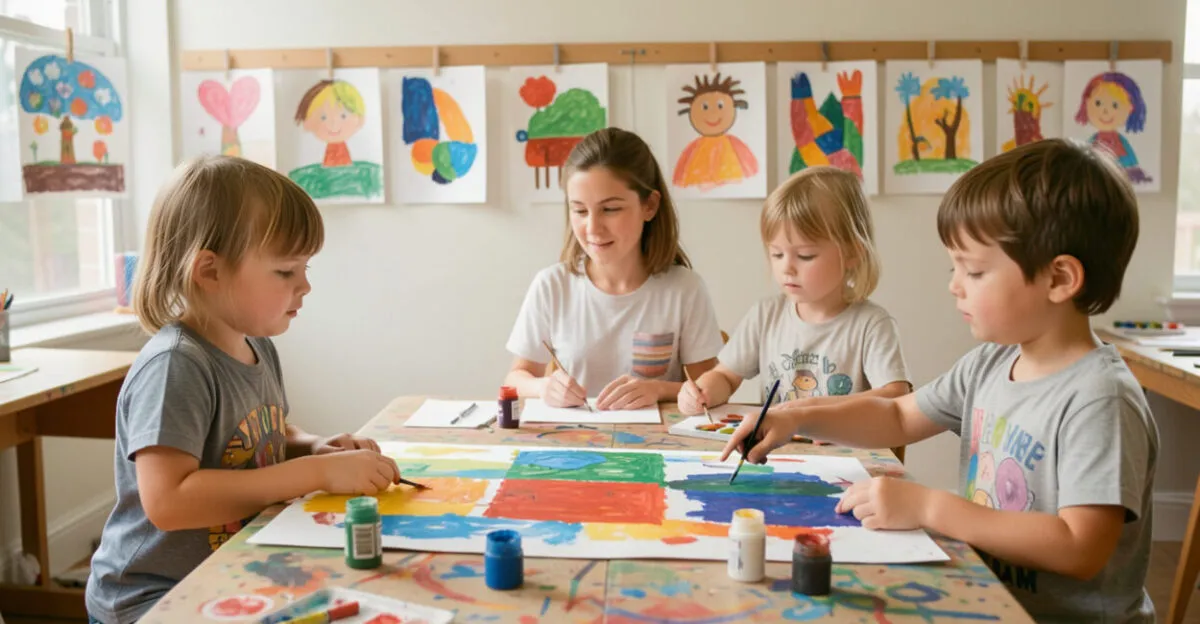
3. Value the Process and Wrap Up Without Competition

Point out specific choices: a child left part of the page blank, mixed colors, or tried a different shape. This shows attention to the process without labeling artwork as prettier, neater, or more correct. If someone doesn’t want to show their work, respect that choice too.
In an art workshop, every choice a child makes is part of the creative process.
To wrap up, invite anyone who wants to share to talk about their work or give it a title. Another option is to display the artwork at children’s eye level, without voting or prizes. Ideas from learning through play-based activities can inspire other ways to play and explore as a group.
Before the next workshop, try out the table arrangement and keep frequently used supplies within children’s reach, always with adult supervision. Sometimes, what children remember isn’t a perfect object but the story they make up as they create.
Do I Need to Buy Specific Supplies for the Workshop?
No. Paper, clean cardboard, and crayons may be enough, as long as they’re age-appropriate and used with supervision.
How Can I Keep Children from Fighting Over Supplies?
Set out small portions at different stations and explain that the supplies are for sharing. Make sure there are enough of the most popular items for the planned activity.
Should I Prepare a Finished Example for Children to Copy?
It’s better to demonstrate how to use the supplies without presenting a required end result. That way, each child can decide what to make and how to continue.
What Should I Do if a Child Doesn’t Want to Participate?
Let them watch or join in when they feel ready. They can start by choosing a material or watching another child create.
Artigos Relacionados
 Environmental Storytelling: 7 Ideas for Young Children
 Nature Games: 10 Ideas for Preschoolers
 Hands-On Learning Workshops: 12 Ideas for Schools
 Children’s Day in Early Childhood Education: Ideas by Age Group
 Reading at Home for Children With Dyslexia: Strategies
 Syllable Games for Dyslexia: 7 Ideas to Build Reading Skills
