
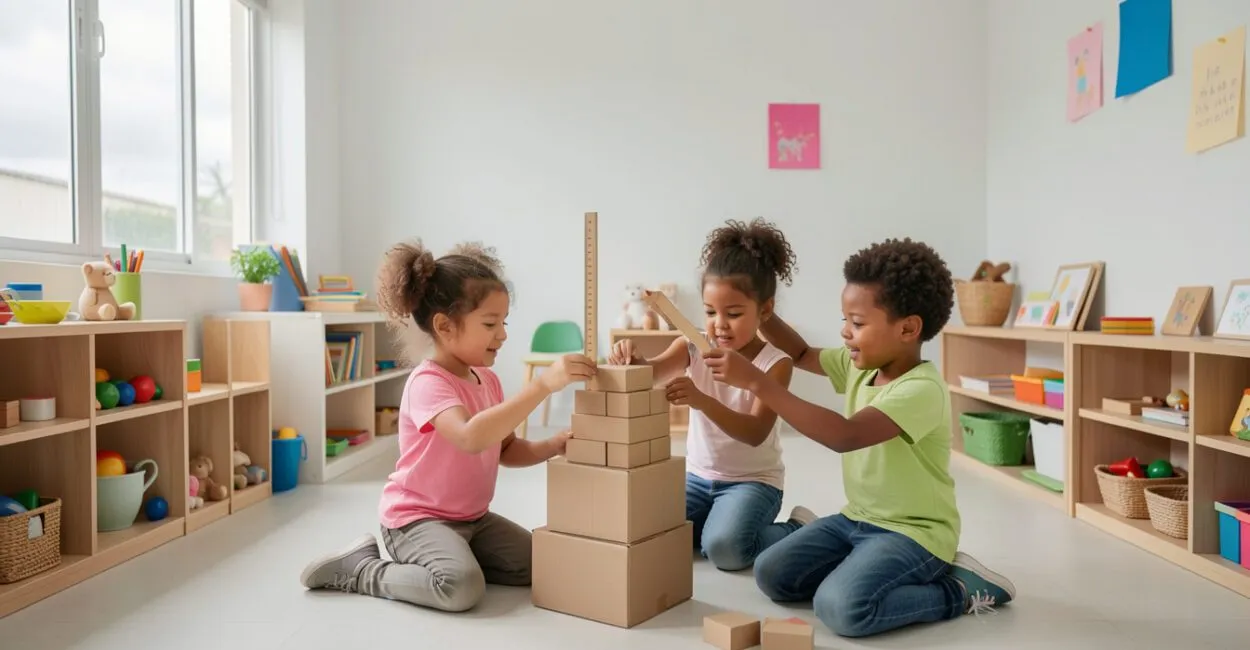
A cardboard box can spark an investigation into balance, measurement, and teamwork; a worksheet with blanks to fill in may produce nothing but identical answers. Creative pedagogy creates situations in which children help build knowledge, make choices, and learn through purposeful experiences. This approach can guide lesson planning, activities, and assessment, especially in early childhood education. To get started, the teacher begins with a question or something the group is curious about, identifies what the children should learn, and creates opportunities for them to explore, talk, create, and revisit their ideas.
Before You Begin, Consider These Points
- What learning or skill do you want to observe?
- What do the children already know, or what are they curious to find out?
- What accessible, safe materials are available?
- How can every child participate, including with adaptations?
What Is Creative Pedagogy and What Does It Aim to Achieve?
Creative pedagogy is an approach to teaching that plans open-ended experiences with clear educational goals, giving students opportunities to explore ideas, make decisions, and build knowledge. In early childhood education, this means connecting play, interaction, and inquiry to learning goals, while focusing on the process, not just the final product. In this context, creativity means imagining possibilities, trying different approaches, sharing discoveries, and working through problems. An activity might involve drawing or music, but it could also involve making rules for a game, comparing objects, or finding solutions to an everyday problem.

The goal is to encourage greater participation and independence without leaving learning to chance. This approach aligns with Brazil’s Base Nacional Comum Curricular (BNCC), the country’s national curriculum framework, which guides education in early childhood through learning rights and fields of experience.
Principles That Guide the Teacher’s Choices
The approach begins with a clear intention: the teacher knows what she wants to foster but leaves room for different answers. This means observing the group and adjusting the process rather than leading every child to the same solution or a model to copy.
- Inquiry: Questions and problems encourage observation, comparison, and the development of hypotheses.
- Child agency: Children make meaningful choices within clear, safe boundaries.
- Experimentation: Testing, making mistakes, and trying again are all part of learning.
- Interaction: Talking, negotiating, and creating something together are learning experiences, too.
- Inclusion: The activity should make room for different ways of perceiving, acting, and communicating.
A creative teacher doesn’t need a classroom full of sophisticated materials. What often takes more thought is deciding what to do when an exploration takes a different turn: consider whether it still supports the goal, welcome the discovery, and, if needed, ask a question that helps the group move forward.
How to Bring It Into the School Day

Choose a specific learning goal and turn it into an activity that allows for more than one answer. Then gather simple materials, anticipate potential risks, and decide what signs of learning to look for. This sequence helps preserve the educational purpose without turning the activity into a closed-ended task.
- Observe: Note the questions, play, and interests that emerge in the group.
- Set a focus: Choose a learning goal, such as comparing quantities or communicating an idea.
- Set the stage: Arrange the materials and pose a question that sparks inquiry.
- Support the process: Listen to the children’s strategies, offer timely guidance, and record evidence of learning.
- Reflect: Consider what worked and what to change for the next experience.
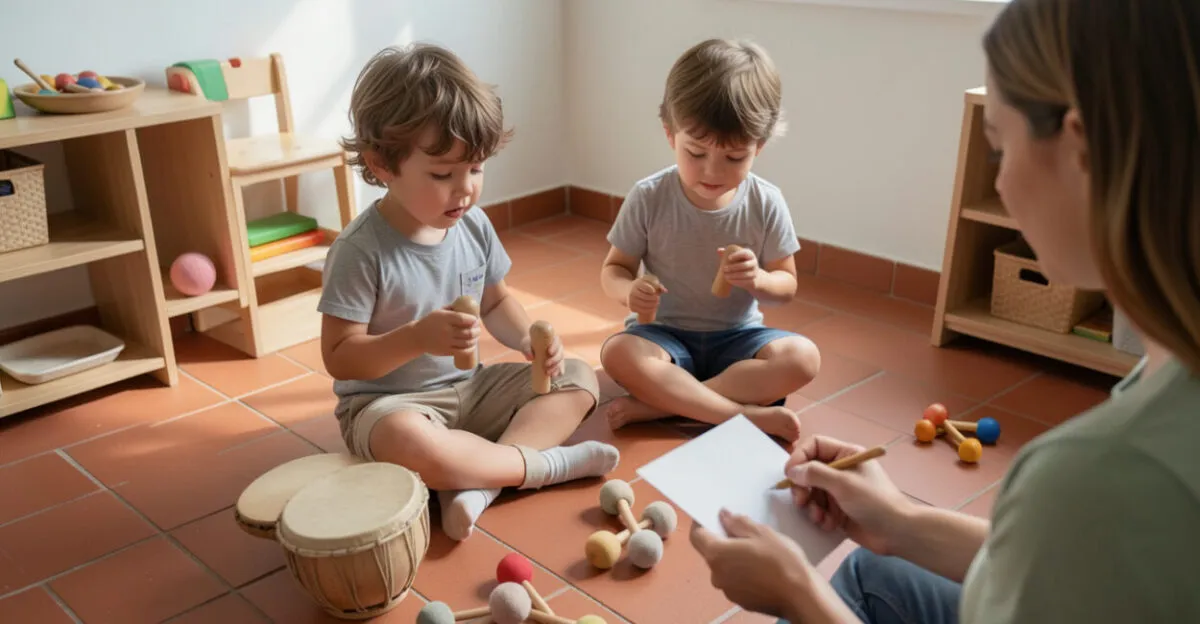
A common mistake is to explain every step before children have time to explore. When the teacher immediately demonstrates the expected solution, the group tends to copy it. When she presents a clear challenge and gives them a little time, different strategies emerge and can guide her next steps. For movement activities using accessible objects, a movement circuit with everyday materials can inspire adaptations that develop balance, planning, and body awareness.
Activity Ideas and Resources for Early Childhood Education
Educational resources for early childhood education can include reusable objects, books, art supplies, natural materials, or items made by the children themselves. Their educational value depends on how they’re used: bottle caps, for example, can be used to sort, count, invent rules, or build patterns, depending on the chosen goal.
Example: After noticing water running off the table during play, the group is given containers, cloths, and waterproof materials.
The children suggest ways to contain the water and test what works.
Read also: Creative Assessment: 6 Ways to Track Learning
The teacher records the children’s hypotheses and introduces words like slope and absorption when they’re relevant.
An workshop with paper, paint, and repurposed materials can encourage choice, composition, and self-expression; an art workshop using simple materials offers ideas for organizing this type of experience. The activity becomes purposeful when each child can decide what to create and explain their choices, without being expected to make the same thing as everyone else.
Read also: Executive Functions in Learning: How to Support Students
If you’re looking for free educational resources, printable materials, or PDF files, use them as supplementary tools, not as a complete lesson plan. Before bringing a worksheet into the classroom, check who created it, the intended age group, its accessibility, and its purpose. A list of educational materials for early childhood education might start with paper, boxes, blocks, fabric, books, and large, safe, washable objects. For children with specific needs, also choose tactile, visual, or augmentative and alternative communication resources as appropriate.
Cooperative games can also encourage negotiation and participation. Ideas for cooperative games that include the whole group can be adapted so the activity depends on each child’s contribution without requiring everyone to participate in the same way.
How to Plan Projects That Encourage Participation and Independence
A project can grow out of a recurring curiosity, an observation of the surrounding area, or a problem that captures the group’s interest. The teacher defines a focus and considers possible experiences; the children help come up with questions, choose materials, agree on what to do, and share what they discover.
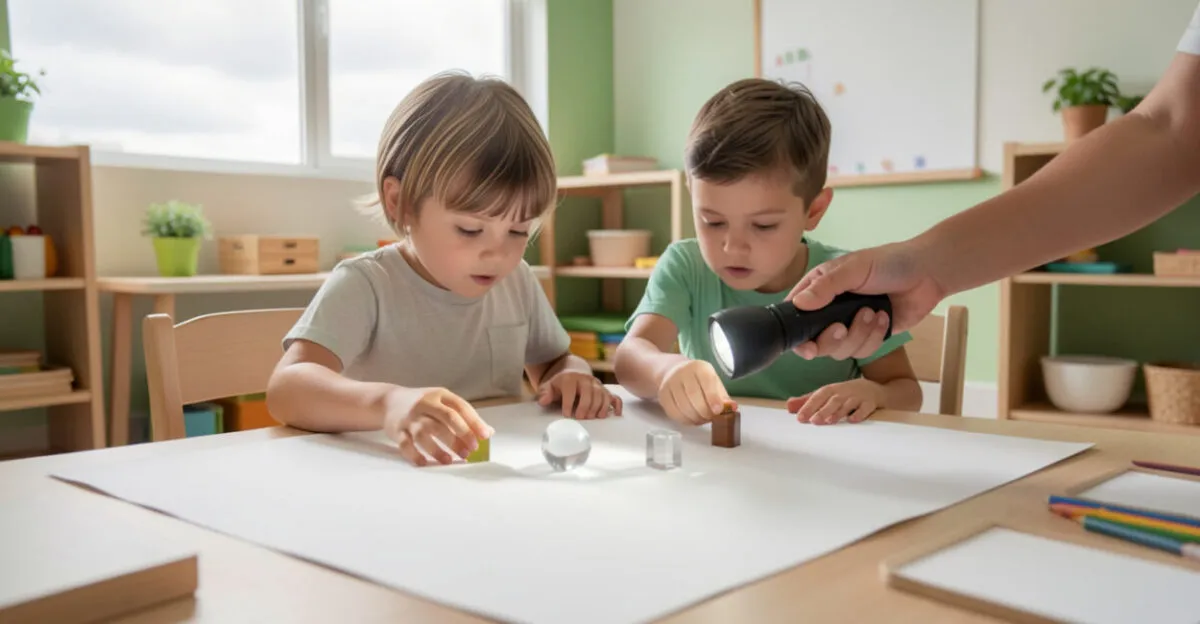
In early childhood education, a project doesn’t have to last for weeks to be meaningful. A short investigation of shadows, for example, might involve observing them at different times, drawing, talking, and comparing. Planning should allow for flexibility: if the group’s interest shifts, the teacher can consider whether the new question still supports the intended learning goals.
To find out whether children are genuinely participating, notice who suggests ideas, who gets to make choices, and which forms of contribution are being recognized. Fostering independence doesn’t mean stepping back from adult guidance: the teacher is responsible for ensuring safety, introducing vocabulary, supporting interactions, and expanding possibilities when the group runs out of ideas.
Learning Environments and Assessment That Leave Room for Creativity
The environment teaches, too. Materials that are visible and within children’s reach encourage choice, while areas for building, talking, reading, or exploring can support different ways of participating. The layout should account for movement, safety, noise, and sensory needs; a room full of activity stations doesn’t guarantee learning on its own.
When assessing learning, document the process: strategies used, questions asked, interactions, progress, and support needed. Photographs, notes on what children say, their work, and brief observations can all contribute to pedagogical documentation, as long as they serve a purpose and respect children’s privacy. Compare each child’s progress with their own past experiences, not with a single standard of performance.
To include children with different needs, offer more than one way to access the activity and respond to it: handling materials, observing, pointing, speaking, drawing, or using augmentative and alternative communication. Plan ahead for adaptations to materials and timing, and consult the team and family when needed. UNICEF’s guidance on inclusive education emphasizes the importance of removing barriers to participation, though the right adaptation depends on the child and the context.
There’s an important limitation: open-ended activities can cause frustration when they require skills children haven’t developed yet or when they lack support and clear expectations. Adjusting the challenge, breaking a task into steps, or offering a brief demonstration may be more inclusive than insisting on complete freedom.
Differences Between Approaches and Mistakes That Undermine the Activity
Project-based learning, inquiry, play, and approaches inspired by different educational philosophies can share practices with this approach. The difference isn’t in the activity’s name, but in its purpose, the role of the children, and how learning is supported and assessed. Creative pedagogy isn’t a single method or a collection of art projects.
A recreational activity can offer opportunities for social connection and enjoyment, but it doesn’t automatically become a planned learning experience. Similarly, a printable resource can support a specific skill, but it can’t replace observing the group and providing teacher guidance. The general principle falls short when children are given choices without considering age, accessibility, safety, or the goal.
- Don’t confuse freedom with a lack of planning: decide what you want to observe.
- Don’t assess only how the final product looks: consider the child’s decisions and strategies.
- Don’t require everyone to participate in the same way: offer different ways to contribute.
- Don’t turn every curiosity into a long project: some explorations can be brief.
Choose a familiar routine and introduce a question the children can investigate. Then note what they did, which supports helped, and what change might make sense next time. This simple record is a good starting point for purposeful planning that preserves children’s independence.
Continue reading this series
Frequently Asked Questions About Creative Pedagogy
Does Creative Pedagogy Require Special Materials?
No. Everyday and reusable objects can support meaningful investigations as long as they’re safe and appropriate for the age group. Planning and teacher guidance matter more than the cost of the materials.
How Can I Find Free Educational Printables?
Look for materials from educational institutions and check the usage license, authorship, and fit with the group’s learning goals. Use worksheets as one resource among many, without letting them replace exploration, discussion, and observation.
How Can I Adapt an Activity for a Child with a Disability?
Identify specific barriers and offer alternative ways to access the activity and demonstrate learning, such as visual supports, tactile objects, augmentative and alternative communication, or extra time. Adaptations should take the child and context into account and, when needed, involve collaboration with professionals and family members.
How Can I Tell Whether the Activity Was Successful?
Look for evidence related to the goal you set: strategies, questions, choices, interactions, or new ways of explaining an idea. Not all learning shows up in a final product; brief notes can help you recognize progress and plan the next step.
Artigos Relacionados
 Active Learning Methods: 7 Practices That Are Transforming Education
 Sensory Activities: Creative Learning in Childhood
 Creative Learning: Trends for 2025 and Beyond
 Educational Process: A Practical Guide to Learning
 Applied Neuroscience of Learning: A Complete Guide
 Active Learning Pedagogy in Extracurricular Activities: Engagement and Learning
