
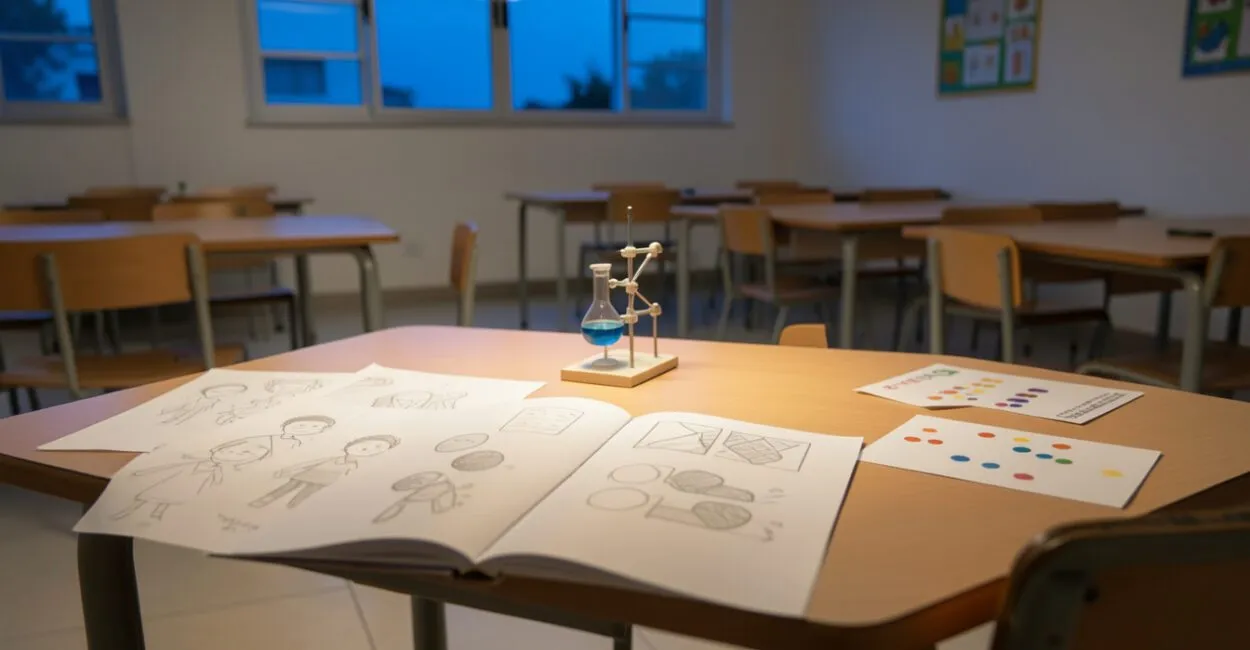
A test can show how a student answered on a particular day; on its own, it rarely reveals how they arrived at that answer or what they can do with what they learned. Creative assessment adds to that picture with tools that track the learning process and help determine what to do next instructionally. In the classroom, this might mean reviewing drafts of a paper, noting a strategy used to solve a problem, or asking a student to explain their own progress. The goal is still to assess knowledge and skills, but with varied evidence, clear criteria, and feedback that guides learning.
What Is Creative Assessment, and Why Go Beyond Tests?
Creative assessment is an approach to assessing learning that combines different ways of gathering and interpreting evidence to track students’ development. In simple terms, it looks at both the outcome and the process to inform instruction and determine each student’s next steps. That doesn’t mean abandoning tests or criteria. A test can be useful for checking certain knowledge; a portfolio, conversation, or observation can reveal aspects that a test format may miss. The right tool depends on the learning objective.

Evidence of learning is valuable when it helps identify what a student has mastered and which challenge makes sense to offer next.
Formative assessment, which tracks progress to guide instruction while learning is underway, aligns with this approach. Brazil’s Base Nacional Comum Curricular (Common National Curriculum Base), available through the Ministry of Education’s website, outlines learning goals and competencies that can help guide the objectives being assessed. For more focused work on reading, for example, connect this evidence to practices for developing reading fluency.
What Should You Look for When Tracking Learning?
Look at knowledge, strategies, participation, independence, and progress relative to the student’s starting point. These criteria help you interpret performance without mistaking a temporary difficulty for a lack of learning. Before choosing a tool, frame an observable question: “Can the student support an opinion with evidence from the text?” is more useful than “Did they do well on the activity?” The first question points to what to record and helps you plan a specific intervention.
It’s also important to distinguish participation from mastery. Saying little during a discussion doesn’t prove that a student didn’t understand; they may demonstrate the same learning in writing, with a diagram, or in a one-on-one conversation. Offering different ways to express understanding reduces the risk of assessing only students who are comfortable speaking up.
How to Build a School Portfolio That Shows Progress

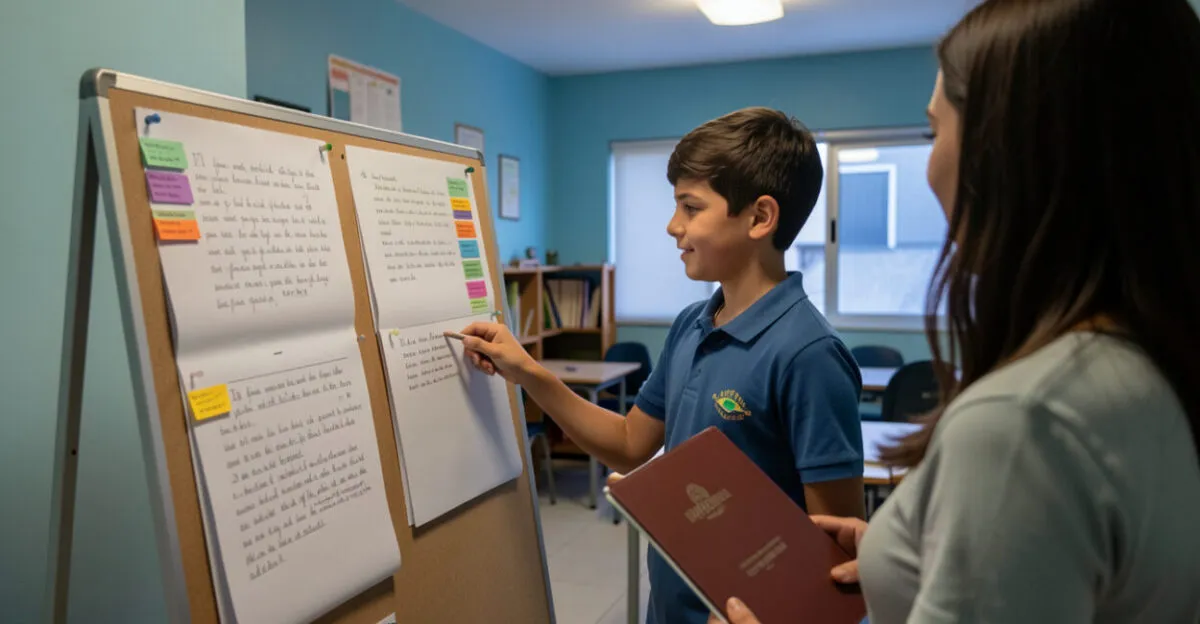
A school portfolio brings together selected work from across a period of time and examines it in relation to defined objectives. It reveals changes across attempts, strategies, and revisions, as long as the collection includes purposefully selected evidence rather than every piece of work the student has produced.
Complete guide: Creative Pedagogy: A Guide to Transforming Learning
Include early and revised drafts, a brief explanation from the student about their choices, and teacher comments tied to criteria. In a writing unit, comparing the first draft with the final version can show progress in organizing ideas, even if spelling still needs work. One possible routine is to select one or two pieces per unit, identify the skill being assessed, and add a short note about the next step. The partnership between school and family to support reading can also draw on portfolio examples, as long as they’re shared with context and the conversation doesn’t turn into comparisons between students.
Read also: Assessment in Early Childhood Education: Methods Without Tests
How to Guide Self-Assessment and Peer Assessment
Self-assessment and peer assessment work best when students use concrete criteria and guiding questions. Without that structure, comments like “It’s good” or “I didn’t like it” offer little information for revising the work. After an activity, students can answer: “What can I do now?”, “Which strategy helped me?” and “What do I still need to practice?” During peer review, questions like “Which part is clearest?” and “Where is more evidence needed?” focus attention on the work, not personal characteristics.
Record responses in a few lines, on a worksheet, or in the student’s notebook. For students who are still learning to assess their own progress, provide sample responses and review the criteria together; reflection shouldn’t become an unsupported task.
How to Use Rubrics and Checklists Without Reducing Everything to Points
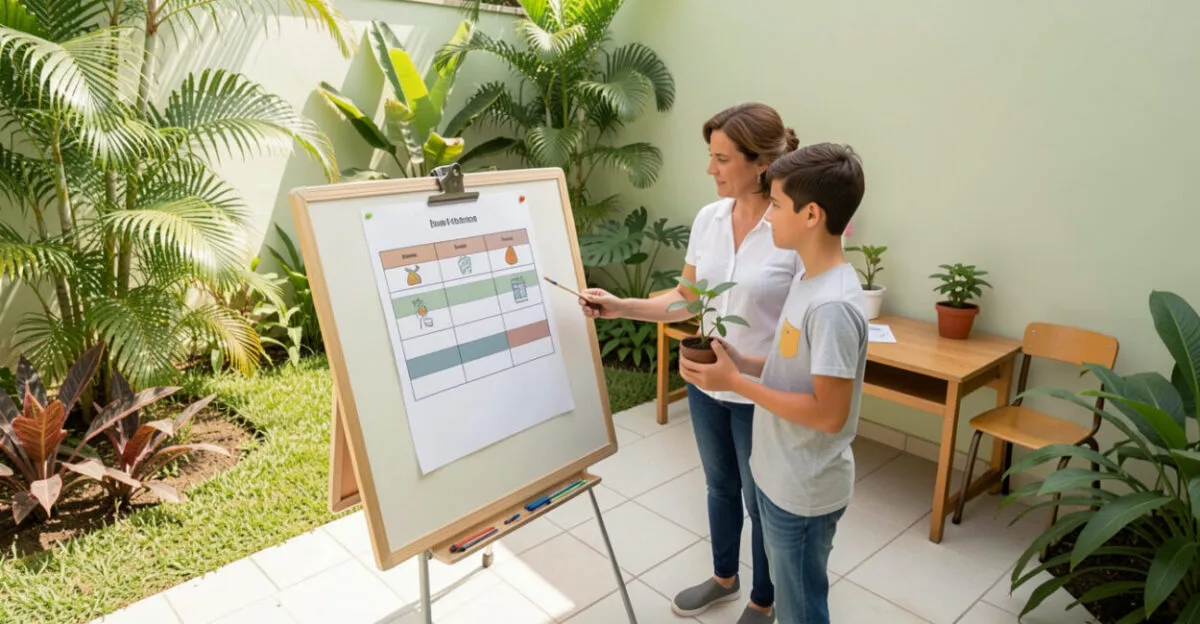
An assessment rubric describes levels of quality for defined criteria, while a checklist identifies elements that should be included in an assignment. Both make expectations clear and support specific feedback. For an oral presentation, criteria might include a clear main idea, use of relevant information, and responses to questions. A rubric can describe what each performance level looks like, but its main purpose is to guide revision and instructional conversations, not to generate an automatic grade.
Share the criteria before the assignment and use them when commenting on the work. If the rubric has too many items, though, students may focus on checking off every line and lose sight of the larger goal; choose just a few priority criteria for each activity.
What Should You Record in a Learning Journal and in Observations?
Record specific evidence, the situation in which it appeared, and how it relates to the learning objective. Brief, frequent notes are usually more useful than lengthy accounts written long after the fact.
A note might say: “During partner work, explained why they grouped the objects in tens; still needs to check the answer without help.” The statement describes an observable action and suggests an intervention. “Did well” doesn’t show what the student did or what they need to practice.
During movement activities, games, or group work, a form with the date, criterion, and an objective note can help you rely less on memory. For example, movement circuits using everyday objects make it possible to observe planning, coordination, and adjustments to strategies, as long as the criteria suit the students’ age and the stated objective.
How to Combine Tools and Turn Evidence Into Next Steps
Choose tools based on the learning you want to observe, and use your notes to decide what to do instructionally. No single tool captures everything a student knows: interpretation depends on the objective, the context, and the opportunities provided to demonstrate learning.
A simple routine can start with a clear objective, continue with collecting evidence during the activity, and end with feedback that identifies what the student has learned consistently and what to do next. If several students have the same difficulty, that may signal a need to revisit the content with a different explanation or activity.
Assessment has limits, too: a one-time observation may be affected by fatigue, anxiety, language, or unfamiliarity with the format. When one piece of evidence doesn’t match the others, it’s worth trying another opportunity or tool before making an important decision. This caution aligns with the UNESCO guidance on assessment and monitoring in its education section.
To get started, choose a skill from the next instructional unit and define evidence that shows how the student applies it. Record only what matters and use the information to adjust an activity or feedback; keep only tools that help you make instructional decisions.
Question Answer How can I go beyond tests? Combine evidence of process and outcomes based on the objective. What should I keep in a portfolio? Selected work, revisions, and reflections tied to criteria. How can I guide self-assessment? Use guiding questions and clear criteria before asking students to reflect. What should I write in a learning journal? An observable action, its context, and the related skill. How should I use the records? Turn evidence into feedback and next steps for instruction.
How Often Should I Update a Portfolio?
Update it at planned points in a unit or learning sequence, when a piece of work shows progress or a significant challenge. Selecting a small number of purposeful examples makes them easier to analyze.
Can Creativity Be Assessed Using Criteria?
Yes. Define what the assignment calls for, such as originality in problem-solving, alignment with the objective, or the ability to revise an idea. Criteria should guide observation without requiring everyone to produce identical responses.
How Can I Keep Peer Assessment From Turning Into Grade Swapping?
Ask students to give descriptive feedback tied to criteria, and, when possible, leave grading out of this step. Modeling examples of respectful feedback helps students comment on the work precisely.
What Should I Do When the Evidence Conflicts?
Check whether the tools assessed the same skill and whether the conditions were comparable. Then collect another piece of evidence before deciding that the student has or hasn’t mastered the content.
Does a Portfolio Replace a Test?
Not necessarily. A portfolio shows development over time, while a test can answer specific questions about knowledge or skills. The right combination depends on what you want to assess.
How Can I Keep Records Without Adding Too Much Work?
Use concise criteria and record only evidence that could change an instructional decision. One objective note per activity or group may be enough when the objective doesn’t require detailed individual tracking.
Artigos Relacionados
 Collaborative Group Activities: 5 Creative Ways to Build Teamwork and Communication Among Middle School Students
 Formative Assessment: Workshops That Strengthen Learning
 Literacy Assessment Tools to Track Student Progress
 Sensory Activities: Creative Learning in Childhood
 Creative Learning: Trends for 2025 and Beyond
 Playful Assessment: How to Measure Learning in a Fun Way
