

A class can complete the same assignment and reveal very different challenges: some students miss the mark because they don’t understand the concept; others misread the directions. Formative assessment helps identify these differences while instruction is underway. By looking at evidence from students’ work, teachers can decide what to revisit, explore in more depth, or teach next—without relying only on tests and grades.
This process can involve a question, an observation, or a short task, as long as the teacher uses what they learn to guide the next steps. Here are six strategies, ways to document learning, and a practical approach to building this kind of monitoring into a lesson plan.

Before you begin
- Define what students should know or be able to do by the end of the lesson.
- Choose an observable sign of learning, such as explaining a concept or solving a problem.
- Set aside a brief strategy for gathering evidence during the activity.
- Decide what follow-up actions are possible: revisit the material, offer support, go deeper, or move on.
Formative assessment as ongoing monitoring of learning
Formative assessment is an ongoing process of gathering and interpreting evidence of learning, followed by feedback and adjustments to instruction. Rather than waiting for a final exam, teachers observe what students can do along the way and use that information to decide what comes next. The activity alone isn’t enough: what makes it formative is how teachers use what it reveals.
In practice, this might mean noticing that several students can apply a rule but can’t explain why it works. That evidence points to a need beyond simply doing more practice problems: the concept may need to be revisited, another example shown, or students asked to compare strategies.
Brazil’s Base Nacional Comum Curricular (BNCC), the national curriculum framework, provides guidance on monitoring learning and using records to support instruction. Formative, ongoing assessment aligns with the idea of observing students’ progress over time rather than reducing learning to a single result.
How diagnostic, formative, and summative assessments work together
Diagnostic assessment helps identify students’ prior knowledge and needs before or at the start of a learning sequence. Formative assessment monitors development during instruction. Summative assessment brings together information at the end of a unit or stage to measure results and often support decisions about certification or grades.
Type When it typically happens What it helps determine Example Diagnostic Before or at the start of instruction The starting point and support students need An introductory fractions activity to identify strategies students already know Formative During the learning process What to revisit, adapt, or explore in more depth A solution with written explanations to pinpoint where a difficulty arises Summative At the end of a unit or stage The level of performance achieved A final test or presentation aligned with the learning objectives
There is no universal list of exactly four types of assessment. Classifications vary by framework: diagnostic, formative, and summative describe common functions, while other approaches may add categories or distinguish between tools and criteria. The same test can be used formatively if it generates feedback and guides a review, although its format alone does not determine its purpose.
Brazil’s Lei de Diretrizes e Bases da Educação Nacional (National Education Guidelines and Framework Law) calls for continuous, cumulative assessment of school performance, giving greater weight to qualitative aspects and results over time than to any final exams. The guidance is available in the LDB text on the Portal da Legislação, Brazil’s official legislation portal.
Six strategies for identifying what students have learned

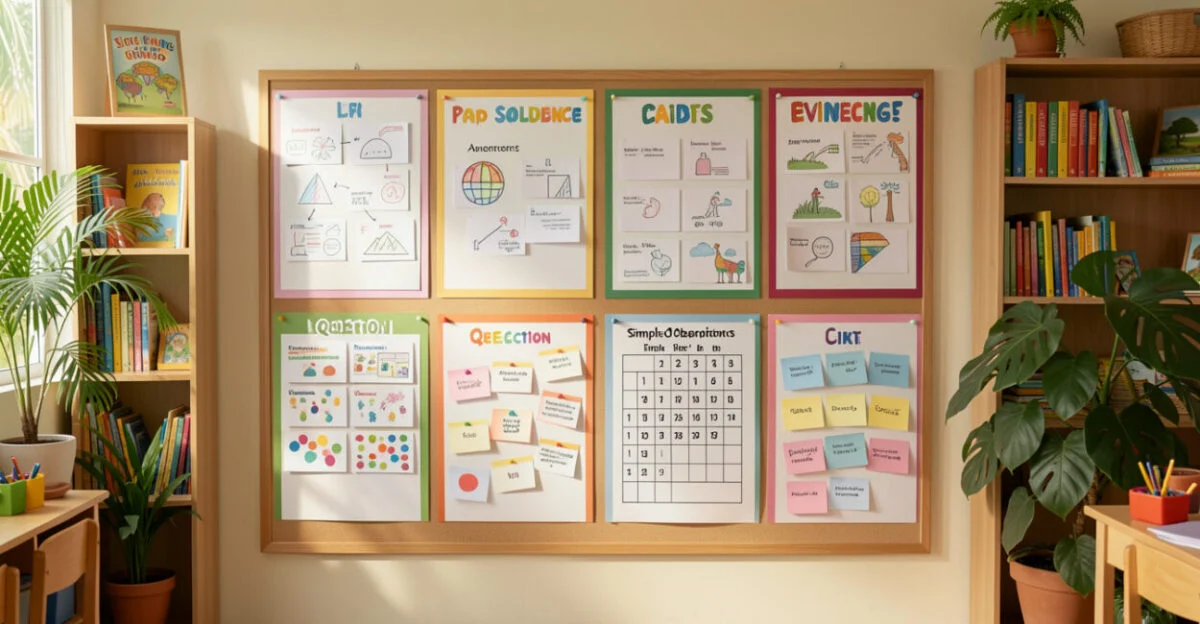
Formative assessment tools don’t fall into a fixed classification. They are ways to gather evidence: questions, observations, brief tasks, discussions, self-assessments, and peer assessments. The right choice depends on the objective and what you want to find out.
- Ask questions that require reasoning. Instead of simply asking, “Does everyone understand?” ask students to explain why they chose a particular approach. Their answers reveal their understanding, strategies, and possible misconceptions.
- Observe the process, not just the result. As students work, notice where they start, what resources they use, and where they get stuck. A calculation error may point to a reading or planning challenge.
- Assign a brief activity. An exit problem, a sentence to complete, or an explanatory drawing can check a specific learning objective without turning every lesson into a test.
- Lead a short discussion. Ask students to compare solutions or defend an interpretation. Discussion can reveal ideas that don’t always show up in written work.
- Include guided self-assessment. Invite each student to identify what they can already do and where they still need support. Clear criteria make their responses more useful than a general impression of their own performance.
- Use peer assessment with clear criteria. Partners can check whether an explanation includes evidence or a solution shows its steps. Without criteria, the activity can turn into a matter of personal opinion.
In early childhood education, formative assessment can take the form of observation notes, conversations, play, and children’s work, respecting how they learn and express themselves. The BNCC fields of experience help connect these observations to planned experiences without requiring children to demonstrate learning only in writing.
Read also: Adult Learning: 6 Principles for Better Teaching
Formative assessment tools and observable evidence
A tool is useful when it makes learning related to the lesson objective visible. The table connects examples of formative assessment with possible evidence and an instructional decision; the right follow-up depends on what the records show.
Tool Evidence observed Possible next step Oral question with a justification The student explains their choice but confuses the concepts involved Revisit the differences between the concepts using new examples Exit ticket Several students solve the problem but can’t explain their process Plan to compare strategies in the next lesson Brief criteria checklist The writing expresses an opinion but doesn’t include evidence Model how to support a claim with a fact or example Observation during a task The student gets started but stops when interpreting the directions Review vocabulary, how to read the directions, or the support needed Peer review Comments don’t refer to the agreed-upon criteria Show examples of specific feedback before the next review
A common mistake is collecting lots of exit tickets or rubrics and never revisiting them. This often happens when records aren’t tied to a planned decision. To avoid a backlog, choose a few pieces of evidence per lesson and decide in advance how each result could change instruction.
Read also: Instructional Leadership: Align Curriculum and Learning
How to document evidence and integrate it into a lesson plan
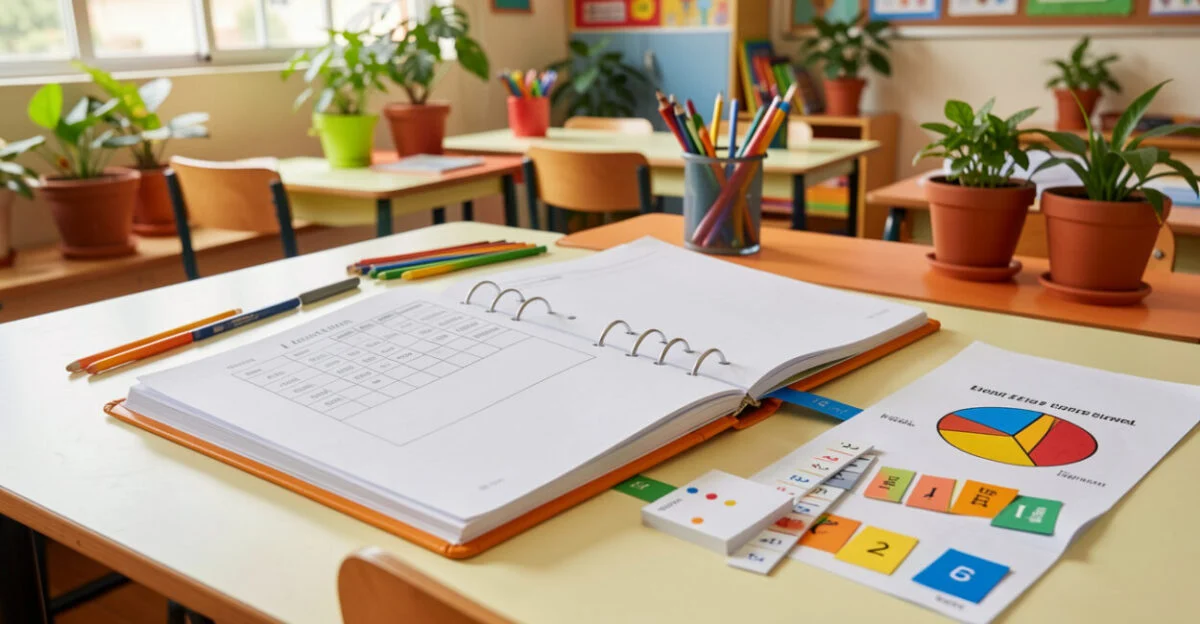
In the assessment section of a lesson plan, record the objective, the evidence that will show whether students have met it, the tool you’ll use, and possible next steps. This builds assessment into planning from the start, rather than tacking it on at the end as a grading task.
A concise record can note the lesson objective, what you observed, and the next action. In a large class, it’s often more practical to document group-wide patterns and individual students who need follow-up than to write a detailed report on every student after every class.
Consider a lesson on comparing fractions: students answer an exit problem, and many choose the larger fraction correctly but justify their answer based only on the denominator.
The teacher records this misconception and starts the next lesson with visual models and a comparison of strategies.
The brief activity provided evidence; reviewing the concept was the instructional decision.
Feedback should identify what the student has already done, what they need to develop, and what they can try next. “Review your answer” gives little direction; “show how the drawing represents each fraction and compare the parts” suggests a clear next step. Planning these interventions can draw on ideas for lesson planning with varied strategies.
Benefits and limitations in schools and workplace training
In schools, the focus is on monitoring curriculum-based learning and supporting students’ development. In workplace training, the goal is usually to see whether participants can apply knowledge or procedures related to a role. These contexts aren’t equivalent: the objectives, criteria, and consequences of assessment differ.
For example, in customer service training, a simulation can reveal whether a person can follow a procedure and respond to a specific situation. That evidence can guide additional practice or feedback on performance, but it doesn’t replace a broader evaluation of job performance and shouldn’t be confused with a school grade.
There’s an important limitation: one response observed during an activity doesn’t, by itself, prove that a student has mastered the content in every context. The result depends on the objective, task format, participation conditions, and clarity of the criteria. If the evidence is ambiguous, it’s worth finding another way to observe before concluding that the student hasn’t learned the material.
How to turn evidence into next steps
Use a simple guideline: if a challenge occurs repeatedly and affects the core objective, revisit the content using a different representation or explanation; if it affects part of the class, offer targeted support; if students demonstrate consistent understanding, move on or offer a deeper challenge. Decisions should respond to observed patterns, not a single impression.
You can also review the activity itself. If many students interpreted the directions differently, the instructions may have created an obstacle that wasn’t part of the learning objective being assessed. Separating challenges with the content from those caused by the task helps avoid misguided interventions.
To get started, choose an objective for your next lesson and a piece of evidence you can observe in just a few minutes. Decide in advance which results will prompt a review and which will let you move on; then record what happened and adjust your next lesson plan.
Frequently asked questions
What is a formative activity?
It’s an activity used to generate evidence of learning and guide an instructional response. It could be an oral question, a short piece of work, or a partner task, as long as the result is interpreted and informs teaching.
Which tools work best with large classes?
Quick-response questions, exit tickets, and short criteria checklists can help identify patterns without requiring detailed comments on every student’s work. To keep grading manageable, focus on a few objectives and first review responses that point to recurring questions or confusion.
Does every monitoring activity need to be graded?
No. A grade can be useful at certain points, but assessment can also lead to descriptive feedback, a review of the material, or a change to the next activity. When every attempt is graded, some students may avoid taking risks and sharing what they’re unsure about.
Artigos Relacionados
 Creative Assessment: 6 Ways to Track Learning
 Formative Assessment: Workshops That Strengthen Learning
 Educational Assessment: Formative or Summative?
 Formative Assessment That Builds Student Autonomy
 Formative Assessment: Practical Methods for Teachers
 Literacy Assessment Tools to Track Student Progress
