
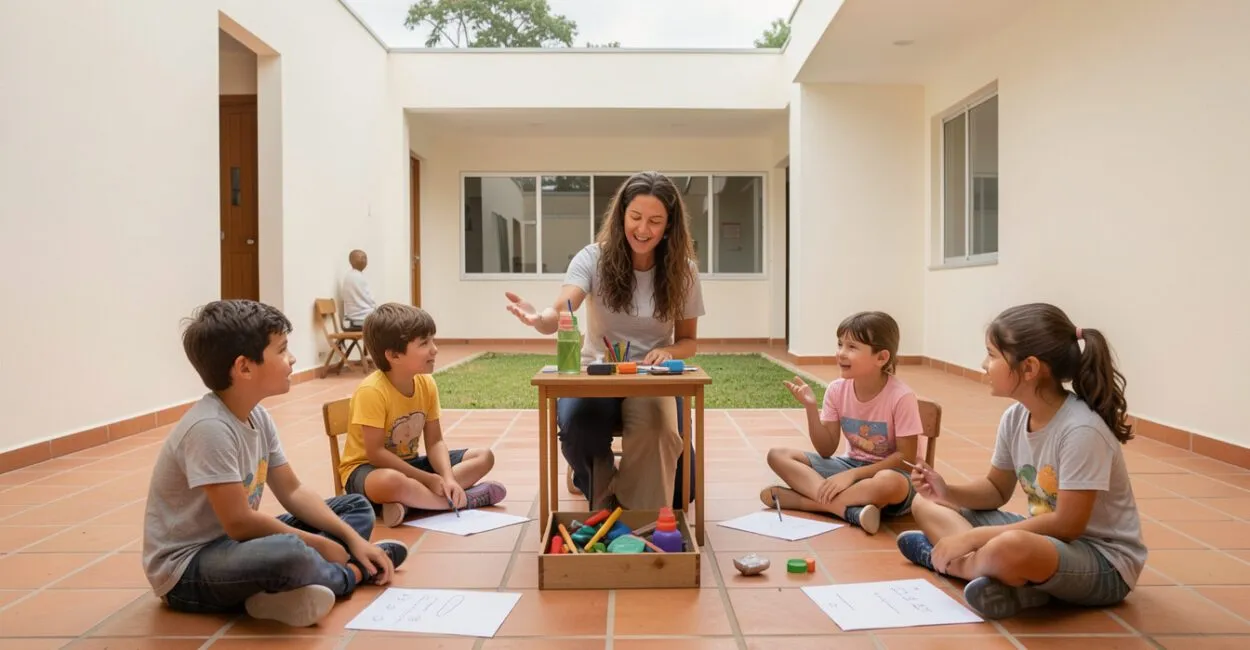
A class can end with colorful posters and excited students without them having learned the intended concept. Creative lesson planning helps prevent this mismatch: it turns curriculum goals into experiences that involve inquiry, collaboration, and student choice, while keeping clear what the class needs to learn.
This doesn’t require a brand-new activity for every class or expensive materials. The key is choosing an experience that fits the goal, anticipating how students will demonstrate what they understand, and adapting the plan to the time and actual conditions of the classroom.

What Creative Lesson Planning Is—and What It Isn’t
Creative lesson planning is the process of designing varied, purposeful learning experiences aligned with curriculum goals and paired with ways to monitor student progress. Put simply, it means deciding what the class needs to learn and choosing an engaging, practical way to get there.
A creative lesson might include a debate, an experiment using everyday objects, or an analysis of a text. The connection between the goal, the activity, and evidence of learning is what makes the plan coherent.
If an activity is entertaining but doesn’t let students practice or demonstrate the intended knowledge, it may be enjoyable without serving its educational purpose.
A practical sign of a mismatch is when the class produces polished work but can’t explain the concept they were supposed to use. The reverse can also happen: students understand the material, but the activity offered so few ways to participate that some students were left out.
Noticing these situations makes it easier to revise the plan with precision.
A creative lesson has educational value when students use what they’re learning to investigate, decide, or explain something.
Why Goals, Curriculum, and Student Choice Need to Align
The curriculum defines expected learning; a learning objective translates that expectation into a lesson or sequence of lessons. Students can make choices about the process, the materials, or the format of their responses, as long as those choices preserve the knowledge being taught. In this way, student agency broadens participation without leaving instruction adrift.
In Brazil, the BNCC (National Common Curricular Base) sets the competencies and skills that guide learning in Basic Education. Consulting the Base Nacional Comum Curricular helps connect classroom work to curriculum expectations; teachers still need to consider their school system’s curriculum and the specific needs of their class.
One way to make this connection concrete is to offer choices within clear limits: everyone investigates the same phenomenon, but students can record their findings in a labeled drawing, a written explanation, or an oral presentation. The choice changes how they express their learning, not the goal. This distinction is especially helpful when students have different reading or participation needs.
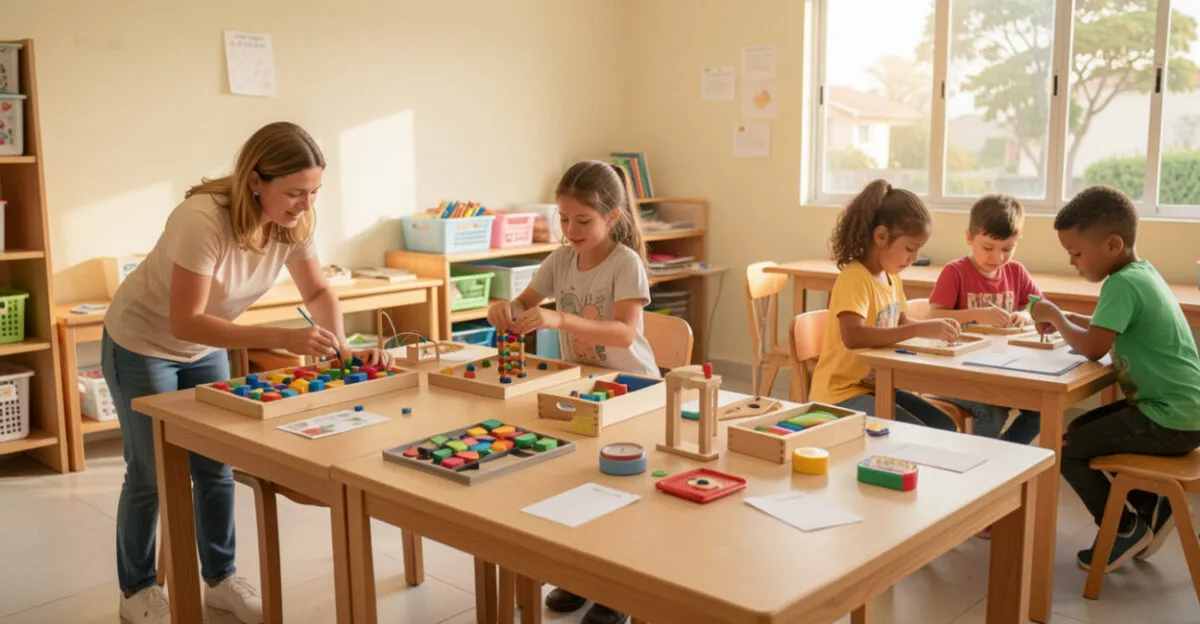
A Step-by-Step Method for Planning a Creative Lesson

Before choosing an activity, write down what students should be able to do by the end. Use observable verbs such as compare, justify, classify, or develop an explanation. “Understand the water cycle” describes an intention, but “represent the stages of the water cycle and explain a change of state” provides more useful criteria for planning and assessment.
- Define the learning: write a specific objective that aligns with the curriculum.
- Choose evidence: decide what students will do to show what they’ve learned.
- Select the experience: plan an investigation, discussion, problem-solving task, or project related to the objective.
- Build in choices and support: offer practical options and access supports, such as key vocabulary, examples, or visual instructions.
- Set aside time to check in: include a progress check and a wrap-up that revisits the learning.
The time needed for each step depends on the class and the complexity of the content. In a short class, it’s better to explore one simple investigation in depth than to squeeze in several stations without time to discuss what the results mean.
Complete guide: Creative Pedagogy: A Guide to Transforming Learning
This process also supports active learning methods, approaches in which students take part in meaningful cognitive tasks, such as investigating, making decisions, and explaining their reasoning. However, the name of the methodology doesn’t replace planning: a group activity can still be passive if just one person does all the work.
How to Include Inquiry, Collaboration, and Varied Experiences
Inquiry starts with something students can observe, compare, or question. It might be a question about the school grounds, a set of short texts, or objects with different properties. The teacher sets the focus and helps the class interpret evidence; a task that’s too open-ended often leads to distraction, especially when students aren’t familiar with the content yet.
Read also: Inclusion in Early Childhood Education: Strategies for Creating a Welcoming Classroom
For collaboration to be meaningful, the group needs a task that depends on different contributions. One team might observe, record, and present; another might review the evidence and raise questions. Switching roles in the next class reduces the likelihood that the same students will make all the decisions and do all the writing.
There are cooperative activities that work in simple spaces with everyday materials. A cooperative activity can be a starting point for discussing rules, strategies, or ways to communicate, as long as its connection to the content is planned.
Example: Planning Around a Curriculum Goal
Goal: compare materials and explain which one reduces heat transfer. The class receives identical containers, warm water, and different insulating materials available at school. In small groups, students make a prediction, observe changes, and record which material seems to keep the water warmer. Each group chooses between an annotated table and an oral explanation supported by drawings; at the end, they must justify their conclusion using their observations. The teacher checks whether students use evidence in their explanations rather than relying only on personal preference.
This approach combines an investigable question, cooperation, and a choice of how to record findings. If students aren’t familiar with making measurements, it’s a good idea to model how to compare results and distinguish observations from conclusions first.
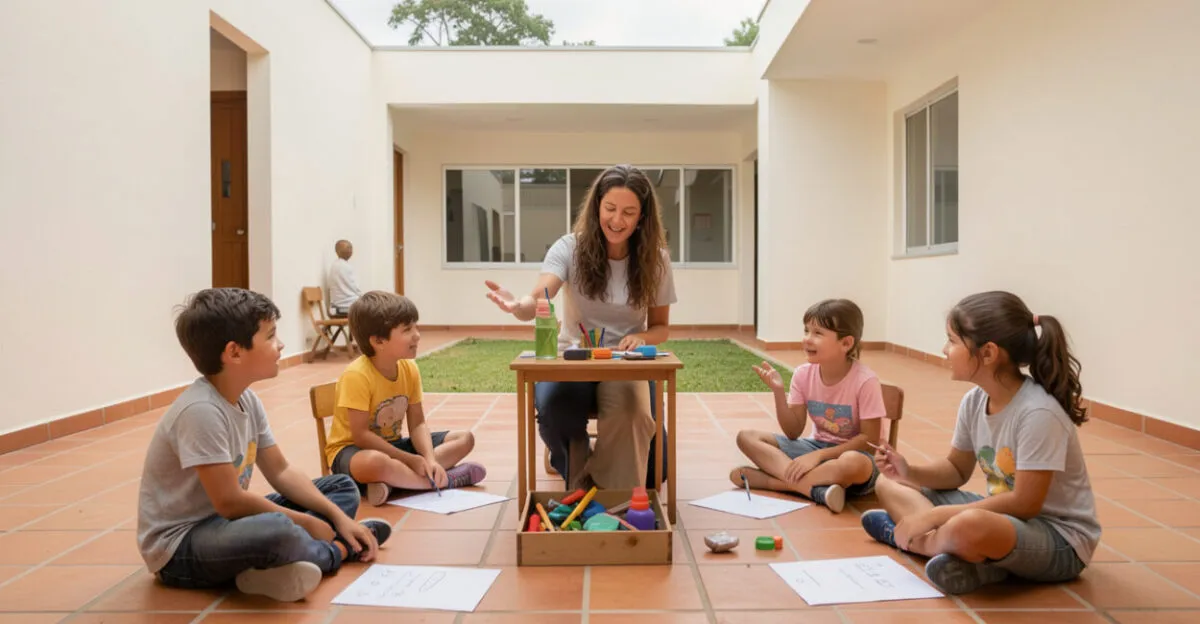
How to Adapt the Lesson to Your Class, Time, and Resources
First, adjust the scope without abandoning the goal. An investigation that seems to require several materials can become a teacher-led demonstration followed by paired analysis. If devices aren’t available, students can record data on paper; if space is limited, each group can work at their seats with a shared sample.
The most important resource is often clear instructions. In classes with students at different reading levels, breaking a task into steps, introducing key words, and allowing oral responses can improve access without lowering the intellectual challenge. Ideas for supporting reading in elementary school can also inspire ways to connect reading comprehension with class participation.
There are limits: too many choices can eat up class time, and an investigation without enough background knowledge can lead to guesses instead of learning. In these cases, reduce the number of options, provide an initial model, or guide the observation with more focused questions. Students become more independent as they learn to use criteria and resources on their own.
An art workshop or a movement activity can also address curriculum goals, but it needs to be adapted to the content and age group. A workshop using simple materials, for example, can inspire a project that represents concepts students have studied, as long as they explain the choices they made while creating it.
How to Assess Learning During and After Class
Formative assessment tracks the learning process and provides information teachers can use to adjust instruction as learning happens. During a discussion, the teacher can note which groups support their conclusions with evidence and which still need guiding questions. At the end, a short response, a labeled drawing, or an oral explanation can show whether students met the goal without requiring a lengthy test.
Consulting materials from Inep, Brazil’s National Institute for Educational Studies and Research, can help teachers understand educational assessment and large-scale testing. In the classroom, lesson assessment should be based on the specific goals set by the teacher; results from external systems don’t replace observing students’ work.
Use criteria the class can understand, such as conceptual accuracy, use of evidence, and clarity of explanation. If many students struggle with the same aspect, the activity or instruction may need revision. If only a few students are having difficulty, targeted support may be more appropriate than repeating the entire lesson.
How to Make Creative Planning Part of Your Teaching Routine
There’s no single creative lesson format that works for every class. Students’ prior knowledge, access needs, group size, and available time all affect what works. An open-ended activity might encourage inquiry in one class and cause uncertainty in another; the teacher’s guidance needs to match students’ level of independence.
For your next lesson plan, choose a curriculum goal and write down evidence that would show students achieved it. Then add one small choice for students and a question that asks them to observe or explain. When reviewing their responses, use what they learned—not just how lively the activity seemed—to shape the next step.
Frequently Asked Questions
How Can I Plan a Creative Lesson Without Losing Sight of the Curriculum?
Start with a curriculum-aligned goal and choose an activity that lets students practice it. Creativity comes through the experiences and opportunities to participate, while the final evidence shows whether the intended learning took place.
What Choices Can Students Make in a Short Class?
Offer two simple options for recording or presenting their learning, such as a short written response or an oral explanation. Keep the goal and assessment criteria the same so the choice doesn’t make the lesson more complicated.
How Can I Keep One Person from Doing All the Group Work?
Assign responsibilities related to the task, such as observing, recording, and presenting, and ask each group member to contribute to the conclusion. Check in with groups as they work: assigning roles helps, but doesn’t guarantee balanced participation on its own.
What Should I Do If the Activity Ends but Students Haven’t Demonstrated Their Learning?
Check whether the task actually required students to use the knowledge in the goal and whether the instructions were accessible. An exit question or brief conversation can reveal whether students need content review, practice, or support; use that information to decide whether to revisit a concept, model a procedure, or provide targeted help.
Artigos Relacionados
 Active Learning in Lesson Planning: Strategies and Examples
 Gamification: Strategies to Engage Students and Teach More Effectively
 Formative Assessment: Integrating It Into Lesson Planning
 Writing That Captivates: What Techniques Make Writing More Engaging?
 An Anxiety-Free Morning Routine: Breathing Techniques, Planning, and Habits for a More Productive Day
 Creative Content Marketing: Innovative Strategies to Attract, Engage, and Convert Customers with Authentic, Memorable Content in 2024
