
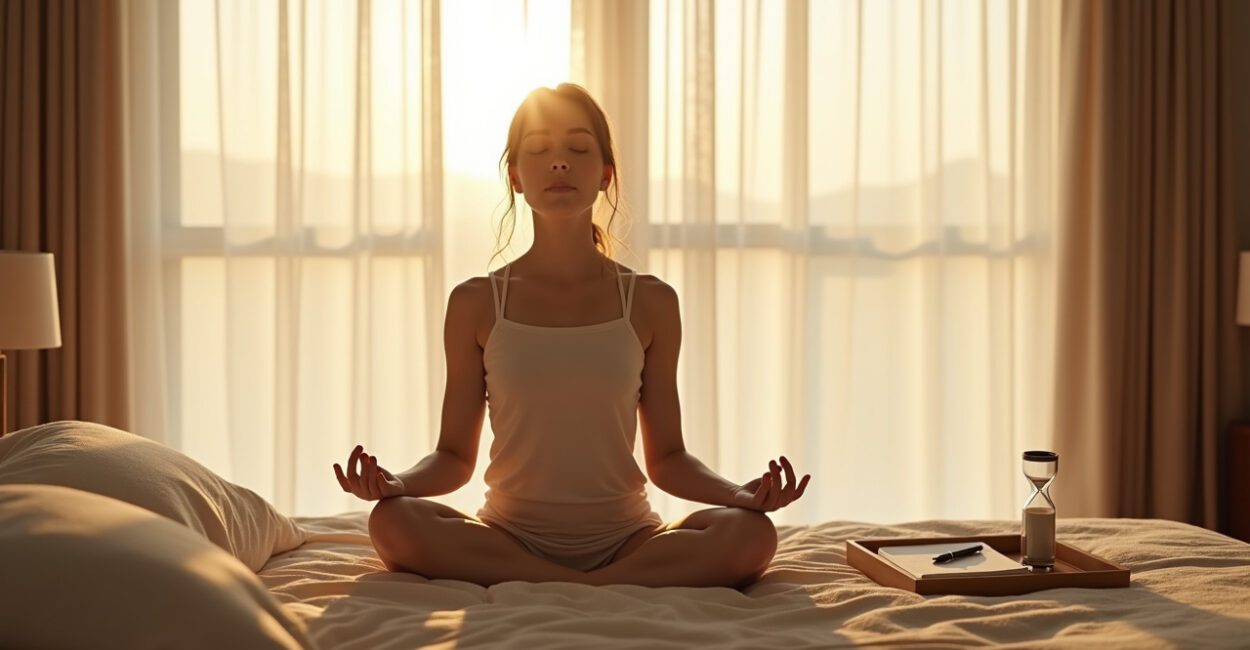
Your phone goes off, messages start coming in, and your mind is already trying to resolve the day before you even get out of bed. A morning routine with steps to reduce anxiety can start with just a few minutes: breathe without forcing it, notice your surroundings, and choose one priority. Then adjust the timing and steps to fit your actual morning.
These practices don’t guarantee that anxiety will disappear. They can help you start the day in a less reactive, more predictable way, without replacing professional care when it’s needed.

Key takeaways
- On busy days, a three-minute sequence can help you maintain the habit without needing an ideal morning.
- Slow breathing is one option; if it causes dizziness or discomfort, stop and try a grounding exercise instead.
- Three organizational steps can reduce indecision about what to do first.
- If the routine isn’t helping, assess the timing, duration, and each step before giving up on it.
Anxiety-free morning routine: steps to get started
A morning routine with steps to reduce anxiety is a brief sequence of repeatable actions that helps direct your attention and prepare you for the next decisions. Set aside five to twenty minutes if you can; on a rushed morning, try a three-minute version: notice your body, choose one priority, and put off non-urgent notifications for a few moments.
Try this order without turning each step into an obligation:
- Pause before picking up your phone. Sit down, place your feet on the floor, and notice how you’re feeling.
- Choose a calming practice. Breathe comfortably or try the 5-4-3-2-1 technique described below.
- Set one priority. Write down the task that needs your attention first and one concrete next step.
If you wake up late, stick with just one of these actions. A short routine that fits an ordinary morning is usually more sustainable than a long list that only works on quiet days. Practical resources can help you organize tasks, but the number of steps should work for your life—not become another source of pressure.
How your morning can affect anxiety
Anxiety involves emotional and physical responses to threats or uncertainty. In the morning, anticipatory worries can combine with rushing, fatigue, or familiar demands. A predictable sequence offers cues to guide your attention, but it can’t control every factor that affects your mood or body.
A common cycle starts with remembering a task, moves on to imagining everything that could go wrong, and ends with repeatedly checking messages. Noticing this sequence can help you choose a smaller action, such as writing down the concern to revisit at a set time. To explore cycles further, focus on the specific pattern that repeats in your own morning.
The study on breathing and stress discusses the effects of breathing practices on stress. That doesn’t mean a brief exercise will have the same effect for everyone, or that it can be expected to reduce anxiety or cortisol in every situation.
A more predictable morning can make room for better choices, even when anxiety doesn’t go away.
Breathing and grounding: safe options for the morning

Controlled breathing means deliberately adjusting your breathing rhythm to make it comfortable and steady. Start with two or three minutes: breathe in without forcing your lungs to fill, and exhale calmly without holding your breath. The NHS provides guidance on breathing exercises for stress.
The 4-6-8 pattern mentioned in popular guidance isn’t right for everyone: counting to eight as you exhale or holding your breath may feel uncomfortable. If counting increases your tension, stop and let your breathing follow its natural rhythm. Stop if you feel dizzy, short of breath, or unwell.
Leia também: Micro Habits: 10 One-Minute Changes to Help You Grow
How does the 5-4-3-2-1 technique work?
The 5-4-3-2-1 technique directs your attention to your senses: identify five things you see, four things you feel through touch, three things you hear, two things you smell, and one thing you taste. Do the exercise seated or standing, without rushing; if one sense isn’t available, adjust the count to the stimuli you can notice.
A guided meditation for anxiety can also replace the breathing practice, as long as it feels comfortable. Choose a short recording with simple instructions, and pause if focusing on your body intensifies your discomfort. The NCCIH explains what is known about meditation, mindfulness, and safety.
Organizational micro-rituals to reduce rumination
A micro-ritual is a small, repeatable action that resolves one pending decision. For example, in ten minutes you could drink water, check your next appointment, and set aside what you need to take with you. The sequence works as an external reminder; your morning doesn’t need to be perfect.
If you care for children, an older adult, or someone who is ill, you can build the routine into caregiving: set out essential items the night before, drink water while preparing breakfast, and choose one priority after the first request for help. If you work night shifts or travel, use the time you wake up as your reference point, not a fixed time on the clock.
Example: If you wake up with a child and have only a few minutes before heading out, set out clothes and pack your bag the night before.
When you get up, pause briefly, drink water, and check one appointment.
To stay in control of your tasks, limit your list to one priority and one next step. If the plan takes more time than you have, scale it back before deciding that you’ve failed.

Screens and early-day stimuli: choose a manageable limit
News, social media, and messages can bring demands before you’ve decided how to start your day. Instead of imposing a strict rule, try keeping your phone out of reach for a few minutes or turning off non-urgent notifications until you’ve completed your first action.
Time available Possible sequence Screen limit 3 minutes Feet on the floor, one comfortable exhale, and one written priority. Put off social media until you finish your priority. 10 minutes Grounding or breathing, water, and getting the item you need to take with you ready. Check only urgent messages. 20 minutes Mindfulness practice, personal care, breakfast, and a brief review of the day. Set a specific time for news and social media.
If you need your phone to care for someone, receive a work call, or keep track of a health issue, stay accessible for urgent matters and silence everything else. The goal is to reduce avoidable stimuli, not create a barrier that interferes with important responsibilities.
How to track results and adjust your routine
Rate your anxiety on a personal scale from zero to ten when you wake up, then rate it again after your routine. Also note which steps you completed and whether you encountered any obstacles. Over seven days, this record may reveal patterns; it isn’t for diagnosis and doesn’t prove that the routine caused a change.
If the sequence isn’t working, change one variable at a time:
- If you’re short on time, shorten the practice to one action.
- If waking up earlier makes you more tired, move the routine to after you get up instead of setting your alarm earlier.
- If breathing feels uncomfortable, replace it with grounding or a guided meditation.
- If notifications interrupt your focus, adjust your alerts instead of insisting that your phone be inaccessible.
This review can help you decide what to adjust before dropping the habit. It also helps you avoid attributing every change in mood to the routine: sleep, family demands, health, and the events of the day all influence the outcome.
Habits that intensify anxiety and when to seek support
Skipping meals when it affects your well-being, getting too little sleep to fit in a long routine, checking messages constantly, and consuming enough caffeine to make you feel more keyed up can make mornings harder for some people. Responses vary; notice what happens for you and make gradual changes without turning habits into rigid rules.
Morning practices can support the well-being of someone diagnosed with an anxiety disorder, but they don’t replace therapy, medication, or guidance from a health professional. The NIMH explains anxiety disorders and treatment options. Seek professional help if your anxiety persists, interferes with work, sleep, or daily care, or is difficult to manage without support. To address health concerns, consider the services available in your area and consult a qualified professional.
Frequently asked questions
How long should I try the routine to see if it’s helping?
There’s no universal timeframe. Try a version that works for you for a week and record how you feel before and after, without treating the scale as a diagnosis; adjust sooner if the practice causes discomfort.
Can I do the routine at night if I work shifts?
Yes. Use the time you wake up as your reference point, even if that’s in the afternoon. A short sequence before your active period starts may be more useful than sticking to a conventional schedule.
Should I force myself to meditate when my mind is racing?
No. If sitting in silence increases your distress, choose a concrete task, notice objects around you, or do some gentle movement. For the practice to be useful, it needs to feel tolerable.
What should I do if an urgent concern comes up during my routine?
Take care of whatever needs immediate attention first. Then, if you have time, return to one step in the sequence; your routine should give way to the real needs of the morning.
Do I need to follow exactly the same steps every day?
No. Keeping one anchor, such as writing down your priority, can provide continuity even when everything else changes. Adapt the sequence for travel, caregiving, and different schedules.
Artigos Relacionados
 A Morning Routine to Boost Productivity: A Complete Method for Reducing Anxiety, Improving Focus, and Getting More Done Every Day
 Transformative Habits: 5 Routines to Start Today
 Event and Conference Planning: Timelines, Checklists, and Techniques for Successful Corporate Events
 Agroforestry: Techniques for Healthy, Productive Soils
 Career Planning: Steps to Map Your Growth
 Writing That Captivates: What Techniques Make Writing More Engaging?
