
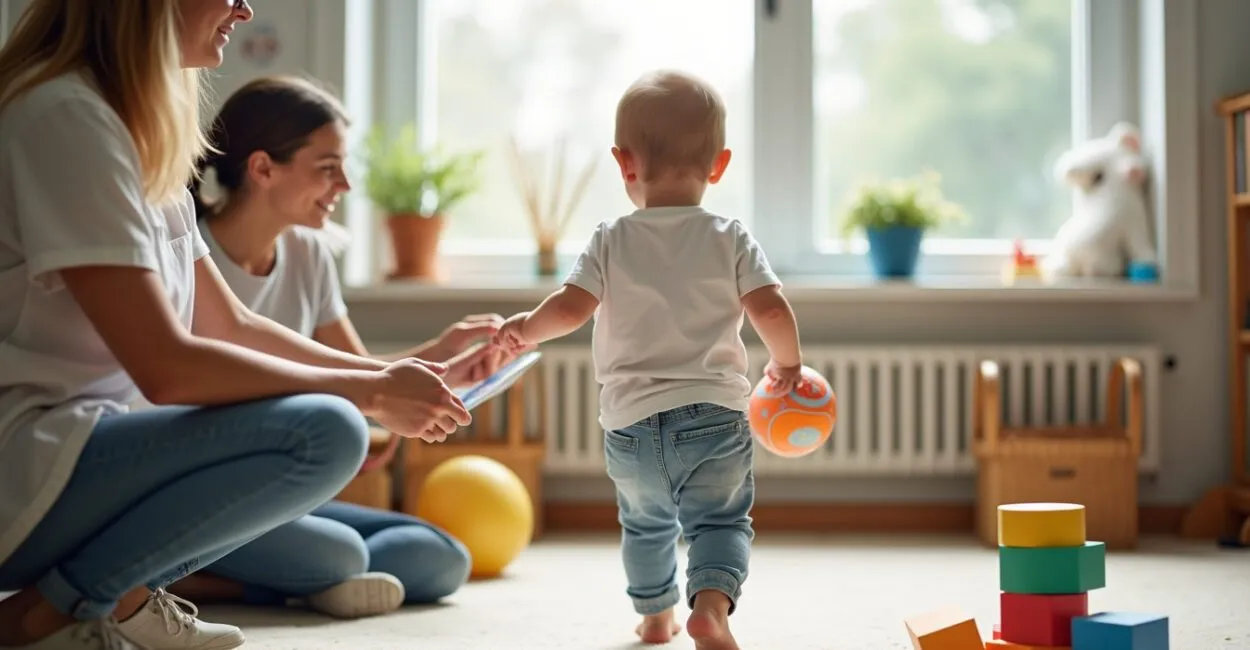
One baby may walk before talking, while another may start forming sentences early and take longer to run. These differences are part of development in childhood, a process that involves physical, cognitive, language, and social-emotional changes from birth onward.
Knowing the stages can help you track new skills and recognize when it may be worth talking with a professional, without turning a chart into a reason to compare children.

The most helpful approach combines everyday observation, play, and health care visits. Age-based milestones are broad guidelines: every child develops at their own pace, influenced by opportunities to interact, health, and other factors.
Persistent delays in gaining skills or losing abilities a child has already acquired deserve attention and an individual evaluation.
What Is Child Development, and Which Areas Does It Involve?
Child development is the ongoing process of acquiring and organizing motor, cognitive, communication, and social-emotional skills. It is shaped by biological maturation and relationships with the environment. Put simply, it’s how a child learns to move, think, communicate wants, and take part in everyday relationships.
These areas are connected. Pointing to a toy, for example, involves motor coordination, the intention to communicate, and joint attention—when an adult and child focus on the same object together.
That’s why assessing one skill in isolation may overlook important information about how a child functions in different situations.
Everyday observation also helps put things in context. A child may speak very little during an appointment but use gestures, sounds, and words at home. Another may show a skill with a caregiver but not yet with unfamiliar people. A professional considers the whole picture, along with health and hearing history, among other factors.
What Stages of Child Development Can Appear from Birth to Age 3?
From birth to age 3, changes are often rapid: babies progress from reflexive movements and communicating through crying to moving more independently, using gestures and words, and engaging in pretend play. These stages are a way to organize observations, not rigid steps every child reaches on the same day or in the same order.
Birth to 12 Months
During the first year, children develop head and trunk control, explore objects with their hands, and respond more and more to voices and interactions. Smiling in response, babbling, looking for an object that has moved out of sight, and sitting with support are examples of skills that may emerge during this period.
1 to 2 Years
Walking often becomes more common, along with gestures to ask for or show something. Vocabulary starts to grow, and children may understand simple instructions related to daily routines. There’s a lot of variation: some children walk earlier, while others spend more time exploring their surroundings in different ways.
2 to 3 Years
Children increasingly combine words, imitate actions, and engage in pretend play, such as feeding a doll or pretending a block is a phone. They also begin trying to eat, get dressed, or take part in routines more independently. In Jean Piaget’s theory, this period is associated with the preoperational stage, but the model alone cannot explain all individual differences or replace a developmental evaluation.
Milestones can guide observation; each child’s history and functioning guide interpretation.
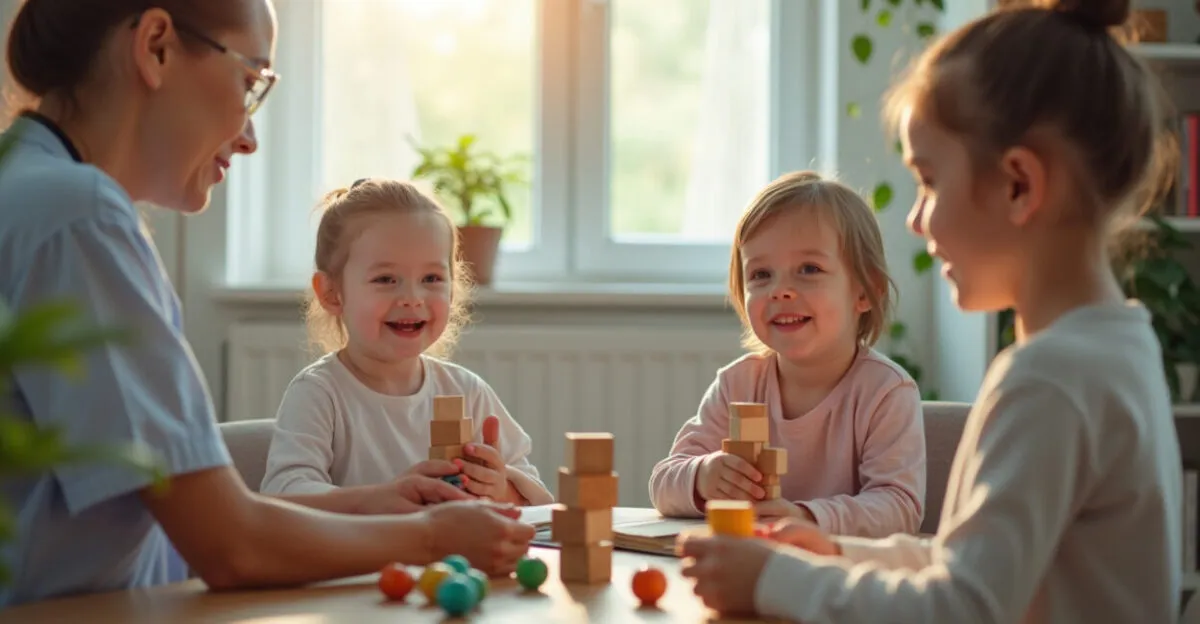
What Milestones May Appear from Birth to Age 6?

The table below lists examples of skills that may emerge at different ages. It is not a diagnostic test or a set deadline. Milestones vary across sources and depend on the skill being observed, so a chart of child development from birth to age 6 should be used as a reference for talking with a health care team, never as a self-diagnostic tool.
Age range Examples of observable skills 0 to 12 months Engaging with sounds and faces, babbling, exploring objects, and gradually developing postural control. 1 to 2 years Using gestures and words, understanding simple requests, and becoming more mobile. 2 to 3 years Combining words, imitating actions, and beginning pretend play. 3 to 4 years Taking more turns in conversations, joining imaginative play, and making more coordinated movements. 4 to 6 years Describing experiences, negotiating simple rules during play, and developing self-care and coordination skills.
These examples are broad. A child may show a skill at home but not in another setting, or make progress in one area while another is still developing. Brazil’s Caderneta da Criança (Child Health Handbook) and resources from the Brazilian Ministry of Health can help families record observations and guide primary care follow-up.
How Do Language, Cognition, Movement, and Social Interaction Develop?
Language includes understanding what is said, communicating with gestures and sounds, and gradually using words and sentences. Language development in childhood depends on opportunities to interact: talking during bath time, naming things you see along the way, and responding to a child’s attempts to communicate all show that sounds and gestures can lead to interaction.
Read also: Early Childhood Education: Teaching and Learning
Cognition involves attention, memory, problem-solving, and understanding relationships. When a child tries to fit a puzzle piece or looks for a hidden object, they are exploring possibilities. Movement includes both large actions, such as walking and jumping, and fine motor movements, such as picking up a spoon or turning pages.
Social-emotional skills develop through predictable relationships that give children room to explore and receive support. Learning to wait, show discomfort, and seek comfort is part of development, too. For example, a speech delay should be considered alongside comprehension, gestures, hearing, and interaction rather than interpreted based on one sign alone.
Read also: Nature Games: 10 Ideas for Early Childhood Education
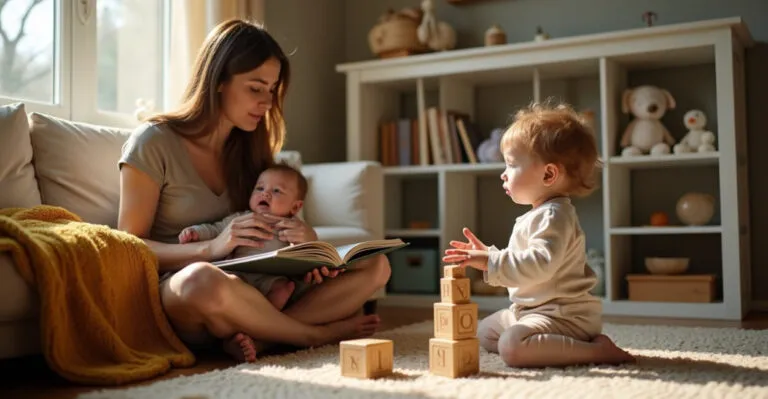
A familiar scene helps illustrate this: during story time, a child points to a picture and makes a sound. The adult names the picture and waits a few seconds; the child tries to repeat the sound or points to another page. This brief exchange builds joint attention, comprehension, and communication without requiring special materials.
How Can You Support Skills at Each Stage?
The most helpful experiences usually fit into daily routines and follow the child’s interests. Playing together, talking, and allowing safe attempts support learning. Products or generic exercises that promise to speed up developmental stages are no substitute for interaction or individualized guidance.
- In the first few months: Talk while looking at your baby, respond to their sounds, and give them time to explore on the floor in a safe, supervised setting.
- From ages 1 to 3: Keep books within reach, name everyday actions, and offer simple choices, such as picking between two outfits.
- From ages 3 to 6: Offer drawing, made-up stories, games with rules, and age-appropriate tasks without expecting perfect performance.
Pausing can teach, too. When an adult asks a question and answers it before the child has a chance to respond, the child has less opportunity to form a gesture, sound, or word. Waiting a few moments, noticing the response, and then adding to the conversation is a small but practical change.
For age-appropriate activities, the article on educational play at each stage offers more ideas. Reading together can also help children become familiar with early literacy. The goal isn’t to push schoolwork too soon, but to build familiarity with books and stories.
How Can You Track Progress Without Comparing Children?
Write down specific situations instead of using labels: “pointed to ask for water” says more than “is behind.” Note when the skill appears, who the child is with, and the context. These notes can help during appointments and reveal changes that might be missed in the rush of daily life.
Comparing siblings or classmates is usually not very informative because children have different histories, temperaments, and opportunities. A skill may also show up in one setting but not another yet. Follow-up should consider a child’s progress over time, combination of skills, and participation in everyday activities.
The Learn the Signs. Act Early. program from the U.S. Centers for Disease Control and Prevention offers milestone resources. Lists like these don’t identify the cause of a difficulty or replace a clinical evaluation. That limitation matters because age, prematurity, health, and context can all affect how a sign should be understood.
If a child is nearing school age, you can also observe how they take part in activities and interact with other children. The article on adjusting to early childhood education covers aspects of this transition without treating adjustment as a stand-alone measure of ability.
When Should You Seek Professional Guidance, and Which Resources Should You Consult?
Talk with your pediatrician or health care team if a concern persists, if your child stops doing something they could already do, or if difficulties with communication, movement, interaction, or independence interfere with daily life. Losing previously acquired skills deserves an evaluation, even if the child can still do other things expected for their age.
You don’t need to wait for a routine checkup if you have a significant concern. Bring specific examples, notes about when they started, and questions. Depending on the situation, the pediatrician may assess hearing and vision or refer you to professionals such as a speech-language pathologist, occupational therapist, physical therapist, or psychologist. Recommendations depend on the individual child.
For Brazilian resources, look for the Caderneta da Criança (Child Health Handbook) and guidance from the Brazilian Ministry of Health through official channels. A PDF chart of child development milestones can help organize questions, as long as it clearly identifies the institution that produced it and isn’t used to make a diagnosis at home. A book about child development can also broaden your understanding, but it should supplement, not replace, health care follow-up.
Use milestones as a reason to observe and talk, not as a stopwatch. Choose one or two everyday situations to track for a few weeks and bring your notes to your next appointment. If your child loses skills or a concern persists, schedule an evaluation rather than waiting for a chart to confirm what you’ve noticed.
Frequently Asked Questions
Can a Bilingual Child Start Talking Later?
Exposure to two languages alone doesn’t mean a child has a delay. Consider the child’s overall communication, including gestures and comprehension, and tell the professional which languages the child hears and in what settings.
Does Prematurity Change How Milestones Are Interpreted?
It can. For children born prematurely, professionals may use corrected age during part of the early follow-up, depending on gestational age and the clinical context. The health care team should guide this interpretation.
Which Milestone Chart Should I Use?
Choose resources from health agencies or recognized institutions, such as Brazil’s Caderneta da Criança (Child Health Handbook). Check the age range and purpose for which the resource was created. Different charts may organize skills in different ways, and none can replace an individual evaluation.
Artigos Relacionados
 Piaget’s Stages of Cognitive Development
 A Guide to Early Childhood Education: Best Practices, Play-Based Activities, and Innovative Approaches to Whole-Child Development
 Child Language Development From Birth to Age 6: Stages and How to Encourage Speech
 Child Development Stages: A Guide to Ages 0–5
 Social-Emotional Skills: Educating the Whole Child
