
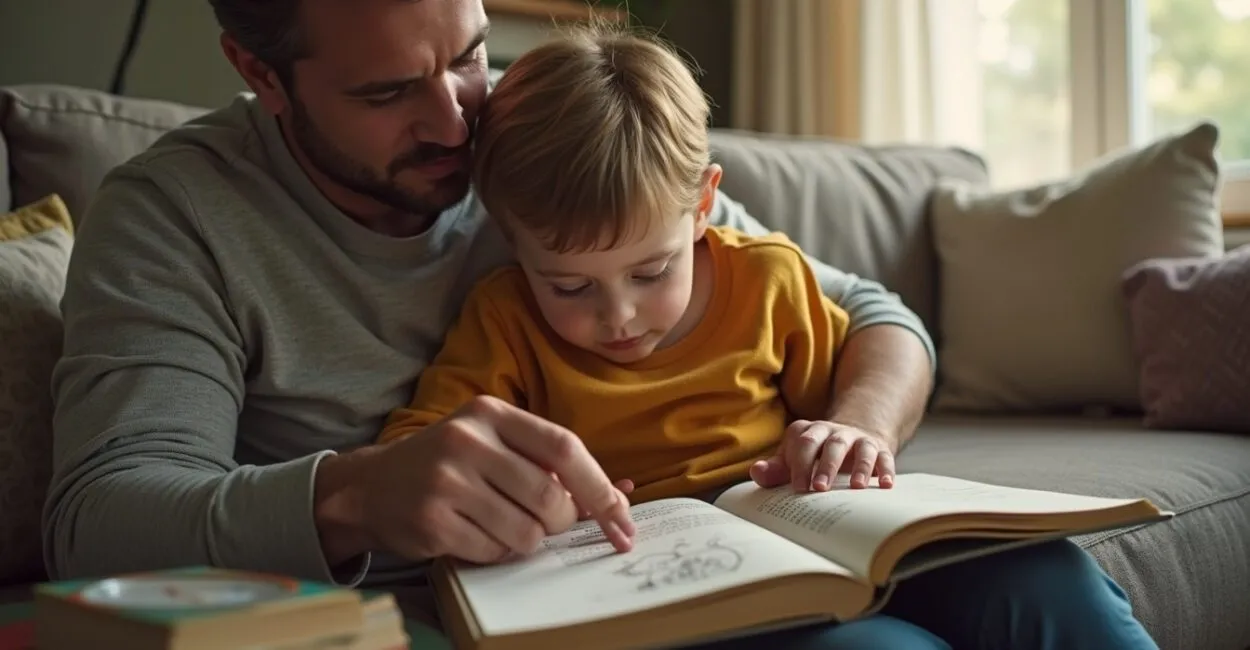
When a child freezes at the sight of a page, asking them to read “just a little more” can turn a calm moment into a source of anxiety. Reading at home helps build skills and familiarity with texts when it happens in short sessions, with support and room for the child to choose. For children with dyslexia, routines can be adapted to their pace and individual needs. The goal is to make reading enjoyable and meaningful, while structured instruction and school or professional support continue to play their part.
How Can You Start Reading at Home Without Pressure?
Start with short, regular sessions at a time when your child is rested, and make it clear they can listen, read along, or take a break. Ten minutes can be a good place to start, but there’s no ideal daily length that works for every child; watch for signs of fatigue and adjust the time. A predictable routine cuts down on negotiations: after dinner, for example, you might choose a story together and read a few pages. If your child comes home exhausted from school, insisting on reading then can make books feel like a chore. Changing the time is more helpful than turning the activity into a mandatory task.

Shared reading can also be part of other teaching approaches tailored to each child. The pace, amount of support, and type of text will vary with age, reading experience, and specific needs.
How Can You Choose the Right Texts for Your Child?
Choose texts your child is interested in and can follow with support, taking into account age, vocabulary, length, and format. The book should offer some challenge, but pages that are too crowded or lengthy can be tiring before the story gets going. Graphic novels, nonfiction books about animals, recipes, and texts related to a hobby all count as reading. When choosing books for children with dyslexia, look at practical features: an easy-to-read font, good contrast, comfortable spacing, and short blocks of text. These features may make reading easier, but no font or layout works the same way for every child.
Let your child browse and choose from two or three options. A book above their independent reading level can still be a good choice if an adult reads it aloud; they don’t have to decode every word on their own to enjoy the story.

How Can You Read Together?

In shared reading, an adult and child enjoy the experience together: they can take turns reading passages, follow along as the adult reads, or talk about the story. The child doesn’t have to read aloud at every session. One simple approach is for the adult to read a page while the child chooses a sentence, a line of dialogue, or simply follows the illustrations. If your child loses their place, offer help with your finger or a reading guide without interrupting for every stumble. When an unfamiliar word comes up, explain its meaning from the context and continue the story.
Reading Rockets, an educational literacy initiative supported by WETA, offers guidance on reading aloud and literacy practices. Whether to take turns or follow along should depend on what makes your child most comfortable that day.
In shared reading, a child can take part in a story even when the adult reads most of the words.
Read also: Children’s Day in Early Childhood Education: Ideas by Age Group
What Reading Activities Can Add Variety to the Routine?
Short, everyday activities can expand your child’s experience with language without requiring every reading session to involve an open book. The most important thing is to keep participation manageable and enjoyable.
- Read to do something: Follow a simple recipe, the rules of a game, or assembly instructions.
- Tell the story through pictures: Have your child look at an illustration and imagine what might happen before hearing the text.
- Listen and follow along: Play an audiobook while your child follows the print version, if that format is helpful.
- Play with words: Look for rhymes, character names, or words that start with a particular sound, without requiring a long series of exercises.
These ideas can be combined with other educational activities that make learning fun. A child who prefers board games may be more engaged by reading cards and instructions than by starting with a long chapter.
Complete guide: Activities for Dyslexia: 12 Literacy Practices
How Can You Adapt Reading for a Child With Dyslexia?
Adapt the format, pace, and level of support to the challenges you observe, while preserving opportunities for choice and success. Dyslexia is a specific learning disability that affects reading and may involve accuracy, fluency, and word recognition; it affects each person differently. Predictability can help: using the same place, letting your child know which passage you’ll read, and agreeing on breaks can help them know what to expect. If the page looks visually overwhelming, try covering part of the text, increasing the line spacing, or using a digital version with accessibility options. Treat these adjustments as options to try with your child, not a one-size-fits-all solution.
Audio resources can also provide access to age-appropriate stories and content, even when decoding still takes effort. The International Dyslexia Association provides information about dyslexia and reading support; adjustments at home can complement instruction but don’t replace a planned educational intervention. To learn more about the stages of learning to read, see our article on early literacy and when to get started. Every child’s development is different, and no single suggestion can predict how long it will take them to become fluent.
What Should You Do When Your Child Dislikes Reading or Gets Frustrated?
Stop or ease up when you notice signs of fatigue, irritability, or embarrassment, and try again later with an easier activity. Resistance may reflect accumulated effort, frustrating experiences, or a lack of interest in the material—not necessarily a dislike of all kinds of reading. Instead of correcting every mistake, choose one small goal for that session: following the story, reading a line, or finding a piece of information. Praise a specific effort, such as “you went back to the beginning of the sentence to understand it,” without comparing your child to siblings or classmates. Don’t use a timer to pressure your child: speed alone doesn’t tell you how well they understand what they read.
If your child would rather listen to the story, talk about the plot, or read just one part, these forms of participation can help maintain their connection with books as their skills develop. You can also revisit the topic through activities suited to your child’s stage of development.
Does Reading at Home Replace Support From School or Professionals?
No. Reading at home complements school instruction and specialized support, but it doesn’t replace an evaluation or intervention when one is needed. If your child has persistent difficulties, talk with their teacher. Ask what literacy strategies are being used and how your family can reinforce them without duplicating assignments.
If dyslexia is suspected or diagnosed, your child’s school and the professionals working with them can recommend accommodations and goals suited to their needs. The Brazilian Ministry of Education website provides official information about education in Brazil; for individual needs, seek guidance from qualified professionals who know your child’s case. A rule that works at home for one child may not work for another: ten minutes may be just right for one child and too much for another, and a visually accessible format for one person may not help someone else. Adjust the routine based on your child’s response and stay in communication with the school.
Reading at Home: Quick Answers for Building a Routine
Question Answer Where should we start? With short, regular sessions that don’t require the child to read alone. How long each day? There’s no set length; start with a few minutes and watch for signs of fatigue. What book should we choose? An interesting, accessible text suited to the support available. How can we adapt reading for dyslexia? Try breaks, visual aids, audio, and shared reading as needed. Does it replace professional support? No; it complements the work of the school and professionals.
To build a reading habit for your child, choose a time that works today and offer two text options. Then notice what helped them participate and use that information to adjust the next session.
Frequently Asked Questions
Does My Child Need to Read Aloud to Practice?
No. Your child can follow along as an adult reads, listen to an audiobook, or take part by talking about the story. Reading aloud should only be introduced when it makes sense for the child and for the goals set with the school or professional.
Is It Okay to Read the Same Book Many Times?
Yes, if your child enjoys it. Knowing the story can make it easier to follow the plot and leave more room to talk about words and characters.
Can I Correct Every Reading Mistake?
Frequent corrections can interrupt comprehension and increase tension. If your child needs help, offer a brief hint and continue reading; check with the school about which errors are worth working on at that time.
Can a Specific Font Cure Dyslexia?
No font can cure dyslexia. Some presentation choices may make text more comfortable for certain people, but they need to be tested individually and don’t replace appropriate instruction.
Do Audiobooks Count as Reading?
Yes, they expand access to stories and information. When helpful, your child can listen while following the printed text, but there’s no requirement to do both.
When Should I Talk to the Teacher?
Talk to the teacher if difficulties persist, reading is causing distress, or you’re unsure how to help without adding pressure. Share specific examples of what happens at home and ask which strategies and accommodations make sense for your child’s school routine.
Artigos Relacionados
 Reading Comprehension Strategies for Children: Guided Questions, Mind Maps, and Summaries to Improve Interpretation and Retention in Elementary School
 Syllable Games for Dyslexia: 7 Ideas to Build Reading Skills
 Inferential Reading: 5 Strategies for Elementary School
 Reading Strategies for Elementary and Middle School: 7 Practical Techniques
 How to Encourage Creativity in Children: 7 Practical Strategies
 Building Healthy Relationships: Effective Strategies to Foster Positive Social-Emotional Development at School and Home
