
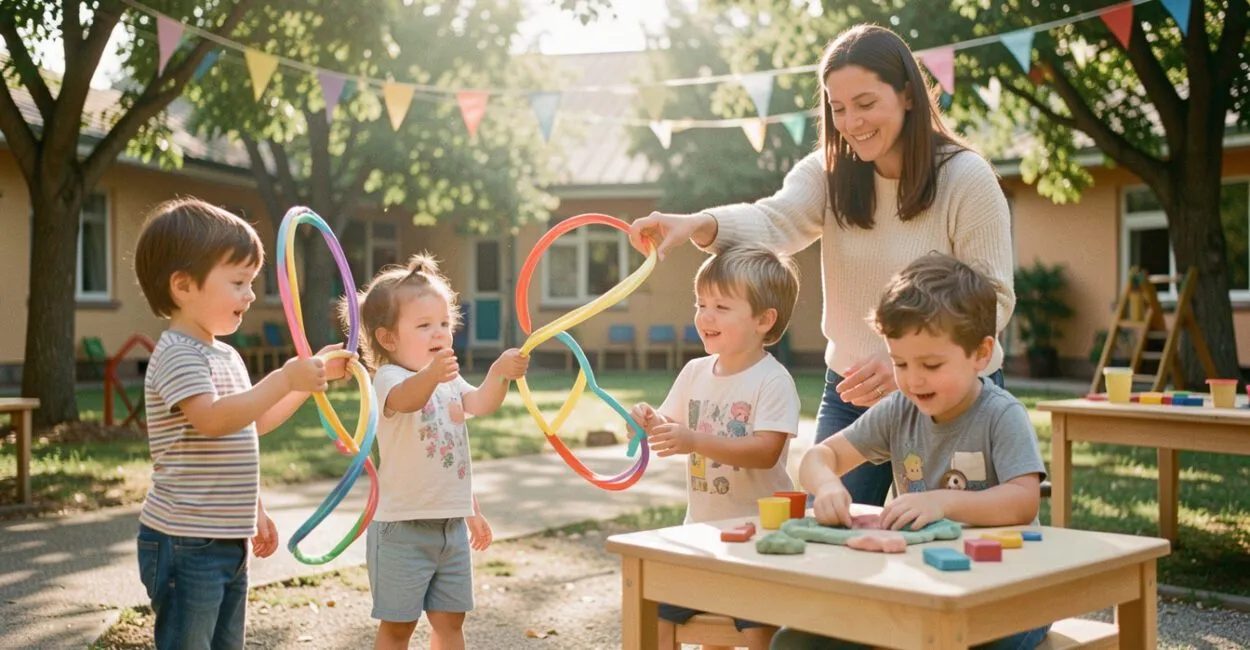
Children’s Day in Early Childhood Education: Ideas by Age Group
A memorable celebration can start with a simple question: What would the children like to play together?

With Children’s Day celebrated on October 12 in Brazil, schools and families can plan a warm, welcoming celebration without turning the occasion into a marathon of party favors. The key is to listen to the group, choose a few activities, and alternate active play with quieter moments.
Start with a short group circle to gather ideas, set out accessible materials, and let each child take part in whatever way feels comfortable. The same activity can invite different kinds of participation: watching, choosing an object, making a gesture, or playing with the group.
How to Plan a Welcoming Children’s Day
Planning a celebration in early childhood education means choosing playful experiences suited to the group’s development and needs, with appropriate space, materials, and supervision. In practice, that means offering simple, flexible activities without expecting every child to participate in the same way.
Start by listening, then plan a short sequence: conversation, active play, and a quiet activity. Ask what the children want to do and offer concrete choices, such as music, painting, or an obstacle course. Young children can choose by pointing to pictures; babies communicate preferences through their gaze, gestures, and reactions, too.
Make sure there’s room to move around, large materials that are safe for the age group, and a quiet corner. One practical tip: set out the materials before you begin. Waiting in line to get supplies can interrupt play and be difficult for some children.
Read also: Early Childhood Education: Teaching and Learning
This approach reflects the emphasis on interactions and play in Brazil’s Base Nacional Comum Curricular (National Common Core Curriculum). Brazil’s Estatuto da Criança e do Adolescente (Child and Adolescent Statute) also establishes rights related to freedom, respect, and social interaction. The right adaptations depend on the group, though: what works for one class may not work for another.
Children’s Day Ideas by Age Group
For babies, focus on brief activities with close adult supervision: exploring fabrics with different textures, following a song with hand motions, or watching large, safe objects. Babies can participate while being held, on the floor, or simply by looking—there’s no pressure to touch everything.
Read also: How to Plan the Transition from Early Childhood Education to Elementary School
For toddlers, try paths marked on the floor with tape, large balls to roll, or a box of safe objects to explore. Instead of setting up a race, invite each child to choose where to go or which object to carry. This keeps the play open to different paces.
For preschoolers, set up a color hunt, a group block-building activity, or an obstacle course with options: go through, go around, or show a friend the way. Shape games can inspire activities with large pieces, like these ideas for geometry and spatial learning in the classroom.
Age can guide your choices, but it doesn’t determine just one way to play. Pay attention to each child’s interests, mobility, communication, and energy level. Supervise closely, especially with babies, and avoid small pieces or materials that could pose a choking hazard.
Circle Time, Movement, and Creativity: Flexible Activities

A group circle can kick off the celebration: each child chooses a song, gesture, or toy to share. Children who don’t want to speak can point to a picture or listen quietly. Then, a dance with pauses gives everyone a chance to move or simply keep the beat with their hands.
For the creative activity, offer paper, crayons, and large stamps to make a group display. Children can also make their own cards with messages for Children’s Day: “Playing is fun,” “Today is our day,” or “Let’s play together.” Children who aren’t writing yet can draw, choose a phrase for an adult to write down, or help glue the card together.
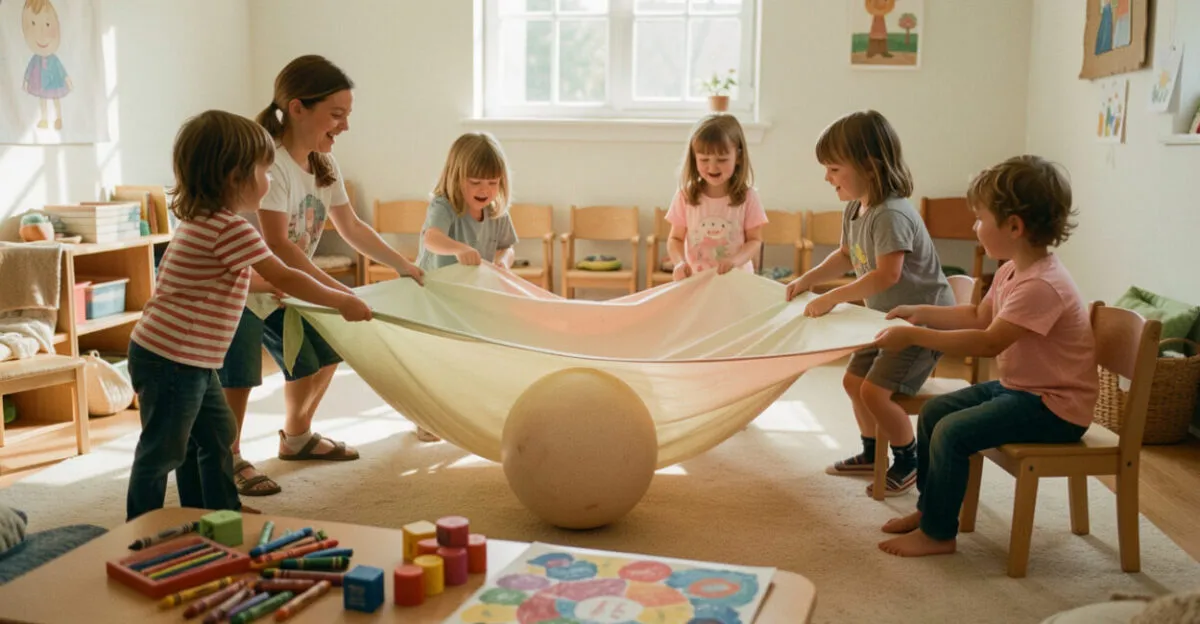
Wrap up with a cooperative game, such as using a piece of fabric held by the group to move a large ball from one spot to another. Anyone who would rather not join in can watch or choose the music. For more ideas that encourage creativity and exploration, see creative early childhood education.
Choose two or three ideas with the children, check that the space works, and leave time for water and rest breaks. A card they draw can serve as a keepsake; the heart of the celebration is what they do together, each in their own way.
Keep reading in this series
Frequently Asked Questions
What Can You Do for Children’s Day in Early Childhood Education?
Combine a short group circle, an active game, and a creative activity, and choose them with the group.
How Can You Include Children Who Don’t Want to Join a Game?
Let them watch, choose materials, or take part in another way without pressuring them. The right approach depends on the child and the class.
What Kind of Keepsake Can Children Make?
A card with a drawing, collage, or phrase dictated to an adult is a simple option. Making it can be part of the activity without taking up the whole celebration.
Artigos Relacionados
 A School Garden in Early Childhood Education
 Activities for Early Childhood Education: Practical Ideas
 Technology for Young Children: Finding the Right Balance
 Neuroscience in Early Childhood Education: How Children’s Brains Learn and How to Apply This Knowledge to Maximize Learning
 Women’s Day Cards for Early Childhood Education: Creative Ideas, Inspiring Messages, and Fun Activities to Celebrate Gender Equality
 School Adjustment in Early Childhood Education: How to Help
