
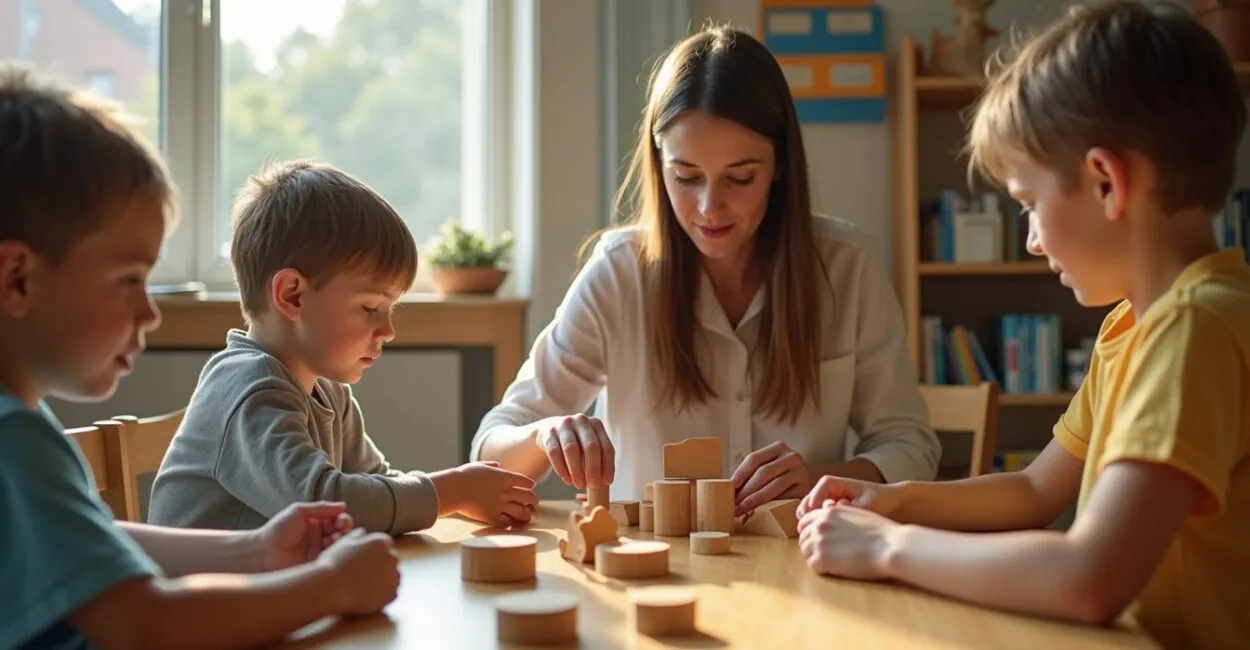
A class can learn the same material through a guided discussion, a group investigation, or a playful activity with rules. Teaching methods shape these choices: they determine how a teacher presents activities, monitors progress, and checks what a child has learned. The right approach depends on each student’s age, goals, and needs.
Learning about different teaching methods helps families and educators make more informed choices, without expecting one approach to work for everyone. It also helps show that a participatory lesson takes planning and guidance—not just lively activities.

What Are Teaching Methods and Teaching Methodologies?
Teaching methods are organized ways of delivering instruction to support learning. They include procedures, resources, and ways to monitor progress that align with educational goals. Put simply, they are planned approaches to teaching specific content and observing how a child progresses.
Related terms overlap, but each has a different emphasis. A pedagogical approach brings together principles about how people learn and the student’s role; a methodology combines strategies and resources; a method describes a more clearly defined way to organize instruction. In everyday use, these words may be treated as synonyms, but distinguishing between them helps clarify what a particular approach actually changes in the classroom.
A group activity, by itself, doesn’t prove that learning has taken place. Teachers need to define what they expect students to understand, guide the task, and gather evidence of what students were able to do. Brazil’s Base Nacional Comum Curricular (National Common Core Curriculum), published by the Ministry of Education, outlines learning goals and competencies; teaching strategies may vary to meet them.
What Are the Main Types of Teaching Methodologies?
Teaching methodologies vary in how much direction the teacher provides, how actively students participate, and how content is organized. Some emphasize structured explanations; others start with problems, projects, or hands-on experiences, and many lessons combine more than one approach.
Type How it works When it may be useful Interactive lecture The teacher presents concepts, pausing for questions and examples. To introduce content, organize ideas, or clarify difficult points. Inquiry-based Students observe, form hypotheses, test possibilities, and discuss results. To explore phenomena and develop reasoning and argumentation skills. Project-based A guiding question shapes research and production over time. To connect knowledge and create a purposeful final product. Cooperative Small groups work toward shared goals with shared responsibilities. To practice collaboration, peer explanation, and participation. Repetition and guided practice Students practice a skill with teacher guidance and feedback. To reinforce procedures such as calculation, reading, or writing.
These categories aren’t rigid boxes. A math lesson might begin with a brief explanation, move on to independent problem-solving, and end with students comparing strategies in pairs. The choice also depends on students’ prior knowledge: open-ended inquiry may work well for some topics but feel frustrating when students lack the concepts they need to get started.
What Are Some Examples of Active Learning Methodologies?

Active learning methodologies engage students intellectually: they need to make decisions, develop ideas, investigate, or apply what they know, while the teacher structures the activity and guides the process.
- Problem-based learning: The class analyzes a question and draws on its knowledge to propose well-supported answers.
- Project-based learning: Students research and create a product, such as a guide to the plants on the school grounds, through planned stages.
- Flipped classroom: Students encounter some of the content before class, leaving class time for questions, exercises, and discussion.
- Station rotation: Groups move through different activities, such as guided reading, hands-on materials, and problem-solving challenges.
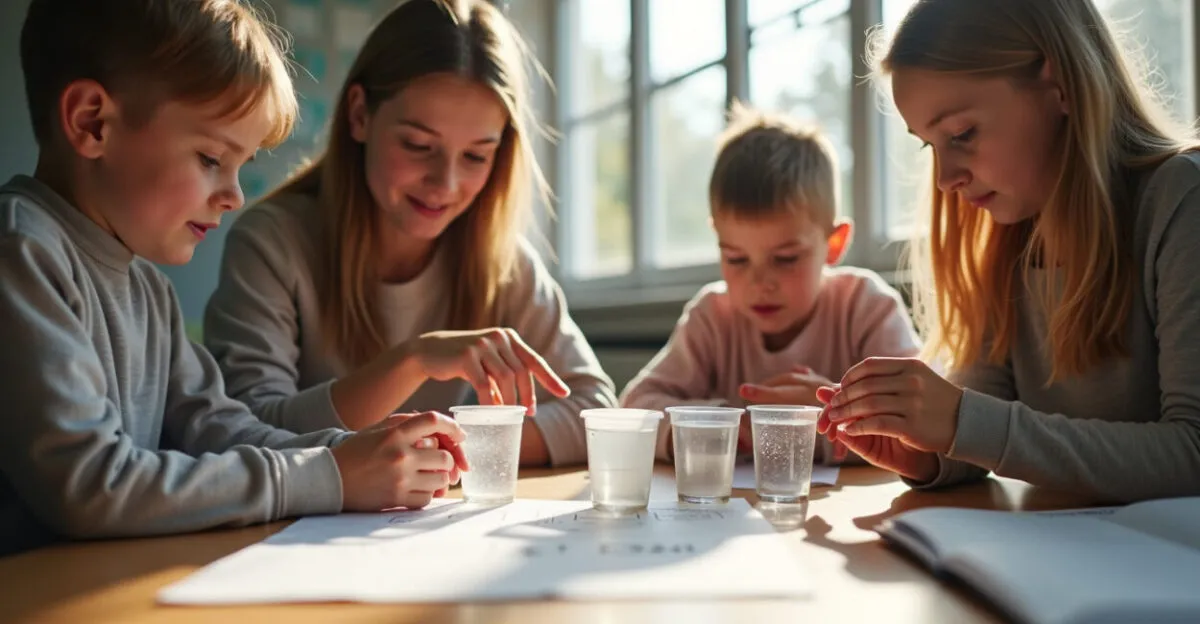
A common example helps distinguish participation from learning: while studying the water cycle, children might observe covered containers, record what happens, and compare their hypotheses. The teacher’s role is to guide observations, introduce vocabulary, and revisit incorrect explanations. Without this support, the activity may spark curiosity but leave important concepts unexplored.
UNESCO recognizes education as a right that requires inclusive learning opportunities. This principle reinforces the need to consider barriers to participation, such as limited access to materials, inaccessible language, or specific support needs.
How Do Well-Known Pedagogical Approaches Differ?
Pedagogical approaches differ in how they view knowledge, autonomy, and the relationship between teacher and student. Understanding these differences helps you assess whether an approach is coherent, without assuming that a familiar name automatically guarantees quality.
Read also: Assessment Methods: How to Apply and Understand Them
- Montessori: Organizes environments and materials to encourage exploration and independence, with guidance from the educator. Independence grows with age and with the ability to use materials purposefully.
- Waldorf: Focuses on the child’s overall development and offers artistic, hands-on, and storytelling experiences aligned with developmental stages. How it is put into practice depends on teacher training and school organization.
- Constructivist: Recognizes that students build knowledge by interacting with problems, objects, and ideas. Teachers plan experiences that challenge existing ideas and help students progress.
- Traditional: Typically places greater emphasis on teacher-led instruction, a structured sequence of content, and reinforcement exercises. It can be useful for explaining concepts, as long as students have opportunities to ask questions and receive support.
In practice, these labels can oversimplify things. Two schools that identify with the same approach may differ in how they teach, assess, and support children with different learning paces. Pay attention to activities and interactions, not just the name used in school materials.
How Do You Choose an Educational Approach for Each Child?
Choosing an educational approach means considering a child’s development, prior knowledge, interests, learning goals, and context. The best way to evaluate an approach is to see whether the child can participate, make progress, and get the support they need—not to search for a supposedly perfect method for every child.
Read also: Children’s Day in Early Childhood Education: Ideas by Age Group
Before making a decision, educators and families can ask:
- What does the child already know, and what skill do they need to develop?
- What kind of guidance does the child need to understand and complete the task?
- Are materials, time, and accessibility in place so everyone can participate?
- How will the teacher recognize progress and identify difficulties?
For a child just beginning to read, for example, a playful approach may spark interest, while explicit practice connecting letters and sounds can also help build essential skills. Guidance on getting started with early literacy can help families and educators think about readiness and pace without turning a specific age into a rigid rule.
There are limits: a strategy that works for one topic or student may not work for another. Children with specific support needs may require accommodations and specialized support; choosing a teaching approach alone doesn’t replace a professional evaluation when one is needed.
How Can Teaching Methods Be Adapted for Early Childhood Education and Elementary School?
In early childhood education, learning often thrives through play, conversation, exploring materials, and interacting with other children. In elementary school, these experiences remain valuable but can be combined with more structured reading, writing, inquiry, and guided practice.
For young children, short, hands-on activities let educators observe how they sort objects, describe what they’ve done, or negotiate rules. Educators can support play with questions and materials without directing every move. Ideas for educational games that support learning can turn exploration into an opportunity to build language, reasoning, and social skills.
In the early elementary grades, it’s helpful to alternate between explanations, independent work, group discussions, and practice. For example, a teacher might introduce a reading strategy, lead a shared reading activity, and then observe each child trying it out. The day-to-day work of teaching the early elementary grades includes supporting different learning paces without lowering expectations.
Can You Combine Different Methodologies in Practice?
Yes. Combining methodologies is useful when each stage has a clear purpose and contributes to the same learning goal.
In a unit on nutrition, for example, a teacher might introduce basic concepts, have students analyze food labels in groups, and then ask each student to create something individually that shows what they understood. The final assessment helps determine whether the group work also led to individual learning.
A combination of teaching strategies works when each one prepares children for the next step and makes it possible to see what they’ve learned.
A common mistake is to pile on varied activities without connecting them. Before switching strategies, ask what challenge the change is meant to address and what evidence will show whether it helped. That way, choices are driven not by novelty but by what students need to learn.
Quick Summary: What Can You Put Into Practice?
Question One-line answer What defines a teaching method? An organized way to teach, guide, and monitor learning. What makes an approach active? Students think and act on the content with teacher guidance. How do you choose? Consider goals, age, prior knowledge, context, and necessary support. Can you combine approaches? Yes, as long as each stage has a purpose and supports the same goal.
Next Steps: How to Evaluate a Teaching Choice
When planning an activity, write down the goal, the strategy you’ve chosen, and the observable sign of learning you expect to see. Then compare your expectations with what the children actually did: their answers, questions, work, or recurring difficulties. This simple cycle of planning and observation offers a more useful basis for adjusting instruction than choosing an approach based only on its reputation.
Are Active Learning Methodologies Right for Every Subject?
Not necessarily. Some topics call for direct instruction and guided practice before open-ended inquiry; others benefit from exploration and discussion from the start. The choice depends on the goal and what students can already do.
Does a Child Always Learn Best the Same Way?
There’s no fixed learning style that determines the best way to learn in every situation. Performance changes with the task, prior knowledge, interest, and available support, so it’s worth observing learning across different activities.
How Can You Tell Whether a Group Activity Is Working?
Notice whether each child participates meaningfully and can explain something they’ve learned—not just whether the group completed the project. Individual work, follow-up questions, and a brief reflection at the end of the task can help identify who needs a different kind of support.
Artigos Relacionados
 5 Teaching Methods That Work for Financial Education
 Multisensory Method: A Guide to Teaching Literacy with Purpose
 Phonics Teaching Methods That Build Fluent Decoding Skills
 Creative Teaching Methods for Teachers
 Neuroeducation in Practice: Innovative Teaching Methods
 How to Choose the Best Private College: 7 Key Criteria
