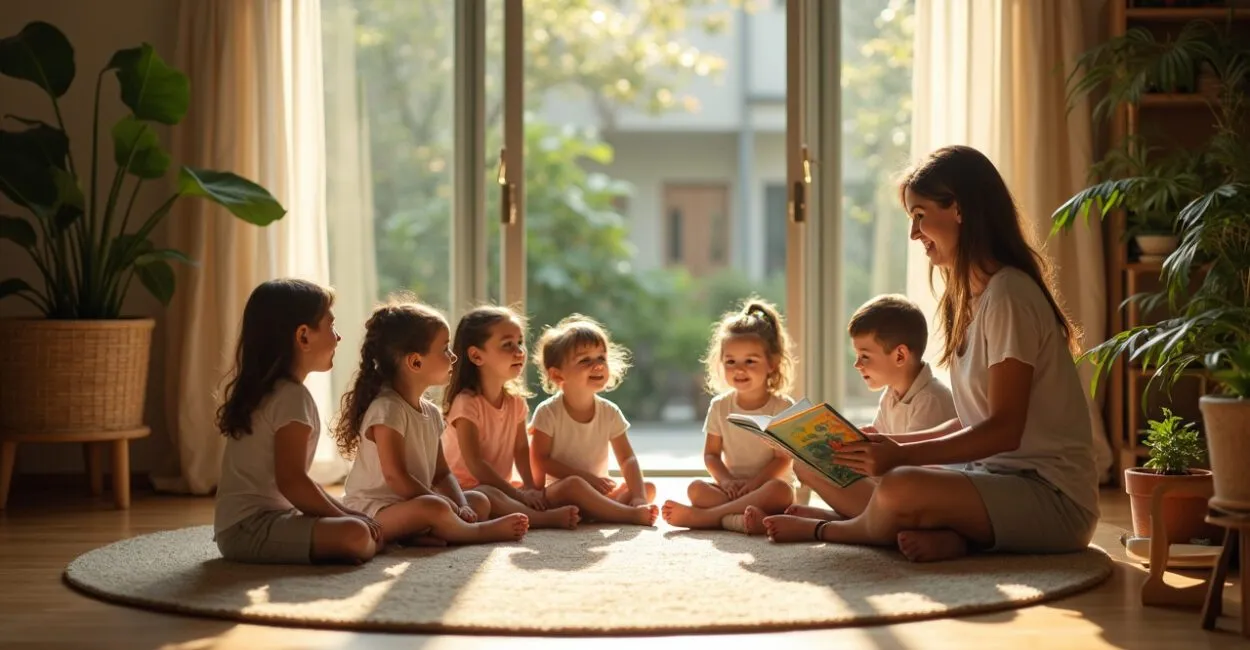
A well-crafted short story can teach young children more than an entire lecture. In environmental storytelling, the plot bridges feelings and behavior: children understand why they shouldn’t waste water, why animals need habitats, and what changes when the class sorts its trash correctly.
This matters because environmental education in early childhood doesn’t depend on long speeches; it depends on repetition, modeling, and concrete language. Here, you’ll find 7 story ideas, criteria for choosing age-appropriate themes, and practical ways to turn a story into a sustainable habit—without preaching or overwhelming children with information.

What You Need to Know
- Environmental stories work best when they focus on a concrete action, such as saving water, protecting animals, or managing trash, rather than generic messages.
- In early childhood education, simple characters, a clear conflict, and a hopeful ending are more memorable than abstract explanations.
- The best results come when the story is followed by a real activity, such as a group discussion, drawing, planting, or sorting waste.
- Not every “beautiful” story teaches effectively: if the lesson is too heavy-handed, children may listen but quickly forget it.
- Trusted sources such as UNESCO, Brazil’s Ministry of Education (MEC), and the Brazilian Institute of Geography and Statistics (IBGE) help ground content in educational and social research.
Environmental Storytelling in Early Childhood Education: Why It Works
Technically speaking, environmental storytelling is a narrative-based, relationship-centered teaching strategy that uses a plot, characters, and a problem to develop ecological awareness, oral language, and responsible behavior. Put simply, children don’t just learn “what to do”; they understand why to do it because they follow a situation with a beginning, a challenge, and a resolution.
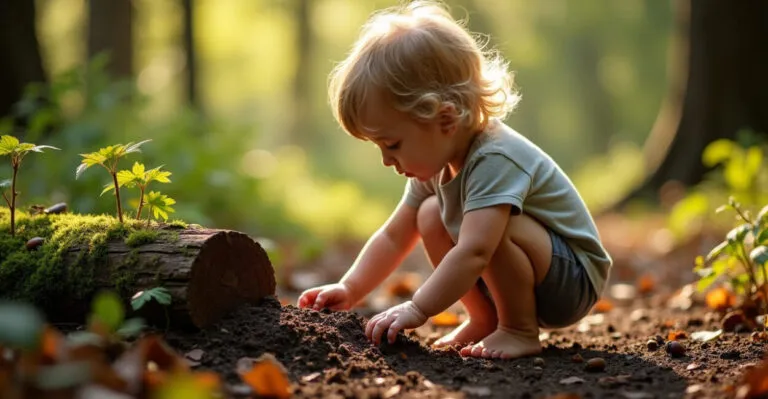
This approach works especially well in early childhood education because learning at this stage is highly symbolic. A turtle trapped in plastic, a tree that has lost its leaves because it hasn’t had enough water, or a stream where fish return after people work together to care for it are images children remember easily. Young children’s brains respond better to scenes than to disconnected concepts.
What makes an environmental story effective isn’t how much information it contains, but how clearly it presents the conflict: when children can see a concrete problem, they can connect emotion, memory, and action.
What Children Actually Take Away
In practice, children repeat actions that made sense to them in the story. If a character sorts recyclables, they want to imitate them; if the class saves a garden, they start paying closer attention to plants. I’ve seen a single group reading spark weeks of spontaneous classroom conversations about trash, water, and animals. That’s no accident: a good story builds a connection, and that connection can shape behavior.
Where This Approach Falls Short
This approach works well when the story connects with children’s routines, but it falls short when it turns into a disguised lecture. If the moral comes before the plot, children lose interest. There’s another limit, too: complex subjects, such as deforestation across an entire country or climate change, need to be presented carefully so children aren’t frightened or confused.
7 Environmental Story Ideas That Keep Kids Engaged
The best selection isn’t the most “educational” one; it’s the one that combines clarity, emotion, and a chance to take action. Below are seven ideas that tend to work well in schools, libraries, and reading programs because each one connects an environmental issue to a setting children recognize from everyday life.
1. The Little Water Drop That Wanted to Return to the Faucet
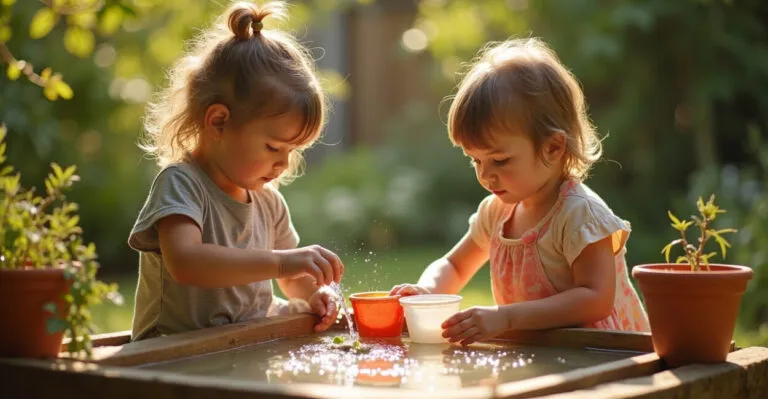
This story helps introduce water conservation. A drop leaves the shower, sees water being wasted in the kitchen, and discovers that every drop matters. The plot creates an opportunity to talk about taking shorter showers, turning off the faucet, and reusing water without turning the subject into a scolding. To provide context, pair the story with information from Brazil’s National Water Resources Information System, which highlights the importance of monitoring the country’s water resources.
2. The Trash That Didn’t Want to Live on the Ground
Here, trash gets a voice and finds the right place: the proper bin. The fun comes from showing that waste doesn’t magically disappear. When it’s left on the ground, it can clog storm drains, litter the street, and end up in rivers. The story opens the door to discussing recycling, organic waste, and recyclables, as well as the role of waste pickers—who rarely appear in children’s stories but are essential to the real-world recycling system.
3. The Tree That Protected the Neighborhood
This story is a great way to explore shade, temperature, and urban biodiversity. The tree becomes a protective character: it gives birds shelter, cools the sidewalk, and beautifies the street. Children learn that planting and preserving trees isn’t just about “making things look nice”; it also improves the local climate and provides shelter for other forms of life. If possible, pair the story with an observation of local species and an introduction to urban forestry.
4. The Frog That Sang Only When the Pond Was Clean
This is an excellent story for discussing the protection of rivers, springs, and wetlands. The frog serves as an ecological indicator: when the pond is unhealthy, it disappears. This idea is powerful because it shows that animals depend on a healthy environmental balance, not just individual acts of kindness. The topic also makes it possible to discuss soap entering waterways, trash dumped in the water, and how communities can care for their surroundings.
Read also: Eco-Education: Learn to Care for the Environment with Joy and Awareness
5. The Sustainable Class’s Backpack
This story is more grounded in everyday life and works well in preschool and the early elementary grades. The backpack holds reusable items: a water bottle, a lunch bag, a cloth napkin, and a repurposed pencil. Each item opens up a conversation about consumption, disposal, and simple choices. This story avoids idealizing sustainability and connects the topic to family routines, which often helps children carry the idea home.
6. The Bat That Planted Seeds
This story can help reduce fear and prejudice toward nocturnal animals. The bat appears as a seed disperser, showing that not every “scary” animal is a threat. This approach teaches more than a list of fun facts because it challenges a common misconception and reinforces the idea of ecological balance. For teachers, it’s a useful starting point for discussing pollination, seed dispersal, and wildlife diversity.
7. The City Where Every Child Cared for a Seedling
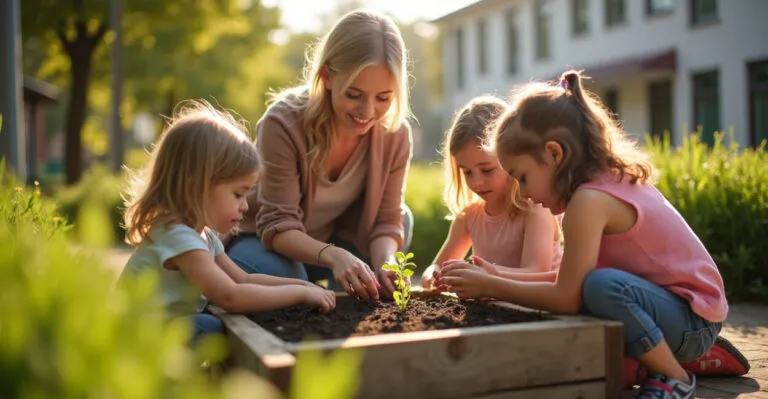
This story brings the cycle to a close with collective action. Each child takes responsibility for a seedling, watches it grow, and learns that caring for the environment is an ongoing process, not a one-time event. Planting becomes a continuing commitment, which is usually more educational than a one-off activity. If the school has a garden or green space, the story becomes even more meaningful because real-life experience reinforces what children heard.
How to Turn a Story into Real Learning

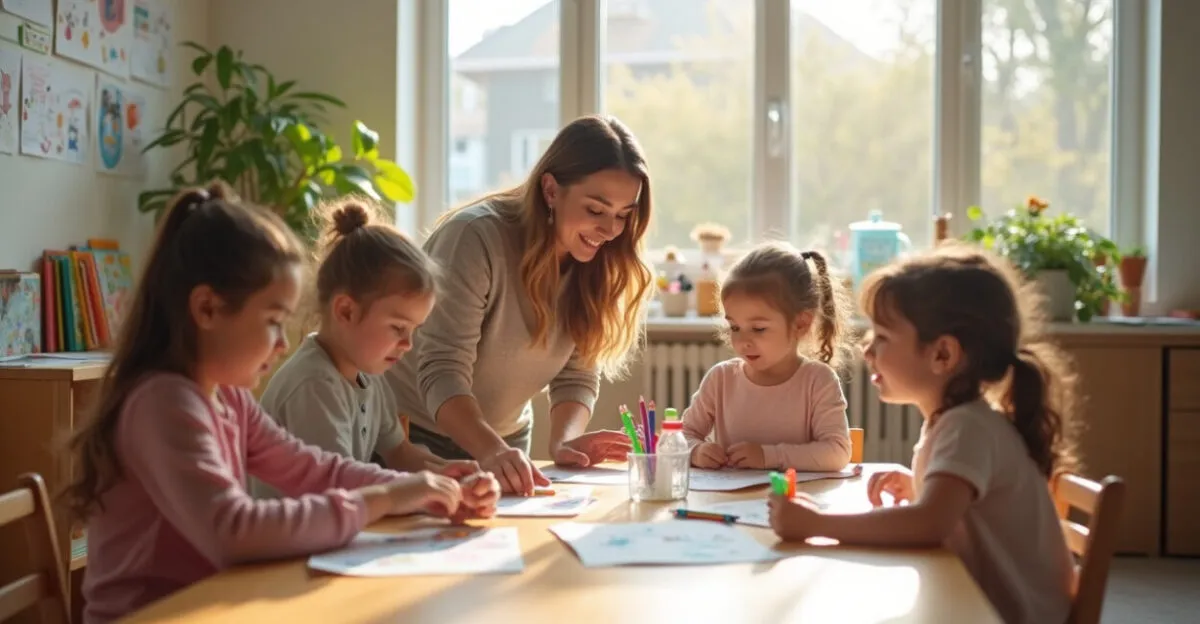
Telling the story is only half the work. Learning takes hold when the story leads to an action, a conversation, or a creative project. Anyone who works in early childhood education knows that children remember more when they handle, draw, compare, or name what they’ve heard. That’s why the follow-up activity needs as much thought as the story itself.
Three Simple Ways to Wrap Up the Activity
- Ask a few brief questions about the story’s main problem.
- Have children draw the most memorable scene and explain why they chose it.
- Connect the story to a concrete action: sorting waste, watering a plant, or watching birds in the schoolyard.
In practice, a good wrap-up doesn’t overdo it. If the lesson ends with an overly long task, children lose the thread. If it ends with a small, repeatable action, the message sticks. That balance is one reason school-supported projects and educational materials from Brazil’s Ministry of Education (MEC) tend to work better when they connect content, experience, and participation.
An environmental story without a follow-up action is entertainment; with a simple, repeatable activity, it becomes a learning habit.
How to Choose Stories Without Talking Down to Children
Not every story about trees, animals, or rain teaches effectively. Some treat children as if they need an overly sweet lesson, while others lean too heavily into apocalyptic language. Both extremes get in the way. The best approach is to respect children’s intelligence and use clear language, relatable characters, and visible consequences.
What to Look for Before Reading
- Is the conflict clear and easy to understand for this age group?
- Does the solution depend on a concrete action rather than magic?
- Does the story avoid excessive guilt and unnecessary fear?
- Does it leave room for a conversation after reading?
Experts disagree about the ideal level of complexity for different ages. In general, younger children respond better to simple scenes and repetition, while slightly older groups can handle more complex cause-and-effect relationships. A useful rule of thumb: if a child can’t retell the main sequence of events, the story may be too easy or too difficult for them.
Organizations and Topics That Add Depth to Environmental Stories
To add depth, a storytelling session can draw on organizations and concepts already associated with environmental education. This makes the story more concrete and helps adults connect what children hear with reliable information and real actions in their community.
Concepts and Sources That Enrich the Topic
- IBGE — useful for context on population, urbanization, and geography.
- UNESCO — a leading resource for education for sustainable development.
- MEC — Brazil’s Ministry of Education, useful for aligning classroom practices with educational guidance.
- Basic sanitation — a key topic when a story addresses water, trash, or health.
- Recycling — an excellent starting point for discussing everyday actions.
- Biodiversity — broadens the focus to local plants, insects, and animals.
- Urban forestry — connects the story to the neighborhood and school.
- Organic waste — offers an accessible way to discuss composting.
These organizations aren’t there to decorate the text. They help avoid the trap of treating the environment as an abstract topic, disconnected from real life. When a story connects with the neighborhood, school, water, trees, and animals, the topic stops being a concept and becomes an experience.
How to Plan Short Reading Sessions with Educational Impact
A short, well-planned session often has more impact than a long, unfocused series. Ideally, combine reading, observation, and a small closing activity. In my experience, activities work best when they don’t require hard-to-find materials or extensive preparation; consistency is what makes the approach effective.
A Practical 15- to 20-Minute Plan
- Introduce the story with an object, image, or sound related to the topic.
- Read or tell the story in a clear voice, without too many interruptions.
- Ask two focused questions about the problem and its solution.
- Wrap up with a small activity: drawing, a gesture, sorting items, or observing the schoolyard.
This approach works well with small and medium-sized groups, but it can fall short if children are tired or the room is noisy. In those cases, shorten the story and increase participation. Children’s attention isn’t limitless, and insisting on lengthy explanations can undermine what made the story effective in the first place.
Next Steps for Bringing Storytelling into Everyday Life
The real value of storytelling about the environment becomes clear when it moves beyond abstract ideas and becomes part of everyday life. Rather than choosing a different story each week with no follow-through, build a short thematic series: water, waste, trees, animals, and sustainable habits. This builds memory and reinforces environmental vocabulary with less effort.
The next step is to choose a story, plan a closing activity, and observe how the children respond. If they repeat the action, talk about it at home, or start noticing their surroundings, the activity is on the right track. If they don’t connect with it, adjust the topic, shorten the story, or make the problem more relevant to their experience.
Frequently Asked Questions
What’s the Best Age to Start Telling Environmental Stories?
You can start in early childhood, as long as the language is concrete and visual. Young children understand characters, animals, water, plants, and simple habits better than lengthy explanations about ecology. The content should match their age: the younger the child, the shorter and more sensory the story should be. The key is to make the topic an experience, not a lecture.
What Types of Environmental Stories Engage Young Children Most?
Stories with animal characters, talking objects, and everyday problems tend to hold children’s attention. That’s because children can relate to actions like putting trash in the right bin, turning off the faucet, or caring for a plant. Plots with a clear beginning, conflict, and resolution are easiest to follow. If the story is too abstract, children quickly lose interest.
Is It Better to Read a Story or Make One Up on the Spot?
Both approaches work; the best choice depends on your goal. Reading a well-crafted story helps maintain structure, vocabulary, and educational focus; making one up on the spot offers more flexibility to adapt to the group. Improvisation works best in early childhood education when the teacher already knows the story’s basic structure. Ideally, have a mental outline and the freedom to adjust the details.
How Can I Keep a Story from Turning into a Lecture?
Avoid lines that blame children or frame everything in overly harsh terms of “right and wrong.” A story is more effective when it shows consequences, cooperation, and the possibility of change. Instead of saying someone “did everything wrong,” show how small actions can improve the environment. This preserves the emotional connection and increases the chances of lasting learning.
Do I Need to Use Data or Official Sources in Stories for Children?
You don’t have to include numbers in the story, but using reliable sources when planning the content can greatly improve its educational value. Organizations such as UNESCO, Brazil’s Ministry of Education (MEC), and the Brazilian Institute of Geography and Statistics (IBGE) can help ground the topic in credible information, especially when the story will be used in a classroom, project, or educational material. Children don’t need to see the data, but adults need to choose content responsibly.