
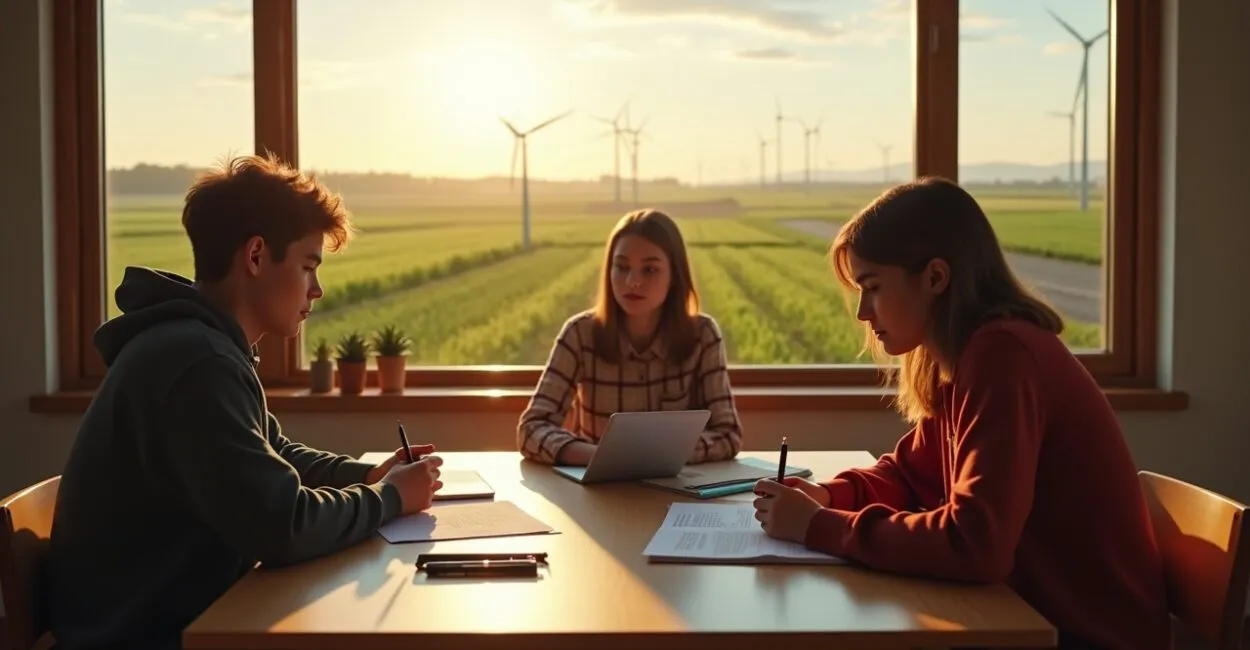
A good essay story doesn’t need to sound “literary” to work; it needs to be clear, coherent, and convey a strong idea in just a few lines. When the topic is Short story models for essays, what helps students most isn’t memorizing formulas, but understanding how to build a brief narrative with a beginning, a conflict, and an ending that make sense within the time allowed on a test.
This matters even more when the prompt calls for social context, as with Strong Agriculture, Sustainable Future. In this case, the story needs to engage with rural life, technology, sustainability, productivity, and human choices without turning into a political tract. Below, you’ll find structures, approaches, practical tips, and ways to adapt your writing for a school essay, college entrance exam, or practice test.

The Essentials
- An essay story works best when it presents a single conflict, a few characters, and an ending that connects to the theme.
- For the topic “Strong Agriculture, Sustainable Future,” the best approach is usually to show the relationship between agricultural production, environmental protection, and human choices.
- A short narrative needs concrete action, not excessive explanation; readers should grasp the point through what happens, not through a speech.
- The story is stronger when it uses specific details from rural life, such as irrigation, harvests, soil, cooperatives, geotechnology, and responsible land management.
- Not every story needs a happy ending; it can end on an open note, as long as the ending feels coherent and prompts reflection.
How Short Story Models Work for the Topic Strong Agriculture, Sustainable Future
Technically, a short story is a brief narrative centered on a single chain of events, with a small cast of characters, a compressed timeline, and a clearly defined conflict. Put simply, it’s a short story that gets straight to the point but still needs life, tension, and an ending. For an essay, that means you shouldn’t “tell everything”; you should choose one situation and develop it precisely.
For an agriculture-related topic, this has a big impact on the plot you choose. Instead of trying to explain the entire agricultural sector, focus on one specific scene: a decision about irrigation during a drought, family succession on a farm, using technology to reduce waste, or the tension between productivity and soil conservation. Anyone who works with storytelling knows that a short story improves when its point comes through in the action, not in a speech.
What separates a weak school story from an effective one isn’t the number of words—it’s the ability to turn an abstract idea into a concrete scene.
For this topic, organizations and concepts such as EMBRAPA (Brazil’s agricultural research agency), Mapa (Brazil’s Ministry of Agriculture and Livestock), IBGE (Brazil’s national statistics agency), agricultural cooperatives, precision agriculture, soil management, irrigation, and bioinputs can come up naturally. They give the writing a solid foundation and help avoid generalizations. Information from the Embrapa website can add technical context without turning the story into an opinion piece.
What Makes a Story Feel Like an Essay, Not Something Thrown Together
Readers quickly notice three things: whether there’s a scene, a conflict, and a consequence. When a story opens with a generic explanation about rural life, it loses momentum. When it starts with an image—the dry fields, a failing moisture sensor, or a farmer delaying the harvest—it gains depth. A school story works best this way: first the situation, then the pressure, and finally the turning point.
A Structure That Works Without Stifling Creativity
A common misconception among students is that a short story is the same as improvisation. It isn’t. A good short narrative needs structure, but that structure should be invisible as you read. The key is to organize the story before writing, even if the final version feels spontaneous.
A Basic Three-Part Model
- Opening: Introduce the setting and character, along with a detail that hints at tension.
- Development: Show the main crisis and force someone to make a decision.
- Ending: Provide a resolution or final image that ties the story together with the theme.
What Belongs—and What Gets in the Way
A short story can include a few characters, direct action, and a brief timeline. Subplots, long explanations, and dialogue that doesn’t move the story forward get in the way. If the story is about succession on a farm, for example, there’s no need to introduce ten different conflicts. It’s better to focus on one point of friction: the son wants to innovate, the father resists, and the farm needs to adapt.
Here’s a useful guideline: if a scene doesn’t change someone’s decision, it probably doesn’t belong. This is especially helpful on a test because it keeps the story from becoming a summary of disconnected ideas. A short story should move forward through consequences, not lists.
Topics That Connect Agriculture, Sustainability, and Human Conflict

Not every agriculture-related topic makes a good story. The best ones put two forces in conflict: tradition and innovation, profit and preservation, urgency and care. That tension is what drives the story forward. When the plot only praises the industry or only criticizes it, it tends to feel shallow.
Four Storylines That Work Well
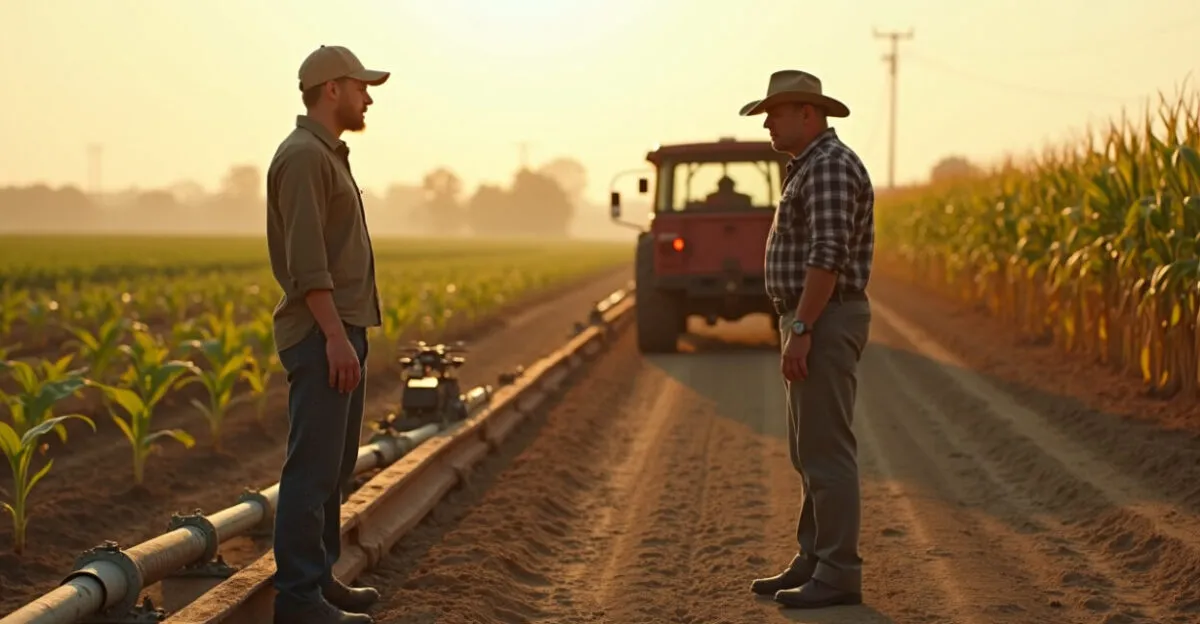
- Family succession: A young person returns to the family farm and meets resistance when trying to introduce sustainable practices.
- Drought and adaptation: A community must choose whether to stick with old methods or invest in efficient irrigation.
- Technology on the farm: Sensors, drones, or precision agriculture change how decisions are made.
- Soil and conservation: The story shows the cost of neglecting proper land management and the effort required to restore the soil.
A Specific Example
I’ve seen students’ writing improve dramatically when they stopped trying to “write about agriculture” in general and chose one scene instead: the grandmother who owns the land refuses to sell it for development, while her grandson argues for starting an organic farming cooperative. In just a few lines, the story already had conflict, context, and a clear theme. Readers could understand the tension between past and future without needing an explanation.
Read also: Sustainable Farming: Practices That Increase Profits
For real-world context, consult the IBGE, which compiles agricultural production statistics, and Brazil’s Ministry of Agriculture and Livestock, which publishes information about industry initiatives and programs. These resources can provide a reliable backdrop for your story.
How to Create Characters Without Relying on Stereotypes
The biggest mistake in these stories is turning the farmer into a perfect hero or the environmentalist into an automatic villain. Real life is more interesting than that. A farmer can be conservative about one decision and innovative about another. A young person can support technology and still fear the financial risk. That ambiguity makes the story feel true.
Read also: Sustainable Agriculture: Techniques for Soil and Climate
A convincing character isn’t someone who “represents a side”; it’s someone who has to make a choice under pressure.
What Makes a Character Believable
- A clear goal: Save the harvest, keep the farm, prevent waste, or protect the water supply.
- A real obstacle: Cost, time, distrust, weather, or family tradition.
- A visible decision: The character acts, hesitates, or backs down in response to the crisis.
This matters because good writing depends on more than a topic. It depends on people in conflict. If a character sounds like a mouthpiece for an argument, the story loses both its literary and persuasive power. But when a character makes mistakes, learns, or pays a price, the story feels much more human.
The Right Vocabulary to Evoke Rural Life Without Weighing Down the Story
Using agricultural vocabulary isn’t about dressing up the writing; it’s about being precise. But there’s a limit. Too much technical jargon makes the story harder to read and feel artificial. Ideally, use terms that fit the scene and that any reader can understand from context.
Terms That Work Well in Stories Like These
- Harvest
- Soil management
- Irrigation
- Cooperative
- Bioinputs
- Geotechnology
- Productivity
- Reforestation
When Technical Language Gets in the Way
If a word appears only to impress, it weighs the story down. “Remote sensing,” for example, can work if the story involves monitoring crops; otherwise, it’s just noise. The rule of thumb is simple: the term needs to serve the action. If it doesn’t change the scene, replace it with something more direct.
There’s an important nuance here: in some college entrance exams, using technical context sparingly can make the writing more credible; in others, too much specificity may feel forced. So the best rule is always the same—the term should feel necessary, not decorative.
The Mistakes That Most Often Undermine an Essay Story
People writing under pressure tend to make the same mistakes. The first is to start with the moral of the story and only then invent a scene. The second is to turn the topic into a lecture. The third is to end with a pretty line that has nothing to do with what came before. These three problems show up often in practice tests and school assignments.
The Most Common Mistakes
- Too much explanation at the beginning.
- Characters without a real conflict.
- A rushed or preachy ending.
- A mismatch between the setting and the ending.
- Artificial use of technical terms.
In practice, readers can see the seams. The story feels assembled in pieces rather than lived. That weakens even a strong central idea. A story about sustainability can be powerful, but if the writer tries to “teach” instead of narrate, the essay loses its literary quality and starts to read like a summary.
A Simple Guide to Writing and Revising More Effectively
Before drafting the final version, it’s worth following a short checklist. It helps you avoid wasting time and keeps you focused on the topic. It’s not a rigid formula; it’s a roadmap.
A Practical Step-by-Step Guide
- Define the central conflict in one sentence.
- Choose two or three elements for the scene: setting, character, and tension.
- Write an opening that shows movement right away.
- Check whether each paragraph moves the story forward.
- Make sure the ending connects to sustainability without turning into a lecture.
This method works well for a short essay, but it falls short when students try to fit every aspect of the topic into the story at once. It won’t apply in every case; it depends on the focus you choose. If the plot already has a strong human conflict, don’t force an agriculture lesson into the middle of the story. The goal is to reveal the theme, not spell it out with excessive explanation.
If you’re writing for school, you can also consult reference materials on reading and writing on the MEC website (Brazil’s Ministry of Education), especially when the prompt calls for standard grammar and command of narrative writing.
Next Steps for Turning the Topic into a Strong Story
The best way to use short story models for essays isn’t to copy a ready-made structure, but to learn how to choose a conflict that captures the theme in a memorable scene. When the plot shows a difficult decision connected to rural life, sustainability stops being a nice-sounding word and becomes part of the story’s consequences. That makes the writing stronger and more authentic.
Before writing your next draft, make a concrete choice: decide who wants what, what’s stopping that person, and what final image will stay with the reader. Then write the whole story without trying to explain everything. Clarity comes from choosing what to include, not from adding more.
Frequently Asked Questions
What Makes a Good Story for an Essay?
A good story for an essay has a clear focus, a defined conflict, and a coherent ending. It doesn’t depend on a large cast of characters or a long plot; it depends on a well-chosen situation and a logical progression. In general, what matters most is the ability to turn an abstract topic into a concrete scene, with clean language and confident pacing. When that happens, the writing becomes powerful without feeling artificial.
How Can I Adapt a Story to the Topic Strong Agriculture, Sustainable Future?
The best approach is to choose a specific situation from rural life, such as family succession, irrigation, soil conservation, or the use of technology. The topic doesn’t need to appear as a slogan; it can emerge through a conflict between producing more and producing responsibly. When the story shows someone making a decision, the sustainability theme comes through naturally. That usually works better than explaining it in a speech.
Do I Need to Use Technical Terms in the Story?
It isn’t required, but some terms can make the writing more precise and credible. Words such as harvest, cooperative, bioinputs, and soil management help when they’re part of the scene. The key is not to overdo it: too much technical language can disrupt the flow. Use the right vocabulary in the right place without turning the story into a lesson.
Does the Ending Need to Be Happy?
No. A story can end on an open, reflective, or even bitter note, as long as the ending makes sense in light of the conflict. In an essay, a good ending is a coherent one. If the story has built tension around productivity and sustainability, the ending might show a lesson learned, a loss, or a change in attitude. The important thing is not to end with a decorative line that has no connection to the story.
How Can I Keep the Story from Reading Like a Disguised Argumentative Essay?
Focus on actions, not explanations. Instead of saying sustainability is important, show a character making a difficult decision about water, soil, or production. A story narrates an experience; an argumentative essay makes a case for an idea. When the two are mixed without control, the writing loses its identity. During your final revision, check whether there are enough scenes to carry the theme.
Artigos Relacionados
 A Strong Agricultural Sector and a Sustainable Future: How to Address Production and the Environment in Your Essay
 Sustainable Agriculture: Techniques for Soil and Climate
 Sustainable Agriculture: A Path to Sustainable Social Development
 How to Build a Sustainable and Profitable Business Model
 Building a Sustainable Future: Eco-Friendly Fashion Business Ideas for Young Entrepreneurs in Brazil
 Environment and Education in the 21st Century: Pathways to a Sustainable Future
