

A school garden can inspire a strong essay when students explain where the water comes from, how the soil is cared for, and who maintains the space. To write about sustainability for Agrinho 2026, a Brazilian education contest focused on agriculture and rural life, choose a nearby issue, investigate its causes, make a case for your perspective, and propose a practical solution for the situation you describe. This approach works for different categories and experience levels. Before you begin, check the current rules and your school’s guidelines: formats, judging criteria, and deadlines can vary, so don’t assume they’re the same each year.
Quick overview
- Genre: Check the category rules to see whether the assignment calls for an essay or another type of writing.
- Focus: Choose a specific aspect of sustainability related to agriculture and rural life.
- Structure: Organize your ideas around the problem, its causes, its effects, and possible solutions.
- Research: Prioritize institutional sources and data that help explain your topic.
- Participation rules: Confirm the format, length, and deadline in the contest’s official guidelines.
How to write an Agrinho 2026 sustainability essay
Start by reading the prompt and identifying what it asks you to do. Then choose a focus, develop a thesis, gather evidence, and organize your essay into an introduction, body, and conclusion. Connect agriculture and sustainability through a specific problem, explain its causes and effects, and propose a practical response. Revise your work according to the rules for your category.

Sustainability means meeting present needs without compromising the ability of future generations to meet their own, while considering environmental, social, and economic factors. In agriculture, this means producing food and income, caring for natural resources, and considering the quality of life of people who work and live in rural areas. An Agrinho essay should show that the student understands the prompt and has developed an independent point of view. Connections to rural life can include topics such as soil conservation, water use, biodiversity, food production, and community involvement in rural areas.
Choose a focus you can argue effectively
“Sustainability in agriculture” is too broad to explore in depth in just a few pages. Narrowing your focus makes the topic manageable. For example, you could write about soil erosion in farmland or responsible water use in food production. To choose a topic, ask yourself whether you can explain the problem, its causes, and who is affected. Then write one sentence that states your position. This thesis will guide your essay and help keep it from becoming a list of unrelated ideas.
- Problem: What is happening in the situation you chose?
- Causes: What practices or conditions contribute to it?
- Effects: What impact does it have on the environment and people’s lives?
- Response: What steps could reduce the problem, and who could put them into practice?
Build your argument around causes and solutions

Problem-and-solution and cause-and-effect structures can work well together. Introduce the problem, explain why it happens and what effects it has, then make a case for a response that fits your analysis. If the assignment calls for a different structure, follow its instructions.
Read also: Soy and Sustainability: The Technological Revolution in the Brazilian Cerrado
Each body paragraph should move your reasoning forward. For example, a claim about soil conservation is more convincing when you explain how land management affects erosion and describe a measure suited to the situation. Avoid blaming the entire problem on one group. Decisions by farmers, public policies, technical assistance, market forces, and local conditions can all play a part.
Research data without turning your essay into a report
A reliable source can help you verify information and understand key terms, but the essay should still be your own. Consult organizations such as Embrapa, Brazil’s agricultural research corporation, which studies topics related to agriculture, and the National Water and Basic Sanitation Agency (ANA), Brazil’s federal agency for water and sanitation, for water-related topics.
Make a note of the main idea, the institution’s name, and the context for each data point. Then explain the information in your own words and connect it to your argument. Direct quotes from authors or researchers aren’t required unless the assignment instructions say otherwise. A short quote can be useful, but several quotes can take up space without developing your thesis.
Check the date and context of any information before using it. National data may not reflect conditions in a specific community, and a technical recommendation may depend on soil type, climate, or crop.
Use local examples without inventing experience
If you don’t have firsthand experience with agriculture, you can draw on observations from your school or community, talk with people who know the subject, or consult verifiable sources. The key is to distinguish what you observed from what you researched, and not to present something that never happened as your own experience. A common mistake is to recommend “saving water” without explaining how the idea addresses the problem. If the issue involves irrigation, your essay could discuss assessing water needs and choosing practices suited to the location, without claiming that one technique works for every farm.
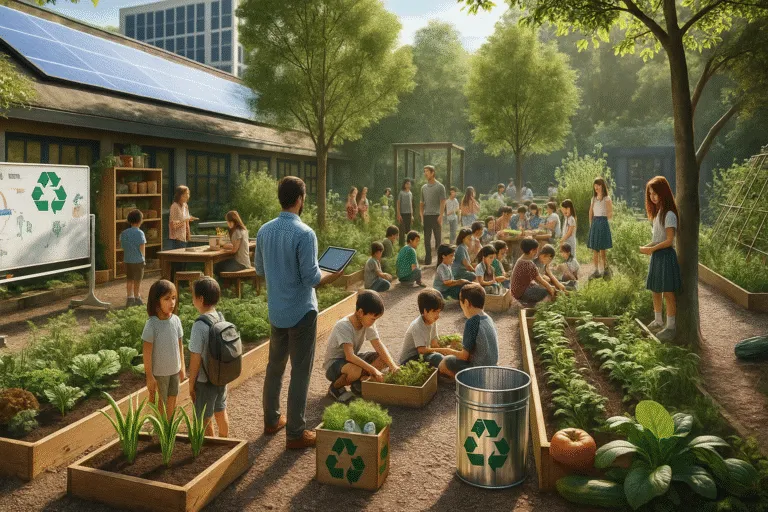
Imagine a school with a garden where some of the water runs off the beds. An essay could investigate how the soil and watering methods contribute to this loss. The proposal might include inspecting the garden beds and seeking technical advice before recommending changes. This example connects a real situation to a solution that needs to be evaluated in context.
Review your content, clarity, and category rules
Read your work more than once, with a different goal each time. First, check the strength of your argument. Then revise the organization and wording. In your final review, compare your essay with the official instructions.
- Argument: Does your thesis answer the prompt? Are the causes and effects explained?
- Coherence: Does each paragraph connect to the one before it and support the main idea?
- Clarity: Are any sentences vague, repetitive, or difficult to understand?
- Writing: Check spelling, punctuation, grammar, and transitions.
- Rules: Confirm your category, format, and other current requirements.
If possible, ask someone to read your essay without seeing your outline. If they can’t identify the main problem and the solution you support, you may need to make the connection between your ideas clearer.
Frequently asked questions about the essay and project
How long should an Agrinho 2026 essay be?
Follow the length requirements in the category rules or assignment guidelines. Since this information can change, don’t assume a word limit without checking the current version.
Can I focus only on water, soil, or biodiversity?
Yes. A specific focus can support a stronger argument than trying to cover every aspect of sustainability. Explain how your chosen topic relates to agriculture and the people affected.
Should I organize the essay around problem and solution or cause and effect?
You can combine both approaches: introduce the problem, explain its causes and effects, and then argue for a response. Your choice also depends on what the category prompt asks for.
How can I work on the Agrinho project without experience in agriculture?
Start with an issue you can observe at school or in your community, research reliable sources, and talk with people who know the local situation. Clearly distinguish facts, observations, and proposals without making up personal experiences.
Do I need to include quotes from researchers?
No, unless the assignment instructions require them. In general, a well-explained fact attributed to the institution you consulted is more useful than a long quote without analysis.
Before you submit, state your thesis in one sentence and check that every paragraph supports it. Then confirm your essay follows the current rules for your category and make any final changes.
Artigos Relacionados
 Sustainability Tips for Apartments: A Practical Guide
 How to Write an Effective Argumentative Essay: A Complete Guide
 Rural Sustainability: 9 Practices That Can Fail
 Education and Sustainability: Pathways to Responsible Development
 Agricultural Technical Training: Boost Productivity and Stand Out in the Field
 Water Activities: Teach Sustainability Through Play
