
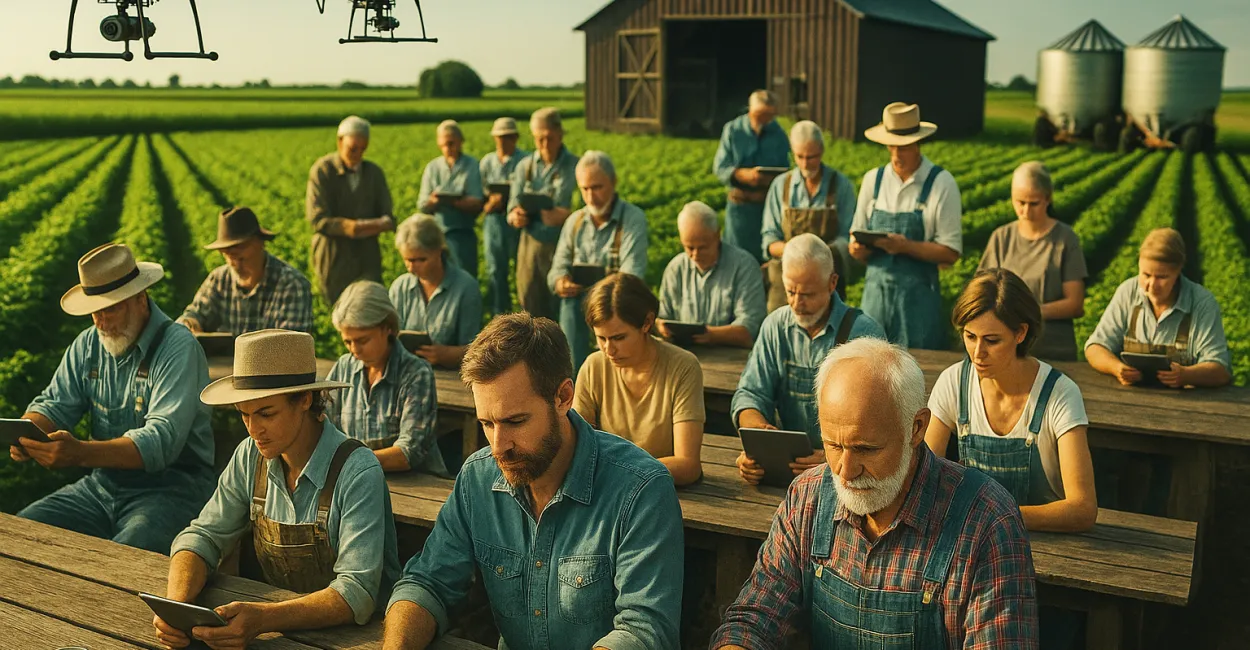
Agricultural technical training is key for anyone looking to increase productivity and stand out in the competitive agricultural industry. With technology and techniques constantly evolving, staying up to date is essential to ensure success and sustainability in the field.
Do you know which technical skills can transform your production? In this article, we’ll explore the strategies, technologies, and essential knowledge that can improve your agricultural work, along with practical tips you can use in your day-to-day operations.

Why agricultural technical training matters for increasing productivity
How agricultural technical training improves results
Technical training in agriculture is essential for farmers looking to apply efficient, modern methods that increase productivity. Technical knowledge helps you better understand soil, crops, and the best practices for each type of planting.
In addition, trained farmers can identify problems early, use inputs appropriately, and adopt technologies that make the most of available resources while reducing waste and operating costs. The result is more abundant, higher-quality harvests.
Investing in training also helps farmers adapt to climate change and environmental regulations, supporting sustainable practices and the long-term success of their operations.
Economic benefits of technical training in agriculture
Technical training offers farmers many economic benefits. By mastering advanced techniques, they can maximize yields per acre and improve product quality, increasing the market value of their crops.
Trained farmers also have an easier time accessing agricultural credit, loans, and government programs that require proof of technical knowledge. This can make investments in equipment and infrastructure possible.
In addition, training reduces losses and improves efficiency, saving money on inputs and labor and increasing the profitability of farms.
Sustainable development and agricultural technical training
Technical training in agriculture is essential for promoting sustainable practices that protect the environment and support long-term productivity. Techniques such as integrated pest management, crop rotation, and soil conservation can be learned and applied more effectively.
Trained farmers also understand the importance of using water and agricultural chemicals responsibly, minimizing environmental impacts and improving soil health. This helps preserve biodiversity and supports the economic sustainability of agribusiness.
With technical knowledge, agriculture becomes a more responsible activity that aligns with the expectations of consumers and regulatory agencies.
- Improved quality of agricultural products.
- Reduced environmental impact.
- More efficient use of natural resources.
- Greater market competitiveness.
- Easier access to financing and incentive programs.
Essential techniques in modern agricultural technical training
Integrated pest and disease management
Integrated pest management (IPM) is an essential approach that combines biological, cultural, and chemical methods to control insects and diseases effectively and sustainably. Agricultural technical training teaches farmers how to monitor pests, recognize early warning signs, and apply appropriate solutions without harming the environment.
This approach reduces the overuse of pesticides and helps prevent pests from developing resistance, resulting in healthier, safer crops. IPM is also important for meeting certification standards and international market requirements.
Farmers trained in IPM can plan targeted control measures that preserve ecological balance and increase productivity.
Efficient use of fertilizers and soil amendments
Another key part of agricultural technical training is the proper management of fertilizers and soil amendments. Knowing how to assess soil fertility and identify its needs makes it possible to apply the right amount of nutrients, avoiding waste and environmental contamination.
Technical knowledge includes interpreting soil test results, selecting fertilizers based on the crop, and choosing the right time to apply them. This supports vigorous plant growth and more productive harvests.
Training also covers techniques such as cover cropping and composting, which are sustainable ways to maintain soil health.
Using precision agriculture technologies
Precision agriculture is transforming the industry with technologies such as GPS, sensors, and drones that help farmers monitor and manage crops with a high degree of accuracy. Agricultural technical training prepares farmers to use these tools to tailor management to each area.
This makes it possible to optimize input use, improve irrigation management, and increase the efficiency of agricultural operations. Precision farming reduces costs and environmental impacts while improving product quality.
Farmers who master precision technologies gain a competitive edge and can respond quickly to changing field conditions.
| Technique | Benefits | Applications |
|---|---|---|
| Integrated Pest Management | Reduces pesticide use and supports sustainable pest control | Monitoring and biological methods |
| Efficient fertilizer use | Improves soil fertility and reduces waste | Soil testing and proper application |
| Precision agriculture | Optimizes inputs and increases productivity | GPS, drones, and sensors |
Additional knowledge in agricultural technical training

Financial management for farmers
A well-rounded agricultural technical training program also includes financial management. Knowing how to track costs, plan investments, and assess production profitability is vital to the success of a farming business.
Farmers with financial training can make strategic decisions that increase profits and help them avoid debt. Technical courses cover simple tools such as spreadsheets and farm management software, as well as basic accounting concepts.
This training provides a clear picture of cash flow and the return on investments made in the operation.
Environmental laws and agricultural regulations
Another important part of agricultural technical training is understanding environmental, health, and workplace safety regulations. Compliance can help farmers avoid fines, production shutdowns, and legal problems.
Technical courses cover environmental permits, proper pesticide use, waste management, and farm safety. This helps ensure that production is sustainable and meets the requirements of regulatory agencies such as Brazil’s Ministry of Agriculture and Ibama, the country’s environmental protection agency.
In addition, understanding the law helps farmers adopt good agricultural practices that increase the value of their operations.
Innovation and rural entrepreneurship
Agricultural technical training also encourages innovation and entrepreneurship in rural communities. With up-to-date knowledge, farmers can spot business opportunities, diversify production, and add value to their products.
Topics such as direct-to-consumer sales, organic certification, family agribusiness, and rural marketing help farmers broaden their understanding of the market.
This preparation opens doors to new market segments and strengthens the financial sustainability of the operation.
- Effective financial planning.
- Compliance with current regulations.
- Ability to innovate in agriculture.
- Greater value for agricultural products.
- Improved product marketing.
How to choose the best agricultural technical training course
What to look for in agricultural technical courses
When looking for agricultural technical training, it’s essential to assess the quality and relevance of the available courses. Check whether the institution is recognized by Brazil’s Ministry of Education (MEC) and whether the course content addresses the specific needs of your region and crops.
Also consider the instructors’ experience, the number of course hours, and the teaching methods. Prioritize courses with up-to-date, hands-on lessons. Post-course support and networking opportunities with other farmers are important advantages.
Reading reviews from former students can help you make a more confident, informed choice.
Course formats available to farmers
Agricultural technical training is available in many formats, from in-person courses to online and hybrid programs. In-person technical courses offer more interaction and hands-on practice, while online courses provide flexible schedules and access to up-to-date materials.
There are also courses focused on specific crops, techniques, or technologies, as well as agricultural extension programs offered by universities and government agencies.
Choosing the format that best fits your needs and schedule is essential to getting the most out of your training.
Training costs and expected returns
Agricultural technical training should be viewed as a strategic investment that can deliver financial and operational returns. Although free or subsidized courses are available, choosing high-quality training can speed up productivity gains and open up new market opportunities.
It’s important to assess the cost-benefit, taking into account potential increases in productivity, lower operating costs, and the added value of the farm.
Planning your investment in training is a key step toward sustainable growth in agriculture.
Putting agricultural technical training into practice every day
Using technical knowledge to plan farm operations
Agricultural technical training helps farmers create effective farm plans by setting the best times for planting, harvesting, and crop management, as well as choosing varieties suited to the climate and soil.
Technical data can help farmers organize resources, labor, and equipment, anticipate potential challenges, and prevent losses.
This strategic planning helps maximize results and keep production sustainable.
Monitoring and analyzing agricultural performance indicators
Trained farmers use tools and indicators to monitor crop performance, such as yield per acre, pest levels, and input use. Analyzing this data helps identify areas for improvement and adjust farming practices in real time.
This data-driven approach reduces risk and improves operational efficiency, making the farm more competitive.
Farm management apps and software are an emerging trend that can take this kind of technical management to the next level.
Combining technologies to optimize production
Combining the technologies covered in agricultural technical training—such as automated irrigation systems, mapping drones, and moisture sensors—can deliver significant benefits to farmers.
This combination supports efficient resource use, early problem detection, and fast, accurate decision-making.
As a result, farmers can increase productivity, reduce costs, and improve product quality sustainably.
- Creating detailed farm schedules.
- Regularly assessing crop performance.
- Integrating digital technologies into farm operations.
- Quickly adapting to changes in weather and markets.
Challenges and solutions in implementing agricultural technical training
Overcoming barriers to accessing training
Many farmers have difficulty accessing agricultural technical training courses because of distance, cost, and a lack of information. To overcome these barriers, look for agricultural extension programs, partnerships with local associations, and affordable online courses.
Support from public and private agencies can make training more accessible and help more farmers benefit from technical knowledge.
Investing in training is essential to the development of the agricultural industry as a whole.
Adapting course content to regional realities
Another challenge is adapting the course content and techniques to each region’s specific conditions, which vary by climate, soil, and predominant crops. Courses tailored to these local factors are more effective at preparing farmers.
Educational institutions and research organizations have developed regional approaches to ensure that what farmers learn can be applied and deliver practical results.
Active farmer participation in course development is an important advantage.
Incentives and public policies for agricultural training
Encouraging agricultural technical training also depends on public policies that provide financial support, subsidies, and continuing education programs. Incentives for farmers who adopt good technical practices help professionalize the industry.
Governments and institutions can expand access to courses, host educational fairs and events, and fund applied research.
These efforts strengthen the agricultural supply chain and support food security and sustainable rural development.
Leading institutions and platforms for agricultural technical training
Universities and agricultural research centers
Organizations such as EMBRAPA, Brazil’s Agricultural Research Corporation, and federal universities offer technical courses, agricultural extension services, and research that are widely recognized in agricultural training. They develop up-to-date materials tailored to farmers’ needs.
Taking part in these programs provides access to innovative technologies and experts who can help solve practical problems.
These organizations also host events and publish important resources for the agricultural industry.
Digital learning and training platforms
Online platforms such as the Brazilian Government Portal and private institutions offer free and paid courses that make agricultural technical training more accessible. These virtual platforms offer flexible schedules and a range of materials, including videos, quizzes, and forums.
Distance learning has expanded access to technical knowledge, especially for farmers in remote areas.
Digital platforms also provide regular updates and opportunities to connect with agricultural communities.
Agricultural associations and cooperatives
Organizations such as farmers’ associations and cooperatives are also important centers for agricultural technical training. They organize training sessions, workshops, and farm visits that encourage the exchange of experiences and collective learning.
Joining a cooperative makes it easier to access resources and information, while also strengthening mutual support among farmers.
These organizations play an active role in regional development and in professionalizing the agricultural industry.
- EMBRAPA: research and technical courses.
- Government portals offering online courses.
- Digital learning platforms.
- Local associations and cooperatives.
- Federal and state universities.
Technical training for family farming and small farms
Methods tailored to family farmers
Technical training for family farming should take into account the characteristics and limitations of this group, such as smaller-scale operations, heavy reliance on family labor, and limited financial resources. Practical, straightforward, and adaptable methods are essential for success.
Agricultural extension programs focused on family farming offer training that combines respect for traditional knowledge with modern techniques.
This approach supports social inclusion and improves quality of life in rural communities.
Training programs and government support
Brazil’s federal government, through agencies such as the Ministry of Agriculture, Livestock and Food Supply (MAPA), offers programs specifically designed to provide technical training for family farming. These programs aim to strengthen production, encourage agroecology, and promote direct sales.
Initiatives such as the National Program for Education in Agrarian Reform (Pronera) and the Food Acquisition Program (PAA) are examples of support for family farmers.
These efforts expand access to training and provide qualified technical assistance.
Social and economic benefits for small farms
Technical training for family farming has positive effects that go beyond agricultural production. It supports food security, income generation, and sustainable development in rural communities.
In addition, trained farmers tend to manage their operations more effectively, diversify production, and reach new markets, strengthening the local economy.
These benefits help reduce rural poverty and recognize the value of agricultural work.
Agricultural technical training and technological innovation
Robotics and automation in agriculture
The introduction of robotics and automation is one of the innovations transforming agriculture. Agricultural technical training prepares farmers to use automated machinery and robots for planting, harvesting, and monitoring, increasing efficiency and reducing reliance on labor.
These technologies enable precise operations, faster work, and better control of agricultural processes, directly affecting productivity and sustainability.
The future of farming depends on combining automation with farmers’ technical knowledge.
Internet of Things (IoT) for smart agriculture
The Internet of Things (IoT) enhances agricultural technical training by connecting sensors and devices that monitor soil, weather, and crops in real time. This enables better-informed decisions and remote farm management.
Using these technologies requires technical knowledge to interpret data and quickly take corrective action, making the most of resources and protecting production.
Smart agriculture is a growing trend that supports greater competitiveness and sustainability across the industry.
Big Data and data analysis for agricultural decision-making
Analyzing large volumes of data (Big Data) is a powerful tool for today’s farmers. Agricultural technical training teaches farmers how to collect, interpret, and use this data to improve planning, identify trends, and forecast results.
This knowledge helps improve operational efficiency, minimize risks, and adapt strategies to market and weather conditions.
Farmers who know how to use Big Data gain a competitive edge and can keep innovating.
- Using agricultural robots for repetitive tasks.
- Remote monitoring through IoT.
- Making decisions based on accurate data.
- Lower operating costs.
- Higher productivity and sustainability.
How agricultural technical training supports food security
Efficient production to meet growing demand
As the world’s population grows, agricultural technical training is essential to increasing food production efficiently and sustainably. Improved techniques can raise yields without depleting natural resources.
Trained farmers can produce more with less, helping ensure a steady, reliable food supply for society.
This efficiency is essential to fighting hunger and food insecurity.
Sustainable practices that protect natural resources
Food security also depends on protecting natural resources for future generations. Agricultural technical training teaches practices that conserve soil, water, and biodiversity, all of which are essential to continued agricultural production.
These practices include proper crop management, crop rotation, and reduced chemical use, in line with environmental policies.
This helps keep agriculture productive and socially responsible.
Improving food quality and safety
Training farmers in crop management and quality control helps ensure safer food for consumers. Agricultural technical training includes guidance on proper pesticide use, storage, and transportation to prevent contamination.
This helps food reach consumers fresh and intact, building trust and expanding market opportunities for farmers.
Investing in training is an investment in public health and economic development.
Future outlook and trends in agricultural technical training
Bringing education and technology together in agriculture
The future of agricultural technical training lies in bringing education and technology together more closely. Digital platforms, augmented reality, and interactive courses will transform learning, making it more accessible and engaging.
This convergence gives farmers in every region access to up-to-date materials and helps them put new techniques into practice quickly.
Technological progress, combined with quality education, will be key to sustainable rural development.
Ongoing training as a competitive advantage
In a constantly changing agricultural market, ongoing training is becoming a necessity rather than a competitive advantage. Farmers who keep learning are better prepared to innovate, reduce risk, and increase productivity.
Lifelong learning programs, with access to advanced courses and specialized training, will be essential to staying competitive in agriculture.
Technical knowledge will continue to grow in value.
Digital inclusion and making agricultural knowledge accessible to all
Expanding internet access and digital inclusion in rural areas create a major opportunity to make agricultural technical training more widely available. This allows small and midsize farmers to access the same learning opportunities as larger producers.
This wider access helps reduce inequality and strengthen family and regional agriculture.
The future of agricultural training lies in accessibility and collaboration between farmers and institutions.
- Using augmented reality in training.
- Keeping up with new technologies.
- Expanding digital access in rural areas.
- Offering training programs across all regions.
- Strengthening family farming.
Conclusion
Technical training in agriculture is an essential investment for anyone looking to increase productivity, support sustainability, and stand out in the field. With up-to-date knowledge, farmers can apply modern techniques, use innovative technologies, and improve farm management.
In addition, training strengthens food security, protects the environment, and creates new economic opportunities. Look for courses and training programs that meet your needs and transform your work in agriculture. Share this article with anyone looking to grow in agriculture, and leave a comment below with your experiences and questions!
Frequently Asked Questions (FAQ)
What is agricultural technical training?
It’s a learning process that teaches techniques, knowledge, and specific skills to improve agricultural production efficiently and sustainably.
What are the main benefits of agricultural technical training?
Increased productivity, better resource management, lower costs, environmental sustainability, and greater competitiveness in the market.
How do I choose an agricultural technical training course?
Check whether the institution is recognized, whether the content is relevant to your region and crops, what teaching methods are used, and how much experience the instructors have.
Is agricultural technical training available for small-scale farmers?
Yes. Courses and programs are designed to address the specific needs of family farms and small operations, using adapted methods.
Why is technology important in agricultural technical training?
Technology enhances learning and the use of agricultural techniques, improving the efficiency, productivity, and sustainability of farm production.
Artigos Relacionados
 Personal Routine: 12 Powerful Strategies to Boost Daily Productivity
 Rural Technical Courses: A Reliable Path to a Successful Agribusiness Career
 Professional Training in Agriculture: Advance Your Rural Career
 Agricultural Machinery: Technology and Modernization on the Farm
 Educational Gamification: Innovative Strategies to Boost Student Engagement
 Gynecologist: Complete Training, Current Challenges, and Career Opportunities
