
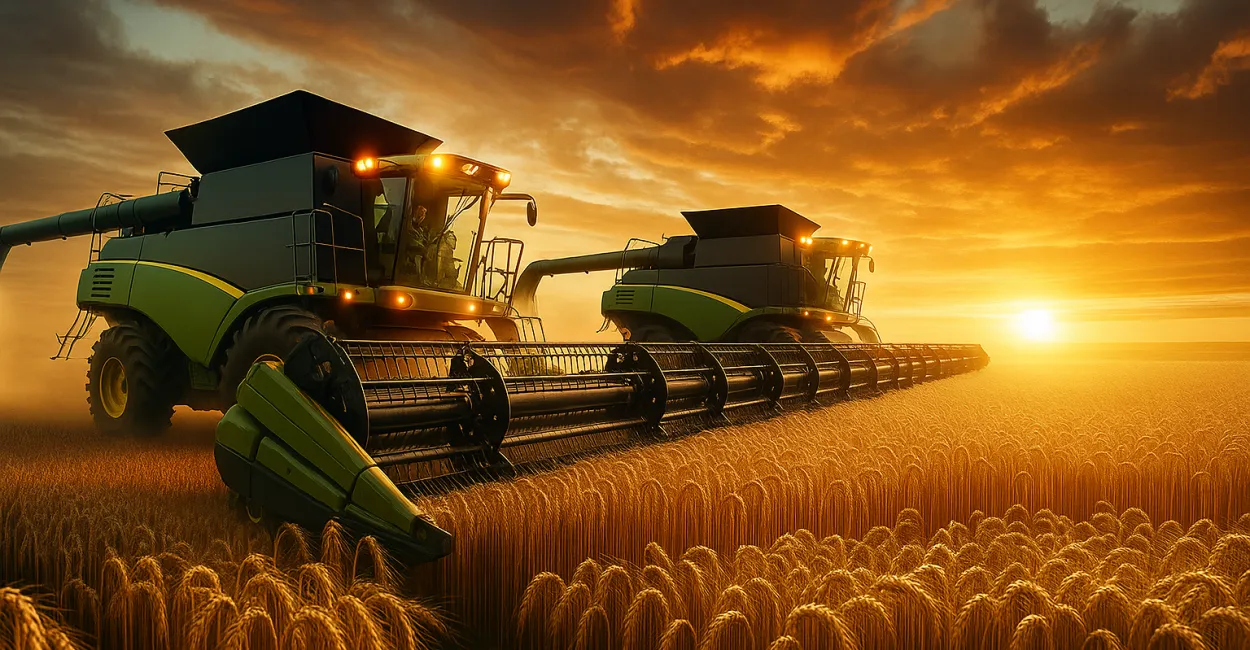
A field may look the same from the outside, but differences in productivity almost always come down to how the work is done. With the right equipment, farms gain precision, waste less, and produce more predictably.

Agricultural machinery is no longer just about mechanical power. Today, it brings together electronics, sensors, telemetry, and real-time decision-making.
This changes the game for producers of all sizes. Anyone involved in planting, spraying, harvesting, or soil preparation can see the day-to-day impact of more efficient machines, better-planned maintenance, and lower fuel use per acre.
Below, we’ll look at what has changed, which equipment makes the most sense at each stage, and why modernization has become essential to staying competitive in agriculture.
Quick Summary
- Modernizing agricultural equipment reduces operational losses by improving the precision of planting, application, and harvesting.
- Tractors, seeders, planters, sprayers, and combines have evolved from purely mechanical machines into connected, monitored systems.
- The best equipment isn’t the most expensive; it’s what fits the farm’s acreage, crops, and maintenance capabilities.
- Telemetry, auto-steering, and variable-rate application are already key tools for improving efficiency and controlling costs.
- In many cases, the financial return comes first from reducing waste, not from an immediate increase in productivity.
Agricultural Machinery, Technology, and Modernization on the Farm
Technically speaking, agricultural machinery includes motorized equipment or implements attached to a tractor that are used to prepare soil, sow, fertilize, spray, harvest, and transport crops. In practice, this means replacing manual or semi-mechanized work with standardized operations, reducing variation between fields and giving producers more control over the final results.
Modernization began with motorization and has since advanced along three fronts: automation, connectivity, and precision. Today, a tractor can use auto-steering, a seeder can adjust seed distribution in real time, and a combine can record losses by field area.
Anyone following this trend quickly realizes that the benefits aren’t just about speed—they’re also about the quality of the work.
The difference between an efficient farm operation and an expensive one isn’t just engine power; it’s how much precision the machine delivers per acre.
What Has Really Changed
The biggest shift has been moving beyond the idea that “more power means better results.” Today, it makes more sense to focus on operating efficiency, utilization rate, fuel consumption, and application quality. Producers who track these indicators can see where their equipment makes money and where it becomes an idle expense. Reports from the Embrapa portal, Brazil’s agricultural research agency, show that well-calibrated mechanization directly improves production efficiency, especially when equipment is chosen to suit the cropping system and soil type. This matters especially in areas with uneven terrain, short planting windows, or crops that are sensitive to inconsistent seed placement.
Main Types of Equipment and Where Each Makes a Difference
Not every farm needs the same set of machines. The most common mistake is buying equipment based on advertised horsepower or a rugged appearance, when the right criterion should be how it will actually be used.
The ideal machine gets the job done at the lowest possible total cost—not the one that attracts the most attention in the equipment yard.
Tractors
Tractors are the backbone of a mechanized operation. In addition to pulling implements, many modern models serve as control platforms for planters, sprayers, and spreaders.
On farms with heavy equipment use, transmission, hydraulics, and ergonomics matter nearly as much as raw horsepower.
Combines
Combines are essential when the harvest window is short and delays are costly. Newer models offer loss monitoring, header adjustments, and yield maps.
This helps producers spot variations within a field rather than seeing only the total crop yield.
Seeders and Planters
These machines are critical because crop establishment determines the potential of the entire season. Uniform seed distribution, correct planting depth, and a speed suited to soil conditions make a real difference.
Anyone who grows corn or soybeans knows that poor seed placement at the start often shows up months later—in the bottom line.
Sprayers
Incorrect application is costly and can compromise effectiveness, the environment, and safety. Sprayers with pressure control, stable booms, and section shutoff help reduce overlap.
In uneven fields, these features can often pay for part of the investment by reducing wasted crop protection products.
The right machine isn’t the biggest one on the farm; it’s the one that best fits the crop, terrain, and available workforce.
Automation, Telemetry, and Precision Agriculture in Practice

Precision agriculture is no longer just a showcase concept. It comes into play when producers start making decisions based on georeferenced data instead of relying only on what they observe in the field. This includes soil mapping, variable-rate application, auto-steering, and remote fleet monitoring.
In practice, the benefits come from combining consistent execution with quick adjustments. If a field shows signs of compaction, the subsoiler is used only where needed. If input requirements vary by management zone, the machine adjusts the rate. This shifts operations from a one-size-fits-all approach to a strategic one.
- Telemetry: Tracks equipment location, fuel use, idle time, and performance.
- Auto-steering: Reduces overlap, missed rows, and operator fatigue.
- Variable-rate application: Adjusts seed, fertilizer, or soil amendment rates to match field needs.
- Yield maps: Show where crops perform best and where management practices need to change.
A useful resource for following digital innovation in agriculture is Embrapa’s CNPTIA, a center focused on innovation and intelligent systems for the sector. At the national level, IBGE, Brazil’s national statistics agency, publishes regular data on rural production and mechanization, which can help explain technology adoption across the country.
How to Choose the Right Equipment Without Falling into Common Traps
Choosing farm equipment shouldn’t start with a catalog. Start with acreage, crops, operating windows, labor, and maintenance capacity. Without that assessment, you risk buying a solution that’s too sophisticated for your farm—or too basic for its needs.
Criteria That Really Matter
- Operating capacity: How many acres per hour the machine can cover without sacrificing quality.
- Fuel use and cost per acre: Factor in fuel, lubricants, parts, and wear.
- Technical support: Parts availability and service matter greatly during the growing season.
- Implement compatibility: Not every tractor works well with every implement setup.
- Ease of operation: Overly complex machines increase the risk of human error and require more training time.
I’ve seen farms buy a more powerful tractor without having compatible implements or a trained operator. The result was simple: more capital tied up and little practical benefit. This kind of mistake is common because horsepower is tempting, but efficiency requires a well-matched setup.
Where the General Rule Doesn’t Apply
There’s a point at which technology doesn’t pay for itself. On small farms with seasonal operations and low annual utilization, fixed costs can become too high. In these cases, renting, hiring a custom operator, or sharing equipment often makes more sense than tying up capital in an owned fleet.
Maintenance, Durability, and Total Cost of Ownership
The purchase price is only the first line item. A serious evaluation of equipment considers depreciation, maintenance downtime, fuel use, parts, and resale value. Together, these make up the total cost of ownership, which often separates a good decision from one that only seems inexpensive.
Well-maintained machinery lasts longer and delivers more consistent performance throughout the season. Preventive maintenance, timely filter changes, sensor calibration, and tire or track inspections help prevent breakdowns at the worst possible time. In the field, problems rarely happen in the shop; they show up when time is already running short.
What Experienced Operators Notice
An attentive operator notices unusual noises, pressure loss, excessive heat, and abnormal vibration before a major breakdown. These may seem like minor details, but they’re not. Many costly interruptions start with small warning signs that go unnoticed when work gets busy.
It’s also worth remembering that advanced technology without proper maintenance can quickly become an expense. Sensors, electronic modules, and hydraulic systems require more specialized care than simpler machines. Modernization boosts performance, but it also increases the responsibility of the people operating and maintaining the equipment.
Sustainability and Efficiency: Benefits Beyond Productivity
When operations become more precise, their environmental impact tends to decrease. Less overlap during spraying, less wasted fertilizer, and more consistent seed placement mean fewer inputs go to waste. This doesn’t solve every challenge facing agriculture, but it helps make better use of resources in a sector under pressure from both costs and environmental expectations.
From a regulatory and technical standpoint, equipment modernization is also linked to operational safety and good farming practices. Agencies such as the Ministry of Agriculture and Livestock, Brazil’s federal agency responsible for agriculture and livestock, publish guidance and information on production, agricultural defense, and modernization. For anyone planning an investment, these resources help distinguish genuine trends from trade-show promises.
A Real-World Example
On a mid-sized grain farm, switching from manual spraying to equipment with section control reduced overlap along field edges and cut down on repeat work. The benefits weren’t limited to product savings. The operation also made better use of the weather window, because the crew finished spraying sooner and needed fewer follow-up corrections.
Trends Already Shaping the Future of Farming
The industry is moving toward machinery that’s more connected, more autonomous, and more integrated with weather, soil, and operating data. There’s real progress in systems with built-in intelligence, predictive maintenance, and integration with farm management platforms. At the same time, demand is growing for more economical equipment suited to different scales of production.
- Partial autonomy: Machines that handle parts of an operation with less human intervention.
- Cloud-based management: Fleet data available in real time from anywhere.
- Predictive maintenance: Early alerts that help prevent failures and reduce downtime.
- Partial electrification: Hybrid solutions and greater energy efficiency in certain settings.
Experts disagree on how quickly these technologies will reach every farm. That’s understandable: agriculture in Brazil varies widely, from large commercial operations and cooperatives to small family farms. Adoption will be uneven, but the direction is clear—less improvisation and greater integration between machinery and data.
Next Steps for Making a Better Decision
If the goal is to invest wisely, the safest approach is to start by assessing the operation, not by browsing equipment on the market. Identify bottlenecks, calculate cost per acre, review maintenance capacity, and compare equipment with the crop’s actual needs. Make the choice only after that, because good agricultural machinery is what improves the bottom line at the end of the season.
A practical step is to create a simple analysis with three columns: the farm’s needs, the features the machine offers, and the expected financial impact. This filter eliminates many impulse purchases and helps prioritize equipment that genuinely improves productivity. Planning this way makes for calmer decisions and less risk.
Frequently Asked Questions
What is the main purpose of agricultural machinery?
Agricultural machinery mechanizes stages of farm production, including soil preparation, planting, input application, and harvesting. The goal is to improve efficiency, reduce manual labor, and make operations more precise.
Which machine tends to have the biggest impact on productivity?
It depends on the crop and the farm’s bottlenecks, but seeders and planters often have a major impact because they directly affect crop establishment. In grain production, combines and sprayers can also make a significant difference to the final results.
Is buying a more expensive machine always worth it?
No. The return depends on actual usage, how well the machine fits the farm, and its total cost of ownership. On small farms or where equipment is used infrequently, hiring a contractor may be more cost-effective than buying.
Are telemetry and auto-steering worthwhile for mid-sized farms?
In most cases, yes—especially when there’s a need to monitor fuel use, reduce overlap, and improve operational traceability. The return tends to come faster for crops with short operating windows.
How can I tell whether my equipment is properly sized?
Compare the machine’s operating capacity with the acreage that needs to be covered within the ideal work window. If the machine is too large, costs can become burdensome; if it’s too small, the operation loses pace and quality.
%%AGPTRH5%%
Artigos Relacionados
 Digital Inclusion: Empowering Communities With Limited Access to Technology
 Autonomous Cars: Revolutionary Technology and the Future of Mobility
 Technology in the Workplace: A Complete, Practical Guide
 Quantum Computing: Understanding the Present and Future of Technology
 3D Printing: The Technology Revolutionizing Modern Manufacturing
 The 5 Most In-Demand Careers in Technology
