
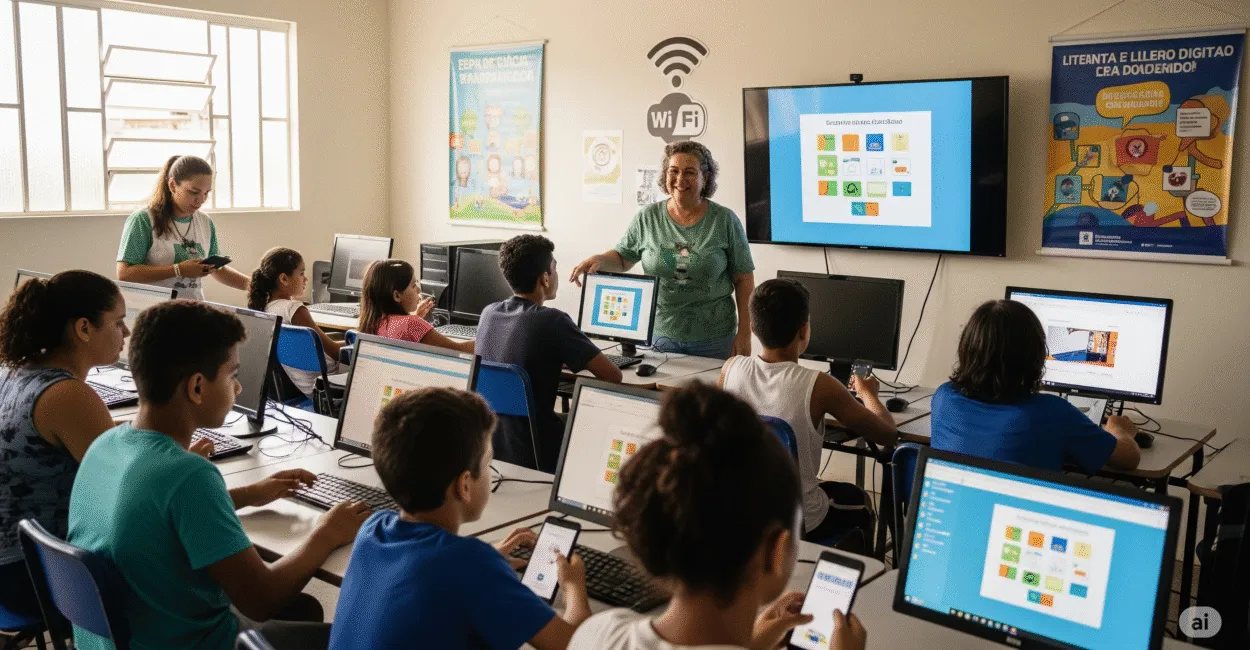
When a community can’t access services, study online, or handle simple tasks on a phone, the problem isn’t “lack of interest”—it’s lack of meaningful access. That’s where digital inclusion comes in: it bridges the gap between people, information, and opportunities that now depend on technology. In practice, digital inclusion isn’t just about distributing devices or installing internet service. It means ensuring reliable connectivity, digital skills, basic security, and the conditions for technology to make a real difference in everyday life. In this article, you’ll learn what digital inclusion means, the most common barriers, what tends to work in real-world projects, and which strategies can help communities with limited access to technology make meaningful progress.

The Essentials
- Digital inclusion combines access, digital literacy, and meaningful use of technology—not simply ownership of a device.
- Projects that overlook connectivity, electricity, maintenance, and training tend to see low participation and little social impact.
- In underserved communities, the greatest benefits often come from being able to independently use public services, education, and remote work.
- Public agencies, schools, telecenters, and local organizations are more effective when they work together rather than in isolation.
- Not every technology program succeeds in its first year; measuring real-world use matters more than counting the number of devices distributed.
Digital Inclusion in Communities With Limited Access to Technology
Technically speaking, digital inclusion is the process of reducing barriers to accessing, using, and adopting information and communication technologies. Put simply, it’s not enough to “have internet.” People need to be able to use it to study, work, schedule appointments, obtain documents, and participate in public life. This issue is especially pronounced in low-income communities, rural areas, urban neighborhoods with limited resources, and places with inadequate infrastructure. The Brazilian Internet Steering Committee has monitored this digital divide for years, and its data show that access and quality of use still vary widely across regions and social groups. The difference between sharing a smartphone and having a reliable internet connection at home changes everything.
What digital inclusion really helps solve
It cuts down on time spent traveling, expands access to reliable information, and creates opportunities for income, education, and civic participation. In many places, the first benefit isn’t “taking online courses”—it’s being able to handle a whole list of bureaucratic tasks without leaving the neighborhood.
Digital inclusion isn’t about handing out technology; it’s about making sure technology leads to greater independence, access to services, and meaningful participation in society.
Why Lack of Access Still Excludes So Many People
The most common mistake is assuming that the only barrier is a lack of internet service. In practice, the problem usually comes down to a combination of four factors: the cost of a data plan, signal quality, lack of a suitable device, and limited skills for using digital platforms safely.
The four most common barriers
- Unreliable connectivity: The signal drops, pages load slowly, and using the internet becomes impractical.
- Shared devices: When several people depend on the same device, access becomes a source of conflict.
- Low digital literacy: Many people can open apps but don’t know how to spot scams, fill out forms, or save documents.
- Mistrust and fear: Fraud, data breaches, and scams are part of the experience for people entering the digital world without support.
I’ve seen communities with internet access where most online activity was limited to social media because no one knew how to access the health portal, the school’s job board, or their gov.br account. This shows that digital exclusion doesn’t disappear when the signal arrives. It simply takes another form.
The Brazilian Institute of Geography and Statistics (IBGE) and the Cetic.br ICT survey help paint a more precise picture by analyzing income, education, age, and location. These factors are crucial to avoid confusing “being connected” with “being included.”
What Works in Real-World Projects in Brazil

Successful projects almost always combine three elements: infrastructure, training, and ongoing support. When one is missing, results quickly weaken. Distributing devices without support, for example, often leads to low participation once the initial excitement wears off.
1. Connectivity with a purpose
Setting up Wi-Fi in a community center helps, but the real benefit comes when that connection supports services people actually use: school enrollment, medical appointments, social benefits, job listings, and training.
2. Short, practical training
Long, abstract workshops tend to fall short. What works better is teaching concrete tasks: creating an email account, accessing the gov.br app, spotting suspicious links, attaching documents, and using WhatsApp more safely.
3. Local support
Community health workers, teachers, neighborhood leaders, and public libraries make a difference because they speak the community’s language. Their support helps people stop feeling that “technology is for experts.”
What sets a digital inclusion project apart from a connectivity project is guided use, training, and continued support after the initial rollout.
Education, Work, and Public Services Depend on This Step
Today, education, employment, and access to government services are heavily digital. Learning platforms, job applications, banking, health systems, and government portals all require basic digital navigation skills. People who lack them lose time, opportunities, and often money.
Read also: Technology in the Classroom: A Practical Guide for Teachers
In education
Students with limited access tend to fall behind not only because they lack learning materials, but also because they can’t submit assignments, attend live classes, or access supplementary resources. The problem gets worse when their only access is through a limited mobile data plan.
At work
Resumes, remote interviews, job boards, and communication with recruiters are already part of the process. In many areas, learning to use email and online forms can be just as valuable as learning a basic workplace tool.
In the public sector
Registrations, appointments, and service requests have moved to digital channels. This improves efficiency but creates a blind spot for people without support. That’s why in-person service still needs to coexist with digital service in many situations.
There is, however, an important limit: digitizing everything without considering people’s skill levels can deepen exclusion instead of reducing it. Not every service should be “online only”; in underserved communities, the transition needs to be gradual and supported.
How to Build a Digital Inclusion Initiative That Lasts
If the goal is to move beyond talk and get results, the strategy needs to be easy to measure. It’s not enough to talk about social transformation; you need to build habits around technology use and track what actually changes in the community.
| Stage | What to do | Practical metric |
|---|---|---|
| Assessment | Map access, income, age, education, and the main barriers | Percentage of households without a connection or with unreliable access |
| Infrastructure | Provide network access, electricity, and devices at key locations | Average service uptime |
| Training | Teach practical everyday tasks | Number of people who complete basic tasks independently |
| Follow-up | Maintain local support and conduct regular reviews | Usage rates after 60 and 90 days |
This kind of framework is common in public programs and university initiatives. A good place to start is by looking at examples on government portals and reports from organizations such as UNESCO, which treat connectivity and digital skills as parts of the same policy.
A practical example from an urban neighborhood
At a community center in an underserved neighborhood, the first request wasn’t for an “advanced course.” People wanted to learn how to download a utility bill, access social benefits, and complete school enrollment. After three weeks of short workshops, fewer people needed help because the group had learned to repeat the tasks on its own.
The important detail: what kept the project going wasn’t the novelty, but repeated practice with guidance. Without that, most people would have given up at the first obstacle.
Metrics to Tell Whether Progress Has Been Made
Measuring success in digital inclusion takes more than counting computers or SIM cards distributed. What matters is meaningful use. If no one can access services, study, or earn income as a result, the project has become a showpiece.
Metrics worth tracking
- Number of people who can complete digital tasks without help.
- How often people use the access point or the devices they received.
- Fewer trips to handle simple in-person services.
- Participation in online classes, courses, and job application processes.
- Ability to recognize scams and protect personal information.
These metrics help distinguish real impact from good intentions. This is where many programs fall short: they celebrate the rollout but don’t track whether people become more independent afterward.
The Role of Communities, Schools, and Governments
Long-lasting initiatives emerge when each stakeholder does its part. Government provides scale and infrastructure; schools build skills; the community encourages participation; and local organizations offer proximity and trust. This approach is more effective than relying on a single solution. Telecenters, libraries, CRAS centers (Brazilian social assistance centers), schools, and neighborhood associations can serve as entry points for people who have never had consistent access to digital environments. The key is to connect services, not just install technology.
When digital inclusion depends only on devices, it falls apart when maintenance is needed; when it relies on connectivity, training, and local support, it becomes a real public policy.
What to Do Now
If the goal is to turn access into opportunity, the next step is to assess the community using clear criteria: who is being left out, why, and at what point exclusion occurs. From there, it makes sense to test small initiatives, measure actual use, and adjust what isn’t working. The goal isn’t to digitize everything at once; it’s to help more people use technology independently and safely.
To make steady progress, start with a simple assessment of access, skills, and usage. Then organize a pilot program with practical training and local follow-up. That’s how digital inclusion stops being a promise and starts delivering concrete results.
Frequently Asked Questions
What does digital inclusion mean in practice?
It means ensuring people have access, skills, and the conditions to use technology in useful ways in their daily lives. This includes internet access, a device, guidance, and the ability to browse safely. Without these elements, access is incomplete.
Is a smartphone with internet access enough?
No. A smartphone helps, but many tasks require a reliable connection, a larger screen, storage space, and the knowledge to use services safely. Limited data plans and weak signals also restrict what people can do.
Which groups are most affected by digital exclusion?
Low-income families, older adults, rural residents, people in underserved urban neighborhoods, and those with limited formal education tend to face more barriers. In many cases, the problem isn’t just a lack of internet, but a lack of support to learn and keep using it.
What’s the difference between digital access and digital inclusion?
Digital access means having some way to connect or a device to use. Digital inclusion goes further: it means knowing how to use technology, being able to handle real-world tasks, and participating in social and economic life independently. One doesn’t guarantee the other.
How can you tell whether a project worked?
See whether people have started using services, studying, applying for jobs, and handling tasks without relying on constant help. If usage drops off soon after the rollout, the project reached people but didn’t help them become independent. Continued use is the strongest indicator.
%%AGPTRH7%%
Artigos Relacionados
 Digital Inclusion: Empowering Communities With Limited Access to Technology
 Precision Agriculture: Advanced Technology and Sustainability in Farming
 Autonomous Cars: Revolutionary Technology and the Future of Mobility
 Technology in the Workplace: A Complete, Practical Guide
 Digital Education: Transforming Teaching with New Technologies
 Quantum Computing: Understanding the Present and Future of Technology
