

Advances in internet access have been among the greatest technological revolutions of the 21st century. The keyword Starlink has emerged as a leading force in this transformation, offering an innovative way to connect remote and urban areas with high speeds and low latency. But what really sets Starlink Global 2.0 apart, and why is it considered a revolution in high-speed internet?
In this article, we’ll take an in-depth look at Starlink’s technical features, practical applications, and global impact. With a clear, detailed approach, you’ll learn how this technology is reshaping connectivity around the world.

Understanding Starlink and Its Advanced Technology
What Is Starlink and How Does It Work?
Starlink is a system of low Earth orbit satellites designed to provide high-speed internet anywhere on the planet. Using hundreds of interconnected satellites, the system creates a network that minimizes latency and maximizes coverage. This innovative architecture gives rural and hard-to-reach areas access to a fast, reliable connection.
Starlink satellites orbit about 550 km (340 miles) above Earth, much closer than traditional satellites. This significantly reduces data transmission delays. The technology also uses high-performance antennas that automatically adjust to maintain a stable signal.
By combining hardware and software, Starlink delivers speeds that rival traditional fiber-optic connections, even in places with limited ground infrastructure.
Technical Innovations in Starlink Global 2.0
The second generation of Starlink, known as Global 2.0, incorporates technological advances that increase the system’s capacity and efficiency. Key innovations include more powerful satellites, upgraded transmission antennas, and integration with artificial intelligence technologies to optimize data traffic.
This new generation also uses optical links between satellites, enabling direct communication in space without relying exclusively on ground stations. This reduces latency and improves network resilience, especially in regions with poor ground infrastructure.
These technical improvements make Global 2.0 a more robust platform for growing broadband demands, high-definition streaming, online gaming, and demanding business applications.
Benefits of Low Latency for End Users
Latency, or the delay in data transmission, is a critical factor in the user experience for internet services. Thanks to its low orbit and intersatellite links, Starlink offers average latency of 20 to 40 milliseconds, comparable to fiber-optic connections.
This low latency is essential for applications such as video conferencing, telemedicine, distance learning, and online gaming, where delays can disrupt communication and interaction.
In addition, signal stability and high speeds provide a consistent experience, even in adverse weather, giving end users reliable access to high-speed internet.
- Global coverage, including remote areas
- Competitive download and upload speeds
- Low latency for time-sensitive applications
- Easy installation and portability
- Lower costs for ground infrastructure
Economic and Social Impacts of Starlink Global 2.0
Digital Inclusion and Reducing Inequality
One of the world’s biggest challenges is ensuring internet access for people in rural and isolated areas. Starlink Global 2.0 has the potential to significantly reduce this inequality by providing coverage in places traditional providers can’t reach.
This digital inclusion expands access to education, healthcare, e-commerce, and government services, supporting socioeconomic development and a better quality of life.
Governments and international organizations already recognize Starlink’s role in combating the digital divide and promoting sustainable growth.
Opportunities for Businesses and Industries
Businesses in sectors such as agriculture, oil and gas, mining, and tourism benefit from the improved connectivity Starlink provides. Real-time monitoring, automation, and efficient communication open new opportunities for innovation and productivity.
Small and midsize businesses can also expand their digital presence and compete in global markets, overcoming geographic limitations.
Access to high-speed internet also accelerates the adoption of emerging technologies such as the Internet of Things (IoT) and artificial intelligence, transforming local and global economies.
Global Investment and Strategic Partnerships
Expanding Starlink Global 2.0 involves partnerships with governments, telecommunications carriers, and private organizations. These agreements are essential to speeding up network deployment and establishing regulations that support innovation.
Ongoing investments in research and development help the system keep pace with future demand and remain competitive and sustainable.
Starlink’s business model, based on subscriptions and specialized services, also creates opportunities for diversification and economic growth.
| Feature | Starlink Global 1.0 | Starlink Global 2.0 |
|---|---|---|
| Number of satellites | ~1,500 | ~7,500 planned |
| Average speed (Mbps) | 50-150 | 150-500+ |
| Average latency (ms) | 30-60 | 20-40 |
| Optical links between satellites | Limited | Expanded |
| Coverage capacity | Initial global coverage | Expanded, more stable global coverage |
Practical Uses of Starlink in Everyday Life

Internet for Rural Areas and Isolated Communities
Starlink gives remote communities access to high-quality internet, overcoming ground infrastructure challenges. This makes online education, telemedicine, and previously inaccessible economic opportunities possible.
Rural schools can offer live classes and digital resources, while healthcare professionals can provide remote consultations more effectively, improving quality of life in the community.
Residents in these areas can also access essential digital services, such as banking and e-commerce, supporting social inclusion.
Support During Emergencies and Natural Disasters
During crises such as natural disasters, ground networks are often disrupted. Starlink can be set up quickly to restore communications and help rescue teams coordinate emergency response efforts.
This makes the system a valuable tool for governments and humanitarian organizations, ensuring vital information reaches affected areas.
The portability of Starlink terminals makes it easy to deploy them in temporary locations or while on the move, improving the efficiency of operations.
Connectivity for Vehicles and Transportation
Starlink Global 2.0 is also expanding its reach to provide internet on vehicles, trains, ships, and aircraft. This transforms the passenger experience and enables smarter, more connected logistics operations.
Transportation companies can monitor routes, weather conditions, and performance in real time to improve safety and efficiency.
For end users, continuous access to high-speed internet while traveling is a major advantage for communication and entertainment.
- Quick, portable installation
- High speeds on the move
- Support for multiple devices at once
- Compatibility with smart vehicle technologies
Challenges and Considerations for Starlink Global 2.0
Regulatory and Legal Issues
Starlink’s global operations face a range of regulatory challenges because each country has its own rules for satellite use and spectrum allocation. Harmonizing these rules is essential for efficient network expansion.
Privacy, data security, and responsible use of the technology also require the attention of authorities and users.
Businesses and governments need to work together to establish clear guidelines that serve the public interest without compromising security.
Environmental Impact and Sustainability
Launching thousands of satellites raises concerns about space debris and environmental impact. Starlink Global 2.0 is investing in technologies to minimize orbital debris and ensure satellites can be safely recycled at the end of their service life.
Efficient energy use and sustainable materials are also part of the development of new satellites and ground stations.
These practices are essential to ensuring that the internet revolution does not come at the expense of the global environment.
Competition in the Satellite Internet Market
The satellite internet market is competitive, with global players investing in similar technologies. Starlink Global 2.0 stands out for its coverage, speed, and innovation, but it must continue improving to maintain its lead.
Competitors such as Amazon Kuiper and OneWeb are also advancing quickly, pushing the industry to deliver better services.
For consumers, this competition means more high-quality options at affordable prices.
The Future of Starlink and High-Speed Internet
Network Expansion and New Markets
Starlink plans to expand its satellite constellation and extend operations to regions that are still unserved, including maritime and aerial areas. This strategy aims to strengthen its global presence and meet emerging demand.
New markets, including the military, government, and industrial sectors, are being explored with customized solutions and enhanced security.
This expansion reinforces Starlink’s role as an essential platform for the future of connectivity.
Integration with Emerging Technologies
Starlink doesn’t operate in isolation; it works in tandem with other technologies such as artificial intelligence, 5G, and edge computing. This integration enables faster, smarter, and more personalized services.
Applications such as smart homes, connected cities, and autonomous vehicles benefit directly from these technological advances.
The continued development of these synergies promises to radically change how we interact with the digital world.
What Users and Communities Can Expect
End users can expect internet access to become increasingly affordable, reliable, and fast, regardless of location. Remote communities will gain new educational, professional, and social opportunities.
Democratizing internet access will create opportunities for social and economic innovation, especially in developing countries.
This positive impact underscores Starlink’s commitment to connectivity as an essential right in the 21st century.
- Expanded global coverage
- Speeds exceeding 1 Gbps in testing
- Lower operating costs
- Support for mission-critical applications
- Continuous improvements to the user experience
How to Get Starlink: A User’s Guide
Required Equipment and Installation
To use Starlink, you’ll need to purchase a kit that includes a satellite dish, Wi-Fi router, and connection cables. The equipment is designed for easy installation and can be set up by the user with online support.
Antenna placement is essential for getting the best signal. It should generally be installed outdoors with a clear view of the sky.
Activation is simple. Once the initial setup is complete, the connection is maintained and optimized automatically.
Subscription Plans and Costs
Starlink offers monthly subscription plans that vary by region and service type. Although upfront costs may be higher than those of traditional providers, the speed and coverage can make the investment worthwhile, especially in areas with few alternatives.
Residential and business plans are available, with differences in speed, traffic priority, and technical support.
It’s a good idea to weigh the cost against the connectivity you need and the quality you want.
Service Support and Maintenance
Starlink customer support is available through digital channels, and equipment firmware is updated frequently to provide ongoing improvements.
Preventive maintenance is minimal, but it’s important to keep the antenna clean and properly positioned.
If a problem occurs, support is responsive, reflecting the company’s commitment to customer satisfaction.
Security and Privacy with Starlink Global 2.0
Protecting User Data
Starlink uses advanced encryption protocols to protect the privacy and integrity of data transmitted over its network. This includes end-to-end encryption and robust device authentication.
These measures are essential for protecting sensitive information, including personal and business data, from unauthorized access.
The company also follows international information security standards and local regulations.
Measures Against Cyberattacks
In response to the growing threat of cyberattacks, Starlink uses detection and mitigation systems to protect its infrastructure and users. Firewalls, continuous monitoring, and automatic updates are all part of its defense strategy.
These measures reduce the risk of outages and help ensure reliable service, even in the face of malicious attacks.
Users are also encouraged to follow good security practices on their devices.
Compliance with Regulations
Starlink complies with international and local regulations covering data, telecommunications, and privacy. The company is transparent about its data collection and usage policies and respects users’ rights.
These practices build trust among consumers and in the market, aligning the service with ethical and legal standards.
Partnerships with regulatory agencies help ensure that the service develops within current legal frameworks.
Comparing Starlink with Other Internet Technologies
Starlink vs. Fiber-Optic Internet
Fiber-optic internet offers high speeds and low latency, but deployment is limited to urban areas and regions with well-developed infrastructure. Starlink stands out for covering remote areas where fiber isn’t available or is prohibitively expensive to install.
Fiber can deliver higher maximum speeds than Starlink, but satellite service offers flexibility and mobility that expand access in new ways.
In many regions, Starlink is the only viable option for high-speed internet.
Starlink and 5G Networks
5G promises high speeds and low latency, but it depends on extensive ground infrastructure and nearby antennas. Starlink complements this technology with global coverage, especially in places where 5G is not yet available.
The two technologies can coexist and integrate to provide continuous, efficient connectivity.
The future of connectivity will likely combine satellites, 5G, and other networks to meet every need.
Other Satellite Internet Providers
Companies such as OneWeb and Amazon Kuiper also offer satellite internet services, each with its own technical features and target markets.
Starlink stands out for its larger operational satellite constellation and established user experience. However, competition drives improvements and innovation across the industry.
Consumers benefit from having more choices and services that evolve quickly.
- Starlink: global coverage and high speeds
- OneWeb: focus on specific regions and partnerships
- Amazon Kuiper: future expansion using advanced technology
- Others: niche solutions for specific market segments
How Starlink Is Redefining Digital Education
Remote Access to Educational Content
With Starlink connectivity, students in remote areas can access online classes, digital libraries, and interactive platforms, breaking down geographic barriers.
This expands educational opportunities and promotes equal access to knowledge.
Institutions can expand their programs and support students with modern technology.
Support for Teachers and Institutions
Educators have tools to teach live classes, share materials, and assess performance with greater flexibility and interactivity.
Starlink helps create more stable, reliable digital environments that are essential for hybrid and distance learning.
It also makes ongoing professional development easier for educators.
Projects and Initiatives Supported by Starlink
Many initiatives around the world use Starlink to bring internet access to underserved schools and communities, promoting inclusion and development.
Partnerships with educational organizations and NGOs extend these projects’ reach and effectiveness.
These efforts demonstrate the technology’s commitment to a fairer, more connected future for education.
Starlink Global 2.0 and the Transformation of Healthcare
Telemedicine with a Reliable Connection
Access to high-speed internet enables high-quality remote medical appointments, making diagnoses and treatment easier in places without adequate infrastructure.
Starlink provides the stability needed for video calls, sharing medical test results, and ongoing patient monitoring.
This technology reduces travel and costs for patients and healthcare professionals.
Applications in Remote and Emergency Settings
Hospitals and clinics in isolated regions can integrate digital systems, receive remote support, and access up-to-date information, improving the quality of care.
During disasters, Starlink enables fast, effective communication to coordinate medical teams.
This saves lives and speeds up emergency response.
Innovations in Research and Monitoring
Starlink enables real-time collection and transmission of health data, supporting epidemiological research and environmental monitoring.
This information helps inform public policy and preventive measures based on accurate data.
Technological progress contributes to smarter, more resilient healthcare systems.
- Reliable connectivity for telemedicine
- Support in hard-to-reach areas
- Remote monitoring and emergency response
- Support for research and real-time data collection
Conclusion
Starlink Global 2.0 represents a true revolution in how the world accesses high-speed internet. With advanced technology, global coverage, and applications ranging from education to healthcare, it is making quality connectivity more accessible.
Regulatory and environmental challenges remain, but the social and economic benefits are clear and transformative. If you want to stay ahead in the digital age or bring reliable connectivity to places that were once out of reach, Starlink is a solution worth considering. Share your thoughts in the comments and pass this article along to keep the conversation going!
Frequently Asked Questions
What sets Starlink Global 2.0 apart from the previous version?
Version 2.0 features more advanced satellites, optical links between satellites, higher speeds, and lower latency, expanding coverage and improving service reliability.
Which regions of the world can access Starlink today?
Starlink is available in many countries, covering urban and remote areas, with plans to expand to maritime and aerial regions soon.
How is Starlink equipment installed?
Installation is simple. The kit includes an antenna, router, and cables. Users place the antenna in an open area and follow the steps in the app to activate the service.
Is Starlink secure for transmitting personal data?
Yes. Starlink uses advanced encryption protocols and follows international standards to protect users’ data and privacy.
What’s the difference between Starlink and fiber-optic internet?
Although fiber optics can offer high speeds, coverage is limited. Because Starlink operates via satellite, it can reach areas fiber cannot, providing fast, stable internet worldwide.
Artigos Relacionados
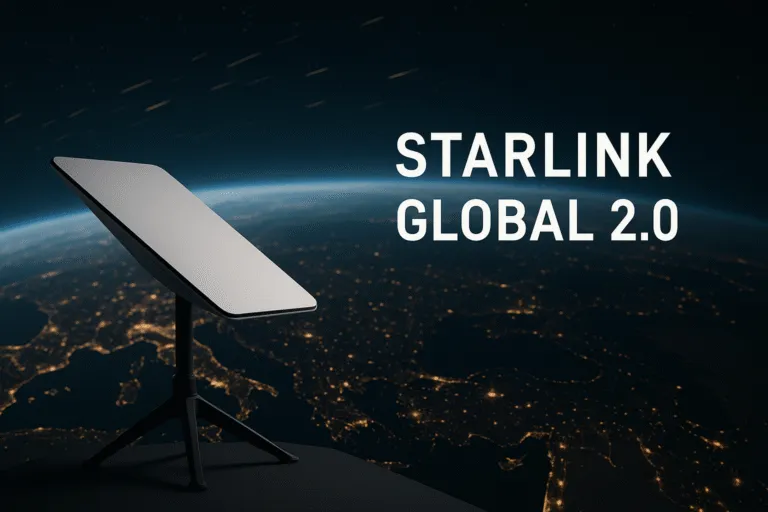 Starlink Global 2.0: Transforming High-Speed Internet Worldwide
 AI in Agriculture: A Revolution Transforming Global Food Security
 Biotechnology: The Revolution Transforming the Food Industry
 Digital Education: Transforming Teaching with New Technologies
 Blockchain: Transforming the Future Beyond Cryptocurrency
