
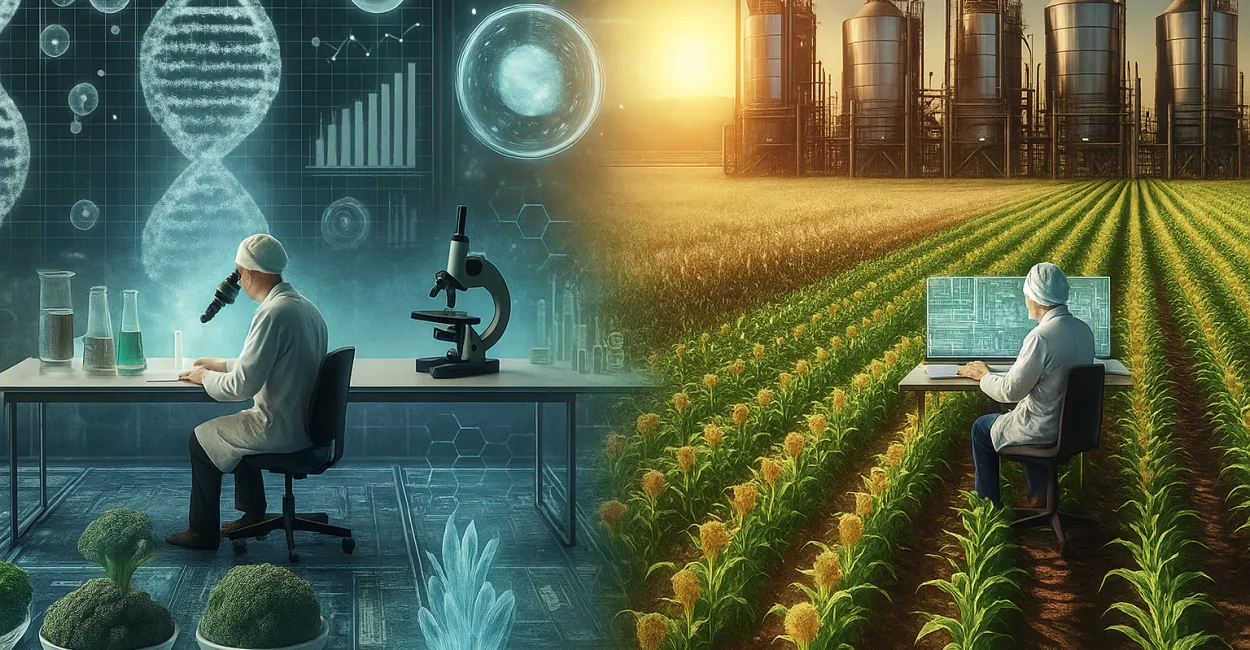
Genetic engineering is no longer just a promise made in the lab. It already affects what ends up on our plates, how much it costs to produce, and even how long food stays fresh. Biotechnology refers to the use of microorganisms, enzymes, and biological modification techniques to create products, improve processes, and reduce waste throughout the food supply chain.
This matters because the food industry needs to solve three problems at once: produce more, waste less, and ensure food safety. In this article, you’ll learn where this science is already being applied, what benefits it offers, where its limits lie, and why the debate needs to move beyond opinion and focus on evidence.

The Essentials
- Biotechnology uses biological systems to develop or improve products and processes. This includes fermentation, industrial enzymes, and genetic improvement.
- In the food industry, it reduces waste, improves texture, boosts nutritional value, and helps control contamination.
- Not all biotechnological solutions are the same: their benefits depend on the food, the scale of production, and applicable regulations.
- The greatest impact often comes when science, traceability, and industrial processing work together.
- The serious question isn’t “Should we use it or not?” but where it delivers measurable benefits without shifting risks to consumers.
Biotechnology in the Food Industry: What Changes in Practice
Technically speaking, biotechnology is the use of living organisms, cells, enzymes, or parts of these systems to produce goods and services. In the food industry, this ranges from traditional processes like fermentation to modern molecular breeding techniques and the production of functional ingredients.
In practice, it’s easy to understand what happens: producers gain better control over variables that once depended largely on the weather, timing, and trial and error. This improves yields, predictability, and safety.
Anyone who works in dairy, baking, or fermented beverages knows that small biological changes can affect a finished product’s flavor, consistency, and shelf life.
What separates a useful application from a passing tech fad is its ability to improve a process without creating unnecessary costs, risks, or complexity.
From Fermentation to Genetic Engineering
Fermentation is the oldest application in the field, and it remains extremely relevant. Yeasts, lactic acid bacteria, and filamentous fungi are used to make bread, yogurt, cheese, vinegar, beer, and other foods on a large scale.
Genetic engineering works at a different level. Rather than relying solely on conventional breeding, it allows scientists to insert, remove, or silence genes associated with pest resistance, stress tolerance, and nutritional composition. A classic example is Bt corn, developed to reduce losses caused by insects.
Enzymes, Starter Cultures, and Functional Ingredients
Industrial enzymes speed up reactions and help standardize texture, yield, and flavor. Chymosin, used to coagulate milk, is a familiar example; amylases and proteases are common in baking and meat processing.
Starter cultures, in turn, help ensure fermentation follows the expected course. This reduces failures, improves consistency, and prevents competing microorganisms from taking hold. It can make the difference between a stable batch and a lost one.
For an institutional overview of applications and safety, see the FAO’s biotechnology page, which brings together technical resources on agricultural and food uses.
Why the Food Industry Adopted These Techniques
These techniques weren’t adopted just because they were trendy. They were adopted because the numbers work. In long supply chains with tight margins, any improvement in yield, waste reduction, or product stability can have a real impact on the bottom line.
Scale is another factor. As the population grows and production needs to become more predictable, biological technologies are increasingly valuable tools for staying competitive. That’s why major companies and cooperatives invest in seed improvement, precision fermentation, and ingredients made through biotechnological processes.
Less Waste, More Efficiency
One of the most valuable applications is reducing post-harvest and industrial losses. Enzymes can improve the use of raw materials, while selected microorganisms make fermentation processes more consistent.
In the fruit industry, for example, pectinolytic enzymes help clarify juices. In baking, amylases contribute to volume and softness. In dairy products, specific cultures control acidity and flavor profiles.
Food Safety and Traceability
Another benefit is the ability to better monitor contamination and adulteration. Molecular biology methods, such as PCR and sequencing, are already used for quality control and traceability. They don’t eliminate risk, but they shorten response times when something falls outside established standards.
Biotechnology doesn’t replace good manufacturing practices; it makes them more effective when the underlying sanitation standards are already in place.
Read also: Digital Transformation in the Automotive Industry: The Future of Mobility
This matters because technology without solid processes just adds costs. I’ve seen companies invest in advanced solutions but fall short on hygiene, calibration, and training. The results were disappointing: the problem wasn’t the tool, but the environment it was introduced into.
Where It Shows Up in the Foods You Already Eat

Most people picture futuristic labs when they hear the term, but this science is part of everyday life. It’s in bread that rises consistently, yogurt with a stable texture, and cheese made with controlled coagulation.
Everyday Examples
- Yogurt and kefir: Fermentation by lactic acid bacteria, which convert lactose into lactic acid.
- Bread: Yeasts produce carbon dioxide, causing the dough to rise.
- Cheese: Specific enzymes and cultures are used for coagulation and aging.
- Clarified juice: Enzymes reduce cloudiness and improve yield.
- Functional products: Foods containing probiotics, prebiotics, or bioactive compounds adjusted through biological processes.
A Real-World Example
At a mid-sized dairy plant, an entire batch of yogurt developed excessive syneresis—the separation of whey that affects its appearance. The problem wasn’t the recipe itself, but the choice of culture and the incubation temperature.
After changing the strain and fine-tuning the process, stability improved within a few production cycles. This kind of case shows that biotechnology is less about spectacle and more about disciplined control.
For an accessible overview of genetically modified organisms, including regulation and safety, the WHO offers questions and answers about genetically modified foods.
Real Benefits and Limits That Can’t Be Ignored
Supporters often point to productivity and innovation, and that makes sense. But a serious analysis must also account for technical limitations, implementation costs, and public acceptance. Not every solution is right for every production chain.
Key Benefits
- Higher productivity with less raw material waste.
- More consistent quality in high-volume processes.
- The ability to enrich foods with vitamins, proteins, or functional compounds.
- Better microbial control at sensitive stages.
- Reduced reliance on harsh inputs in some industrial processes.
Where the Approach Falls Short
This approach works well when a company has a laboratory, quality control, and an organized supply chain. It falls short when a company tries to use advanced technology to make up for poor management. It also falls short when regulations are ignored or consumers aren’t informed transparently.
Experts disagree about the ideal pace for adopting certain techniques, particularly genetically modified organisms and gene editing. However, they agree that decisions should be based on scientific evidence, not fear or promises of a technological cure-all.
Application
Main benefit
Key consideration
Fermentation
Flavor, preservation, and consistency
Sensitive to temperature and contamination
Industrial enzymes
Yield and texture
Depends on dosage and formulation
GMOs
Resistance and agricultural productivity
Requires regulation and traceability
Probiotics
Functional value and product differentiation
Benefits depend on the strain and dose
Regulation, Ethics, and Consumer Trust
Without clear regulations, technology loses legitimacy. In Brazil, genetically modified organisms are assessed by CTNBio, Brazil’s National Technical Commission on Biosafety, while labeling and oversight involve other regulatory bodies. This framework is important because it distinguishes research, approval, and communication with consumers.
Transparency is part of the product. When the supply chain explains the source, process, and purpose, distrust declines. When information is withheld, the discussion shifts from science to suspicion.
The official CTNBio website is a useful resource for understanding biosafety assessments in Brazil. Embrapa, Brazil’s Agricultural Research Corporation, also publishes useful materials on agricultural applications, breeding, and biological innovation.
The Ethical Debate Continues
Ethical questions aren’t an afterthought. They include access to technology, patent concentration, effects on small farmers, and consumers’ ability to make informed choices. The point isn’t to demonize innovation, but to decide who benefits from it and under what rules.
Food technology earns trust only when it delivers measurable benefits, undergoes regulatory review, and is communicated transparently.
Where Food Biotechnology Is Headed
The strongest trend today is the combination of biology, data, and automation. Genetic sequencing, genome editing, precision fermentation, and computational modeling are shortening the path from research to industrial application.
Trends to Watch
- Gene editing: Tools such as CRISPR enable more precise changes in plants and microorganisms.
- Precision fermentation: Programmed microorganisms produce ingredients such as proteins and flavor compounds.
- Functional foods: Formulations focused on health, satiety, and nutritional value.
- Advanced traceability: Integration across laboratories, factories, and logistics chains.
Going forward, the key will be balancing efficiency with public trust. Companies that do this well are likely to gain market share; those that treat the field as an empty promise will quickly lose credibility. Biotechnology isn’t a magic bullet, but it’s already one of the most practical tools for producing food with greater control and less waste.
What to Do Now If You Want to Understand This Market
If you want to evaluate this field seriously, start with the application, not the hype. Compare processes, read labels, look at regulations, and find out what specific problem the technology solves. This applies both to people working in the industry and to anyone who wants to make more informed choices as a consumer.
The best next step is to examine a real-world case—a food, an ingredient, or a process—and check three things: measurable benefits, proven safety, and regulatory compliance. Without these three pillars, an innovation may seem cutting-edge, but it won’t hold up in practice.
Frequently Asked Questions
Is Biotechnology the Same as Genetically Modified Foods?
No. Genetically modified organisms are one specific application of biotechnology, in which an organism receives genetic material from another species or genetic line. Biotechnology also includes fermentation, the use of enzymes and microbial cultures, gene editing, and other techniques.
Are Biotech Foods Safe?
They can be, provided they undergo regulatory review and have adequate safety evidence. Safety depends on the product, the process, and oversight. There’s no single answer that applies to every case.
Why Does the Industry Use Enzymes Instead of Common Additives?
Enzymes act more specifically in chemical reactions and can improve yield or texture with fewer unintended effects. In many processes, they allow for greater precision and less waste.
Are Probiotics Directly Related to Biotechnology?
Yes. Probiotics are live microorganisms that provide health benefits when consumed in adequate amounts. Their development relies on biotechnological selection, cultivation, and control. Their effectiveness, however, varies by strain and formulation.
What Is the Main Limitation of Food Biotechnology?
The main limitation is that technology can’t make up for structural process failures. Without hygiene, traceability, quality control, and regulation, the benefits of biotechnology are reduced or may disappear entirely.
Does This Field Affect Food Prices?
It can, in either direction. In some cases, it improves yields and reduces waste, helping lower the final cost. In others, especially when the technology is complex, the initial investment can raise prices until operations reach scale.
Artigos Relacionados
 AI in Agriculture: A Revolution Transforming Global Food Security
 Digital Education: Transforming Teaching with New Technologies
 Blockchain: Transforming the Future Beyond Cryptocurrency
 In-Demand Careers: How Artificial Intelligence Is Transforming the Job Market
 Tomorrow’s Professions: How AI Is Transforming Education and Work
 Gene Therapies: A Revolution in Treating Inherited Diseases
