
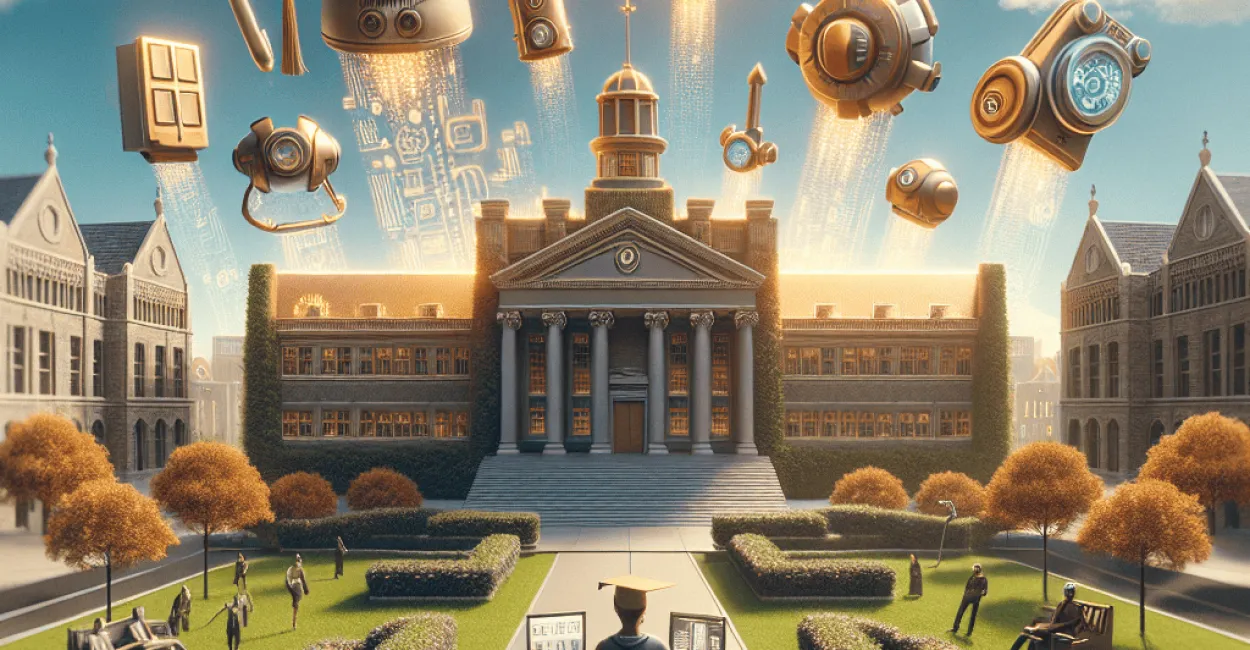
Have you ever wondered how artificial intelligence (AI) will affect tomorrow’s professions? The technological revolution is not only redefining professional roles but also transforming how we learn and prepare for the future.
This article explores AI’s role in education and the job market, detailing the changes shaping emerging careers and the essential skills needed to thrive in this new landscape.

How AI Is Transforming Tomorrow’s Professions
Automation and the Reshaping of Professional Roles
Artificial intelligence is automating repetitive tasks, freeing professionals to focus on more strategic and creative work. This is redefining roles in industries such as manufacturing, healthcare, and finance, requiring ongoing adaptation.
AI is also creating new roles that didn’t exist before, such as AI ethics specialists and algorithm trainers, showing how technology can create unprecedented opportunities.
Understanding this transformation is essential to finding your place in tomorrow’s professions.
Essential Skills for Future Careers
As AI advances, skills such as critical thinking, complex problem-solving, and emotional intelligence are becoming more important. Professionals who combine technical and human skills will have a competitive advantage.
Knowledge of programming, data analysis, and AI is becoming an important asset, but the ability to adapt and keep learning is even more valuable.
Investing in multidisciplinary development is crucial for anyone seeking success in tomorrow’s professions.
How AI Is Expanding Career Options
Artificial intelligence is broadening the range of career possibilities, bringing together fields such as biotechnology, data engineering, and digital experience design. This diversity calls for flexibility and an interdisciplinary perspective.
Hybrid professions are emerging from the combination of technical knowledge with creativity, sustainability, and innovation, reflecting the complexity of the modern world.
As a result, tomorrow’s professions will be defined by diversity and constant change.
- Automation of repetitive processes
- Creation of new specialized roles
- Need for technical and human skills
- Flexibility and continuous learning
- Interdisciplinary careers
Educational Innovations for Tomorrow’s Professions
Personalized Learning with AI
Artificial intelligence makes personalized learning possible by adapting content and teaching methods to each student’s needs. Digital platforms analyze performance and recommend customized learning paths.
This approach makes teaching more effective, motivates students, and better prepares them for the demands of today’s job market.
Education thus becomes more inclusive and effective, aligned with tomorrow’s professions.
Emerging Technologies in Education
Augmented reality, virtual reality, and AI-powered simulations enrich the learning experience, making complex concepts more accessible and practical.
These tools enable immersive training in a range of fields, helping students develop the skills essential for future careers.
Incorporating these technologies is therefore an established trend in innovative education.
Developing Soft Skills with AI
In addition to technical skills, AI helps identify and develop soft skills such as communication, collaboration, and leadership.
Virtual environments and chatbots provide personalized feedback, simulate interactions, and encourage self-awareness, strengthening social and emotional skills.
This focus prepares students to tackle the complex challenges of tomorrow’s professions.
| Aspect | Traditional Education | AI-Powered Education |
|---|---|---|
| Personalization | Same content for everyone | Learning paths tailored to each student |
| Interactivity | Lectures | Simulations and augmented reality |
| Feedback | Waiting for human evaluation | Immediate, personalized feedback |
The Job Market and New Professions of Tomorrow

Demand for Professionals with Digital Skills
The job market increasingly values professionals skilled in digital tools, programming, and data analysis—capabilities essential in industries shaped by AI.
This demand is driving the creation of courses and certifications focused on these skills, reflecting the urgent need for training aligned with technological trends.
Keeping digital skills up to date is essential for anyone looking to stand out.
Reskilling and Continuing Education
With change happening so quickly, professional reskilling has become an ongoing necessity. Continuing education, often supported by AI, makes this process easier.
Online platforms and modular courses offer flexible, effective ways to stay current, helping workers keep pace with changes in the job market.
Lifelong learning is therefore a cornerstone of tomorrow’s professions.
Entrepreneurship and New Ways of Working
Artificial intelligence also encourages entrepreneurship by lowering barriers to innovation and the creation of digital businesses.
Remote work, freelancing, and the sharing economy are gaining ground, requiring self-management skills and adaptability.
Professionals of the future need to be ready to work in dynamic, independent environments.
- Proficiency in digital skills
- Continuing education and reskilling
- Entrepreneurship and innovation
- Remote and flexible work
- Self-management and adaptability
Ethics and Sustainability in Tomorrow’s Professions
Ethical Challenges in the Age of AI
Advances in artificial intelligence raise ethical questions about privacy, algorithmic discrimination, and accountability for automated decisions.
Professionals need to be aware of these issues and develop the skills to work ethically and transparently.
Ethics is therefore becoming an indispensable asset in tomorrow’s professions.
Making Sustainability Part of Future Careers
Commitment to sustainable practices is increasingly valued across all fields, influencing processes and products.
Emerging professions are making sustainable development a core priority, aligning technology with social and environmental responsibility.
Sustainability is therefore a key value for professionals of the future.
AI Regulation and Governance
Governments and institutions are working to create regulations that ensure artificial intelligence is used safely and fairly.
AI governance specialists are essential to ensuring legal and ethical compliance, protecting rights, and promoting responsible innovation.
AI governance will therefore be a growing field among tomorrow’s professions.
The Role of Educational Institutions in Tomorrow’s Professions
Updating Curricula to Meet New Demands
Colleges and universities are revising their curricula to include courses related to AI, data analysis, and social and emotional skills.
These updates aim to prepare professionals for the challenges and opportunities of today’s job market.
Aligning education with the job market is therefore essential for tomorrow’s professions.
Public-Private Partnerships
Collaboration among educational institutions, businesses, and government strengthens professional training through internships, research, and innovation.
These partnerships help students enter the job market and develop practical skills.
Collaboration across sectors is therefore an advantage for future careers.
Investing in Technology Infrastructure
Investing in labs, digital platforms, and technology resources is essential to providing high-quality, up-to-date education.
Digital environments and AI resources expand teaching possibilities and better prepare students.
Technology infrastructure is therefore a cornerstone of training professionals for tomorrow’s professions.
- Ongoing curriculum updates
- Cross-sector collaboration
- Investment in educational technology
- Focus on practical skills
- Connection to the job market
AI’s Impact on Healthcare and Tomorrow’s Professions
Intelligent Diagnosis and Treatment
AI improves medical diagnoses by analyzing large volumes of data, increasing accuracy and speed.
Healthcare professionals need to adapt to these technologies and incorporate intelligent tools into their practices.
This is changing the profile of specialists and creating new opportunities.
Hospital Management and Resource Optimization
AI-powered systems help hospitals operate efficiently, optimize inventory, and monitor patients.
These innovations improve the quality of services and reduce operating costs, creating demand for qualified professionals to operate these solutions.
Healthcare management is therefore a growing field.
New Careers in Medical Technology
The development of smart devices and bioinformatics is creating new professions, such as biomedical engineers specializing in AI.
These professionals design, implement, and maintain advanced technologies.
The healthcare industry is therefore one of the sectors most affected by tomorrow’s professions.
Tomorrow’s Professions in Finance
Automating Financial Processes
Robots and algorithms handle tasks such as credit analysis, auditing, and compliance, increasing efficiency and reducing errors.
Finance professionals need to understand these tools to work strategically.
This is transforming traditional roles and creating new specialized positions.
Data Analysis and Fraud Prevention
AI makes it possible to identify suspicious patterns in real time, helping prevent fraud and improve security.
Data science and cybersecurity specialists are increasingly in demand.
These skills are essential to tomorrow’s professions in finance.
Personalized Consulting with AI
Intelligent tools offer clients personalized financial advice based on their needs and risk profiles.
Human advisors are taking on the role of facilitators, interpreting data and offering integrated solutions.
This combination improves the customer experience and creates new job opportunities.
- Automation and operational efficiency
- Security and advanced analytics
- Data-driven consulting
- New specialized roles
- Human-machine integration
Tomorrow’s Professions in Technology and Development
AI and Algorithm Development
Programmers and data scientists are at the forefront of creating and improving intelligent algorithms.
These professionals develop solutions that affect multiple industries, requiring them to keep their skills up to date.
This is giving rise to careers focused on technological innovation.
Data Engineering and Infrastructure
Data architecture specialists ensure that information is organized and available to AI systems.
These careers are essential to the efficient operation of emerging technologies.
Data engineering is therefore a promising field among tomorrow’s professions.
Information Security and Privacy
As AI use grows, so does concern about data protection and preventing cyberattacks.
Information security specialists are essential to maintaining trust and ensuring legal compliance.
These skills are increasingly valued in the job market.
Tomorrow’s Professions in Education
Personalized Mentoring and Tutoring
Educators act as mentors, using AI to identify students’ individual needs and provide targeted support.
This approach promotes more effective learning and engagement.
The teacher’s role is therefore changing, with greater emphasis on human connection.
Digital Content Development
Professionals create interactive, adaptive educational materials that combine digital technologies with modern teaching methods.
This role requires creativity and in-depth technological knowledge.
The education sector is thus becoming more dynamic and innovative.
Educational Management and Analytics
Educational data analytics specialists help optimize policies and teaching practices based on evidence.
These careers support the ongoing improvement of education quality.
In this way, informed decisions strengthen education.
- Personalized mentoring with AI
- Innovative digital content creation
- Educational data analysis
- Integration of technology and teaching
- Emphasis on the human role
The Future of Tomorrow’s Professions: Prospects and Challenges
Balancing Technology and Humanity
Although AI automates many tasks, the human touch remains essential, especially in creativity, empathy, and ethics.
Professionals who combine technology with social skills will be ready to lead.
This balance is the key to success in tomorrow’s professions.
Access to New Opportunities for Everyone
Ensuring that everyone has access to technology education and career opportunities is a critical challenge.
Public and private initiatives are working to expand access and promote diversity and equity.
Tomorrow’s professions should therefore be inclusive and accessible.
Ongoing Preparation for a Changing World
The rapid pace of innovation means professionals need to keep their skills current and stay open to change.
Developing a lifelong learning mindset will be essential to keeping pace with tomorrow’s professions.
Adaptability is therefore the key to thriving in the future.
Conclusion
Tomorrow’s professions are closely tied to artificial intelligence, which is reshaping both education and the job market. Automation, personalized learning, and the creation of new careers call for a balanced combination of technical and human skills.
To thrive in this landscape, it’s essential to invest in continuous learning, professional ethics, and adaptability. We invite you to share this article and comment with your experiences and expectations about the professions of the future.
Frequently Asked Questions
What are tomorrow’s professions?
They are emerging careers influenced by technological advances, especially artificial intelligence, that require new skills and knowledge.
How is artificial intelligence affecting education?
AI personalizes instruction, provides immediate feedback, and incorporates immersive technologies, making learning more effective and tailored to students.
What skills are essential for tomorrow’s professions?
Technical skills such as programming and data analysis, combined with soft skills such as critical thinking and emotional intelligence.
How are educational institutions adapting?
They are updating curricula, investing in technology, and building partnerships with the private sector to align education with the job market.
Why is ethics important in future professions?
Ethics ensures that AI is used responsibly, protecting rights and promoting fairness. It is essential for building trust in new technologies.
Official sources for further information: Brazilian Government Portal, Brazil’s Ministry of Education (MEC).
Artigos Relacionados
 AI Advances: Transforming 21st-Century Education
 Rural Education: Transforming Lives and Driving Development in Rural Communities
 Educational Games: How Games Are Transforming Modern Education
 Digital Education: Transforming Teaching with New Technologies
 Education and New Technologies: Transforming the Future of Teaching
 ChatGPT-4: Transforming the Future of Education
