
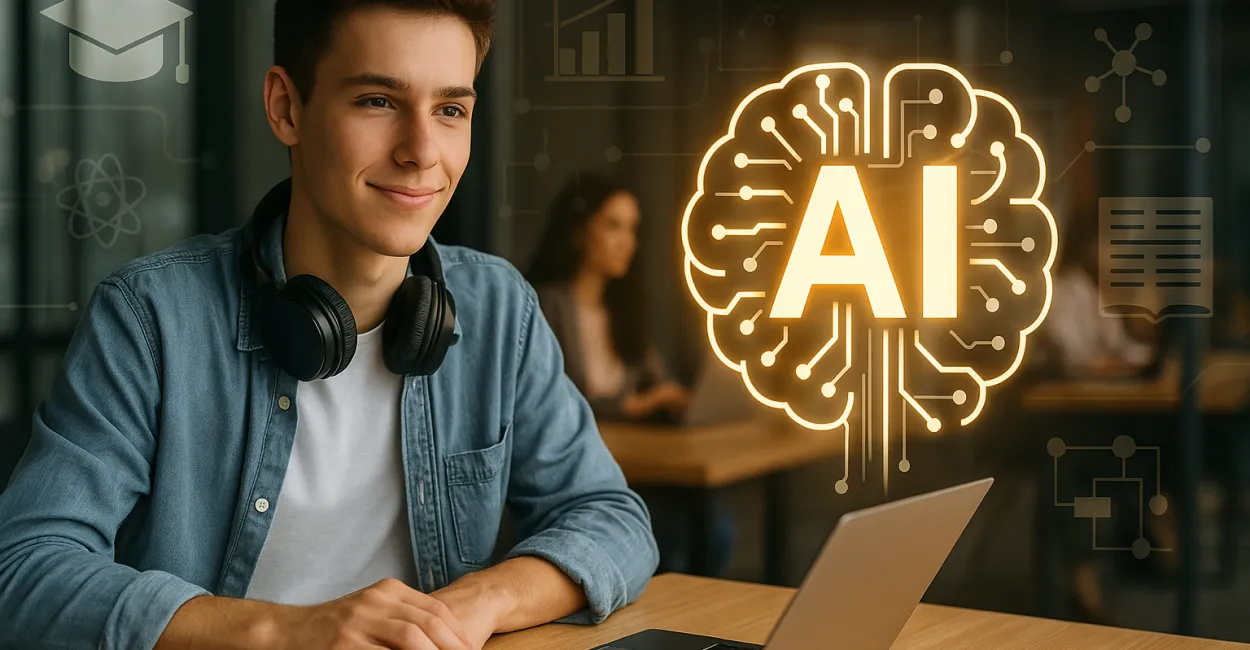
We live in an era of profound technological change, with artificial intelligence (AI) revolutionizing the job market. The colleges of the future face the challenge of preparing students for careers that are constantly evolving in response to these emerging technologies.
But how are these higher education institutions adapting to ensure students are ready for the challenges and opportunities of an AI-driven world? In this article, we’ll explore the key strategies, curriculum innovations, and trends shaping this new generation of colleges.

How Colleges of the Future Are Changing for an AI-Driven World
Updating Curricula with a Focus on Artificial Intelligence
Colleges of the future are revising their curricula to include courses in machine learning, deep learning, and AI ethics. These updates help students gain the technical skills they need to work in a range of fields.
Along with technology, courses emphasize critical skills such as analytical thinking and complex problem-solving—essential for working alongside AI.
As a result, students become well-rounded professionals, ready to innovate and lead technology projects.
Partnerships with Technology Companies
To connect theory with practice, colleges of the future are forming strategic partnerships with leading technology and AI companies. These collaborations provide internships, workshops, and real-world projects that enrich the student experience.
With access to advanced tools and real-world use cases, students develop skills that align with the needs of the job market.
This integration strengthens future professionals’ employability and ability to adapt.
Adopting Active Learning Methods
Active learning methods, such as project-based learning and problem-solving, are becoming more common at colleges preparing students for an AI-driven world. These approaches encourage students to take ownership of their learning and apply what they know in practice.
By tackling real-world challenges, students develop independence, creativity, and collaboration skills—all essential in innovative workplaces.
This shift in teaching reflects institutions’ commitment to educating the whole student.
- Ongoing curriculum updates
- Strategic partnerships with the technology sector
- Use of active learning methods
- Focus on social and emotional skills
- Adoption of advanced educational technologies
Innovative Curriculum Strategies at Colleges of the Future
Bringing Technology and the Humanities Together
Recognizing that artificial intelligence affects many aspects of society, colleges of the future offer courses that combine technology with humanities subjects such as philosophy, sociology, and ethics.
This approach prepares students to understand the social and ethical effects of AI and develop a critical, responsible perspective.
Educating conscientious professionals is essential to ensuring that technology is used sustainably and fairly.
Flexible and Personalized Learning
Institutions are adopting flexible models that let students tailor their academic path to their interests and career goals, especially in AI-related fields.
This flexibility includes online and hybrid courses, as well as the option to choose electives that complement students’ technical training.
The result is a more motivated workforce, better prepared to meet the specific challenges of the job market.
Comparison Table: Traditional vs. Future Models of Higher Education
| Aspect | Traditional Model | Colleges of the Future |
|---|---|---|
| Curriculum | Fixed and segmented | Up to date and interdisciplinary |
| Teaching method | Lecture-based and passive | Active and student-centered |
| Flexibility | Limited | High, with personalized options |
| Industry integration | Limited hands-on experience | Partnerships and real-world projects |
| Focus | Isolated subject matter | Technical and social-emotional skills |
- Integrating fields of study for a well-rounded education
- Flexible study options and pace
- Hands-on, collaborative learning
- Developing soft skills
- Using innovative educational technologies
Technology Trends at Colleges of the Future

Using Artificial Intelligence to Personalize Learning
Colleges of the future use AI systems to tailor course content, assessments, and feedback to each student, making learning more effective.
These platforms analyze individual performance and recommend additional resources, creating a more effective and engaging learning experience.
This technology also helps instructors plan courses and track student progress.
Virtual Labs and Augmented Reality
Virtual environments and augmented reality technologies are being integrated to simulate real-world situations and make hands-on experimentation easier in fields such as programming, robotics, and data analysis.
These tools expand access to practical experiences, even for remote students, and encourage engagement.
As a result, students learn more deeply and develop essential technical skills.
Automating Academic Processes
Institutions are implementing automated systems for academic management, registration, assessments, and student services, increasing administrative efficiency.
This allows instructors and students to focus on teaching and learning while simplifying administrative processes.
This innovation helps create a smoother, more satisfying college experience.
- AI platforms for personalized learning
- Immersive virtual environments
- Administrative and academic automation
- Educational data analysis tools
- Integration of emerging technologies
Essential Skills Developed at Colleges of the Future
Technical Skills in AI and Data Science
Courses focus on helping students build skills in programming, algorithms, data analysis, and AI model development—crucial competencies in today’s job market.
Regular practice and real-world projects ensure that students can apply this knowledge effectively.
Professionals with these skills are in high demand across many industries.
Critical Thinking and Adaptability
Beyond technical training, colleges encourage students to think critically about the implications of AI and adapt quickly to technological changes.
These skills are developed through case studies, discussions, and interdisciplinary activities.
They prepare students to navigate unpredictable and fast-changing situations.
Social and Ethical Skills
Training also covers professional ethics, social responsibility, and effective communication—all essential to using AI responsibly.
Developing these soft skills fosters collaborative and inclusive workplaces.
In this way, future professionals can contribute to technological progress while keeping human values at the forefront.
How Colleges of the Future Affect the Job Market
Better Employment Prospects and a Faster Start
Graduates of colleges of the future have strong employment prospects because their education aligns with current market needs.
Hands-on projects and internships at technology companies make it easier for graduates to enter the workforce right away.
The networking opportunities these institutions provide also open doors.
Encouraging Innovation and Entrepreneurship
Colleges encourage a culture of innovation, inspiring students to develop technology solutions and AI-related businesses of their own.
Incubators and entrepreneurship support programs are common at these institutions.
This environment fosters startup creation and technological progress.
Helping Companies Go Digital
Graduates of these colleges play a key role in organizations’ digital transformation by implementing AI-based solutions to optimize processes.
Their work helps companies become more competitive and efficient.
In this way, these institutions contribute directly to economic and technological development.
- High employment rates
- Development of startups and innovative projects
- Training for digital transformation
- Connections with industry
- Educating technology leaders
Challenges Facing Colleges of the Future
Keeping Course Content Up to Date
Keeping curricula current as AI evolves rapidly is an ongoing challenge for colleges.
It requires investment in faculty development and regular program reviews.
Only then can institutions ensure their education remains relevant.
Building the Right Technology Infrastructure
Setting up labs, software, and advanced platforms requires financial and technological resources that not every institution has.
This limitation can restrict students’ access to the tools they need.
Partnerships and government funding are essential to overcoming this barrier.
Access and Inclusion
Expanding access to AI education for students from different socioeconomic backgrounds and remote areas is essential to making it more equitable.
Colleges face the challenge of creating policies and resources to ensure this inclusion.
Scholarships, remote learning, and curriculum adaptations are among the strategies they use.
- Keeping curricula continuously up to date
- Investing in technology infrastructure
- Ensuring access and inclusion
- Ongoing faculty development
- Adapting to market needs
The Role of Public Policy in the Evolution of Colleges
Funding Research and Innovation
Governments provide funding and scholarships for AI research projects at universities, encouraging scientific progress.
These policies strengthen colleges’ position as centers of technological innovation.
They also support the development of skilled professionals.
Regulations and Education Guidelines
Regulatory agencies such as the MEC (Brazil’s Ministry of Education) set standards for incorporating AI into higher education, helping ensure quality and consistency.
These guidelines help institutions revise their curricula and teaching methods.
This helps ensure that education keeps pace with technological change.
Promoting Digital Inclusion
Government programs aim to expand access to the internet and digital technologies for students across the country.
These initiatives make it easier to take part in innovative and remote courses.
Ensuring connectivity is essential to making AI education more accessible.
- Funding for AI research
- Up-to-date education standards
- Expanded digital access
- Support for technical training
- Public-private partnerships
The Impact of Hybrid Learning at Colleges of the Future
Combining In-Person and Online Learning for More Flexibility
Hybrid learning lets students alternate between in-person classes and online content, giving them more flexibility and independence in their studies.
This model is especially effective for AI courses, which require constant updates.
As a result, colleges can expand the reach and quality of their education.
Using Digital Platforms to Boost Engagement
Interactive digital tools make it easier for students and instructors to communicate, while also supporting collaborative activities and ongoing assessments.
This virtual environment increases student engagement and participation.
It gives modern colleges an advantage in an AI-driven world.
Challenges of Managing Hybrid Learning
Managing the integration of in-person and remote learning requires careful planning and faculty training.
It’s also necessary to ensure that all students have access to appropriate technology infrastructure.
Colleges address these challenges through ongoing training and investment.
- Flexibility for students with different needs
- Improved student-instructor interaction
- Development of digital skills
- Need for robust infrastructure
- Ongoing teaching development
The Future of AI Careers and Colleges
New and Emerging Careers
With advances in AI, new careers are emerging, including AI ethics engineer, algorithm explainability specialist, and cognitive data analyst.
Colleges of the future are anticipating these needs and preparing students to meet them.
This expands students’ opportunities in the job market.
Reskilling and Lifelong Learning
The rapid pace of technological change requires professionals to keep their skills up to date.
Colleges offer continuing education and graduate programs focused on AI to support reskilling.
This culture of lifelong learning is essential for long-term career success.
Interdisciplinary Careers
Future careers will require knowledge that spans technical, human-centered, and business fields.
Colleges encourage this integration to prepare versatile, innovative professionals.
This approach expands AI’s positive impact on society.
- Innovative, specialized careers
- Ongoing learning and modular courses
- Interdisciplinary, collaborative education
- Focus on technical and social skills
- Support for continuous professional development
How to Choose a College of the Future for an AI Career
Assessing Technology Infrastructure and Resources
Check whether the institution has modern labs, up-to-date software, and access to AI platforms that provide a high-quality, hands-on education.
These resources are essential for effective learning.
Also consider the technical support available to students.
Evaluating Faculty and Partnerships
Look for colleges with instructors experienced in AI and strong connections to industry and research centers.
Strategic partnerships expand opportunities for internships and innovative projects.
This network supports academic and professional development.
Flexibility and Student Support
Consider institutions that offer hybrid learning, personalized academic support, and resources for students’ overall development.
These factors contribute to a rewarding college experience.
They also make it easier to balance school, personal life, and work.
- Up-to-date technology infrastructure
- Qualified, experienced faculty
- Partnerships with companies and research centers
- Flexible learning options
- Student support services
The Role of Ethics in Education at Colleges of the Future
Teaching Social and Technological Responsibility
Colleges of the future incorporate ethics into the teaching of AI development and use, preparing professionals to understand its social impact.
This education is essential to promoting technologies that respect human rights and diversity.
Ethical commitment is becoming a competitive advantage in the job market.
Ethical Discussions and Case Studies
Activities that involve critically analyzing real ethical dilemmas help students internalize moral principles related to technology.
These discussions build critical thinking and a sense of responsibility.
They help future professionals make decisions that align with society’s values.
Creating Institutional Ethics Policies
Institutions implement codes of conduct and policies to guide the responsible use of AI in academic activities.
These standards reinforce an ethical culture and promote institutional integrity.
They help ensure a fair and transparent academic environment.
- Ethics integrated into the curriculum
- Discussions about social responsibility
- Institutional policies for responsible use
- Promoting diversity and inclusion
- Preparing students for today’s social challenges
Global Initiatives and the Landscape of Colleges of the Future
International Collaboration in Education and Research
Colleges of the future participate in global networks that foster academic exchanges and collaborative AI projects.
This international engagement broadens knowledge and creates opportunities for students and instructors.
It contributes to shared scientific and technological progress.
Adapting to Global Market Trends
Institutions track global demand to adjust their courses and maintain relevance and international competitiveness.
This strategic outlook prepares students to work in diverse, fast-changing markets.
It strengthens colleges’ position on the global stage.
Sustainability and Inclusion Initiatives
Projects that promote sustainable technology use and social inclusion are increasingly valued at educational institutions.
These efforts reflect colleges’ commitment to an ethical and responsible future.
They encourage students to develop solutions aligned with global sustainable development goals.
- International exchanges and partnerships
- Keeping up with global trends
- Focus on sustainability and inclusion
- Cooperation in advanced research
- Preparing for global challenges
Conclusion
Colleges of the future: preparing students for careers in an AI-driven world are forging an innovative path for higher education by bringing technology, interdisciplinary learning, and ethics together. They provide a well-rounded education that not only builds technical skills but also develops the critical, social, and emotional skills needed to thrive in a constantly changing job market.
Choosing an institution that keeps up with these trends is essential for anyone who wants to build a strong, meaningful career in artificial intelligence. Share this article with someone who wants to understand how education is evolving to prepare tomorrow’s professionals, and leave a comment with your thoughts or questions!
Frequently Asked Questions
What are colleges of the future?
They are higher education institutions that use innovative teaching methods, curricula, and technologies to prepare students for emerging careers, especially those related to AI.
How do colleges of the future prepare students for the AI job market?
They update curricula, partner with companies, use active learning methods, and adopt educational technologies to provide hands-on training aligned with current needs.
Which skills are most valued in AI education?
Along with technical knowledge, the most valued skills include critical thinking, adaptability, ethics, communication, and social and emotional skills.
What challenges do colleges face as they adapt to an AI-driven world?
They must continually update curricula, invest in technology infrastructure, and ensure access and inclusion for all students.
How can I find a good college for studying AI?
Look at the technology infrastructure, faculty qualifications, industry partnerships, flexible learning options, and student support.
Recommended sources for further reading: Ministry of Education (MEC), Brazil’s education ministry, IEEE, and Association for the Advancement of Artificial Intelligence (AAAI).
Artigos Relacionados
 Computer Scientist: A Complete Guide to Your Career and Future
 Digital Art and NFTs: The Future of Artistic Expression
 Industry-School Partnerships: Benefits for Students and Businesses
 The 5 Most In-Demand Careers in Technology
 Assessing Learning: Modern and Innovative Methods for Students
 Youth and Adult Education in Brazil: Better Preparation for a Successful Future
