
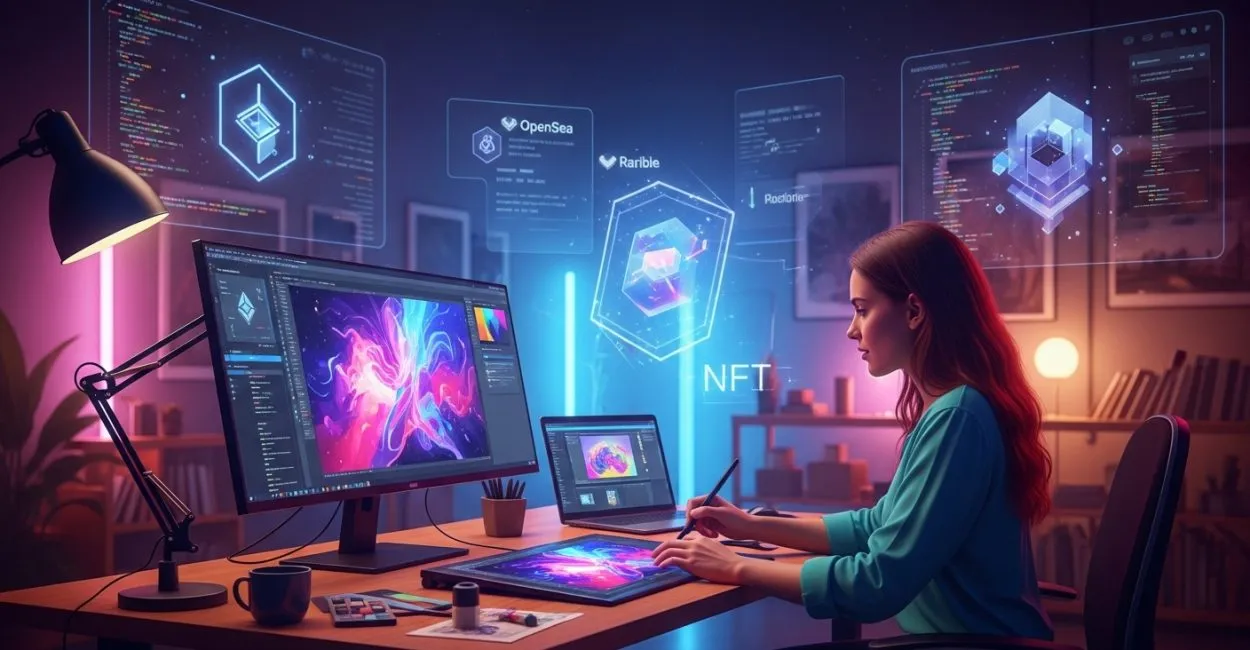
Digital art has evolved exponentially over the past few decades, driven by technological advances and new platforms for creating and sharing work. Among the most significant innovations is the rise of NFTs (non-fungible tokens), which are revolutionizing how artists and collectors interact with digital art.
Have you ever imagined owning a one-of-a-kind piece of digital art, authenticated and protected by blockchain technology? This article takes an in-depth look at digital art and NFTs, revealing how this combination is transforming the global art market and opening up new possibilities for creativity in the virtual world.

What Is Digital Art? Concepts and Evolution
Definition and Characteristics of Digital Art
Digital art refers to artistic creations produced or modified using digital technology. Unlike traditional art, it uses software, tablets, computers, and other digital tools to bring images, videos, animations, and even interactive performances to life. One of the defining characteristics of digital art is how easily it can be reproduced and shared, challenging traditional ideas of exclusivity and authenticity.
Digital art can range from simple drawings made with basic software to complex virtual installations involving augmented reality and artificial intelligence. Its popularity has grown significantly alongside technological advances, making artistic creation more accessible.
This artistic medium not only expands artists’ creative possibilities but also sparks debate about copyright, ownership, and the value of work in the digital world.
History and Milestones of Digital Art
Digital art began to take shape in the 1960s, with early experiments in computer graphics. In the 1980s and 1990s, the emergence of software such as Photoshop and 3D modeling tools helped bring the genre into the mainstream. At the same time, the internet created new opportunities to promote and sell digital art.
In recent years, technologies such as virtual reality and artificial intelligence have taken this art form to new heights, enabling immersive and interactive experiences. Events such as virtual exhibitions and online auctions have increased the visibility and value of this type of art.
Digital art has thus established itself as a dynamic and essential part of contemporary culture, paving the way for its integration with other technological innovations.
Key Tools Used to Create Digital Art
- Digital editing and painting software (e.g., Adobe Photoshop, Corel Painter)
- 3D modeling and animation platforms (e.g., Blender, Maya)
- Graphics tablets and pen displays (e.g., Wacom)
- Virtual and augmented reality tools for immersive experiences
- Artificial intelligence for generating and manipulating images
These tools let artists explore textures, colors, and shapes with unprecedented precision and creative freedom, taking digital art to new dimensions.
NFTs and Digital Art: How They Work Together
What Are NFTs, and How Do They Relate to Digital Art?
NFTs, or non-fungible tokens, are unique digital certificates that use blockchain technology to verify the authenticity and ownership of digital assets. Unlike common cryptocurrencies such as Bitcoin, which are fungible and interchangeable, NFTs are unique and indivisible.
In digital art, NFTs allow artists to create an unalterable digital certificate for their work, even if anyone can copy or view it online. This creates a new model for selling and collecting virtual art, with exclusivity guaranteed by technology.
NFTs therefore offer a solution to the longstanding challenge of unlimited reproduction in digital art, helping creators’ work retain value and opening up new commercial opportunities.
How Artistic NFTs Are Created and Sold
To turn a digital artwork into an NFT, an artist “mints” the token on a compatible blockchain, such as Ethereum or Solana. This process records the artwork on a public, immutable ledger and links the token to the art.
After minting, the NFT can be listed on specialized marketplaces, where collectors and investors can buy, bid on, or trade tokens. Artists can also program automatic royalties, earning a percentage of future sales—a major innovation for financial sustainability in the digital art market.
This ecosystem creates a direct connection between artists and audiences, eliminating traditional intermediaries and expanding the reach of their work.
Effects on the Art Market and New Opportunities
- Greater access to art, allowing emerging artists to reach global audiences.
- Recognition of digital art as a collectible asset and financial investment.
- Creation of digital communities centered on artists and art movements.
- Integration of interactive and multimedia elements into artworks, enriching the collector experience.
- Regulatory challenges and a need for education about digital rights.
These developments show that the combination of NFTs and digital art is profoundly and irreversibly reshaping the art and financial ecosystems.
Leading Platforms for Digital Art NFTs

OpenSea: The World’s Largest NFT Marketplace
OpenSea is the largest platform for buying, selling, and auctioning NFTs, supporting a wide range of digital assets, including art. Its intuitive interface and large user base attract both professional and amateur artists.
The platform offers NFT minting tools and supports multiple blockchains, giving creators greater flexibility. It is a key gathering place for collectors seeking variety and innovation.
OpenSea also lets users create exclusive collections and promotional events, helping strengthen the digital art community.
Rarible: Community and Decentralized Governance
Rarible stands out for its decentralized governance model, which lets users participate in decision-making through RARI tokens. This makes the platform more democratic and community-focused.
It is popular with artists who want more control over their work and direct interaction with fans and buyers. Rarible also supports automatic royalties and multiple file formats.
This collaborative approach encourages innovation and diversity in tokenized digital art.
SuperRare: Exclusive Art and Curation
SuperRare positions itself as an exclusive digital art gallery with rigorous curation. Only selected artists can list their work, ensuring a high standard of quality and authenticity.
The platform is ideal for collectors seeking one-of-a-kind pieces and valuing professional curation. It also provides a secure environment for transactions and hosts digital cultural events.
SuperRare exemplifies the convergence of digital art and the luxury market, elevating the profile of the sector.
Comparison of Leading NFT Platforms
| Platform | Supported Blockchain | Key Features |
|---|---|---|
| OpenSea | Ethereum, Polygon, Klaytn | Largest marketplace, diverse assets, easy minting |
| Rarible | Ethereum, Flow | Decentralized governance, automatic royalties, active community |
| SuperRare | Ethereum | Rigorous curation, exclusive art, focus on quality |
Challenges and Criticism of Digital Art NFTs
Environmental Impact of Blockchain Technology
One of the main criticisms of the growing popularity of NFTs concerns the energy consumption of blockchains, especially those that use proof-of-work mechanisms, such as the original Ethereum network. This process requires significant computing power, resulting in a substantial carbon footprint.
Artists and platforms are exploring more sustainable alternatives, such as proof-of-stake blockchains and Layer 2 solutions. Environmental awareness is essential to the responsible development of tokenized digital art.
Balancing innovation with sustainability has therefore become a central focus of the NFT community.
Legal and Intellectual Property Issues
The ease of copying and distributing digital art creates challenges for copyright protection in the NFT space. While a token certifies ownership of the original file, copies can still circulate freely, raising questions about value and exclusivity.
In addition, cases of plagiarism, counterfeiting, and disputes over authorship have increased, making clear regulations and action by official agencies necessary. Educating artists and collectors about these issues is essential to maintaining the integrity of the market.
Digital art involving NFTs therefore requires an updated and effective legal framework to protect everyone involved.
Volatility and Financial Risks in the NFT Market
- Unstable prices and intense speculation can undermine the value of artworks.
- Fraud and scams involving NFTs remain common due to a lack of regulation.
- Legal uncertainty affects investor confidence.
- Digital assets can be lost because of technical problems or cyberattacks.
- Technical knowledge is needed to participate safely in the market.
These factors show that, despite the opportunities, the NFT-based digital art market requires participants to proceed with caution and preparation.
The Future of Digital Art and NFTs
Emerging Technology Trends
Digital art will continue to benefit from technological advances, particularly in artificial intelligence, augmented and virtual reality, and the metaverse. These innovations will make it possible to create increasingly interactive, immersive, and personalized works.
NFTs will serve as access and authentication keys for these environments, creating new ways for artists and collectors to engage and generate revenue.
The convergence of digital art and blockchain technology is only beginning to transform culture and the economy.
New Business and Monetization Models
Beyond direct art sales, NFTs enable models such as subscriptions, exclusive experiences, participation in creative decisions, and co-creation. Artists can build closer and more profitable relationships with their audiences.
Decentralized platforms and smart contracts will enable greater transparency and automation in art-related business, broadening access and reducing costs.
These models encourage innovation and make digital art more sustainable as a profession.
Inclusion and Diversity in the Digital Art World
- Greater access for artists from different backgrounds and regions.
- Recognition of diverse narratives and marginalized cultures.
- Online communities that encourage sharing experiences and learning.
- Collaborative projects and social initiatives built around NFTs.
- A more diverse global art landscape.
This inclusion reinforces the role of digital art as a tool for expression and social change.
How to Get Started Creating and Investing in Digital Art NFTs
Steps for New Artists
- Learn digital tools and creative techniques.
- Understand how blockchains and NFTs work.
- Choose a trusted platform for minting and selling.
- Prepare a digital portfolio and define your artistic identity.
- Join online communities and events to network.
These steps can help you build a solid, sustainable career in the digital market.
Tips for Collectors and Investors
If you want to invest in digital art through NFTs, it is essential to research the artist, verify the artwork’s authenticity, and understand market conditions. Assessing risks and diversifying investments are recommended practices.
Also, follow trends and take part in auctions and virtual exhibitions to spot opportunities and learn about the market.
With knowledge and caution, you can earn strong financial returns while contributing to the growth of digital art.
Educational and Community Resources
- Online learning platforms specializing in NFTs and digital art.
- Blogs, podcasts, and explainer videos about blockchain technology.
- Forums and social media groups for sharing experiences.
- Events, workshops, and hackathons focused on artistic innovation.
- Consulting and mentorship for professional development.
Investing in education is essential to making the most of digital art and NFTs.
Conclusion
Digital art, powered by NFT technology, is shaping a new art landscape where creativity, authenticity, and innovation come together to transform how we create, experience, and value art. This movement not only broadens access and expands artists’ reach, but also raises important challenges related to sustainability, copyright, and security.
Anyone looking to enter this space should learn as much as possible, understand the technologies involved, and actively participate in digital communities. That way, you can take advantage of the opportunities and contribute to the promising future of digital art. Share your experiences or questions about digital art and NFTs in the comments below, and pass this article along to anyone interested in this creative revolution!
Frequently Asked Questions
What makes digital art different from traditional art?
Digital art is created and displayed using digital technology, making it easier to manipulate, reproduce, and distribute than traditional art, which is physical and one of a kind.
How do NFTs verify the authenticity of digital art?
NFTs use blockchain to record a unique, immutable certificate that proves ownership and originality of a digital artwork, even when copies exist.
What are the main risks of investing in digital art NFTs?
The risks include price volatility, fraud, a lack of clear regulation, and potential technical issues that could affect asset security.
How can I start creating NFTs from my digital artwork?
You need to create a digital wallet, choose a minting platform, register your digital files as tokens, and list them for sale on specialized marketplaces.
Is digital art involving NFTs environmentally sustainable?
Although some blockchains consume a lot of energy, more sustainable alternatives and initiatives to reduce the environmental impact of creating and selling NFTs are available.
Artigos Relacionados
 Digital Art and NFTs: The Future of Artistic Expression
 Youth and Adult Education in Brazil: Better Preparation for a Successful Future
 Essential 21st-Century Skills: Prepare for the Future
 Digital Education: Transforming Teaching with New Technologies
 Women in Science: Overcoming Challenges and Shaping the Future
 Education and New Technologies: Transforming the Future of Teaching
