
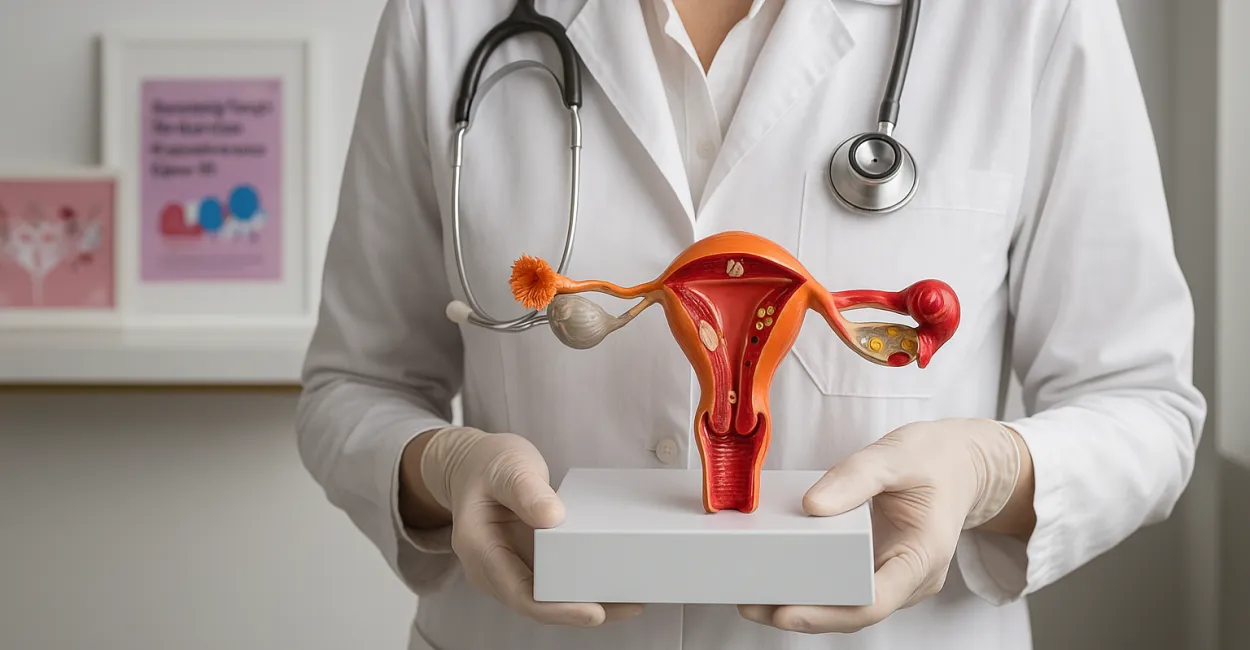
Choosing to become a gynecologist involves much more than routine checkups. It’s a specialty that supports women through pivotal stages of life, from their first period to pregnancy, perimenopause, and menopause. In practice, gynecologists need to combine clinical judgment, attentive listening, and ongoing education to provide prevention, diagnosis, and treatment without treating every patient as a standard case. Interest in this field often stems from two things: its direct impact on patients’ health and the wide range of career options in medicine. This article explains what gynecologists do, what their training involves, the profession’s current challenges, and the most promising opportunities for those who want to pursue this path with purpose.

What You Need to Know
- Gynecology is a medical specialty focused on the health of the female reproductive system, but its scope goes far beyond the reproductive organs.
- Becoming a gynecologist involves earning a medical degree, completing a residency in Obstetrics and Gynecology, and, in many cases, pursuing a subspecialty.
- Quality care depends on a well-indicated physical exam, a thorough medical history, and nonjudgmental communication, because many concerns don’t show up on imaging tests.
- The field’s biggest challenges today include high patient demand, obstetric violence, patient autonomy, and staying current with evidence-based guidelines.
- The strongest opportunities are often in preventive care, women’s health in Brazil’s public health system (SUS), private practice, fertility, menopause care, and colposcopy.
The Gynecologist’s Role in Women’s Health at Every Stage of Life
Technically, gynecology is the specialty that studies, prevents, diagnoses, and treats diseases of the female reproductive system, as well as conditions related to sexual and hormonal health. In everyday terms, that means helping patients manage menstruation, pelvic pain, vaginal discharge, birth control, preventive screenings, and signs of hormonal changes.
Gynecologists don’t only treat disease. Much of their work focuses on prevention: screening for cervical cancer with a Pap test, evaluating menstrual symptoms, discussing birth control, and identifying conditions such as fibroids, endometriosis, polycystic ovary syndrome, and sexually transmitted infections at an early stage.
What sets excellent gynecologic care apart isn’t the number of tests ordered. It’s the combination of attentive listening, a well-indicated physical exam, and a sound understanding of the patient’s circumstances.
What the day-to-day work involves
- Taking a detailed history of menstrual cycles, sexual health, pain, bleeding, and family medical history.
- Performing a gynecologic exam when clinically indicated and with the patient’s consent.
- Ordering and interpreting tests such as cervical cytology, pelvic ultrasounds, and lab work.
- Discussing birth control, fertility, pregnancy planning, and the transition to menopause.
Why appointments vary so much from one patient to another
A teenager with irregular periods doesn’t need the same approach as a woman in perimenopause, and a patient with chronic pelvic pain needs a different workup than someone who just wants to renew a birth control prescription. That’s one reason the specialty is so demanding: it calls for careful clinical judgment, not the automatic application of a protocol.
For more background on Brazil’s institutional approach to women’s health, see the Brazilian Ministry of Health’s women’s health resources and recommendations from FEBRASGO, Brazil’s federation of gynecology and obstetrics associations, which develops guidelines and continuing education in the field.
How to Train to Become a Gynecologist
The path begins with medical school, which typically takes six years in Brazil. After that, physicians complete a residency in Obstetrics and Gynecology, where they gain experience in outpatient care, childbirth, surgery, and obstetric emergencies.
In practice, choosing this field means accepting that training doesn’t end with a diploma. Guidelines change, recommendations for tests evolve, and subjects such as cancer screening, evidence-based medicine, and patient safety require ongoing study.
Common training steps
- Earn a medical degree.
- Complete a residency in Obstetrics and Gynecology.
- Work in outpatient care, a hospital, prenatal care, or gynecologic surgery.
- Optionally pursue a subspecialty in reproductive medicine, urogynecology, gynecologic oncology, or laparoscopy.
What residency really teaches
More than technical skills, residency trains physicians to make decisions under pressure. Those who work in this field know that cases rarely arrive neatly packaged: nonspecific pain, uterine bleeding, suspected infection, difficult physical exams, and incomplete information are all part of the job. That’s when experience starts to matter as much as theoretical knowledge.
A good residency doesn’t just train physicians to perform exams; it teaches them when to monitor, when to investigate, and when to intervene.
Common Reasons for a Visit and What They May Mean

Gynecologists see a wide range of concerns, and a quick assessment can easily miss the mark. Vaginal discharge, for example, may be a sign of a yeast infection, bacterial vaginosis, or a sexually transmitted infection. But it can also be a normal variation when there’s no odor, itching, or change in color.
This nuance matters because patient anxiety and reflexive treatment can do more harm than good. I’ve seen patients arrive convinced they had a serious infection when the real issue was a hormonal imbalance or improper use of intimate cleansing products.
Common concerns
- Irregular or unusually heavy periods.
- Pelvic pain, pain during sex, or debilitating cramps.
- Persistent vaginal discharge, itching, or odor.
- Low sex drive, vaginal dryness, and discomfort during menopause.
- Questions about birth control, fertility, and family planning.
When a symptom needs prompt attention
Bleeding between periods, sudden severe pain, fever with pelvic pain, and bleeding after menopause are signs that warrant prompt medical evaluation. Not every symptom is serious, but some patterns raise the level of concern and shouldn’t be dismissed as normal.
For screening and prevention guidelines, you can also consult INCA, Brazil’s National Cancer Institute, particularly for information about cervical cancer and cancer prevention.
Real-World Challenges in the Office and Hospital
The biggest challenge for gynecologists today isn’t a lack of patients. It’s managing high demand, conflicting expectations, and limited time for each appointment. Patients want compassionate care, clear explanations, and quick solutions, while the system often provides packed schedules and little continuity of care.
Read also: AI ethics specialist: exploring today’s dilemmas
Communication is another sensitive issue. A poorly chosen phrase can damage trust, and an exam performed without a sufficient explanation may be remembered as a traumatic experience. This applies in both Brazil’s public health system and the private sector.
Three challenges that come up often
- Obstetric violence and negative past experiences that make it harder to build trust.
- Medical litigation and uncertainty around complex reproductive decisions.
- Keeping up with developments in birth control, gynecologic cancer, and hormonal health.
Where one-size-fits-all guidelines fall short
Not every protocol is right for every patient. An approach that works well for a younger woman may not be appropriate for someone in perimenopause, and a treatment that works in an outpatient setting may not be enough in an emergency. Good medicine recognizes these differences instead of forcing standardization where it doesn’t belong.
In gynecology, patient trust is part of the treatment. Without it, adherence drops, exams become more difficult, and the medical history is less complete.
Practice Areas and Subspecialties With Strong Career Potential
The specialty offers a wide range of career paths. Some physicians focus on preventive care and office visits, while others pursue surgery, assisted reproduction, or cancer care. That range is one reason the field continues to appeal to physicians in training.
The most promising opportunities tend to be in areas where the need is ongoing and the patient relationship matters: hormone management, prevention, chronic pain diagnosis, fertility, and perimenopause care.
| Area | Primary focus | Practice profile |
|---|---|---|
| General practice | Preventive care and common concerns | Ongoing relationships with patients |
| Colposcopy | Cervical lesions | Important role in screening |
| Reproductive medicine | Infertility and fertility treatment | High complexity and greater demand for technology |
| Gynecologic oncology | Gynecologic cancers | Hospital-based and surgical practice |
| Urogynecology | Incontinence and pelvic floor disorders | Growing demand as the population ages |
An example that sums up the job market
A newly graduated physician started seeing patients in a small town, focusing on preventive care and birth control. Within a few months, she realized that demand for menopause care and pelvic pain treatment was higher than expected. Instead of trying to do everything, she organized her schedule around different types of care: short follow-up visits for birth control adjustments, longer appointments for perimenopause, and referrals for surgical cases. The result was a more predictable schedule and stronger patient loyalty, both of which matter in practice.
How to Stand Out Without Relying on Cookie-Cutter Care
Standing out in this specialty has less to do with “sounding impressive” and more to do with delivering consistent clinical care. A good gynecologic appointment explains what will be done, why it’s needed, and what the exam can and can’t tell you.
Another distinguishing skill is the ability to explain risk without causing unnecessary alarm. A normal test doesn’t make symptoms disappear, and an important symptom shouldn’t be dismissed just because imaging shows no abnormalities. That balance is a hallmark of an experienced physician.
Skills that make a difference
- Listening without judgment, especially when discussing sexual health and birth control.
- Knowledge of cancer screening and prevention.
- Clinical interpretation that goes beyond the test report.
- The ability to explain things in clear, straightforward language.
- Staying current with guidelines from FEBRASGO, Brazil’s Ministry of Health, and INCA.
For those who want to stay current on evidence and best practices, regularly reviewing technical materials from the Federal Council of Medicine, Brazil’s national medical regulatory body, and medical associations can help prevent reliance on practices based solely on institutional habit.
What to Consider Before Pursuing This Career
The next step isn’t choosing between “being successful” and “not being successful.” What separates a shaky practice from a solid career in gynecology is the ability to combine clinical skill, strong patient relationships, and ongoing education. Those who enter the field expecting nothing but a full schedule often feel disappointed; those who understand the value of long-term care build a more stable reputation.
If you want to assess this career honestly, consider three things before deciding: whether you’re willing to care for patients over many years, whether you’re interested in sensitive topics, and whether you’re open to learning beyond medical school. The best approach is to get a firsthand look at outpatient care, talk with residents, and compare subspecialties before choosing a specific path.
Frequently Asked Questions
Are gynecologists and obstetricians the same?
Not exactly. Gynecologists focus on the health of the female reproductive system, while obstetricians care for patients during pregnancy, childbirth, and the postpartum period. In Brazil, many physicians train in both areas through an Obstetrics and Gynecology residency.
How often should a woman see a gynecologist?
It depends on her age, symptoms, and medical history. For women without symptoms, an annual visit is a useful general guideline, but some need more frequent follow-ups for birth control, abnormal test results, or symptoms being investigated.
Is all vaginal discharge a sign of infection?
No. Normal discharge can vary throughout the menstrual cycle and doesn’t indicate disease. Strong odor, itching, burning, a significant change in color, or associated pain may be cause for concern.
Does a gynecologic exam always include a pelvic exam?
No. The physical exam should be based on the patient’s concerns and clinical needs, and the patient should be informed before any procedure. In some visits, the medical history and additional tests are enough to investigate the issue without an immediate invasive exam.
Which subspecialties are in greatest demand today?
Reproductive medicine, urogynecology, colposcopy, gynecologic oncology, and menopause care are gaining ground. Demand is growing because these fields address common, chronic issues that have a major impact on quality of life.
%%AGPTRH10%%
Artigos Relacionados
 A Soccer Player’s Career: A Complete Guide to Tips, Challenges, and Opportunities
 Pharmacist: A Complete Guide to the Profession and Career Opportunities
 Physical Education Teacher: A Complete Guide to Training and Career Paths
 Reinventing Your Career After 50: New Professional Opportunities
 Software Engineer: A Complete Guide to Building a Successful Career
 Dentists: Comprehensive Training and Essential Career Tips
